Connect with us

Technology

EcoFlow Unveils OCEAN 2 Plus Single-Phase at Smart Energy 2026 as Australia Accelerates Towards Smarter Home Energy


Published

on

Top lines:

Next-generation EcoFlow OCEAN 2 Plus Single-Phase system unveiled for scalable, whole-home energy in AustraliaStorage capacity expandable up to 30kWh stack, with 10,000 cell-cycle battery lifespanDesigned for faster installation and reduced system lossesAdvanced solar optimisation with triple MPPT architecture for complex rooftop layoutsDesigned to align with Clean Energy Council standards and support accredited installersFull press pack, including images and data sheet here

SYDNEY, May 6, 2026 /PRNewswire/ — EcoFlow will unveil OCEAN 2 Plus Single-Phase, its next-generation home battery system, at Smart Energy Conference and Exhibition, taking place from 6–7 May.

Positioned at the intersection of performance, scalability, and intelligent energy management, OCEAN 2 marks a significant evolution for residential energy systems in Australia. Designed to meet the needs of a rapidly electrifying housing market, the system supports everything from everyday households to high-demand homes integrating solar, electric vehicles, and advanced electrification technologies.

As Australia continues to face rising energy costs and increasing pressure on grid infrastructure, demand is growing for solutions that give households greater control over how energy is generated, stored, and used. OCEAN 2 has been developed in response to this shift, delivering a system that adapts over time as energy needs evolve.

EcoFlow OCEAN 2 Plus Single-Phase has long-term flexibility at its core. Systems can start small and expand as required, supporting up to 300 kWh of storage capacity when configured in parallel. This enables households to scale their energy independence without replacing existing infrastructure. With a 10,000-cycle battery lifespan, OCEAN 2 is engineered for durability and sustained performance over many years.

Performance has been optimised for real-world Australian conditions. With three independent MPPTs, the system can maximise solar generation across rooftops with multiple orientations or partial shading, ensuring consistent energy capture throughout the day. High input capacity per string allows installers to design higher-yield systems with greater efficiency and flexibility.

Efficiency extends beyond generation. OCEAN 2 operates at just 50W during light-load discharge, reducing baseline energy consumption and contributing to meaningful long-term savings. Over a 15-year period, this equates to estimated lifetime energy savings of up to 6,000 kWh.

Installation has been streamlined to support Australia’s fast-growing installer network. With a compact design, integrated components, and reduced on-site complexity, OCEAN 2 is built to save time across installation and commissioning. Each battery pack weighs 46kg and supports both indoor and outdoor installation, providing flexibility across a wide range of property types.

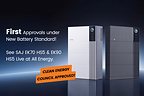
Crucially for the Australian market, OCEAN 2 has been developed to align with Clean Energy Council requirements, supporting compliance pathways and enabling installation by accredited professionals. This ensures the system integrates seamlessly into established installer workflows while meeting the standards required for grid connection and incentive eligibility.

Whole-home backup capability is included as standard, enabling seamless switching to maintain power continuity across essential loads.

EcoFlow also offers an optional Single-Phase gateway to enable AC-coupling existing solar system and flexible battery location choosing, with a smart port handling either a smart load or generator input.

This is supported by a multi-layered safety architecture, combining active and passive protection mechanisms across the battery system, alongside a 15-year warranty designed for long-term reliability.

At a system level, OCEAN 2 integrates into EcoFlow’s wider Home Energy Ecosystem, connecting solar generation, storage, and smart home technologies into a single intelligent platform. Through its Home Energy Management System, the system can automatically optimise energy usage based on demand and time-of-use tariffs, helping households maximise self-consumption and reduce reliance on the grid.

Craig Bilboe, Head of Residential UK & ANZ for EcoFlow, said:

“Australian homes are already leading the way in solar adoption, but the next step is how that energy is stored and used more intelligently. OCEAN 2 Plus Single-Phase has been designed to support that shift. It gives installers a system that fits into existing accreditation frameworks, while giving households the flexibility to expand and optimise their energy use over time.”

Visitors to the EcoFlow stand at Smart Energy Conference and Exhibition will be able to experience live demonstrations of OCEAN 2 Plus Single-Phase, explore upcoming product developments including the also new OCEAN 2 Three-Phase, and speak directly with EcoFlow’s technical and commercial teams.

To register or learn more, visit: https://energy.ecoflow.com/au/smart-energy-sydney-2026?utm_source=pr&utm_medium=link&utm_campaign=new_product_release_20260422

View original content to download multimedia:https://www.prnewswire.com/apac/news-releases/ecoflow-unveils-ocean-2-plus-single-phase-at-smart-energy-2026-as-australia-accelerates-towards-smarter-home-energy-302754032.html

SOURCE EcoFlow Australia

Continue Reading
Click to comment

Leave a Reply

Your email address will not be published. Required fields are marked *

Technology

It’s Official: Chicken Salad Chick Establishes July 16 as National Chicken Salad Day

Published

on

By

Southern-inspired brand marks the inaugural celebration with free scoops, flavor proclamations and exclusive giveaways for guests nationwide

ATLANTA, June 29, 2026 /PRNewswire/ — Chicken Salad Chick, the nation’s only fast casual chicken salad restaurant concept, invites guests nationwide to celebrate the inaugural National Chicken Salad Day on Thursday, July 16, with a free scoop offer, exclusive in-restaurant giveaways and a nationwide nod to one of the nation’s most beloved gathering foods.

Established by Chicken Salad Chick, National Chicken Salad Day will be celebrated yearly on the third Thursday in July. The holiday not only recognizes the brand’s signature menu item, but also the role chicken salad has long played in bringing people together – from picnics and gatherings to lunch with friends, bridal showers, family celebrations, tailgates and everyday moments shared around the table.

On July 16, Chicken Salad Chick Rewards members can claim an offer for one free scoop of any chicken salad flavor in the Chicken Salad Chick app, redeemable for up to 30 days. New members can join for free by downloading the app and creating an account ahead of National Chicken Salad Day to access the offer.

The celebration extends in-restaurant as well. Guests visiting any Chicken Salad Chick location on July 16 can pick up an exclusive brand sticker while supplies last, and declare their favorite chicken salad flavor with a personalized in-store proclamation designed to be shared on social media.

To make the inaugural National Chicken Salad Day even more memorable, Chicken Salad Chick will celebrate all week long on Facebook and Instagram with special giveaways. Followers will have multiple chances to win prizes, including free chicken salad for a year, and join the nationwide celebration leading up to July 16.

“Chicken salad has always had a way of showing up where people gather, and so has Chicken Salad Chick,” said Scott Deviney, President and CEO of Chicken Salad Chick. “National Chicken Salad Day gives us a chance to celebrate a dish that has connected generations and thank the guests who continue to make us part of their traditions.”

Chicken salad has earned its place at the American table: passed through generations, packed into picnic baskets, spooned onto luncheon plates and shared at showers, reunions and celebrations. Chicken Salad Chick carries that tradition forward with more than a dozen made-from-scratch flavors, from the timeless Classic Carol to bold, savory and sweet creations that reflect the brand’s signature personality. Beyond its variety of chicken salad offerings, the menu also features pimento cheese, fresh sides, soups and desserts, providing something for every guest and every gathering.

To mark the national celebration in its home state, Chicken Salad Chick will host a special event at its Woodstock, Georgia restaurant, celebrating the brand’s Georgia headquarters and continued commitment to Spreading Joy, Enriching Lives, and Serving Others® in the communities it calls home.

Since opening its doors, Chicken Salad Chick has grown around a simple idea: welcoming guests with gracious service, a warm atmosphere and food made for sharing. National Chicken Salad Day gives guests a new reason to gather and celebrate the flavors they love.

Guests are encouraged to visit their local Chicken Salad Chick on Thursday, July 16 to take part in the celebration, redeem the free scoop offer through the Chicken Salad Chick app and share their favorite flavor proclamations on social media.

For more information, to find a nearby location or to download the Chicken Salad Chick app, visit chickensaladchick.com/national-chicken-salad-day.

About Chicken Salad Chick
Chicken Salad Chick serves full-flavored, Southern-style chicken salad made from scratch and served from the heart. With more than a dozen original chicken salad flavors plus fresh sides, soups, sandwiches, desserts and catering, there’s something for every guest and occasion. Chicken Salad Chick has grown to more than 330 restaurants across 23 states and continues its rapid expansion driven by a passionate network of franchise owners. The brand has earned consistent recognition from Entrepreneur, Franchise Times, Fast Casual, QSR, Southern Living and Technomic, among others. Visit chickensaladchick.com to learn more.

For More Information:
Shannon Murphy / Kiley Fenn
BRAVE Public Relations
404.233.3993
smurphy@emailbrave.com / kfenn@emailbrave.com

View original content to download multimedia:https://www.prnewswire.com/news-releases/its-official-chicken-salad-chick-establishes-july-16-as-national-chicken-salad-day-302813320.html

SOURCE Chicken Salad Chick

Continue Reading

Technology

WiMi Explores the Application of Neural Networks in Parameter Optimization for Dual-Field Quantum Key Distribution

Published

on

By

BEIJING, June 29, 2026 /PRNewswire/ — WiMi Hologram Cloud Inc. (NASDAQ: WiMi) (“WiMi” or the “Company”), a leading global Hologram Augmented Reality (“AR”) Technology provider, announced that they are researching the use of neural networks for machine learning to optimize parameters in the dual-field quantum key distribution (TF-QKD) system. This innovative approach aims to leverage the powerful fitting ability and generalization performance of neural networks to directly predict the optimal parameter configuration for the TF-QKD system, significantly reducing computation time and resource consumption.

In the study, WiMi trained and evaluated three different types of neural network models:

Backpropagation Neural Network (BPNN): Based on the error backpropagation algorithm, BPNN minimizes prediction errors by continuously adjusting the network weights and biases. Due to its flexibility and wide applicability, BPNN has become the preferred model in many fields.

Radial Basis Function Neural Network (RBFNN): Using radial basis functions as activation functions for the hidden layer neurons, RBFNN efficiently handles nonlinear problems and is particularly suitable for high-dimensional data and scenarios requiring high precision.

Generalized Regression Neural Network (GRNN): Based on probability density estimation, GRNN uses kernel function methods to achieve nonlinear regression, excelling in handling small sample data and uncertainty issues.

Through training and testing these three neural network models, WiMi found that all models could accurately predict the optimal parameters of the TF-QKD system to some extent. Among them, RBFNN and GRNN performed especially well in high-dimensional parameter spaces, showing higher prediction accuracy. Compared to LSA, the neural network-based prediction method achieved a significant reduction in computation time, cutting it by multiple orders of magnitude. BPNN, due to its relatively simple structure, had the fastest computation speed; whereas RBFNN and GRNN, though slightly more complex in terms of computational cost, still remained within acceptable limits, and their enhanced prediction accuracy often brought more practical application value.

Considering the varying optimization needs of different TF-QKD systems (such as real-time requirements and precision demands), WiMi also conducted a comprehensive comparison of prediction accuracy and time consumption. The results indicate that for scenarios requiring rapid response with lower precision demands, BPNN is the ideal choice. On the other hand, for applications that prioritize high accuracy and can tolerate certain computation time, RBFNN or GRNN is more suitable.

The main technical advantage of using neural networks for TF-QKD system parameter optimization lies in significantly reducing the computational complexity of parameter optimization, accelerating the key generation rate, and enhancing the system’s real-time responsiveness. Neural networks can automatically learn and adapt to changes in the quantum communication environment, providing the possibility for dynamic adjustment of system parameters. As quantum communication technology develops, neural network models can be further upgraded and optimized to accommodate more complex quantum key distribution protocols and higher security requirements.

In the future, WiMi will continue to deepen its research into neural networks for TF-QKD parameter optimization, exploring more advanced neural network architectures and training strategies, such as deep learning, reinforcement learning, etc., with the aim of achieving more efficient and intelligent quantum key distribution systems. At the same time, it will strengthen integration with quantum communication hardware platforms to promote the practical application and commercialization of quantum communication technologies, contributing to the development of secure and efficient quantum communication networks.

About WiMi Hologram Cloud

WiMi Hologram Cloud, Inc. (NASDAQ:WiMi) is a holographic cloud comprehensive technical solution provider that focuses on professional areas including holographic AR automotive HUD software, 3D holographic pulse LiDAR, head-mounted light field holographic equipment, holographic semiconductor, holographic cloud software, holographic car navigation and others. Its services and holographic AR technologies include holographic AR automotive application, 3D holographic pulse LiDAR technology, holographic vision semiconductor technology, holographic software development, holographic AR advertising technology, holographic AR entertainment technology, holographic ARSDK payment, interactive holographic communication and other holographic AR technologies.

Safe Harbor Statements

This press release contains “forward-looking statements” within the Private Securities Litigation Reform Act of 1995. These forward-looking statements can be identified by terminology such as “will,” “expects,” “anticipates,” “future,” “intends,” “plans,” “believes,” “estimates,” and similar statements. Statements that are not historical facts, including statements about the Company’s beliefs and expectations, are forward-looking statements. Among other things, the business outlook and quotations from management in this press release and the Company’s strategic and operational plans contain forward−looking statements. The Company may also make written or oral forward−looking statements in its periodic reports to the US Securities and Exchange Commission (“SEC”) on Forms 20−F and 6−K, in its annual report to shareholders, in press releases, and other written materials, and in oral statements made by its officers, directors or employees to third parties. Forward-looking statements involve inherent risks and uncertainties. Several factors could cause actual results to differ materially from those contained in any forward−looking statement, including but not limited to the following: the Company’s goals and strategies; the Company’s future business development, financial condition, and results of operations; the expected growth of the AR holographic industry; and the Company’s expectations regarding demand for and market acceptance of its products and services.

Further information regarding these and other risks is included in the Company’s annual report on Form 20-F and the current report on Form 6-K and other documents filed with the SEC. All information provided in this press release is as of the date of this press release. The Company does not undertake any obligation to update any forward-looking statement except as required under applicable laws.


View original content:https://www.prnewswire.com/news-releases/wimi-explores-the-application-of-neural-networks-in-parameter-optimization-for-dual-field-quantum-key-distribution-302813268.html

SOURCE WiMi Hologram Cloud Inc.

Continue Reading

Technology

HiddenLayer Joins Databricks Unity AI Gateway Ecosystem to Bring AI-Native Security to Enterprise AI Workloads

Published

on

By

Building on its Unity Catalog integration, HiddenLayer is working with Databricks to extend model security, AI threat intelligence, and detection-and-response capabilities into Databricks-governed AI runtime workflows

AUSTIN, Texas, June 29, 2026 /PRNewswire/ — HiddenLayer, the leading provider of security for AI, today announced its participation in the Databricks Unity AI Gateway ecosystem, advancing the company’s vision of helping enterprises securely build, deploy, and operate AI at scale.

As organizations move from AI experimentation to production use of generative AI, AI agents, and Model Context Protocol integrations, the security challenge has changed. Enterprise AI systems are no longer isolated model calls. They are interconnected workloads that retrieve data, invoke tools, interact with APIs, execute actions, and operate across business-critical environments. Securing those systems requires more than traditional application controls or governance checklists. It requires visibility into how AI is being used, intelligence about how AI systems can be attacked, and security workflows designed specifically for models, agents, and AI runtime behavior.

Databricks Unity AI Gateway provides a centralized layer for governing enterprise AI interactions across models, agents, tools, MCP servers, providers, and frameworks. Through the Unity AI Gateway ecosystem, HiddenLayer is working with Databricks to bring AI-native security intelligence and detection-and-response capabilities into the workflows customers use to manage and scale AI on the Databricks platform.

The collaboration builds on HiddenLayer’s existing work with Databricks Unity Catalog, where HiddenLayer helps customers scan and assess AI models before deployment. With Unity AI Gateway, HiddenLayer is extending that security approach closer to the runtime path, helping organizations protect not only the models they deploy, but also the agents, prompts, responses, tool calls, and AI interactions those systems generate in production.

“Organizations are rapidly adopting AI agents and autonomous systems, but many are doing so without the security controls needed to manage emerging risks,” said Chris Sestito, CEO and Co-founder of HiddenLayer. “HiddenLayer provides AI-native security across the AI lifecycle, helping customers protect models, applications, and agents from evolving threats. Through the Unity AI Gateway ecosystem, we’re helping organizations combine strong governance with the security required to confidently scale AI and deploy agents to production environments.”

HiddenLayer’s participation in the Unity AI Gateway ecosystem is designed to help customers address the emerging security requirements of enterprise AI, including:

Model security before deployment: Scan model artifacts and versions for malicious code, vulnerabilities, unsafe dependencies, tampering, and other AI supply-chain risks before they become production assets.Runtime visibility for AI workloads: Monitor activity across prompts, responses, model behavior, agent actions, tool usage, and MCP-enabled workflows to understand how AI systems are operating in real environments.AI-specific threat detection: Identify attack patterns such as prompt injection, data leakage, model manipulation, unsafe tool use, model theft, adversarial ML techniques, and emerging agentic AI threats.Policy controls and guardrails: Apply security and policy enforcement to help prevent unsafe behavior, protect sensitive data, and reduce exposure across enterprise AI applications.Detection and response workflows for AI: Turn AI activity into actionable security signals that security teams can investigate, triage, and respond to through established operational processes.Support for governance, audit, and compliance programs: Provide visibility, evidence, policy enforcement, and risk context that help organizations demonstrate control over the AI systems they deploy.

This approach aligns with the broader Databricks strategy for governed enterprise AI. Unity Catalog established a foundation for managing and securing data and AI assets. Unity AI Gateway extends that foundation to the runtime interactions between models, agents, tools, MCP servers, and AI applications. Together, they help organizations bring context, control, and choice to enterprise AI while enabling customers to govern AI usage across models, agents, and applications. HiddenLayer adds specialized security depth to that architecture, helping customers detect and respond to risks that are unique to AI systems.

“As organizations move AI into production, governance must extend beyond access controls to include visibility and protection across AI interactions,” said Stephen Orban, SVP, Product Partnerships and Ecosystem, Databricks. “By integrating HiddenLayer with Databricks Unity AI Gateway, customers can monitor AI activity, enforce guardrails, and manage risk across models, agents, and tools.”

The announcement comes as enterprises increasingly recognize AI security as a distinct cybersecurity discipline. Responsible AI, governance, and compliance programs remain important, but they do not replace the need to defend the AI systems themselves. Models can be tampered with. Agents can be manipulated. Prompts and tool calls can be abused. Sensitive data can leak through AI workflows. Runtime behavior can indicate compromise, misuse, or adversarial activity.

HiddenLayer is purpose-built for that threat surface. By working with Databricks, HiddenLayer is helping customers secure AI where it is being built, governed, deployed, and operated, bringing model security, AI threat intelligence, runtime monitoring, policy controls, and detection-and-response capabilities into the enterprise AI workflows and platform customers already trust.

To learn more about HiddenLayer and its approach to securing AI systems, visit www.hiddenlayer.com.

About HiddenLayer

HiddenLayer protects agentic, generative, and predictive AI applications across the entire AI lifecycle, from discovery and AI supply chain security to attack simulation and runtime protection. Backed by patented technology and industry-leading adversarial AI research, our platform is purpose-built to defend AI systems against evolving threats. HiddenLayer protects intellectual property, helps ensure regulatory compliance, and enables organizations to safely adopt and scale AI with confidence.

Contact

SutherlandGold for HiddenLayer
hiddenlayer@sutherlandgold.com

View original content to download multimedia:https://www.prnewswire.com/news-releases/hiddenlayer-joins-databricks-unity-ai-gateway-ecosystem-to-bring-ai-native-security-to-enterprise-ai-workloads-302813334.html

SOURCE HiddenLayer

Continue Reading

Trending