Connect with us

Technology

commercetools Introduces ‘Autonomous Commerce’ Category And Unveils Sphere Platform For The AI Era of Shopping

Published

on

commercetools declares ‘Autonomous Commerce’ the next major era in commerce in which AI systems make and execute operational decisions in real-time.Autonomous commerce systems sense signals, determine the right action, and carry it out, within rules and boundaries.commercetools Sphere provides the infrastructure for autonomous commerce, enabling enterprises to adopt AI-driven operations without rebuilding existing systems.Sphere already powers more than $100 billion in annualized GMV and is designed for AI workloads operating at machine speed.

BOSTON, June 9, 2026 /PRNewswire/ — commercetools, the company that pioneered headless commerce and helped define the MACH movement, today introduced Autonomous Commerce, the new category for the AI era where businesses drive commerce operations faster and at a greater scale through AI systems that operate independently in real-time.

AI is rapidly becoming an active participant in commerce, from making decisions, executing actions, and operating at a speed and scale unmatched by humans. While agentic shopping focuses on AI acting on behalf of customers, autonomous commerce extends AI across enterprise operations, enabling systems to make and execute decisions in real-time. Instead of waiting for human input, autonomous commerce systems sense signals, determine the right action, and carry it out across pricing, inventory or marketing, within rules and boundaries.

Autonomous commerce demands three things no enterprise can deliver today: a headless foundation exposing every product, price, and checkout as real-time APIs; intelligence that orchestrates agents across pricing, promotions, and fulfillment from one platform; and governance giving every agent an identity, a scope, and human approval where it counts.

“The commerce industry is entering its biggest transition since the shift from monolithic to headless commerce,” said Chief Executive Officer Doug McNary. “It spent the last decade optimizing websites and apps for humans. The next decade will be about building systems that can support both humans and AI agents acting autonomously on their behalf to drive conversion. That requires a flexible and agile infrastructure which commercetools has been preparing for.”

commercetools transformed the industry more than a decade ago by breaking commerce away from rigid, monolithic platforms and enabling API-first, headless architectures built for the web and mobile era. Since then, commercetools has helped enterprises adopt headless architectures, running unified commerce, and more recently, agentic commerce capabilities.

As part of the announcement, commercetools unveiled commercetools Sphere, an enterprise commerce platform that brings together commercetools’ AI-native infrastructure and agent governance into a unified platform designed to provide the headless foundation required for the autonomous era.

Sphere already powers over $100 billion in annualized GMV at under 60 milliseconds average response time and is primed for autonomous workloads where AI agents act at machine speed.

Both headless and API-first, it will host the commerce modules including carts, orders, checkout, catalog, inventory, search, promotions and customer management. It also provides the secure entry point through which any AI agent, from commercetools, third parties or customers, can access commerce APIs, while enterprises retain full control over the guardrails – the permissions, policies and limits – that govern what every agent is allowed to do.

While AI is already increasingly participating in shopping by discovering products, comparing options, making decisions and transacting on behalf of customers, commercetools believes commerce is entering another major transition where agents will increasingly execute and optimize commerce operations autonomously rather than simply assist them. A recent Gartner study found that 80% of chief executives expect AI will force operational overhauls to their business from digital to autonomous.

“When we launched commercetools, we believed commerce should be flexible, headless and built for constant change. That philosophy matters even more in a world where AI agents become active participants in commerce itself,” said Founder and Chief Innovation Officer Dirk Hoerig. “Autonomous Commerce is not a feature. It is the next category of commerce. The companies that succeed will be the ones whose systems can act autonomously and react to market changes in seconds.”

Sphere will enable enterprises to integrate autonomous commerce throughout their operations, including:

Pricing: Dynamic pricing agents will monitor competitor prices, demand velocity, stock levels and margin targets simultaneously, adjusting prices in real time, protecting margin on low-stock items and staying competitive on high-intent categories, without a single manual rule update.Inventory and Reordering: Autonomous inventory agents forecast demand using real-time and historical signals, and automatically trigger replenishment orders when thresholds are met.Campaigns and Promotions: Autonomous agents will select the audience, set the discount parameters and launch across channels automatically, measuring performance and adjusting in real time, based on an initial goal set by marketers.Personalization at scale: Autonomous personalization engines adapt storefronts, product sequencing and promotional content for each visitor based on live behavioral signals.Fulfillment routing: Autonomous fulfillment agents select the optimal warehouse, carrier and route for each order in real time, factoring in stock location, delivery SLAs, cost and current carrier performance. They reroute automatically when a disruption occurs.B2B Procurement and Reordering: Autonomous agents manage routine procurement including monitoring contract terms, validating compliance, placing reorders against approved supplier lists and escalating only when decisions fall outside defined parameters.

commercetools will formally unveil its Autonomous Commerce vision during Shoptalk Europe (June 9-11) at Stall M30. This will include a preview of MosAIc, the first-ever autonomous commerce operations tool built for enterprises. It will enable multi-agent orchestration across pricing, promotions and fulfillment based on desired business outcomes.

About commercetools

For global enterprises, commercetools provides the leading commerce platform, delivering unmatched revenue growth and performance. Built on a headless, API-first foundation, our modular and scalable technology brings together the intelligence and orchestration to power agentic shopping and autonomous operations — with the governance enterprises need to run agents with confidence.

By removing the constraints of legacy systems, commercetools enables enterprises to respond to changing business needs quickly — realizing new opportunities faster, meeting the evolving demands of their customers, and expanding across offline and online channels, regions, brands, and business models without compromise.

Media Contact: comms@commercetools.com

View original content to download multimedia:https://www.prnewswire.com/news-releases/commercetools-introduces-autonomous-commerce-category-and-unveils-sphere-platform-for-the-ai-era-of-shopping-302794220.html

SOURCE commercetools

Continue Reading

Technology

GAC Wins 8 Awards, Including 4 First Prizes, Showcasing Technological Innovation Strength

Published

on

By

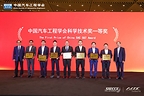
SUZHOU, China, Oct. 31, 2026 /PRNewswire/ — On October 28, GAC won 8 awards at the 2026 China-SAE Science and Technology Award ceremony in Suzhou, Jiangsu. In the fields of automotive chips, electric drive, vehicle safety, intelligent driving governance and body design, four first prizes were awarded to two GAC-led projects and two GAC-participated projects, and one GAC-led project won second prize.

In chips, GAC’s led project built a full-chain path from vehicle definition to scale application, working with 105 partners to apply nearly 400 chip models and over 1,000 domestic chips. The HYPTEC GT Special Edition, China’s first ICV with 100% domestically designed chips, has been launched.

In electric drive, GAC pioneered mass production of amorphous alloy stators and carbon-fiber high-speed rotors, becoming the world’s only company to mass-produce amorphous alloy automotive motors. Its amorphous ribbon is just 0.025 mm thick. The motor reaches 99.03% peak efficiency, 17.29 kW/kg power density (@1000V)—nearly three times the industry mainstream—and 30,000 rpm maximum speed; system CLTC efficiency reaches 94.184%. For users, energy consumption drops 4%, and range rises 30-50 km with the same battery capacity. It has been applied to HYPTEC, AION and AISTALAND models and promoted to other automakers. The related precision manufacturing technology won the Gold Medal with Congratulations of the Jury at the 51st International Exhibition of Inventions of Geneva.

In safety, the GAC-led project with Tsinghua University won second prize. It developed China’s first ASIL-D fully domestic safety controller, real-time risk quantification, active-suspension side-impact mitigation, a rear-window airbag and an “automaker-traffic police-hospital” integrated rescue model. It has been applied to 20 models with cumulative sales of 1.446 million units.

In addition, GAC’s participated L2-L4 safety governance project helped establish a full-lifecycle system covering pre-admission, in-process supervision and post-event traceability. Its participated BIW project features an AI-based body design system that generates concept schemes within 5 hours, with over 95% stiffness prediction accuracy and over 30% higher design efficiency; it has been applied to the second-generation GAC GS8, GAC ES9 and GAC All-new S7.

Looking ahead, GAC will uphold innovation-driven development, advance core technology breakthroughs and commercialization, and support high-quality development of China’s auto industry.

For further information about GAC, please visit: https://www.gacgroup.com/en or follow us on social.

View original content to download multimedia:https://www.prnewswire.com/news-releases/gac-wins-8-awards-including-4-first-prizes-showcasing-technological-innovation-strength-302925529.html

SOURCE GAC

Continue Reading

Technology

ScienceOra Demonstrates AI-Assisted Hydrogen-Production Catalyst Design Workflow at Tencent Global Digital Ecosystem Summit

Published

on

By

The workflow spans literature analysis, candidate design, experimental planning and industrial decision support, extending AI4S into materials research

SHENZHEN, China, Oct. 30, 2026 /PRNewswire/ — Wenge AI demonstrated an AI-assisted hydrogen-production catalyst design workflow supported by ScienceOra at the 2026 Tencent Global Digital Ecosystem Summit. The demonstration showed how AI for Science (AI4S) can connect literature analysis, catalyst candidate design, experimental planning and industrial decision support, helping materials researchers translate scientific evidence into actionable research plans.

ScienceOra is Wenge AI’s intelligent research decision platform, built on the ScienceOne Scientific Foundation Model. For specialist research tasks such as materials development, the platform brings together scientific models, professional literature, research data and tools to support information access, research-plan development and scientific decision-making.

From literature analysis to catalyst candidate design

The demonstration focused on the design of a high-entropy alloy catalyst for the alkaline hydrogen evolution reaction. To address the need for high activity and durability, ScienceOra searched professional literature and drew on published research methods and elemental properties to support the development of candidate designs. It also cross-checked optimization proposals against relevant literature, providing researchers with references that could be reviewed and verified.

Rather than simply generating material formulations, the workflow connects documentary evidence, materials knowledge and specific design objectives to support more targeted analysis of candidate solutions. Researchers remain responsible for assessing scientific validity and determining subsequent research directions.

From experimental planning to industrial decision support

For experimental planning, ScienceOra can assist in developing research protocols around candidate designs, helping researchers organize experimental variables and producing testing standard operating procedures (SOPs) and related reference information for subsequent validation.

For industrial applications, the platform can also support comparative analysis across dimensions such as the feasibility of scaled hydrogen production, performance at industrially relevant current densities, durability, raw-material availability and compatibility with mass-production synthesis processes. It can then assist in establishing decision priorities, screening criteria and process-improvement recommendations.

Candidate designs, experimental plans, process recommendations and references can be consolidated into a structured research report, helping R&D teams assess scientific evidence alongside engineering constraints. AI provides analytical and decision support, while experimental testing and scientific validation remain essential parts of materials research.

Previously disclosed collaboration reports design efficiency and activity improvements

In a previously disclosed industry–research collaboration on hydrogen-production catalyst design, ScienceOra supported literature analysis and research-plan development. The collaboration reported a 38% improvement in catalyst activity and reduced the design stage from several months to 30 minutes. The case illustrates the potential of domain-specific AI to connect scientific literature, research design and engineering requirements.

ScienceOra was recently made available on Tencent WorkBuddy, with an initial offering of more than 30 research expert agents and skills covering literature analysis, research hypotheses, plan design, modeling and simulation, validation analysis and research communication. The conference demonstration further illustrated how ScienceOra can be applied to specialist materials research, as AI4S moves beyond general information processing toward support for research workflows and industrial R&D decision-making.

For more information, visit https://www.scienceone.ai/portal/.

About Wenge AI

Wenge AI (1956.HK) is a provider of artificial intelligence technology and service platform products for enterprises. With self-developed large models as its core, the company helps enterprises build practical intelligent platforms and applications. Founded by a team of AI scientists from the Chinese Academy of Sciences, Wenge AI has deep technological expertise in large models, cognitive intelligence and complex-system modeling, and is committed to advancing AI from technological capabilities to enterprise-level applications.

View original content to download multimedia:https://www.prnewswire.com/news-releases/scienceora-demonstrates-ai-assisted-hydrogen-production-catalyst-design-workflow-at-tencent-global-digital-ecosystem-summit-302925517.html

SOURCE Wenge AI

Continue Reading

Technology

Cake Digital Bank Wins Gold at Qorus-Infosys Finacle Banking Innovation Awards 2026

Published

on

By

ROME, Oct. 31, 2026 /PRNewswire/ — Cake Digital Bank, a digital-only bank from Vietnam, has won Gold at the Qorus-Infosys Finacle Banking Innovation Awards 2026 for its initiative, “Reinventing Financial Experiences Through an AI-First Banking Model.” Cake was the only financial institution from Vietnam recognized at this year’s awards.

The winners were celebrated in Rome, Italy, during Infosys Finacle Conclave 2026. The 13th edition of the awards attracted 538 submissions from 206 financial institutions across 68 countries, with 37 institutions recognized across ten award categories. The selection process combined voting by industry peers with evaluation by an expert jury of 81 senior banking executives.

The award-winning institutions included leading international banking names such as Santander, Commonwealth Bank, DBS, Maybank, and CaixaBank, reflecting the global scope and competitive landscape of the awards.

John Berry, Chairman of Qorus, observed that the banking industry is entering a new era in which AI is becoming integral to innovation, transforming initiatives and expanding the possibilities of financial services.

Building an AI-First Banking Model from the Ground Up

As artificial intelligence becomes increasingly central to banking innovation, financial institutions face a growing challenge: translating technological capabilities into better customer experiences, greater operational efficiency, and sustainable business performance.

Cake’s AI-first approach reflects this industry shift while taking a different starting point. Rather than integrating AI into established banking processes, Cake was built as a digital-only bank from the outset, embedding AI, data, and automation into its technology architecture, operating model, and customer journeys.

This greenfield foundation has enabled Cake to develop an integrated AI-first banking model, where technology supports how the bank makes decisions, manages operations, and delivers financial services at scale.

Supported by its independently developed core banking and card management systems, Cake applies AI across the banking value chain, from customer onboarding, credit assessment, and fraud prevention to risk management, customer service, and personalized financial recommendations.

Beyond operational efficiency, Cake has also invested in localized AI capabilities designed specifically for Vietnamese users, enabling more accessible, responsive, and personalized financial experiences.

Scaling Growth with Efficiency and Sustainable Business Performance

Nearly six years since its launch, Cake has grown to serve more than 8 million customers, demonstrating the scalability of its branchless digital banking model.

Cake achieved positive EBITDA in Q3 2024, just 3.5 years after launch, marking a significant milestone in demonstrating the viability of its digital-only banking model. The bank subsequently recorded 173% year-on-year revenue growth in 2025, followed by a further 121% growth in 2026, reflecting sustained business momentum as it continues to scale. Meanwhile, average revenue per user (ARPU) increased from USD 12 in 2024 to USD 44 in 2026, highlighting Cake’s ability to generate greater value from its growing customer base.

Beyond customer acquisition, Cake’s growth strategy increasingly focuses on deepening customer relationships and expanding the range of financial needs served through its platform and partner ecosystems. This approach reflects the bank’s evolution toward a mature digital banking model, where scale is complemented by stronger customer engagement, operational efficiency, and long-term business sustainability.

Nguyen Huu Quang, CEO of Cake Digital Bank, said:

“Winning Gold at the Qorus-Infosys Finacle Banking Innovation Awards is a meaningful international recognition of Cake’s AI-first banking model. From the beginning, our ambition has been to build a digital bank that combines technological innovation with sustainable business performance, while making financial services simpler, more accessible, and more relevant to customers. This recognition reinforces our commitment to delivering world-class banking experiences for Vietnamese users and continuing to advance our AI-first capabilities.”

The Gold Award marks another milestone in Cake’s development as a next-generation AI-first digital bank. It also demonstrates how a banking model developed and scaled in an emerging market can deliver meaningful customer and business outcomes, contributing practical perspectives to the global conversation on the future of digital banking.

In September 2026, Cake was also named “Vietnam’s Best Digital Bank” by Euromoney under its Group Level Banking Awards, further recognizing the bank’s progress in strategy, technology, and business performance.

About the Qorus-Infosys Finacle Banking Innovation Awards

The Qorus-Infosys Finacle Banking Innovation Awards are jointly organized by Qorus, a global association for retail financial institutions, and Infosys Finacle, a digital banking solutions provider. Now in their 13th edition, the awards recognize innovative initiatives and banking models that deliver meaningful impact across the global financial services industry.

View original content:https://www.prnewswire.com/apac/news-releases/cake-digital-bank-wins-gold-at-qorus-infosys-finacle-banking-innovation-awards-2026-302925502.html

SOURCE Cake Digital Bank

Continue Reading

Trending