Connect with us

Technology

MicroLED Interconnect Market to Reach USD 722.0 Million by 2033, Driven by AI Infrastructure Expansion and High-Performance Computing Demand

Published

on

Grand View Research Analysis Highlights Rapid Adoption of Energy-Efficient Optical Interconnect Technologies Across AI Data Centers and Advanced Semiconductor Architectures

SAN FRANCISCO, June 14, 2026 /PRNewswire/ — The global MicroLED interconnect market is entering a period of accelerated growth as artificial intelligence (AI), high-performance computing (HPC), and next-generation data center architectures drive demand for faster, more energy-efficient communication technologies. According to a new study by Grand View Research, the global MicroLED interconnect market was valued at USD 181.6 million in 2025, and is projected to grow from USD 225.0 million in 2026 to reach USD 722.0 million by 2033, expanding at a CAGR of 18.1% from 2026 to 2033. The market is witnessing significant momentum as organizations seek scalable alternatives to traditional copper-based interconnect technologies.

Key Highlights

• Global market size reached USD 181.6 million in 2025.
• Market expected to grow to USD 722.0 million by 2033.
• CAGR projected at 18.1% from 2026 to 2033.
• North America accounted for the largest market share of 31.3% in 2025.
• Chip-to-chip applications represented 54.1% of market revenue in 2025.
• Asia Pacific is anticipated to be the fastest-growing regional market.
• Growing deployment of AI clusters and GPU-intensive workloads continues to fuel demand.

AI Workloads Create New Opportunities for Optical Interconnect Technologies

The rapid growth of generative AI, machine learning, and large-scale computing environments is transforming requirements for data transmission inside modern computing systems. Traditional electrical interconnects increasingly face limitations related to power consumption, latency, and signal integrity, particularly as data volumes continue to expand.

MicroLED interconnect technology has emerged as a promising solution capable of supporting ultra-high-density data transfer while maintaining energy efficiency. By utilizing optical communication approaches, MicroLED interconnects enable faster and more reliable communication between processors, GPUs, memory systems, and networking components.

As enterprises scale AI infrastructure and cloud providers invest heavily in advanced computing resources, demand for high-bandwidth, low-latency connectivity is expected to rise substantially throughout the forecast period.

Chip-to-Chip Segment Leads Market Adoption

Among product categories, the chip-to-chip segment accounted for the largest revenue share of 54.1% in 2025. The segment’s leadership reflects growing adoption of chiplet architectures and increasing demand for short-distance, high-speed communication within advanced semiconductor packages.

Chip-to-chip implementations provide several advantages, including lower power consumption, reduced signal loss, and simplified integration compared to longer-distance communication solutions. As semiconductor manufacturers continue developing advanced packaging technologies, chip-to-chip optical interconnects are expected to remain a major growth driver for the industry.

Industry participants are increasingly focusing on enabling dense connectivity between processors and memory resources to support next-generation computing architectures.

Get Instant Access to a Sample Report

AI Data Centers Accelerate Demand for High-Speed Connectivity

The ongoing expansion of AI-focused data centers is creating favorable conditions for MicroLED interconnect adoption. Large AI clusters require efficient communication between GPUs, accelerators, and memory resources to process complex workloads effectively.

MicroLED interconnect solutions offer significant advantages in these environments by enabling high-bandwidth communication while reducing energy consumption. Their modular design also supports scalability across multi-rack deployments, helping organizations optimize performance without substantially increasing operational costs.

Emerging optical and photonic interconnect approaches are gaining attention because they address key limitations associated with traditional electrical connections. These technologies improve bandwidth density, minimize signal degradation, and support the increasing computational requirements of AI applications.

North America Maintains Market Leadership

North America held the largest revenue share of 31.3% in 2025, supported by strong investments in semiconductor innovation, AI infrastructure, and advanced packaging technologies.

The region benefits from a concentration of leading technology companies, research institutions, and semiconductor manufacturers actively pursuing next-generation interconnect solutions. Public and private investments in advanced computing systems have further strengthened the region’s position in the market.

Meanwhile, Asia Pacific is expected to register the fastest growth rate during the forecast period. Countries including China, Japan, South Korea, Taiwan, and India continue investing in semiconductor manufacturing, optical technologies, and research initiatives that support commercialization of advanced interconnect solutions.

Innovation Continues to Shape Competitive Landscape

Technology developers are accelerating efforts to commercialize scalable MicroLED interconnect platforms capable of supporting AI clusters, high-performance computing systems, and future data center architectures.

Recent industry developments have highlighted growing interest in replacing conventional electrical links with optical alternatives that provide superior energy efficiency and higher data transmission capacity. Market participants are also investing in modular architectures designed to support increasingly complex computing environments.

Advancements in optical chiplets, co-packaged optics, and photonic integration are expected to create additional opportunities for market expansion over the next several years.

Browse more Research Reports in Semiconductors & Electronics Industry by Grand View Research

Growing Focus on Sustainability and Energy Efficiency

As organizations seek to reduce power consumption across computing infrastructure, energy-efficient communication technologies are becoming a strategic priority. MicroLED interconnects are gaining recognition for their ability to support high-speed data transfer while lowering energy requirements compared to conventional solutions.

This trend aligns with broader sustainability initiatives across the technology sector, where reducing data center power usage has become an important objective. As a result, optical interconnect technologies are expected to play an increasingly important role in future computing architectures.

Future Outlook

The MicroLED interconnect market is poised for substantial growth as AI adoption accelerates and demand for advanced computing infrastructure continues to expand. The convergence of semiconductor innovation, optical communication technologies, and AI-driven workloads is creating a strong foundation for long-term market development.

With projected revenue reaching USD 722.0 million by 2033, the industry is expected to become a critical component of next-generation computing ecosystems, enabling faster, more efficient, and highly scalable data communication across advanced digital infrastructure.

To learn more about growth opportunities in the MicroLED Interconnect Market, access the full report from Grand View Research

About Grand View Research

Grand View Research, U.S.-based market research and consulting company, provides syndicated as well as customized research reports and consulting services. Registered in California and headquartered in San Francisco, the company comprises over 425 analysts and consultants, adding more than 1200 market research reports to its vast database each year. These reports offer in-depth analysis on 46 industries across 25 major countries worldwide. With the help of an interactive market intelligence platform, Grand View Research Helps Fortune 500 companies and renowned academic institutes understand the global and regional business environment and gauge the opportunities that lie ahead.

Explore Grand View Consumer Insights Platform – The GVR Consumer Insights Platform combines data from our Global Voice of Consumer Survey — capturing real, evolving consumer sentiment and behavior. Get transparent, periodic insights across lifestyles, media habits, brand perceptions, and purchase triggers to fuel data-backed strategies.

Contact:
Michelle Thoras
Corporate Sales Specialist, USA
Grand View Research, Inc.
Phone: 1-415-349-0058
Toll Free: 1-888-202-9519
Email: sales@grandviewresearch.com
Web: https://www.grandviewresearch.com
Follow Us: LinkedIn | Twitter
Blog – https://globalindustryherald.com/


View original content to download multimedia:https://www.prnewswire.com/news-releases/microled-interconnect-market-to-reach-usd-722-0-million-by-2033–driven-by-ai-infrastructure-expansion-and-high-performance-computing-demand-302799111.html

SOURCE Grand View Research, Inc.

Continue Reading

Technology

RealNex Releases Major Navigator Enhancements to Power the Next Generation of CRE Brokerage Performance

Published

on

By

New release expands RealNex Navigator with KRM, RealNex Insights, RealNex Vault, RealNex Bridge, MarketEdge enhancements, and CRE Marketing Hub AI tools.

STAFFORD, Texas, Sept. 10, 2026 /PRNewswire/ — RealNex, a commercial real estate technology company, today announced a major release of updates and enhancements to RealNex Navigator, its integrated platform for commercial real estate professionals.

The release includes the evolution of RealNex CRM into KRM — Knowledge and Relationship Management, embedded RealNex Insights Power BI dashboards, the launch of RealNex Vault, the upgraded RealNex Bridge transaction workflow, enhanced MarketEdge analysis and presentation tools, and CRE-trained AI tools powered through CRE Marketing Hub.

Together, the enhancements make RealNex Navigator a more connected platform for managing knowledge, sharpening strategy, and activating execution across the full CRE deal cycle. The result is what RealNex calls The CRE Intelligence Advantage: a more effective way to make brokerage knowledge measurable, visible, and actionable.

“Commercial real estate has always been a knowledge business — and the broker who knows their market deepest wins. Every AI tool in the world cannot change that. What we have built changes something more fundamental: it makes that knowledge measurable, visible, and actionable at a scale no individual broker could achieve alone.”

— Mark Kingston, Executive Chairman, RealNex

KRM reflects the reality that CRE professionals manage more than contacts. They manage properties, markets, companies, owners, tenants, activity, assignments, and transaction history. RealNex Insights turns live KRM data into Power BI dashboards covering pipeline health, market inventory, financial performance, production activity, and business development performance.

RealNex Vault is a purpose-built virtual deal room for commercial real estate, with staged bidder progression, tiered access, NDA e-signature, dynamic watermarking, two-factor authentication, audit trails, and bidder engagement analytics. Vault is included at no additional charge for MarketEdge and Navigator subscribers.

RealNex Bridge, formerly Transaction Manager, now includes a redesigned interface, nationwide commercial property database, direct MarketPlace and KRM integration, enhanced proposal comparison, and one-click branded PDF tour books.

MarketEdge enhancements include a refreshed UI, widget-based design editor, auto-sizing text, expanded demographics, and enhanced sale-leaseback and lease vs. buy reports.

CRE Marketing Hub AI tools are available to support property and market analysis, business development strategy, targeted marketing plans, content creation, underwriting and investment analysis, social media messaging, and video scripting.

All updates are live for RealNex subscribers as of September 9, 2026.

About RealNex

RealNex is a commercial real estate technology company providing an integrated platform including KRM — Knowledge and Relationship Management — MarketEdge, RealNex Bridge, RealNex Vault, and RealNex Insights, with AI tools powered through a partnership with CRE Marketing Hub. RealNex serves brokerage firms, leasing professionals, tenant representatives, investment sales teams, and property owners across the United States and internationally.

Media Contact: Sara Perez • 281.299.3161 • 416191@email4pr.comrealnex.com 

View original content to download multimedia:https://www.prnewswire.com/news-releases/realnex-releases-major-navigator-enhancements-to-power-the-next-generation-of-cre-brokerage-performance-302873966.html

SOURCE RealNex

Continue Reading

Technology

97% of America’s Red-Eye Flights Take Off in the West, and Overnight Flying Is at a Record High, 26 Years of Federal Data Show

Published

on

By

Champion Traveler analysis of every US domestic flight since 2000 finds red-eyes concentrated in the Pacific and Mountain time zones, growing, and more reliable than daytime flights

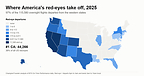
SOUTH JORDAN, Utah, Sept. 10, 2026 /PRNewswire/ — About one in sixty US domestic flights is a red-eye, and 97 percent of them take off in the western United States, according to a new Champion Traveler analysis of 26 years of Bureau of Transportation Statistics flight records.

The study counted every scheduled domestic flight reported to the federal government from 2000 through 2025 and classified as a red-eye any flight scheduled to depart between 9 p.m. and 3 a.m. and land between 3 a.m. and 10 a.m. local time. In 2025, 115,580 of 6.9 million flights met that definition.

Key findings:

Red-eyes are a western phenomenon. 97 percent of 2025’s overnight flights departed from the Pacific and Mountain states plus Alaska and Hawaii, a share that has never fallen below 95 percent since 2000.The red-eye is at a record high. Overnight flights grew 54 percent, from 75,158 in 2000 to 115,580 in 2025, after a low in 2009 and a collapse in 2020.Anchorage is the red-eye capital by share: 26 percent of its departures are overnight flights. Los Angeles leads by count with 19,064. Las Vegas flew the most red-eyes in America in 2000, lost more than half by 2010, and has since recovered.The middle-of-the-night departure is disappearing. Flights leaving after midnight were 31 percent of red-eyes in 2000 and 14 percent in 2025.The legacy airlines lost the overnight market. American, Delta and United flew 97 percent of red-eyes in 2000 and 64 percent in 2025. Alaska Airlines is now the most red-eye-heavy carrier, and Southwest, which flew none for 25 years, took 5.6 percent of the market in its first year.Red-eyes are more reliable. In 2025, 82.4 percent arrived within 15 minutes of schedule, against 77.6 percent of other flights, and they were cancelled less often.

The geography has a simple cause. An overnight flight from the West Coast crosses three time zones and lands on the East Coast at breakfast; the same trip westbound would land in the middle of the night, so airlines schedule almost no overnight flights in that direction. Among the 300 busiest red-eye routes in the study, 82 percent land in the Central or Eastern time zones.

The full study, with a sortable table of every US airport’s red-eye departures in 2000, 2010, 2019 and 2025, airline shares back to 2000, departure hours, seasonality and reliability, is at https://championtraveler.com/news/red-eye-flights-share-of-us-flights/. Journalists can request data for any airport, airline or route.

About Champion Traveler: Champion Traveler publishes data-driven travel research, including the Best Time to Travel tool covering more than 35,000 destinations, the Air Quality Travel Index and the Flyover States study. Champion Traveler is operated by Terra Lake Data, an enterprise data company.

Media contact: Edwin Ivanauskas, (385) 462-2956, 422341@email4pr.com 

View original content to download multimedia:https://www.prnewswire.com/news-releases/97-of-americas-red-eye-flights-take-off-in-the-west-and-overnight-flying-is-at-a-record-high-26-years-of-federal-data-show-302874725.html

SOURCE Champion Traveler

Continue Reading

Technology

Rentvine Names Nat Kunes as CEO as Its AI Platform Enters Its Next Chapter

Published

on

By

The fastest-growing property management software in the single-family rentals industry strengthens its leadership team as it enters its next phase of growth.

ESTERO, Fla., Sept. 10, 2026 /PRNewswire-PRWeb/ — Rentvine, the fastest-growing property management software in the single-family rentals industry, today announced Nat Kunes as Chief Executive Officer, effective September 9. Kunes will lead company strategy and assume day-to-day leadership, building on the AI and open foundation Rentvine has already established with its recent launch of MCP and Pro Skills. Rentvine founder, Dave Borden will continue as a hands-on member of the leadership team and board of directors, closely involved in Rentvine’s vision, and industry relationships.

“We’re building the experience property managers deserve. The company’s focus on actively listening to property managers and executing based on their needs is rare, and it’s the foundation I get to build on as we push further into what AI can do for this industry.”

Nat Kunes brings a rare combination of experience: more than 20 years of product leadership, including at one of the largest property management software providers in the industry, paired with a track record of leading AI software organizations through their accelerated growth stages. That blend is precisely what Rentvine has been building in its next chapter, with that vision already taking shape inside the platform.

“What drew me to Rentvine was that our product, support, and culture already set the standard,” said Kunes. “We’re not running a predefined playbook. We’re building the experience property managers deserve. The company’s focus on actively listening to property managers and executing based on their needs is rare, and it’s the foundation I get to build on as we push further into what AI can do for this industry.”

“As founder, this company has always been my passion, and that’s not changing,” said Dave Borden. “Nat’s experience within property management will undoubtedly extend Rentvine’s industry leadership in AI. I will focus on the industry relationships, strategy, and culture, all near and dear to me, as we build our next chapter.”

“Adding Nat to our leadership team alongside Dave and me is exactly the kind of move that helps our customers win,” said Jonathan Ewen, Co-Founder and President of Rentvine. “He shares our commitment to the Herd, and having all three of us driving the business forward means we can move faster without losing what makes Rentvine, Rentvine.”

Rentvine’s product, team, and commitments to property managers remain unchanged. While Borden remains active in the business, Kunes will work alongside Borden and Ewen to make sure employees, customers, and partners continue to receive the same experience they’ve always received from Rentvine.

About Rentvine

Rentvine is the fastest-growing property management software in the single-family rentals industry. Built for property managers who want to scale with confidence and clarity, we deliver the best trust accounting in property management, giving operators unmatched accuracy, visibility, and control over their financials. From leasing, maintenance, and CRM tools to owner reporting and performance analytics, everything lives in one modern, AI-connected platform with an open API.

To learn more, visit www.rentvine.com.

Media Contact

Chris Brasher, Rentvine, 1 888-597-2611, chris.brasher@rentvine.com, www.rentvine.com

View original content:https://www.prweb.com/releases/rentvine-names-nat-kunes-as-ceo-as-its-ai-platform-enters-its-next-chapter-302875032.html

SOURCE Rentvine

Continue Reading

Trending