Connect with us

Technology

Well-Timed Nudges Help Care Providers to Honor the Wishes of Patients with Cancer According to JNCCN Study

Published

on

Researchers find a two-pronged approach helps ensure people with cancer understand their illness better and share their priorities for care.

PLYMOUTH MEETING, Pa., June 15, 2026 /PRNewswire/ — New research in the June 2026 issue of JNCCN—Journal of the National Comprehensive Cancer Network finds that small, targeted prompts delivered to both patients and providers at the right moment can significantly increase the number of serious illness conversations that take place.

“These conversations improve patient anxiety and quality of life and help them get care that matches their goals…”

The randomized controlled trial out of Dana-Farber Cancer Institute tested two simple nudges designed to encourage important conversations between patients with cancer and their oncologists about goals and preferences for care. One nudge consisted of a reminder email to clinicians prior to patients’ appointments and another was a letter and questionnaire mailed to patients. When these nudges were combined, these conversations occurred significantly more often.

“Past research has shown these conversations improve patient anxiety and quality of life and help them get care that matches their goals, especially near the end of life,” said one of the lead researchers, Christopher R. Manz, MD, MSHP, Dana-Farber Cancer Institute. “Having the conversation with a provider they trust, and documenting it somewhere accessible, is what allows the rest of the team to honor the patients’ wishes, particularly if the patient is ill and unable to advocate for themself.”

The clinical trial was conducted across four cohorts totaling 1,051 patients and 160 clinicians at two academic cancer center sites between December 4, 2022 and September 30, 2024. Adult patients with poor prognosis were randomized to either receive one of the two types of nudges, both nudges, or neither. Patients in the combined nudge arm had 79% higher odds of having a serious illness conversation documented as advance care planning within 60 days over the no-nudge group. The single-nudge groups also showed a modest increase, though not statistically significant.

The researchers deliberately limited the nudges to only patients starting a treatment that is associated with a poor prognosis and capped them at three visits.

“The key is precision. Nudging clinicians at the right time for the right patient rather than blasting reminders for every patient is how we turn this into a helpful quality improvement initiative rather than a burdensome email. Burnout is real and alert fatigue undermines the goal of these nudges: when they feel like noise, they get ignored,” noted co-lead author Cody E. Cotner, MD, Harvard Medical School. “When a patient is prepared to have these conversations through initial outreach and walks into the office already thinking about what matters most to them, the clinician has a more receptive partner across the desk, and the conversation is easier to start and goes deeper.”

“This study offers a practical dose of hope for patients with advanced cancer and the clinicians caring for them,” commented Elise Carey, MD, a palliative care specialist at Mayo Clinic Comprehensive Cancer Center, who was not involved with this research. “It shows that a relatively simple approach—identifying high-risk patients through existing oncology treatment pathways and sending simple reminders to both patients and clinicians—can meaningfully increase serious illness communication in routine cancer care.”

Dr. Carey, a Member of the NCCN Clinical Practice Guidelines in Oncology (NCCN Guidelines®) Panel for Palliative Care, continued: “What is especially striking is that the benefit was driven largely by the clinician nudge, suggesting that small, well-timed supports can help clinicians make space for these essential conversations even in a busy clinical practice. Overall, this study offers a realistic, scalable step toward bringing serious illness conversations into oncology care earlier and more reliably.”

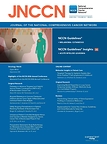
To read the entire study “Pathways to Advance Targeted and Helpful Serious Illness Conversations (PATH-SIC): A Randomized Clinical Trial,” visit JNCCN.org.

About JNCCN—Journal of the National Comprehensive Cancer Network
More than 25,000 oncologists and other cancer care professionals across the United States read JNCCN—Journal of the National Comprehensive Cancer Network. This peer-reviewed, indexed medical journal provides the latest information about innovation and scientific studies related to oncology health services research, including quality care and value, bioethics, comparative and cost effectiveness, public policy, and interventional research on supportive care and survivorship. JNCCN features updates on the NCCN Clinical Practice Guidelines in Oncology (NCCN Guidelines®), review articles elaborating on guidelines recommendations, health services research, and commentary. JNCCN is published by Conexiant. Visit JNCCN.org for more information.

About the National Comprehensive Cancer Network
The National Comprehensive Cancer Network® (NCCN®) is a not-for-profit alliance of leading cancer centers devoted to patient care, research, and education. NCCN is dedicated to defining and advancing quality, effective, equitable, and accessible cancer care and prevention so all people can live better lives. The NCCN Clinical Practice Guidelines in Oncology (NCCN Guidelines®) provide transparent, evidence-based, expert consensus-driven recommendations for cancer treatment, prevention, and supportive services; they are the recognized standard for clinical direction and policy in cancer management and the most thorough and frequently-updated clinical practice guidelines available in any area of medicine. The NCCN Guidelines for Patients® provide expert cancer treatment information to inform and empower patients and caregivers, through support from the NCCN Foundation®. NCCN also advances continuing education, global initiatives, policy, and research collaboration and publication in oncology. Visit NCCN.org for more information.

Media Contact:
Rachel Darwin
267-622-6624
darwin@nccn.org

View original content to download multimedia:https://www.prnewswire.com/news-releases/well-timed-nudges-help-care-providers-to-honor-the-wishes-of-patients-with-cancer-according-to-jnccn-study-302800347.html

SOURCE National Comprehensive Cancer Network

Continue Reading
Click to comment

Leave a Reply

Your email address will not be published. Required fields are marked *

Technology

DATABANK CLOSES $1.45 BILLION IN NEW FINANCING ACROSS TWO TRANSACTIONS

Published

on

By

$800 Million Revolving Credit Facility and $650 Million Upsize of Red Oak, Texas Campus Financing Strengthen DataBank’s Capital Structure and Support Continued Growth

DALLAS, June 15, 2026 /PRNewswire/ — DataBank, a leading provider of enterprise-class edge colocation, interconnection, and managed services, today announced the successful closing of two financing transactions totaling $1.45 billion: an $800 million corporate revolving credit facility and a $650 million upsize of its existing construction financing for its Red Oak, Texas data center campus.

$800 Million Revolving Credit Facility

DataBank closed an $800 million revolving credit facility (the “Corporate Revolver”) maturing in 2031. Proceeds will be used for general corporate purposes, including working capital needs, capital expenditures, and liquidity support for the company’s continued growth and acquisition strategy.

This Corporate Revolver was arranged by a syndicate of banks led by Citizens Bank, N.A. along with Joint Lead Arrangers Citibank, MUFG Bank, Ltd., PNC Bank, N.A., TD Securities (USA) LLC, Truist Securities, Inc., U.S. Bank, N.A. and Wells Fargo Securities.

$650 Million Red Oak Campus Financing Upsize

DataBank also closed a $650 million upsize of its existing $2.0 billion construction financing for its Red Oak, Texas campus, originally announced in April 2026. This brings the total Red Oak campus financing to $2.65 billion. The upsize supports construction of the fourth building on this campus, adding 60 megawatts of incremental IT capacity.

The upsize consists of $400 million in bank financing, led by the same institutions as the April 2026 announcement, and $250 million of notes placed in a private placement, which is  DataBank’s first private placement transaction. The private placement marks a significant milestone for DataBank, opening the company to a new institutional investor base and further diversifying its sources of capital for development projects.  MUFG served as Lead Placement Agent, with TD Securities (USA) LLC and Barclays as Joint Placement Agents, and Citibank, Citizens Bank, N.A., and National Bank of Canada as Co-Placement Agents.

“This new revolving credit facility strengthens our financial flexibility and reflects the confidence our lending partners have in DataBank’s business model and long-term growth trajectory,” said Raul K. Martynek, Chief Executive Officer of DataBank.

 “As demand for data center capacity continues to accelerate, having a robust and flexible capital structure is essential. This revolver, combined with the upsized Red Oak financing and our inaugural private placement, positions DataBank to move decisively as we expand our platform and deepen our relationships with hyperscale, cloud, and enterprise customers,” said Kevin Ooley, President and Chief Financial Officer of DataBank.

Davis Polk & Wardwell LLP served as legal counsel to DataBank on both transactions.

About DataBank

DataBank helps the world’s largest enterprises, technology, and content providers ensure their data and applications are always on, always secure, always compliant, and ready to scale to meet the needs of the artificial intelligence era.

Recognized by Deloitte in 2023 and 2024, and Inc. 5000 in 2024 as one of the fastest-growing private US companies, DataBank’s edge colocation and infrastructure footprint consists of 70+ “HPC-ready” data centers in 25+ markets, 20 interconnection hubs, and on-ramps to an ecosystem of cloud providers with virtually unlimited reach.

We combine these platforms with contract portability, managed security, compliance enablement, hands-on support, and a guarantee of 100% uptime availability, to give our customers absolute confidence in their IT infrastructure and the power to create a boundless digital future for their business.

To learn more, follow us on LinkedIn or subscribe to our YouTube channel. To tour a facility, visit DataBank or call 1(800) 840-7533.

View original content to download multimedia:https://www.prnewswire.com/news-releases/databank-closes-1-45-billion-in-new-financing-across-two-transactions-302800012.html

SOURCE DataBank

Continue Reading

Technology

Hasung Expands Global Reach with Advanced Precious Metal Processing Solutions

Published

on

By

SHENZHEN, China, June 15, 2026 /PRNewswire/ — Hasung, a professional solutions provider in the field of precious metals and alloys founded in 2014, is leveraging its years of accumulated expertise in precious metal processing and independent R&D capabilities to accelerate the internationalization of Chinese high-end precious metal equipment manufacturing, as the global jewelry manufacturing and precious metal processing industry continues to develop towards higher precision, higher purity, and higher efficiency.

The global jewelry market reached approximately USD 381.5 billion in 2025 and is projected to exceed USD 578 billion by 2033, driving increasing demand for high-precision precious metal manufacturing technologies, according to Grand View Research.

Advanced Precious Metal Processing Technology as the Upgrading Direction

In the field of precious metal processing, purity determines value, and details reveal quality. As global refineries, jewelers, and gold bullion manufacturers place stringent demands on product quality and manufacturing efficiency, traditional processing methods have become the production bottleneck due to unresolved issues such as oxidation, porosity, and precision. As a result, advanced casting, melting, and precision processing technologies are emerging as an important development direction for high-end precious metal manufacturing.

Guided by a focus on technology and product quality, Hasung has gradually formed an independent and highly stable core product system based on its deep understanding of industrial automation systems and advanced technology R&D capabilities. This system covers continuous casting equipment, metal granulating equipment, induction melting furnaces, gold bar casting machines, jewelry casting machines, metal powder making machines, etc.

This precious metal solution, which integrates intelligent control, efficient heating, and precision forming, effectively addresses the core pain points of the precious metal processing industry, such as oxidation control, yield, and production efficiency. Advanced IGBT wafers and high-frequency heating technology not only enable rapid melting of metal in a very short time, but also significantly reduce unit energy consumption. The PID intelligent temperature control system ensures that the molten metal has optimal fluidity, avoiding shrinkage porosity or uneven grain structure caused by temperature fluctuations.

Meanwhile, Hasung places strong emphasis on process stability and precision control. Through continuous optimization of equipment structure, temperature management, and automation systems, the company helps customers achieve greater consistency in precious metal casting and processing operations.

Rising Demand for High-Precision Precious Metal Processing Equipment

High-end precious metal processing equipment has long been dominated by German and Japanese manufacturers, especially when it comes to precision casting, temperature precision, and automation.

As manufacturers worldwide increasingly prioritize casting quality, material utilization, and process consistency, companies with strong engineering capabilities are gaining greater opportunities to compete in the global market.

Through sustained investment in engineering innovation, intelligent control systems, and precision manufacturing technologies, Hasung has continued to strengthen its competitiveness in high-end precious metal processing equipment. The results show up in how the equipment actually performs in production environments: more consistent, more reliable, less operator intervention.

That reputation has opened doors. Hasung’s equipment is now running in jewelry workshops, precious metal refineries, and advanced materials operations across Europe, Southeast Asia, the Middle East, and South America.

Expanding from Jewelry into Advanced Materials

As the global advanced manufacturing industry continues to increase its demand for high-performance metal materials, advanced precious metal processing technology is applied from the jewelry industry to a wider range of industrial applications.

In addition to the traditional jewelry manufacturing market, Hasung has also been actively expanding its applications in advanced materials and scientific research in recent years, like metal powder manufacturing, new material experimentation, precision alloy processing, and others. Its clients include not only jewelry manufacturers but also new material companies, university laboratories, and solder companies.

In the future, Hasung will intensify its R&D investment in precious metal processing technology, intelligent automation, and precision control, continuously improving product performance and global service capabilities.

“Thirteen years ago, we moved into precious metals industry,” said Mr. Xiang, the founder of Hasung, “year after year we’ve kept pursuing technology development and been committed to driving technological innovation in the global precious metals industry through China’s smart manufacturing.”

About Hasung

Hasung is a national high-tech enterprise based in Shenzhen, specializing in the manufacturing of equipment for precious metals and new materials processing. Its main products include vacuum pressure casting machines, gold bar casting machines, silver bullion casting machines, jewelry casting machines, jewelry rolling mills, metal powder making machines, gold chain making machines, etc., which are sold to more than 80 countries and regions around the world.

Media Contact:

Shenzhen Hasung Precious Metals Equipment Technology Co., Ltd
No.11, Jinyuan 1st Road, Heao Community, Yuanshan Street, Longgang District, Shenzhen, China 518115
Email: sales@hasungmachinery.com
Tel: +86 17898439424
www.hasungmachinery.com 

View original content to download multimedia:https://www.prnewswire.com/news-releases/hasung-expands-global-reach-with-advanced-precious-metal-processing-solutions-302799897.html

SOURCE Shenzhen Hasung Precious Metals Equipment Technology Co., Ltd

Continue Reading

Technology

LifeNet Health, NASA, and UNOS Complete First-of-Its-Kind Drone Kidney Transport Study to Help Save More Lives

Published

on

By

HAMPTON, Va., June 15, 2026 /PRNewswire/ — Teams from the United Network for Organ Sharing (UNOS), NASA Langley Research Center, and LifeNet Health successfully completed a groundbreaking study transporting human kidneys by drone beyond visual line of sight, marking a major milestone in the future of organ transportation and transplantation.

The June 5 flights highlight the potential for drone technology to support future innovations in organ transportation, with the goal of improving reliability, reducing transit times, and helping save more lives through transplantation.

During the study, the kidneys were biopsied and placed on preservation pumps before and after the flights to assess whether drone transportation affected organ integrity. Temperature, pressure, and altitude were monitored throughout the approximately 15-minute flights. Preliminary findings showed no evidence that the flights negatively affected the organs.

Organ transplantation is one of the most time-sensitive processes in healthcare. Once recovered, organs have only a limited window of viability, making efficient transportation critical to successful transplantation. Delays can impact organ function, patient outcomes, and whether a transplant can occur at all. Transportation innovation, including the exploration of drone technology, has the potential to expand access to transplantation for patients on the waitlist or reduce the time to transplant, improving patient outcomes.

“With more than 100,000 people currently waiting for a lifesaving transplant nationwide, innovation in organ transportation is essential,” said UNOS Interim CEO Mark Johnson. “This successful collaboration represents an important step toward making organ transportation safer, faster, and more efficient.”

According to national transplant data, another person is added to the U.S. transplant waiting list every eight minutes, while 13 people die each day waiting for an organ that never arrives. More than 3,000 people in Virginia alone are currently waiting for a lifesaving transplant.

The kidneys used in the study were donated for research by a donor family working with LifeNet Health after it was determined the organs would not be transplanted. Through these gifts, the organizations were able to evaluate how drone transportation may support future advances in transplantation logistics and organ preservation.

While transplantation saves lives today, donation for research helps save lives tomorrow. Organs and tissues that cannot be used for transplant can still help scientists improve preservation methods, develop new therapies, and explore future innovations in transplantation and patient care.

“Just as every patient waiting for a transplant matters, so does the timely transportation of the organs and tissues that can save and heal lives,” said Rony Thomas, President and CEO of LifeNet Health. “Advancing transportation and logistics innovation can make a meaningful difference in ensuring these lifesaving gifts reach patients when they are needed most.”

The study also highlights the broader impact of research donation. A single research donation can support multiple scientific studies and discoveries that may improve transplant outcomes and benefit patients for years to come. Many medical advances used in transplantation today were made possible through the generosity of donors and their families.

Donation for research occurs only with proper authorization and under strict ethical and regulatory standards. Families receive clear information about the process and can make informed decisions that honor their loved one’s wishes.

UNOS, NASA, and LifeNet Health continue exploring opportunities to further evaluate drone transportation in operational environments, including transporting research organs between hospitals and airports.

For updates and more information, follow:

NASA Langley Research Center LinkedIn
NASA Langley Research Center X
NASA Langley Research Center Instagram
NASA Langley Research Center Facebook
NASA Langley Research Center YouTube
UNOS Facebook
UNOS LinkedIn
UNOS Instagram
LifeNet Health LinkedIn
LifeNet Health Facebook
LifeNet Health Instagram

About UNOS
UNOS is a nonprofit organization with decades of experience in helping save lives through research, technology, innovation and education.

About LifeNet Health
As a global leader in regenerative medicine, LifeNet Health continues to push the boundaries to give healing every advantage. The organization offers groundbreaking transplantation and cellular solutions that support healthcare providers and powers scientific research. This forward-focused approach has improved life for millions of patients, all while honoring donor heroes and their families. For more information, visit: www.lifenethealth.org.

EX-3896.00

View original content to download multimedia:https://www.prnewswire.com/news-releases/lifenet-health-nasa-and-unos-complete-first-of-its-kind-drone-kidney-transport-study-to-help-save-more-lives-302800324.html

SOURCE LifeNet Health

Continue Reading

Trending