Connect with us

Technology

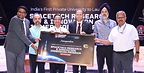
ISRO Scientists Launch Space Technology & Research Program 2026 at Chandigarh University

Published

on

CU Space Program to offer training & research by ISRO, IIST Scientists for research scholars and students

CHANDIGARH, India, June 16, 2026 /PRNewswire/ — In a major step towards strengthening space technology education and research, Chandigarh University, through its Kalpana Chawla Centre (KCC) has launched the KCC Space Technology & Research Program 2026 and the KCC Summer Internship Program 2026 at its campus on Monday.

The month-long national-level programme, running from June 15 to July 11, 2026, has brought together leading space scientists, satellite technologists and semiconductor experts from the Indian Space Research Organisation (ISRO), the Indian Institute of Space Science and Technology (IIST), the Semiconductor Laboratory (SCL) and other premier scientific institutions to mentor the next generation of innovators and researchers. The initiative will provide students with valuable insights into emerging space technologies and hands-on exposure to cutting-edge developments shaping India’s rapidly evolving space sector.

The inaugural ceremony was graced by Dr S Sudhakar, Deputy Director, U R Rao Satellite Centre (URSC), ISRO as the Chief Guest while Prof. Priyadarshnam, Head and Project Director, SSPACE, Indian Institute of Space Science and Technology (IIST) attended as the Guest of Honour. Distinguished guests included Dr. Kamaljeet Singh, Director General, Semiconductor Laboratory (SCL), Chandigarh, and Sri Jothy Soman, Group Director, URSC, ISRO.

Speaking on the occasion, Dr S Sudhakar, Deputy Director, U R Rao Satellite Centre (URSC), ISRO said, “As India works towards becoming a developed nation by 2047, science and technology will play a defining role in shaping the future. Science is going to govern the world and space technology will be one of the most important drivers of that transformation. One of the most important lessons young engineers and researchers can learn from ISRO’s journey is the value of developing indigenous technologies. We have achieved world-class results by building our own capabilities and relying on the talent of our people. Technology does not come free and acquiring it from elsewhere often comes at a significant cost. When we develop technologies ourselves, we not only reduce costs but also gain strategic advantages and self-reliance. This approach has enabled India to perform exceptionally well despite resource constraints.”

Dr S Sudhakar added, “Communication, navigation, scientific exploration and strategic applications will increasingly depend on advancements in the space sector. The coming decades will witness growing demand for space-based services, including surveillance, communication and navigation systems. The defence sector is also expanding its space-based capabilities, both independently and in collaboration with ISRO. At the same time, there will be increasing requirements for scientific research, exploration missions and technology development across multiple domains.”

“ISRO has already charted out an ambitious roadmap extending to 2047, including major programmes ranging from advanced exploration missions to long-term human spaceflight missions. To remain technologically ahead in an increasingly competitive global environment, India must continue to invest in indigenous technologies and strengthen its infrastructure,” added Dr Sudhakar.

Speaking on the occasion, Prof. Priyadarshnam, Head & Project Director, SSPACE, Indian Institute of Space Science and Technology (IIST) said, “ISRO has always been at the forefront of achieving maximum impact with limited resources. One of the key lessons from its journey is the importance of precision, rigorous testing and human expertise. While automation has its place, mission success ultimately depends on meticulous development, validation and the dedication of scientists and engineers. This culture of frugal innovation and uncompromising testing has been central to ISRO’s achievements over the years.”

On the role emerging technologies can play in strengthening the security systems in the country, Prof. Priyadarshnam said, “Quantum technology will be a major thrust area in the future. If we do not adapt to quantum systems, many of the present security mechanisms could eventually become vulnerable. Research organizations across India, including ISRO, are already working on quantum technologies, particularly quantum cryptography and quantum communications. Artificial intelligence is another technology that will have a profound impact on the space sector. While its adoption in satellite systems is still evolving, the enormous volume of data being generated by modern space missions will make AI indispensable for analysis, decision-making and future space applications. These areas will play a crucial role in securing communications, protecting critical infrastructure and strengthening national security in the years ahead.”

On space technology’s role in driving economic growth, he said, “Space technology is going to play a major role in India’s future development. Unless we are quick enough to adopt and integrate space technologies across the domains, the pace of development will not be sufficient. There is certainly a threat perception arising from the growing role of space-based technologies in security and strategic affairs. However, India has the capability to overcome such challenges through indigenous innovation and technological self-reliance. India’s greatest strength lies in its talent, and we must increase our workforce in this critical sector. Innovation in areas such as small satellite technologies and advanced space systems will be important in enhancing our preparedness and resilience.”

Dr Kamaljeet Singh, Director General, Semiconductor Laboratory (SCL) said, “Semiconductors are the foundation of the digital economy and will play a crucial role in India’s journey towards becoming a developed nation by 2047. Under the India Semiconductor Mission, significant progress is already being made with multiple manufacturing and assembly plants being established across the country. Our objective is to build a robust, full-stack semiconductor ecosystem that reduces import dependence and strengthens India’s technological capabilities. Semiconductors are critical for strategic sectors including space, telecommunications, defence, artificial intelligence and advanced computing.”

“The next step is to strengthen manufacturing, deployment and application ecosystems. As artificial intelligence becomes a key driver of future growth, India must leverage its vast data resources to develop indigenous technologies and sovereign AI models. Building strong capabilities in semiconductors and AI will not only boost economic growth but also enhance national security, technological independence and India’s competitiveness in the global innovation landscape,” added Dr Kamaljeet.

Over the next four weeks, nearly 15 eminent scientists, directors, senior researchers and technical experts from premier national institutions including ISRO, IIST, NewSpace India Limited (NSIL), Indian Institute of Remote Sensing (IIRS), Ministry of Earth Sciences (MoES), Semiconductor Laboratory (SCL) and other leading organizations will engage with Chandigarh University students and faculty through an intensive series of technical training sessions, expert lectures, laboratory demonstrations, mentoring programmes, research discussions and interactive workshops.

About Chandigarh University

Chandigarh University is a NAAC A+ Grade University and QS World Ranked University. This autonomous educational institution is approved by UGC and is located near Chandigarh in the state of Punjab. It is the youngest university in India and the only private university in Punjab to be honoured with A+ Grade by NAAC (National Assessment and Accreditation Council). CU offers more than 109 UG and PG programs in the field of engineering, management, pharmacy, law, architecture, journalism, animation, hotel management, commerce, and others. It has been awarded as The University with Best Placements by WCRC.

Website address: https://www.cuchd.in/ 


View original content to download multimedia:https://www.prnewswire.com/in/news-releases/isro-scientists-launch-space-technology–research-program-2026-at-chandigarh-university-302801168.html

Continue Reading
Click to comment

Leave a Reply

Your email address will not be published. Required fields are marked *

Technology

Ineffable Intelligence Selects Google Cloud To Power Its Superintelligence Mission

Published

on

By

Following a rigorous evaluation of the infrastructure market and a historic $1.1 billion seed round, Ineffable Intelligence enters agreement with Google Cloud to develop the world’s first “superlearner”

LONDON, June 16, 2026 /PRNewswire/ — Google Cloud Summit London ’26 — Google Cloud and Ineffable Intelligence today announced a strategic partnership in which Google will provide the specialized infrastructure for Ineffable’s new frontier AI lab. Under the agreement, Ineffable Intelligence, the London-based startup founded by AlphaGo visionary David Silver, has selected Google Cloud as its preferred cloud partner, utilizing Google’s world-class AI-optimized technology to advance the next frontier of artificial intelligence: systems that learn continuously from their own experience.

The partnership follows Ineffable Intelligence’s historic $1.1 billion seed round, the largest of its kind in European history. Ineffable Intelligence will utilize Google Cloud’s high-performance computing capabilities to accelerate its mission of developing a “superlearner.” This partnership will also see Ineffable Intelligence deploy one of the largest clusters of A5X, powered by NVIDIA Vera Rubin NVL72 GPUs on Google Cloud, delivering massive computational scale.

Experience-based learning places fundamentally different demands on computing infrastructure than training on static datasets. Rather than learning from static datasets, these systems generate, evaluate, and learn from vast amounts of experience in real time, requiring enormous computational scale, high-performance networking, and tightly integrated training and inference systems. Google Cloud’s infrastructure will provide the foundation for this next generation of AI development.

Powering frontier AI with Google Cloud’s AI stack

While the industry has seen a surge in simple GPU-renting agreements, Ineffable Intelligence chose Google Cloud for its integrated AI Hypercomputer architecture. Unlike a standard “box of chips” approach, Google Cloud provides a systems-level optimization that combines performance-engineered GPUs with high-efficiency AI networking and storage.

“Training frontier models requires more than just raw compute; it requires a sophisticated orchestration of hardware and software,” said David Silver, CEO and Founder of Ineffable Intelligence. “We evaluated the space and chose Google Cloud as the best fit for our reinforcement learning infrastructure. We aren’t just looking for processors; we are building a resilient and scalable environment to make ‘first contact’ with superintelligence, AI that transcends human limitations in science, mathematics, and technology.”

Europe’s new frontier in AI

The collaboration signals a shift in the global AI landscape, positioning Ineffable Intelligence as a cornerstone of Europe’s growing AI ecosystem. By basing operations in London and leveraging Google Cloud’s secure infrastructure, Ineffable is poised to attract the continent’s premier engineering talent to solve the world’s most complex technical challenges.

“We are honored that the Ineffable Intelligence team has chosen Google Cloud to power its mission,” said Thomas Kurian, CEO of Google Cloud. “Ineffable is leveraging our full-stack AI Hypercomputer, from Jupiter networking to our optimized storage, to ensure its researchers can focus on breakthroughs, not bottlenecks. This partnership reflects how leading AI innovators are choosing Google Cloud to move faster and focus on revolutionary research and real-world impact.”

About Ineffable Intelligence
Ineffable Intelligence is the frontier AI company on a mission to make first contact with superintelligence. Founded by David Silver in London, it aims to create a superlearner that discovers all knowledge from its own experience, from elementary motor skills through to profound intellectual breakthroughs. This superlearning capability – the ability to endlessly discover knowledge and skills, without relying on human data – will be driven by the world’s most powerful reinforcement learning algorithms. The superlearner is expected to rediscover and then transcend the greatest inventions in human history, such as language, science, mathematics and technology – a scientific breakthrough of comparable magnitude to Darwin.

About Google Cloud
Google Cloud offers a powerful, optimized AI stack — including AI infrastructure, leading models like Gemini, data management capabilities, multicloud security solutions, developer tools and platform, as well as agents and applications — that enables organizations to transform their business for the Agentic Era. Customers in more than 200 countries and territories turn to Google Cloud as their trusted technology partner.


View original content to download multimedia:https://www.prnewswire.com/news-releases/ineffable-intelligence-selects-google-cloud-to-power-its-superintelligence-mission-302801139.html

SOURCE Google Cloud

Continue Reading

Technology

Univers Unveils Next Generation Platform for Physical AI at VivaTech 2026

Published

on

By

One Univers. One Intelligence Fabric. One Platform for the Physical World.

PARIS, June 16, 2026 /PRNewswire/ — At VivaTech 2026, Univers unveiled the next generation of its industry-leading platform suite: a Platform for Physical AI that enables enterprises to transform energy, infrastructure and industrial operations into a source of enduring competitive advantage.

As Europe seeks to strengthen industrial competitiveness, energy resilience and technological leadership, organizations face a growing challenge: applying AI reliably across the physical systems that power economies. While generative AI is transforming information work, the next frontier is enabling assets, facilities, energy systems and operations to sense, decide and act in real time.

Built on years of experience managing complex physical infrastructure, the Univers Platform for Physical AI brings together AI, energy and operational intelligence through a unified Intelligence Fabric. The platform continuously learns from operational outcomes, creating what Univers calls Compounding Intelligence—a growing intelligence advantage that enables organizations to deploy generative, agentic and autonomous AI in mission-critical environments with confidence.

Today, Univers connects over 400 million devices and manages more than 1,000 GW of energy assets and globally, orchestrating complex operational workflows across energy, building, transportation, logistics and industrial sectors.

“Europe’s next competitive advantage will be built not only on AI, but on the ability to apply AI to the physical world,” said Valerio Dilda, Senior Vice President, Europe, Univers. “The organizations that move first to build compounding intelligence across their operations will create a lasting advantage in productivity, resilience and innovation. Our Platform for Physical AI provides the foundation to make that possible.”

With four Centers of Excellence focused on Solar, Wind, Mobility and Energy and Resources across Europe alone, Univers helps enterprises unlock greater value from existing infrastructure while accelerating the transition from digital intelligence to autonomous operations.

About Univers

Univers operates one of the world’s largest real-time intelligence platforms for physical infrastructure, managing more than 1,000 GW of energy assets and connecting over 400 million devices globally. Through its Platform for Physical AI, Univers helps organizations orchestrate complex energy, infrastructure and operational systems with intelligence that continuously learns and improves over time.

View original content:https://www.prnewswire.co.uk/news-releases/univers-unveils-next-generation-platform-for-physical-ai-at-vivatech-2026-302798852.html

Continue Reading

Technology

DXC Expands Relationship with Norske Skog to Modernize Network and Technology Operations

Published

on

By

Multi-year partnership delivers a modern, secure network solution while broadening DXC’s role across Norske Skog’s technology environment

OSLO, Norway, June 16, 2026 /PRNewswire/ — DXC Technology (NYSE: DXC), a leading enterprise technology and innovation partner today announced an expansion of its long-standing relationship with Norske Skog, a leading producer of publication paper and recycled containerboard in Norway. DXC will design, implement and operate a new software-defined wide area network (SD-WAN)—a modern, software-driven network that securely connects sites and —over the next four years, while also serving as its primary technology partner and trusted advisor across its broader technology estate.

Norske Skog’s network is the critical backbone connecting the company’s physical locations including offices and mills. Because the infrastructure plays a central role in ensuring availability and security, reliable service delivery is paramount. In selecting DXC to support the transformation of its network services, Norske Skog sought a more robust and responsive solution to improve service quality. DXC’s new network solution is designed to deliver stronger security, improved performance, greater scalability, and simplified management across Norske Skog’s locations.

“We are pleased to expand our long-standing partnership with DXC Technology as we modernize our network infrastructure. With a new software-defined wide area network, we will benefit from secure, scalable connectivity across our sites, improving performance and supporting our continued digital development. We also value DXC as a trusted advisor across our broader technology landscape.” Says Børge Teigland, CIO Norske Skog

“Expanding our relationship with Norske Skog reflects the trust we’ve built over time and DXC’s ability to deliver in critical environments,” said Espen Olsen, Managing Director DXC Norway. “By modernizing Norske Skog’s network infrastructure and taking on a broader role across their technology operations, we’re helping build a stronger, more secure foundation that supports the business today and as it evolves.”

DXC Technology is a long-standing partner to Norske Skog with more than 20 years of experience delivering end-to-end business and IT services. Today, DXC manages a significant part of Norske Skog’s IT estate, reflecting a deep and strategic partnership built on trust, reliability, and consistent delivery. As a trusted advisor, DXC continues to support Norske Skog across infrastructure, applications, and operational services, helping to modernize and optimize its technology landscape.

About DXC Technology
DXC Technology (NYSE: DXC) is a leading enterprise technology and innovation partner delivering software, services, and solutions to global enterprises and public sector organizations — helping them harness AI to drive outcomes at a time of exponential change with speed. With deep expertise in Managed Infrastructure Services, Application Modernization, and Industry-Specific Software Solutions, DXC modernizes, secures, and operates some of the world’s most complex technology estates. Learn more on dxc.com.

About Norske Skog
Norske Skog is a producer of packaging paper and publication paper across four mills in Europe. Packaging paper includes testliner and fluting and publication paper includes newsprint and magazine paper. The annual production capacity of packaging paper is 0.8 million tonnes, and the annual production capacity of publication paper is 1.2 million tonnes. Packaging paper and publication paper are sold through sales offices and agents. Norske Skog has approximately 1 650 employees and the parent company, Norske Skog ASA, a public limited liability company, is incorporated in Norway and has its head office in Oslo. The company is listed on Oslo Stock Exchange with the ticker NSKOG.

MEDIA CONTACT: Ashley Houk-Temple, Media Relations, ashley.houktemple@dxc.com 

View original content to download multimedia:https://www.prnewswire.co.uk/news-releases/dxc-expands-relationship-with-norske-skog-to-modernize-network-and-technology-operations-302800869.html

Continue Reading

Trending