Connect with us

Technology

Pearson Crowns Certiport 2026 Microsoft Office Specialist U.S. National Champions

Published

on

HOBOKEN, N.J., June 17, 2026 /PRNewswire/ — Pearson (FTSE: PSON.L) announced the winners of the 24th annual Certiport 2026 Microsoft Office Specialist U.S. National Championship. This year’s event, held in Nashville, TN, drew 140 finalists from thousands of students (ages 13–22) across the U.S. who qualified by passing Microsoft Word, Excel™, or PowerPoint™ certification exams. The competition recognizes outstanding achievement in Microsoft Office, and empowers students to build confidence as they develop essential digital skills. By participating, these students are gaining valuable experience that will better prepare them for a future shaped by artificial intelligence and technological innovation.

The winners:

Microsoft Word (Microsoft 365 Apps)
First: Scott Chamberlain, Utah Second: Julia Schieferdecker, Illinois Third: Payne Brown, IdahoMicrosoft Excel (Microsoft 365 Apps)
First: Ethan Strayer, Idaho Second: Aiden Haynes, Tennessee Third: Gage Patty, KansasMicrosoft PowerPoint (Microsoft 365 Apps)
First: Rebecca Sutherlin, Texas Second: Marina Simmons, Tennessee Third: Steven Miller, Utah

Microsoft Word (Office 2019)
First: Reid Chapman, Kansas Second: Bryan Lochan, New York Third: Rebecca Korchman, New JerseyMicrosoft Excel (Office 2019)
First: Paul Hudson, Illinois Second: Isabel Winkler, Michigan Third: Mason Indiraraj, WisconsinMicrosoft PowerPoint (Office 2019)
First: Amar Azar, New Jersey Second: Julie Chea, Georgia Third: Riviera Foley, Iowa

Why it matters: “These students have gained a valuable credential for their resumes that highlights their commitment to developing sought-after skills and creating a pathway for continued learning and growth. Both the certification they’ve achieved and the title ‘Microsoft Office Specialist’ will benefit them as they advance in their academic and professional journeys,” said Laura Peterson, Managing Director of Professional Assessments at Pearson. “It’s important to recognize that these students are not only excelling in digital skills but are also embracing the newest technology, and preparing for an AI-driven economy. Their initiative and adaptability set a powerful example for us all to follow as we navigate the evolving landscape of technology.”

What’s next: First-place champs head to the global stage at the Certiport 2026 Microsoft Office Specialist World Championship in Anaheim, CA, July 27–30. They’ll compete against 100+ international finalists, with a $3K prize in hand and an attempt at the world title.

What Microsoft said: “We are proud to support the Certiport 2026 Microsoft Office Specialist U.S. National Championship, honoring students whose ambition, perseverance, and commitment to learning have brought them to this national stage to showcase their digital expertise,” said Jeana Jorgensen, Corporate Vice President, Global Skilling, Microsoft. “This competition shows what’s possible when student talent, digital skills, and certification come together – a powerful combination that prepares students for success in the modern workforce.”

This is the only official Microsoft-recognized certification program for Microsoft Office globally and serves as a powerful instrument for assessing learners’ skills and preparing them for real-world application of their knowledge. Learn more about the Certiport Microsoft Office Specialist U.S. National Championship here, and more about the Certiport Microsoft Office Specialist World Championship here.

Related Pearson News  

The Certification Imperative: Empowering Young People to Bridge the Skills GapEmployers Use IT Certification to Close High Risk Skills Gaps and Gain Competitive Advantage, Pearson Study FindsNew Pearson and AWS Global research: 53% of Employers Struggle to Find AI-Ready Graduates

About Pearson 

At Pearson, our purpose is simple: to help people realize the life they imagine through learning. We believe that every learning opportunity is a chance for a personal breakthrough. That’s why our c. 18,000 Pearson employees are committed to creating vibrant and enriching learning experiences designed for real-life impact. We are the world’s lifelong learning company, serving customers in nearly 200 countries with digital content, assessments, qualifications, and data. For us, learning isn’t just what we do. It’s who we are. Visit us at plc.pearson.com.    

Media Contact

Greg.Forbes@pearson.com 

View original content to download multimedia:https://www.prnewswire.com/news-releases/pearson-crowns-certiport-2026-microsoft-office-specialist-us-national-champions-302803713.html

SOURCE Pearson

Continue Reading
Click to comment

Leave a Reply

Your email address will not be published. Required fields are marked *

Technology

Hisense Brings Smarter Home Experiences to Families During the FIFA World Cup 2026™

Published

on

By

QINGDAO, China, June 17, 2026 /PRNewswire/ — Hisense, a leading brand in global consumer electronics and home appliances, is helping families enjoy the excitement of the FIFA World Cup 2026TM beyond the screen by creating smarter, more connected home experiences through its latest home appliance innovations.

Guided by its vision of “Innovating a Brighter Life,” Hisense continues to advance the Hisense Suite, a unified home ecosystem built around connected experiences. More than a collection of smart products, the Hisense Suite represents a new approach to organizing the home around the realities of everyday life—how people cook, relax, manage comfort, and spend meaningful time together. Powered by AI connectivity, it creates “A Unified AI Home Ecosystem,” where the value comes not only from what each product does individually, but from how they work together seamlessly.

At the heart of the experience is the PureFlat Smart Series Refrigerator, designed for today’s social kitchen lifestyle. Featuring a large smart display and integrated connectivity, it helps families manage food, plan meals and recipes, access entertainment, and stay connected while preparing for match-day gatherings. Its built-in ice and water dispenser provides convenient access to chilled refreshments—an essential feature for families and football fans gathering to enjoy match-day celebrations. Whether hosting friends for a game-night celebration or sharing everyday family meals, the refrigerator serves as a hub for interaction and convenience. This commitment to fresher and smarter living is also reflected in Hisense’s FIFA World Cup 2026TM pitch-side advertising message, “Hisense Fridge, Smart Cooling, Fresh Living,” connecting the excitement of football with everyday family experiences at home.

Creating a comfortable home environment is another way families care for the people they love. Designed to deliver cleaner, healthier, and more personalized comfort, the Hisense Air Master Air Conditioner combines intelligent climate control with smart eye pro and advanced air care technologies. By helping maintain an ideal indoor environment throughout the year, it enables families to relax, recharge, and enjoy quality time together in greater comfort.

As families gather to celebrate football’s biggest moments, Hisense continues to bring innovation beyond the screen, transforming everyday living through connected experiences that make every moment at home more enjoyable.

About Hisense

Hisense, founded in 1969, is a globally recognized leader in home appliances and consumer electronics with operations in over 160 countries, specializing in delivering high-quality multimedia products, home appliances, and intelligent IT solutions. According to Omdia, Hisense ranks No. 1 globally in the 100-inch and over TV segment (2023-2026Q1). As The Origin of RGB MiniLED, Hisense continues to lead the next-generation RGB MiniLED innovation. As the official sponsor of the FIFA World Cup 2026TM, Hisense is committed to global sports partnerships as a way to connect with audiences worldwide.

View original content to download multimedia:https://www.prnewswire.com/news-releases/hisense-brings-smarter-home-experiences-to-families-during-the-fifa-world-cup-2026-302803777.html

SOURCE Hisense

Continue Reading

Technology

Delta Thailand Highlights Integrated Smart and Green Manufacturing Solutions for Intelligent Factory Operations at Manufacturing Expo 2026
Published

on

By

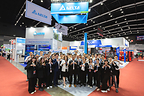
BANGKOK, June 18, 2026 /PRNewswire/ — Delta Electronics (Thailand) Public Company Limited, a global leader in power management and smart green solutions, is showcasing its integrated smart manufacturing solutions at Manufacturing Expo 2026 under the theme “Enabling Smart and Sustainable Manufacturing Excellence with Integrated Automation Solutions.” The showcase is demonstrating how Delta helps manufacturers enhance productivity, operational visibility, and sustainability performance across the factory by integrating automation, AI-powered inspection, digital twin technologies, smart warehouse systems, and energy management solutions into intelligent manufacturing ecosystems.

“The future of manufacturing will be defined by how well companies connect operational intelligence across the entire factory ecosystem,” said Ms. Atitaya Surapunthu, Country Manager, Delta Thailand. “Manufacturers need greater visibility across production, energy usage, logistics, and facilities to improve resilience, efficiency, and sustainability simultaneously. Delta’s integrated solutions help manufacturers transform siloed operations into connected, data-driven ecosystems that improve visibility, optimize performance, and enable smarter, more agile, and more sustainable manufacturing.”

At Manufacturing Expo 2026, Delta highlights three key smart manufacturing solution pillars:

Integrated, Intelligent Manufacturing

Delta showcases automation solutions that combine robotics, AI-powered inspection, servo press technologies, smart screwdriving systems, and press-fit machines for PCBA manufacturing, addressing the growing demands of the E&E and AI server assembly industries. These solutions enhance production precision, assembly consistency, traceability, and operational efficiency, while reducing manual intervention through real-time monitoring and intelligent analytics.

Smart Factory Digitalization 

Delta’s factory digitalization solutions integrate the DIAEAP+ Equipment Automation Program and DIATwin digital twin platform to provide manufacturers with real-time production visibility, predictive insights, and data-driven operational intelligence. In E&E manufacturing, DIATwin enables manufacturers to virtually simulate, verify, and optimize machine performance before physical deployment, helping reduce trial-and-error adjustments, minimize downtime, accelerate new product introduction, and improve manufacturing precision, efficiency, and reliability.

Smart Infrastructure, Energy & Logistics Management

Delta demonstrates integrated facility and logistics management solutions that combine HVAC optimization, energy management systems, FMCS (Facility Monitoring & Control System), warehouse management systems. Together, these technologies help manufacturers improve material flow, warehouse visibility, energy efficiency, operational reliability, and carbon reduction performance across factory operations.

Delta’s integrated solutions support manufacturers in improving product quality, operational efficiency, material flow, asset visibility, energy efficiency, and carbon reduction across factory operations. As a trusted solutions provider, Delta delivers proven technologies that have been successfully deployed across customer manufacturing environments, supporting customers from solution design and system integration to implementation and delivery. The company’s technologies enable smarter and more sustainable manufacturing practices while supporting customers’ long-term Net Zero and RE100 sustainability goals.

Delta invites visitors to Hall 98, Booth 8K11 at Manufacturing Expo 2026 to explore how its integrated automation and smart manufacturing solutions enable connected intelligence across factory operations. Through automation, digitalization, AI-powered technologies, and energy transparency, Delta supports manufacturers in building smarter, greener, and more competitive industrial operations.

About Delta Electronics (Thailand) Public Company Limited

Founded in 1988, Delta Electronics (Thailand) PCL. is a producer of power and thermal management products and solutions. The company is a subsidiary of Delta Electronics, Inc. with the mission statement, “To provide innovative, clean and energy-efficient solutions for a better tomorrow,” which reflects the company’s strong belief in sustainable development especially with issues related to the environment.

As an energy-saving solutions provider with core competencies in power electronics and innovative research and development, Delta’s business categories include Power Electronics, Mobility, Automation and Infrastructure. The company’s global presence is supported by its sales offices in key regions around the world; manufacturing facilities in India, Slovakia and Thailand; and several R&D centers located in Thailand, India, Germany and other countries.

Delta continues to earn numerous recognitions for its achievements in the region and domestically. Some awards won include the prestigious ASEAN Business Award, Stock Exchange of Thailand’s Best Company Performance Award and the coveted Prime Minister’s Best Industry Award.

For detailed information about Delta Thailand, please visit: www.DeltaThailand.com

View original content to download multimedia:https://www.prnewswire.com/apac/news-releases/delta-thailand-highlights-integrated-smart-and-green-manufacturing-solutions-for-intelligent-factory-operations-at-manufacturing-expo-2026-302803780.html

SOURCE Delta Electronics

Continue Reading

Technology

The Final Mile of Robot Simulation Training: Why Scene Assets Are Becoming the Critical Missing Link in the Industry Chain


Published

on

By

HONG KONG, June 18, 2026 /PRNewswire/ — In 2026, the robot simulation training industry is undergoing a critical infrastructure shift. While large language models (LLMs) effortlessly scrape trillions of words from the open internet, physical robots face a devastating data starvation crisis.

The physical world has yielded only about 500,000 hours of high-quality, real-world robotic interaction data. Yet, achieving baseline generalization in embodied AI demands between 1 billion and 10 billion hours—scaling up to 100 billion hours to successfully safely navigate complex edge cases. This massive data shortfall makes high-fidelity simulation an absolute prerequisite for the future of automation.

According to a Research and Markets report, this acute data squeeze has propelled the global robotics simulation market to $7.58 billion in 2026, on a trajectory to reach $13.9 billion by 2032 (a 10.56% CAGR). Simulation is no longer just an R&D playground; it has matured into the core training infrastructure of the physical AI era.

The Scalability Value of Simulation Data

“To master a new skill, a robot needs to go through millions of trial-and-error iterations in a virtual environment,” explains Shanelle Yuan, co-founder and CEO of Asia-Pacific startup Pixel Planet. “LLMs can source training data from historical human output, but robots have no equivalent ready-made data pool. High-fidelity simulation is currently the only commercially viable path to scalable training and edge-case evaluation.”

Yuan categorizes the emerging robotics data ecosystem into three distinct tiers. At the base sits internet and human data, providing a high-volume, low-cost “general education” on physical environments via public videos and human teleoperation data, though it lacks mechanical precision. The middle tier consists of simulation data, a highly scalable engine that generates an infinite variety of tasks, environments, and long-tail physics problems to serve as the primary resource for mass training. At the top sits real-world robot data, which offers the highest fidelity but remains strictly capped by the prohibitive real-world costs of hardware wear-and-tear and safety risks.

This stratification underscores a vital industry reality: simulation isn’t built to replace real-world data. It exists to do what physical data cannot—generate infinite, hyper-specific long-tail scenarios at a sustainable cost.

To exploit this bottleneck, Pixel Planet has bypassed building hardware or native physics engines, choosing instead to focus entirely on supplying high-fidelity simulation scene assets. The company holds a massive structural advantage: a legacy library of over five million digital models accumulated over a decade of high-end visual production. Spanning household, industrial, medical, and aerospace environments, this repository is being systematically converted into simulation-ready assets.

Ecosystem Shifts: The Rise of Third-Party Scene Assets

The platform ecosystem is fundamentally restructuring. At the NVIDIA GTC 2026 conference, the introduction of the OpenUSD Core Specification 1.0 established the definitive data models for the industry. This standard directly underpins NVIDIA’s “SimReady” designation—physically accurate 3D assets built on OpenUSD and governed by the Alliance for OpenUSD (AOUSD).

Crucially, major platforms like Isaac Sim have explicitly opened their ecosystems, providing clear integration guidelines for third-party assets. This openness acknowledges a stark operational truth: first-party platform developers cannot keep pace with the hyper-localized, diverse environmental training needs of thousands of global robotics companies. For the first time, the market for independent asset suppliers has been officially validated.

Sha Chen, co-founder and head of production at Pixel Planet, describes this transition as the ultimate engineering challenge of “digitizing the physical world.” It requires absolute physical realism, modular scene decomposition, and rigorous quality management across distributed production networks.

These demands align perfectly with the operational frameworks Pixel Planet honed during its years in film-grade visual effects (VFX).

“In VFX production, we mastered breaking down massive, complex environments into standardized, reusable assets while enforcing strict metadata specifications across sprawling vendor networks,” says Chen. “That exact production architecture transfers seamlessly to robotics simulation. The fundamental shift is that our optimization focus has moved from purely visual aesthetics to absolute physical properties—mass, friction, velocity, and material collision.”

Headwinds and Infrastructure Opportunities

Despite its immense potential, the third-party asset sector faces distinct bottlenecks. The primary challenge is not the speed of asset generation, but the absence of a universally accepted verification framework for physical accuracy to guarantee flawless Sim2Real transfer. Furthermore, highly capitalized, proprietary “world simulators”—such as Tesla’s in-house infrastructure—threaten to crowd out independent suppliers in specific verticals. Legacy asset conversion also requires extensive engine-side validation to prove seamless formatting and performance on mainstream simulation platforms.

Yet, despite these headwinds, Yuan sees an incredibly clear path forward. Independent scene assets sit at the literal crossroads of the modern AI pipeline—serving as the necessary raw material for upstream foundation models and a plug-and-play solution for downstream developers.

“The role of an independent, third-party scene supplier is an objective necessity in the supply chain, and the current market gap is enormous,” says Yuan.

As thousands of robotics enterprises simultaneously hit the data wall, simulation scene assets are rapidly shifting from an optional luxury to an indispensable, baseline layer of global AI infrastructure.


View original content to download multimedia:https://www.prnewswire.com/apac/news-releases/the-final-mile-of-robot-simulation-training-why-scene-assets-are-becoming-the-critical-missing-link-in-the-industry-chain-302803783.html

SOURCE Pixel Planet

Continue Reading

Trending