Connect with us

Technology

The Final Mile of Robot Simulation Training: Why Scene Assets Are Becoming the Critical Missing Link in the Industry Chain


Published

on

HONG KONG, June 18, 2026 /PRNewswire/ — In 2026, the robot simulation training industry is undergoing a critical infrastructure shift. While large language models (LLMs) effortlessly scrape trillions of words from the open internet, physical robots face a devastating data starvation crisis.

The physical world has yielded only about 500,000 hours of high-quality, real-world robotic interaction data. Yet, achieving baseline generalization in embodied AI demands between 1 billion and 10 billion hours—scaling up to 100 billion hours to successfully safely navigate complex edge cases. This massive data shortfall makes high-fidelity simulation an absolute prerequisite for the future of automation.

According to a Research and Markets report, this acute data squeeze has propelled the global robotics simulation market to $7.58 billion in 2026, on a trajectory to reach $13.9 billion by 2032 (a 10.56% CAGR). Simulation is no longer just an R&D playground; it has matured into the core training infrastructure of the physical AI era.

The Scalability Value of Simulation Data

“To master a new skill, a robot needs to go through millions of trial-and-error iterations in a virtual environment,” explains Shanelle Yuan, co-founder and CEO of Asia-Pacific startup Pixel Planet. “LLMs can source training data from historical human output, but robots have no equivalent ready-made data pool. High-fidelity simulation is currently the only commercially viable path to scalable training and edge-case evaluation.”

Yuan categorizes the emerging robotics data ecosystem into three distinct tiers. At the base sits internet and human data, providing a high-volume, low-cost “general education” on physical environments via public videos and human teleoperation data, though it lacks mechanical precision. The middle tier consists of simulation data, a highly scalable engine that generates an infinite variety of tasks, environments, and long-tail physics problems to serve as the primary resource for mass training. At the top sits real-world robot data, which offers the highest fidelity but remains strictly capped by the prohibitive real-world costs of hardware wear-and-tear and safety risks.

This stratification underscores a vital industry reality: simulation isn’t built to replace real-world data. It exists to do what physical data cannot—generate infinite, hyper-specific long-tail scenarios at a sustainable cost.

To exploit this bottleneck, Pixel Planet has bypassed building hardware or native physics engines, choosing instead to focus entirely on supplying high-fidelity simulation scene assets. The company holds a massive structural advantage: a legacy library of over five million digital models accumulated over a decade of high-end visual production. Spanning household, industrial, medical, and aerospace environments, this repository is being systematically converted into simulation-ready assets.

Ecosystem Shifts: The Rise of Third-Party Scene Assets

The platform ecosystem is fundamentally restructuring. At the NVIDIA GTC 2026 conference, the introduction of the OpenUSD Core Specification 1.0 established the definitive data models for the industry. This standard directly underpins NVIDIA’s “SimReady” designation—physically accurate 3D assets built on OpenUSD and governed by the Alliance for OpenUSD (AOUSD).

Crucially, major platforms like Isaac Sim have explicitly opened their ecosystems, providing clear integration guidelines for third-party assets. This openness acknowledges a stark operational truth: first-party platform developers cannot keep pace with the hyper-localized, diverse environmental training needs of thousands of global robotics companies. For the first time, the market for independent asset suppliers has been officially validated.

Sha Chen, co-founder and head of production at Pixel Planet, describes this transition as the ultimate engineering challenge of “digitizing the physical world.” It requires absolute physical realism, modular scene decomposition, and rigorous quality management across distributed production networks.

These demands align perfectly with the operational frameworks Pixel Planet honed during its years in film-grade visual effects (VFX).

“In VFX production, we mastered breaking down massive, complex environments into standardized, reusable assets while enforcing strict metadata specifications across sprawling vendor networks,” says Chen. “That exact production architecture transfers seamlessly to robotics simulation. The fundamental shift is that our optimization focus has moved from purely visual aesthetics to absolute physical properties—mass, friction, velocity, and material collision.”

Headwinds and Infrastructure Opportunities

Despite its immense potential, the third-party asset sector faces distinct bottlenecks. The primary challenge is not the speed of asset generation, but the absence of a universally accepted verification framework for physical accuracy to guarantee flawless Sim2Real transfer. Furthermore, highly capitalized, proprietary “world simulators”—such as Tesla’s in-house infrastructure—threaten to crowd out independent suppliers in specific verticals. Legacy asset conversion also requires extensive engine-side validation to prove seamless formatting and performance on mainstream simulation platforms.

Yet, despite these headwinds, Yuan sees an incredibly clear path forward. Independent scene assets sit at the literal crossroads of the modern AI pipeline—serving as the necessary raw material for upstream foundation models and a plug-and-play solution for downstream developers.

“The role of an independent, third-party scene supplier is an objective necessity in the supply chain, and the current market gap is enormous,” says Yuan.

As thousands of robotics enterprises simultaneously hit the data wall, simulation scene assets are rapidly shifting from an optional luxury to an indispensable, baseline layer of global AI infrastructure.


View original content to download multimedia:https://www.prnewswire.com/apac/news-releases/the-final-mile-of-robot-simulation-training-why-scene-assets-are-becoming-the-critical-missing-link-in-the-industry-chain-302803783.html

SOURCE Pixel Planet

Continue Reading
Click to comment

Leave a Reply

Your email address will not be published. Required fields are marked *

Technology

Asia-Pacific Telecom Leaders Gather in Singapore for the Twimbit Telecom Summit & Awards 2026

Published

on

By

MUMBAI, India and SINGAPORE, June 17, 2026 /PRNewswire/ — The Twimbit Telecom Summit & Awards 2026 recently concluded at the iconic Capitol Theatre Singapore, bringing together senior telecom operators, technology leaders, policymakers, investors, and ecosystem partners from across Asia-Pacific for a day dedicated to telecom reinvention in the AI era.

Hosted by Twimbit, the global research and advisory firm, the summit explored how telecom operators are evolving beyond connectivity into AI-native digital platforms powering enterprise transformation, customer intelligence, sovereign infrastructure, and next-generation digital economies.

This year’s summit centered around themes including AI-native operations, enterprise AI monetisation, digital sovereignty, infrastructure transformation, customer experience reinvention, and leadership transformation. Across keynote sessions, executive panels, and roundtable discussions, industry leaders discussed the structural shifts reshaping the telecom sector and the operating models required for the next decade.

The summit featured leadership perspectives from some of the industry’s most influential voices, including Manoj Kohli, Vikram Sinha, Vikram Rao, Juhi McClelland, Ulf Ewaldsson, Rajesh Chandiramani, Anna Yip and Wong Soon Nam.

The evening concluded with the Twimbit Telecom Awards 2026, recognising operators, leaders, and innovators driving transformation across the telecom ecosystem. Built on Twimbit’s proprietary research frameworks and guided by an independent panel of industry judges, the awards celebrate excellence across AI transformation, customer experience, enterprise business, ESG, network modernization, financial performance, and digital infrastructure.

Among the marquee winners this year were Singtel, Bharti Airtel, Reliance Jio, Telkomsel, Indosat Ooredoo Hutchison, Globe, Taiwan Mobile, and Digital Realty. Manoj Kohli received the Lifetime Achievement Award for his outstanding contribution to the telecom industry.

This year’s awards also partnered with the Goh Chok Tong Enable Fund (GCTEF). Through contributions and pledges made during the evening, the initiative raised over SGD 15,000 to support opportunities, aspirations, and inclusion for persons with disabilities in Singapore.

“The telecom industry is entering one of the most defining phases in its history,” said Manoj Menon, Founder & CEO of Twimbit. “What we witnessed at the summit was not just a conversation about technology, but a conversation about leadership, reinvention, and the future role telecom will play in shaping digital economies.”

The Twimbit Telecom Summit & Awards 2026 was supported by founding partner F5 and gold sponsor Comviva.

To explore the complete list of winners and nominees, visit:
https://telecomawards.twimbit.com/

To learn more about the Twimbit Telecom Summit, visit:
https://telecomsummit.twimbit.com/

Media Contact

Vansh Sehgal
Digital Marketing Manager, Twimbit
vansh@twimbit.com
https://twimbit.com/


View original content to download multimedia:https://www.prnewswire.co.uk/news-releases/asia-pacific-telecom-leaders-gather-in-singapore-for-the-twimbit-telecom-summit–awards-2026-302803239.html

Continue Reading

Technology

NSTC TTA Marks 8th VivaTech Appearance, Showcasing Taiwan Innovation under AI Taiwan Initiative

Published

on

By

PARIS, June 17, 2026 /PRNewswire/ — The National Science and Technology Council (NSTC), together with the Small and Medium Enterprise and Startup Administration (SMESA) and the Department of Industrial Technology (DOIT) under the Ministry of Economic Affairs (MOEA), is once again leading Taiwan’s delegation to VivaTech in France this year under the Taiwan Tech Arena (TTA) initiative. Marking its eighth participation, Taiwan has assembled a national team comprising 34 Taiwanese technology startups and 61 supply chain partners, demonstrating the country’s strategic vision of becoming an “Island of Artificial Intelligence” and advancing tangible innovations for smart living ecosystems.

TTA Pavilion Aligns with VivaTech 10th Anniversary, Centered on “AI Taiwan”

Aligned with global AI trends and the exhibition’s focus, the 2026 TTA Pavilion is themed “AI Taiwan,” showcasing Taiwan’s diverse achievements in artificial intelligence technologies and applications. The exhibition further emphasizes how AI is being integrated into real-world industrial and daily-life scenarios, accelerating the convergence of smart applications with everyday environments.

The pavilion also recreates a European-style streetscape to deliver an immersive, life-oriented exhibition experience. This design highlights Taiwan’s vision of using AI to drive innovation across industries and build comprehensive smart living ecosystems, reinforcing its critical role in the global technology value chain.

Global Innovation Leaders Gather at Opening Ceremony to Witness Taiwan’s Startup Strength

The opening ceremony of the TTA Taiwan Tech Arena Pavilion took place on June 17 (Taiwan time), bringing together prominent figures from the global innovation ecosystem. Distinguished guests included Ambassador Clémentine Pei-Chih HAO of the Taipei Representative Office in France, Mr. Der-Sheng Lin, Director General of the NSTC, and Julie Lamandé, Chief International Officer of VivaTech, among other industry leaders and ecosystem partners—demonstrating strong international recognition of Taiwan’s startup ecosystem.

NSTC highlights that this year’s delegation continues the integrated approach, bringing together 34 startup teams and 61 supply chain partners. Compared with previous editions focused mainly on individual technologies, this year emphasizes “total solution” and “application scenario” demonstrations, enabling international enterprises to better understand the full value of Taiwanese innovations and strengthening potential collaboration opportunities.

NSTC notes that participating teams have reached greater maturity, with many already established in the European market. Companies are also positioning themselves to capture emerging opportunities driven by France’s net-zero regulations, rising demand for AI certification, and the development of AI compute infrastructure (“AI factories”).

View original content to download multimedia:https://www.prnewswire.com/news-releases/nstc-tta-marks-8th-vivatech-appearance-showcasing-taiwan-innovation-under-ai-taiwan-initiative-302803814.html

SOURCE Taiwan Tech Arena

Continue Reading

Technology

XCMG Showcases Zero-Carbon Smart Mining Solutions at AMM-2026 to Support Central Asia’s Mining Transformation

Published

on

By

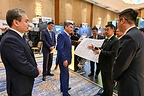
ASTANA, Kazakhstan, June 18, 2026 /PRNewswire/ — XCMG Group recently showcased its zero-carbon smart mining solutions at the 16th Astana Mining & Metallurgy Congress (AMM-2026) in Astana, Kazakhstan, reinforcing its long-term commitment to supporting the green and intelligent transformation of the mining industry in Central Asia.

Held from June 11 to 12, AMM-2026 brought together more than 1,500 delegates from 16 countries, serving as an influential international platform for the mining and metallurgy sectors. Yang Dongsheng, chairman of XCMG Group and XCMG Machinery, attended the plenary session at the invitation of the Ministry of Industry and Construction of the Republic of Kazakhstan.

During the congress, XCMG delivered a keynote presentation and released its Zero-Carbon Smart Mining Solution, demonstrating its integrated capabilities in complete sets of green electric equipment and smart mining technologies.

On June 12, XCMG also hosted a dedicated zero-carbon smart mining solutions forum in Astana. The forum focused on the green transformation and intelligent upgrading needs of mines in Central Asia, bringing together local mining enterprises for in-depth discussions on zero-carbon mine development and the implementation of smart technologies in mining operations.

“The global mining industry is accelerating its transition toward greener and smarter operations,” said Yang. “XCMG remains committed to advancing this transformation with integrated equipment portfolios and solutions that make mines smarter and operations more sustainable. We will continue to deepen our presence across Central Asia and further strengthen our roots in Kazakhstan, working with global partners to support local mining development and engineering construction with safe, reliable, efficient and energy-saving products and integrated solutions.”

From June 10 to 13, Yang also joined a Jiangsu provincial delegation on a visit to Kazakhstan. At the China (Jiangsu)-Kazakhstan Economic and Trade Cooperation Conference held in Astana on June 12, Yang spoke as a representative of Jiangsu enterprises and shared XCMG’s practical experience in serving mining customers in Kazakhstan.

At a lead-zinc mine in Karaganda Region, XCMG equipment was required to operate around the clock under demanding working conditions, including a 5-kilometer uphill haul route, extreme temperature fluctuations and high abrasion from sharp ore. XCMG’s technical team conducted on-site assessments of the operating environment and customer requirements before developing a customized solution. After six months of field testing, the per-vehicle daily transport volume exceeded the design standard by 12 percent, and the customer designated the model as a main operating vehicle and placed additional batch orders.

At the Pustynnoye gold mine, two XCMG pure electric loaders have achieved an average daily operation time of 15 hours, with peak continuous operation exceeding 20 hours. The machines are among the first pure electric mining machines in Kazakhstan to enter routine operation, supporting the implementation of XCMG’s unmanned fleet and full-scenario electrification solutions in the local mining sector and demonstrating how electrified mining equipment can support operational efficiency and environmental performance.

XCMG entered the Kazakhstan market in 2001. Its products now cover cranes, earthmoving machinery, road machinery, excavators, piling machinery and special-purpose vehicles, with cumulative exports of more than 40,000 units to the country. XCMG Kazakhstan, a wholly owned subsidiary registered in Almaty in 2017, began full operations in 2019 and has developed localized capabilities in equipment shipment, customs clearance, warehousing, maintenance, dealer management and training.

With more than two decades of market presence in Kazakhstan, XCMG continues to enhance its full-lifecycle service capabilities for customers across energy, industry, transportation, mining and infrastructure sectors.

Looking ahead, XCMG will further leverage its green equipment, smart technologies and localized service network to provide more tailored construction machinery solutions in Kazakhstan and across Central Asia.

View original content to download multimedia:https://www.prnewswire.com/news-releases/xcmg-showcases-zero-carbon-smart-mining-solutions-at-amm-2026-to-support-central-asias-mining-transformation-302803830.html

Continue Reading

Trending