Connect with us

Technology

The Final Mile of Robot Simulation Training: Why Scene Assets Are Becoming the Critical Missing Link in the Industry Chain

Published

on

HONG KONG, June 18, 2026 /PRNewswire/ — In 2026, the robot simulation training industry is undergoing a critical infrastructure shift. While large language models (LLMs) effortlessly scrape trillions of words from the open internet, physical robots face a devastating data starvation crisis.

The physical world has yielded only about 500,000 hours of high-quality, real-world robotic interaction data. Yet, achieving baseline generalization in embodied AI demands between 1 billion and 10 billion hours—scaling up to 100 billion hours to successfully safely navigate complex edge cases. This massive data shortfall makes high-fidelity simulation an absolute prerequisite for the future of automation.

According to a Research and Markets report, this acute data squeeze has propelled the global robotics simulation market to $7.58 billion in 2026, on a trajectory to reach $13.9 billion by 2032 (a 10.56% CAGR). Simulation is no longer just an R&D playground; it has matured into the core training infrastructure of the physical AI era.

The Scalability Value of Simulation Data

“To master a new skill, a robot needs to go through millions of trial-and-error iterations in a virtual environment,” explains Shanelle Yuan, co-founder and CEO of Asia-Pacific startup Pixel Planet. “LLMs can source training data from historical human output, but robots have no equivalent ready-made data pool. High-fidelity simulation is currently the only commercially viable path to scalable training and edge-case evaluation.”

Yuan categorizes the emerging robotics data ecosystem into three distinct tiers. At the base sits internet and human data, providing a high-volume, low-cost “general education” on physical environments via public videos and human teleoperation data, though it lacks mechanical precision. The middle tier consists of simulation data, a highly scalable engine that generates an infinite variety of tasks, environments, and long-tail physics problems to serve as the primary resource for mass training. At the top sits real-world robot data, which offers the highest fidelity but remains strictly capped by the prohibitive real-world costs of hardware wear-and-tear and safety risks.

This stratification underscores a vital industry reality: simulation isn’t built to replace real-world data. It exists to do what physical data cannot—generate infinite, hyper-specific long-tail scenarios at a sustainable cost.

To exploit this bottleneck, Pixel Planet has bypassed building hardware or native physics engines, choosing instead to focus entirely on supplying high-fidelity simulation scene assets. The company holds a massive structural advantage: a legacy library of over five million digital models accumulated over a decade of high-end visual production. Spanning household, industrial, medical, and aerospace environments, this repository is being systematically converted into simulation-ready assets.

Ecosystem Shifts: The Rise of Third-Party Scene Assets

The platform ecosystem is fundamentally restructuring. At the NVIDIA GTC 2026 conference, the introduction of the OpenUSD Core Specification 1.0 established the definitive data models for the industry. This standard directly underpins NVIDIA’s “SimReady” designation—physically accurate 3D assets built on OpenUSD and governed by the Alliance for OpenUSD (AOUSD).

Crucially, major platforms like Isaac Sim have explicitly opened their ecosystems, providing clear integration guidelines for third-party assets. This openness acknowledges a stark operational truth: first-party platform developers cannot keep pace with the hyper-localized, diverse environmental training needs of thousands of global robotics companies. For the first time, the market for independent asset suppliers has been officially validated.

Sha Chen, co-founder and head of production at Pixel Planet, describes this transition as the ultimate engineering challenge of “digitizing the physical world.” It requires absolute physical realism, modular scene decomposition, and rigorous quality management across distributed production networks.

These demands align perfectly with the operational frameworks Pixel Planet honed during its years in film-grade visual effects (VFX).

“In VFX production, we mastered breaking down massive, complex environments into standardized, reusable assets while enforcing strict metadata specifications across sprawling vendor networks,” says Chen. “That exact production architecture transfers seamlessly to robotics simulation. The fundamental shift is that our optimization focus has moved from purely visual aesthetics to absolute physical properties—mass, friction, velocity, and material collision.”

Headwinds and Infrastructure Opportunities

Despite its immense potential, the third-party asset sector faces distinct bottlenecks. The primary challenge is not the speed of asset generation, but the absence of a universally accepted verification framework for physical accuracy to guarantee flawless Sim2Real transfer. Furthermore, highly capitalized, proprietary “world simulators”—such as Tesla’s in-house infrastructure—threaten to crowd out independent suppliers in specific verticals. Legacy asset conversion also requires extensive engine-side validation to prove seamless formatting and performance on mainstream simulation platforms.

Yet, despite these headwinds, Yuan sees an incredibly clear path forward. Independent scene assets sit at the literal crossroads of the modern AI pipeline—serving as the necessary raw material for upstream foundation models and a plug-and-play solution for downstream developers.

“The role of an independent, third-party scene supplier is an objective necessity in the supply chain, and the current market gap is enormous,” says Yuan.

As thousands of robotics enterprises simultaneously hit the data wall, simulation scene assets are rapidly shifting from an optional luxury to an indispensable, baseline layer of global AI infrastructure.


View original content to download multimedia:https://www.prnewswire.com/apac/news-releases/the-final-mile-of-robot-simulation-training-why-scene-assets-are-becoming-the-critical-missing-link-in-the-industry-chain-302803783.html

SOURCE Pixel Planet

Continue Reading
Click to comment

Leave a Reply

Your email address will not be published. Required fields are marked *

Technology

SEEKINK Unveils Full Product Portfolio of E-Paper Solutions at Infocomm 2026, Powering Commercial, Workplace, Consumer Electronics, Smarter Transit Applications

Published

on

By

From the Prism 3S tiled decorative wall to small tags – ePaper Innovation Scales Across Every Surface

LAS VEGAS, June 17, 2026 /PRNewswire/ — Infocomm 2026 Booth No. C8679SEEKINK, a leading electronic paper manufacturer, today introduced its most extensive lineup of e-paper displays at Infocomm 2026, demonstrating how ultra-low-power, sunlight-readable e-ink technology is transforming digital signage across commercial advertising, office automation, consumer electronics and transportation.

Commercial Advertising – Dynamic E Ink Signage

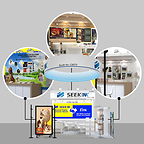
For retail and public venues, SEEKINK rolls out a complete commercial ePaper sign family: A world-first full-color ePaper Prism spliced wall, ePaper advertsing sign 25.3″, 28″, 31.5″, a 31.5″ floor-standing model, and a 13.3″ window-mount display. Ideal for menus, promotions, and corporate lobbies, these signs combine paper-like readability with wireless content updates, enabling businesses to replace thousands of paper posters without compromising visual impact. Particularly eye-catching is the 75-inch color display, which meets the market’s growing demand for “Large-screen” and “Colorization” displays.

Smart Office – Digital Workplace Solutions

From desk to door, SEEKINK equips modern offices with:

4″ 4-color staff badges for employee identification4.2″ workstation signs for the workstation and room status7.5″ desktop nameplates with PV powered and10.2″ & 11.6″ door signs for meeting rooms and executive offices

All products integrate with existing booking systems, reducing paper waste and enabling real-time occupancy management.

Creative Consumer Applications – Beyond Conventional Displays

SEEKINK also debuts innovative e-paper gadgets for daily life:

Trackers: 1.54″ and 1.69″ – perfect for inventory, medicine, or task trackingDigital Photo Frames: 4″, 5.89″, 10.1″, and 13.3″ – displaying personal photos with zero power consumption once staticPet ID Tags: 1.54″ e-ink collar tags with writable owner informationLuggage Tags: 3.7″ battery free, reusable airline tags

Smart Transit – E Ink Bus Stop & Passenger Information Signs

SEEKINK’s intelligent transit solutions feature three e-paper display sizes – 13.3″, 28″, and 31.2″ – designed for bus stops, real-time schedule boards, and platform indicators. These displays consume near-zero power when updating static information and deliver crisp visibility under direct sunlight, drastically reducing operational costs for city transit networks.

“Infocomm is the ideal stage to show how e-paper has evolved far beyond e-readers,” said a SEEKINK spokesperson. “From a bus sign to a pet tag, our displays deliver extreme energy efficiency and sunlight readability – solving real-world pain points for cities, enterprises, and consumers.”

SEEKINK invites visitors to experience the entire product line at Booth No.: C8679, LVCC. (17th-19th, June). For demos or interviews, contact the SEEKINK team onsite or via the information below.

About SEEKINK

SEEKINK is a dedicated electronic paper display manufacturer committed to advancing low-carbon, eye-friendly digital signage solutions. With products ranging from 1.5″ to 42″, SEEKINK serves transit, retail, office, and consumer markets globally.

For more information, please contact:
Website: https://www.seekink.com/
LinkedIn: https://www.linkedin.com/company/seekink/
Youtube: https://www.youtube.com/@Seekink
Business Inquiries: enquiries@seekink.com
Media & Partnership Inquiries: contact@seekink.com 


View original content to download multimedia:https://www.prnewswire.com/news-releases/seekink-unveils-full-product-portfolio-of-e-paper-solutions-at-infocomm-2026-powering-commercial-workplace-consumer-electronics-smarter-transit-applications-302803851.html

SOURCE SEEKINK

Continue Reading

Technology

IQAX Pioneers eBL for High-Volume LCL Operations with Tianjin Consol and EZShipping

Published

on

By

The collaboration helps reduce documentation friction, strengthen cargo control and improve efficiency in high-volume LCL operations

HONG KONG, June 18, 2026 /PRNewswire/ — IQAX, a global leader in trade intelligence technology, has launched a pilot with Tianjin Consol International Co., Ltd., a leading North China–based less-than-container-load (LCL) freight forwarder and non-vessel-operating common carrier (NVOCC), through its partnership with EZShipping. Under the pilot, Tianjin Consol is using IQAX’s blockchain-based electronic Bill of Lading (eBL) and IQAX One, which combines digital documentation, data and workflow orchestration to improve operations. The initiative shows how integrated digital documentation can reduce friction, strengthen cargo control, as well as deliver practical efficiency and risk-management gains in high-volume LCL operations.

The pilot reflects broader challenges in LCL shipping, where high shipment volumes, multiple counterparties and tight timelines make documentation complex and costly. Paper bills of lading remain slow, while alternatives such as telex release and seaway bills often require trade-offs between speed and cargo control.

Addressing these long-standing pain points, the pilot integrates IQAX eBL into Tianjin Consol’s day-to-day workflows as a web-based service, requiring no system integration or changes to existing IT setups. It enables fast online invitation of shippers, consignees and partners to join the bill of lading process, accelerating document circulation, improving coordination and supporting faster, more secure cargo release. These capabilities are supported by IQAX One, designed to unify digital documentation, data and workflow orchestration around real‑world user needs and is currently being tested in a pilot ahead of its official launch.

By combining EZShipping’s AI-driven document processing with IQAX’s secure eBL issuance, Tianjin Consol achieves a fully digital, end-to-end documentation flow, from initial data submission to final bill of lading issuance and transfer. This not only enhances efficiency in high-volume LCL environments but also sets the foundation for scalable, standardised digital workflows across the broader logistics ecosystem.

Beyond operational gains, the pilot highlights the broader importance of eBL adoption for LCL shipping and the wider industry. LCL has historically lagged full-container-load segments in digital documentation because of fragmented stakeholders and coordination complexity. Demonstrating that eBLs can work at scale in LCL marks an important step towards standardizing digital documentation, reducing paper-related risk and laying the groundwork for wider interoperability across trade and logistics ecosystems.

“Electronic bills of lading are moving from industry aspiration to practical necessity, particularly in complex segments such as LCL,” said George Guo, CEO of IQAX. “This pilot with Tianjin Consol, enabled through our partnership with EZShipping, shows how eBLs can deliver both efficiency and control in high-frequency, multi-party environments. By integrating eBLs into workflows and flexible commercial models that minimise cost and complexity, we are accelerating adoption while building a durable digital foundation for global trade.”

“As an LCL-focused forwarder, we process a large volume of bills of lading every day. Through this pilot, we can offer customers lower documentation costs, stronger cargo control than seaway bills, and smoother coordination across counterparties. Taking a proactive approach to eBL adoption helps us improve service quality today while preparing for the future of digital trade.” said Emma Guo, Group President of Tianjin Consol.

Edward Ma, CEO of EZShipping added, “LCL forwarders and their customers continue to face significant friction in document handling. By integrating our digital and AI-driven document processing capabilities with IQAX’s eBL solution, this pilot shows how data submission, validation and bill of lading issuance can be streamlined into a single digital flow. We see this as an important step in making eBL adoption accessible to a broader segment of the logistics market.”

As electronic documentation gains momentum across shipping, the pilot between IQAX, EZShipping and Tianjin Consol shows how targeted collaboration can unlock immediate value in traditionally paper-heavy LCL segments. By combining trusted digital infrastructure, practical workflow integration and ecosystem partnerships, the initiative points to a scalable path for broader eBL adoption and more efficient, secure and connected global trade.

About IQAX

IQAX is the digital trade intelligence company powering critical decisions across global supply chains. We help businesses act faster, build resilience and become more sustainable, by solving their most complex challenges. From IQAX eBL to digital twin, our solutions embed our deep industry expertise with a proprietary frontier technology stack incorporating IoT, blockchain, and AI. Our enterprise-grade solutions prioritize security, integration and interoperability, helping customers accelerate digital transformation. IQAX works with leading shipping lines, logistics providers, corporates, and financial institutions worldwide.

www.iqax.com

About Tianjin Consol International Co., Ltd.

Tianjin Consol International Co., Ltd. is a comprehensive international logistics group headquartered in Tianjin, China, serving worldwide customers. The predecessor of Tianjin Consol was founded in 1993 and now it has been operating as a group since 2014, the company has over 30 years of experience in the international logistics industry and a strong presence at the Port of Tianjin.

Tianjin Consol specializes in international freight forwarding, consolidation services, bonded logistics, cross-border e-commerce logistics, and digital logistics solutions. Leveraging the strategic advantages of Tianjin Port and an extensive global logistics network, we provide a full range of services including LCL and FCL transportation, NVOCC services, customs clearance, warehousing, distribution, and multimodal transportation.

As a dedicated practitioner of logistics service provider in Tianjin, we continuously invest in digital innovation through our self-developed WEconsol Cloud Platform, integrating global logistics resources and enhancing visibility, efficiency, and collaboration throughout the supply chain.

Backed by extensive consolidation expertise, a worldwide agency network, and professional port operation capabilities, we are committed to delivering efficient, transparent, secure, and reliable logistics solutions to customers around the world.

Core Qualifications

* Class-A International Freight Forwarder in China

* Licensed Non-Vessel Operating Common Carrier (NVOCC)

* Member of FIATA

* Official Member of WWA Top Global Consolidation Network

* AAA-Rated Logistics Enterprise

* ISO 9001 Certified

* Subsidiary Company Certified as China Customs AEO Advanced Certified Enterprises

About EZShipping

EZ Shipping is a leading intelligent digital platform for international shipping and logistics, dedicated to the innovative application of Artificial Intelligence in the maritime industry. By integrating AI, big data, and blockchain technologies, the platform provides one-stop digital services including global freight rate and sailing schedule inquiries, AI-powered booking, intelligent document processing, AI-assisted customs declaration, shipment tracking, multi-currency ocean freight payments, freight financing, and electronic Bills of Lading (eBL).

EZ Shipping efficiently connects shipping lines, ports, freight forwarders, customs authorities, insurance providers, banks, and other key stakeholders to build an open and collaborative digital ecosystem, accelerating the digital and intelligent transformation of the global shipping and logistics industry.

View original content:https://www.prnewswire.com/apac/news-releases/iqax-pioneers-ebl-for-high-volume-lcl-operations-with-tianjin-consol-and-ezshipping-302803857.html

SOURCE IQAX Limited

Continue Reading

Technology

CNCF and Linux Foundation Education Partner with Udemy to Provide a Unified Cloud Native Training & Certification Opportunity

Published

on

By

Partnership combines Udemy training with CKA, CKAD, CKS, and CNPE exams into a unified purchasing process to simplify training for developers

Key Highlights

The Cloud Native Computing Foundation (CNCF), Linux Foundation Education, and Udemy partner to create a unified path for cloud native training and certification.The partnership works to close the skills gap by providing industry-recognized training and exams in a single, frictionless bundle.Cloud native developers, site reliability engineers and platform engineers can now easily pursue Certified Kubernetes and Cloud Native Platform Engineer credentials.Available immediately on the Udemy platform

MUMBAI, India, June 17, 2026 /PRNewswire/ — KubeCon + CloudNativeCon India — The Cloud Native Computing Foundation® (CNCF®), which builds sustainable ecosystems for cloud native software, and Linux Foundation Education today announced a strategic partnership with Udemy, a global AI-powered skills acceleration platform, to integrate cloud native training and certification pathways onto the Udemy platform, creating a seamless, unified location for developers to acquire and prove production-grade skills.

The Linux Foundation’s recent 2026 State of Tech Talent Report confirms a global skills crisis when it comes to AI engineering (47%), cybersecurity and compliance (40%), FinOps and cost optimization (36%), platform engineering (34%) and cloud computing (29%). The evolving technological demands are the driver behind these skills gaps and the primary barrier facing the talent market today. Organizations that prioritize continuous development not only close these critical capability gaps but also improve retention, as technical professionals increasingly rank training and growth opportunities alongside compensation. This partnership with Udemy addresses these challenges by integrating cloud native training and certification into a unified, frictionless purchasing process. By streamlining the path from training to performance-based validation, the collaboration empowers practitioners to acquire production-grade skills and enables organizations to bridge the talent gap more efficiently than traditional hiring alone.

“The most critical constraint in scaling cloud native infrastructure isn’t technology—it’s having the talent to operate it effectively in production,” said Chris Aniszczyk, CTO, CNCF. “The partnership with Udemy creates a frictionless path for developers to learn and validate their skills. By unifying our certification tracks through a partnership with Udemy, we’re lowering the barriers to entry and ensuring the next generation of talent is ready to handle real world deployment challenges.”

The new offering includes bundles for the Certified Kubernetes Administrator (CKA), Certified Kubernetes Application Developer (CKAD), Certified Kubernetes Security Specialist (CKS), and the new Cloud Native Platform Engineer (CNPE). The CNPE certification is of particular importance, as it provides a tailored track for engineers responsible for the large-scale orchestration and management of cloud native platforms.

“As the demand for open source expertise continues to outrun the available talent pool, providing accessible, integrated pathways for certification is critical,” said Clyde Seepersad, SVP and general manager, Linux Foundation Education. “Our performance-based exams are the gold standard because they require candidates to solve real problems in live environments. By offering these as a unified bundle on Udemy, we are helping individuals accelerate their careers and helping organizations close the skills gap more efficiently than ever before.”

This partnership represents a deep alignment between the world’s leading open source foundation and one of the world’s largest upskilling platforms, ensuring professionals can move from their first lesson to their final certification exam in one continuous, frictionless journey.

“Developers and technology professionals need clearer, more accessible pathways to build and prove cloud-native skills required in today’s production environment,” said Ramji Sundararajan, SVP & president, consumer, Udemy. “This partnership brings Udemy’s practical, job-relevant learning together with CNCF and Linux Foundation Education’s trusted performance-based certifications, creating a seamless path from skill development to recognized validation.” Enroll today on the Udemy platform.

About Cloud Native Computing Foundation
Cloud native computing empowers organizations to build and run scalable applications with an open source software stack in public, private, and hybrid clouds. The Cloud Native Computing Foundation (CNCF) hosts critical components of the global technology infrastructure, including Kubernetes, Prometheus, and Envoy. CNCF brings together the industry’s top developers, end users, and vendors and runs the largest open source developer conferences in the world. Supported by nearly 800 members, including the world’s largest cloud computing and software companies, as well as over 200 innovative startups, CNCF is part of the nonprofit Linux Foundation. For more information, please visit www.cncf.io.

About Udemy
Udemy is an AI-powered skills acceleration platform transforming how companies and individuals across the world build the capabilities needed to thrive in a rapidly evolving workplace. By combining on-demand, multi-language content with real-time innovation, Udemy delivers personalized experiences that empower organizations to scale workforce development and help individuals build the technical, business, and soft skills most relevant to their careers. Today, thousands of companies, including Samsung SDS America, On24, Tata Consultancy Services, The World Bank, and Volkswagen, rely on Udemy Business for its enterprise solutions to build agile, future-ready teams. Udemy is headquartered in San Francisco, with hubs across the United States, Australia, India, Ireland, Mexico, and Türkiye. Udemy recently combined with Coursera to create one of the world’s most comprehensive skills development platforms.

Media Contact
pr@cncf.io

View original content to download multimedia:https://www.prnewswire.com/news-releases/cncf-and-linux-foundation-education-partner-with-udemy-to-provide-a-unified-cloud-native-training–certification-opportunity-302803484.html

SOURCE Cloud Native Computing Foundation

Continue Reading

Trending