Connect with us

Technology

Yiwugo Merchants Showcase Their Strengths Amid World Cup Fever

Published

on

YIWU, China, June 17, 2026 /PRNewswire/ — Yiwugo.com, the official website of the Yiwu Commodity Market, is the largest commodity wholesale market in the world. As a global distribution hub for sporting goods, Yiwu supplies an estimated 70% of World Cup-related merchandise worldwide, earning it a reputation as the tournament’s “top buzz generator” and “hidden champion”. The city began gearing up for the event as early as 2025, when its annual exports of sporting goods and equipment exceeded RMB 10 billion for the first time. According to the latest data from Yiwu Customs, exports in this category reached RMB 2.83 billion in the first quarter of 2026, up 12% year on year.

The FIFA World Cup, jointly hosted by the US, Canada, and Mexico, officially kicked off at 3:00 a.m. Beijing time on June 12, 2026, sparking a surge of online interest in related topics. Although the procurement peak on Yiwugo has largely passed, “cultural and sporting goods” has remained among the platform’s top 10 best-selling categories since late 2025. Many Yiwugo merchants report that restocking buyers continue to face production backlogs and frequent inventory shortages. As a result, they are advising customers to place their orders as early as possible.

Notably, as sporting events diversify and fan preferences evolve, the “event economy” has expanded far beyond conventional sporting goods. Cultural and creative merchandise — including plush pendants, cushions, keychains, and figurines of popular football stars—has emerged as a mainstream consumer trend in the retail market. Yiwugo merchants are pivoting away from price-driven competition and embracing a business model centered on design, patents, and brand value.

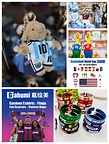
Kanglewu House Decoration Firm, a merchant on Yiwugo, began preparing for the tournament as early as 2025 and secured official licensing rights from several national teams. According to a company representative, its investment in merchandise for this year’s World Cup has already reached several hundred million yuan. Taking pride of place in the Kanglewu store is a charming miniature lamb pendant dressed in Argentina’s iconic blue-and-white national team jersey. Inspired by the popular Internet meme that both Lionel Messi and a sheep can be called a “GOAT”, the pendant also features Messi’s digital signature. The representative said sales of the pendant continued to climb, with more than 60,000 units shipped to date. As the tournament gets underway, new orders continue to pour in. The company is also ramping up production of other best-selling products, including figurines and plush toys featuring superstars such as Lionel Messi and Cristiano Ronaldo.

Gahumi Textiles, a well-established cross-border trader on Yiwugo with nearly three decades of experience, has specialized in customized World Cup merchandise for years. The company brings design, R&D, manufacturing, sales, and exports under one roof. It also holds internationally recognized certifications such as Sedex and GRS, while its production lines are optimized to deliver high-quality products, including officially licensed World Cup merchandise and fan accessories.

Company representative Chen Gangqiang said Gahumi Textiles began preparing for World Cup orders in late 2025. Its supporter scarves, for example, are manufactured using high-precision dye-sublimation printing technology, which accurately reproduces team colors and intricate details while rendering even complex gradients in rich, vibrant hues. Made from high-quality fabric with a sturdy, premium feel, the scarves combine functionality with visual appeal. Since the beginning of 2026, the company has sold more than 200,000 customized scarves per month, while monthly sales of fan apparel have surpassed one million pieces during peak periods.

Chen added that orders related to this World Cup came primarily from football-loving markets such as the US, Brazil and Mexico, with Europe accounting for a particularly large share. Many of the company’s overseas customers were referred through Yiwugo.

Unlike European consumers, who place greater emphasis on aesthetic design and brand identity, South American consumers favor products with strong fan appeal and bold colors. In early 2026, Yiwugo merchants reported that screaming chicken toys dressed in football jerseys had become a breakout fan item in Colombia.

Yiwu Grey Rabbit Accessories, a source manufacturer specializing in World Cup-themed cheering wristbands featuring national flags, emblems, and related motifs,  leverages a wide range of materials and sophisticated craftsmanship to create finely made wristbands that channel the passion of fans.

Ms. Chang, the company’s owner, said that orders from the three host countries — the US, Canada, and Mexico — have surged, while supporter wristbands featuring tournament favorites such as Spain, Argentina, and Brazil have remained in continuous production to meet tight delivery deadlines. Fueled by World Cup demand, Grey Rabbit Accessories’ total order volume has risen by more than 30% compared with previous years. A Shanghai-based buyer who sought to place an additional order through Yiwugo last week was told that no production capacity was currently available and would have to wait for the next open slot.

Enthusiasm for this World Cup has been especially strong in markets such as Morocco, a semifinalist at the previous tournament, as well as Colombia and other South American countries. Consumers have shown a clear preference for lightweight, brightly colored cheering wristbands made of silicone or woven fabric. Gift sets pairing these wristbands with national flags and other merchandise have continued to sell briskly in Colombia, with some individual orders valued at around RMB 1 million.

As football stars battle it out on the pitch, buyers on Yiwugo are engaged in an equally fierce race to secure merchandise. According to Ms. Chang, as the tournament unfolds, World Cup orders will center on restocking merchandise for popular teams that advance to the round of 32 and round of 16, as well as surprise breakout teams. Grey Rabbit Accessories has also begun building inventory in anticipation of upcoming national day celebrations in markets including Mexico and Saudi Arabia.

View original content to download multimedia:https://www.prnewswire.com/news-releases/yiwugo-merchants-showcase-their-strengths-amid-world-cup-fever-302803743.html

SOURCE Yiwugo.com

Continue Reading
Click to comment

Leave a Reply

Your email address will not be published. Required fields are marked *

Technology

Hisense Brings Smarter Home Experiences to Families During the FIFA World Cup 2026™

Published

on

By

QINGDAO, China, June 17, 2026 /PRNewswire/ — Hisense, a leading brand in global consumer electronics and home appliances, is helping families enjoy the excitement of the FIFA World Cup 2026TM beyond the screen by creating smarter, more connected home experiences through its latest home appliance innovations.

Guided by its vision of “Innovating a Brighter Life,” Hisense continues to advance the Hisense Suite, a unified home ecosystem built around connected experiences. More than a collection of smart products, the Hisense Suite represents a new approach to organizing the home around the realities of everyday life—how people cook, relax, manage comfort, and spend meaningful time together. Powered by AI connectivity, it creates “A Unified AI Home Ecosystem,” where the value comes not only from what each product does individually, but from how they work together seamlessly.

At the heart of the experience is the PureFlat Smart Series Refrigerator, designed for today’s social kitchen lifestyle. Featuring a large smart display and integrated connectivity, it helps families manage food, plan meals and recipes, access entertainment, and stay connected while preparing for match-day gatherings. Its built-in ice and water dispenser provides convenient access to chilled refreshments—an essential feature for families and football fans gathering to enjoy match-day celebrations. Whether hosting friends for a game-night celebration or sharing everyday family meals, the refrigerator serves as a hub for interaction and convenience. This commitment to fresher and smarter living is also reflected in Hisense’s FIFA World Cup 2026TM pitch-side advertising message, “Hisense Fridge, Smart Cooling, Fresh Living,” connecting the excitement of football with everyday family experiences at home.

Creating a comfortable home environment is another way families care for the people they love. Designed to deliver cleaner, healthier, and more personalized comfort, the Hisense Air Master Air Conditioner combines intelligent climate control with smart eye pro and advanced air care technologies. By helping maintain an ideal indoor environment throughout the year, it enables families to relax, recharge, and enjoy quality time together in greater comfort.

As families gather to celebrate football’s biggest moments, Hisense continues to bring innovation beyond the screen, transforming everyday living through connected experiences that make every moment at home more enjoyable.

About Hisense

Hisense, founded in 1969, is a globally recognized leader in home appliances and consumer electronics with operations in over 160 countries, specializing in delivering high-quality multimedia products, home appliances, and intelligent IT solutions. According to Omdia, Hisense ranks No. 1 globally in the 100-inch and over TV segment (2023-2026Q1). As The Origin of RGB MiniLED, Hisense continues to lead the next-generation RGB MiniLED innovation. As the official sponsor of the FIFA World Cup 2026TM, Hisense is committed to global sports partnerships as a way to connect with audiences worldwide.

View original content to download multimedia:https://www.prnewswire.com/news-releases/hisense-brings-smarter-home-experiences-to-families-during-the-fifa-world-cup-2026-302803777.html

SOURCE Hisense

Continue Reading

Technology

Delta Thailand Highlights Integrated Smart and Green Manufacturing Solutions for Intelligent Factory Operations at Manufacturing Expo 2026
Published

on

By

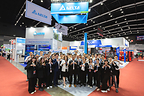
BANGKOK, June 18, 2026 /PRNewswire/ — Delta Electronics (Thailand) Public Company Limited, a global leader in power management and smart green solutions, is showcasing its integrated smart manufacturing solutions at Manufacturing Expo 2026 under the theme “Enabling Smart and Sustainable Manufacturing Excellence with Integrated Automation Solutions.” The showcase is demonstrating how Delta helps manufacturers enhance productivity, operational visibility, and sustainability performance across the factory by integrating automation, AI-powered inspection, digital twin technologies, smart warehouse systems, and energy management solutions into intelligent manufacturing ecosystems.

“The future of manufacturing will be defined by how well companies connect operational intelligence across the entire factory ecosystem,” said Ms. Atitaya Surapunthu, Country Manager, Delta Thailand. “Manufacturers need greater visibility across production, energy usage, logistics, and facilities to improve resilience, efficiency, and sustainability simultaneously. Delta’s integrated solutions help manufacturers transform siloed operations into connected, data-driven ecosystems that improve visibility, optimize performance, and enable smarter, more agile, and more sustainable manufacturing.”

At Manufacturing Expo 2026, Delta highlights three key smart manufacturing solution pillars:

Integrated, Intelligent Manufacturing

Delta showcases automation solutions that combine robotics, AI-powered inspection, servo press technologies, smart screwdriving systems, and press-fit machines for PCBA manufacturing, addressing the growing demands of the E&E and AI server assembly industries. These solutions enhance production precision, assembly consistency, traceability, and operational efficiency, while reducing manual intervention through real-time monitoring and intelligent analytics.

Smart Factory Digitalization 

Delta’s factory digitalization solutions integrate the DIAEAP+ Equipment Automation Program and DIATwin digital twin platform to provide manufacturers with real-time production visibility, predictive insights, and data-driven operational intelligence. In E&E manufacturing, DIATwin enables manufacturers to virtually simulate, verify, and optimize machine performance before physical deployment, helping reduce trial-and-error adjustments, minimize downtime, accelerate new product introduction, and improve manufacturing precision, efficiency, and reliability.

Smart Infrastructure, Energy & Logistics Management

Delta demonstrates integrated facility and logistics management solutions that combine HVAC optimization, energy management systems, FMCS (Facility Monitoring & Control System), warehouse management systems. Together, these technologies help manufacturers improve material flow, warehouse visibility, energy efficiency, operational reliability, and carbon reduction performance across factory operations.

Delta’s integrated solutions support manufacturers in improving product quality, operational efficiency, material flow, asset visibility, energy efficiency, and carbon reduction across factory operations. As a trusted solutions provider, Delta delivers proven technologies that have been successfully deployed across customer manufacturing environments, supporting customers from solution design and system integration to implementation and delivery. The company’s technologies enable smarter and more sustainable manufacturing practices while supporting customers’ long-term Net Zero and RE100 sustainability goals.

Delta invites visitors to Hall 98, Booth 8K11 at Manufacturing Expo 2026 to explore how its integrated automation and smart manufacturing solutions enable connected intelligence across factory operations. Through automation, digitalization, AI-powered technologies, and energy transparency, Delta supports manufacturers in building smarter, greener, and more competitive industrial operations.

About Delta Electronics (Thailand) Public Company Limited

Founded in 1988, Delta Electronics (Thailand) PCL. is a producer of power and thermal management products and solutions. The company is a subsidiary of Delta Electronics, Inc. with the mission statement, “To provide innovative, clean and energy-efficient solutions for a better tomorrow,” which reflects the company’s strong belief in sustainable development especially with issues related to the environment.

As an energy-saving solutions provider with core competencies in power electronics and innovative research and development, Delta’s business categories include Power Electronics, Mobility, Automation and Infrastructure. The company’s global presence is supported by its sales offices in key regions around the world; manufacturing facilities in India, Slovakia and Thailand; and several R&D centers located in Thailand, India, Germany and other countries.

Delta continues to earn numerous recognitions for its achievements in the region and domestically. Some awards won include the prestigious ASEAN Business Award, Stock Exchange of Thailand’s Best Company Performance Award and the coveted Prime Minister’s Best Industry Award.

For detailed information about Delta Thailand, please visit: www.DeltaThailand.com

View original content to download multimedia:https://www.prnewswire.com/apac/news-releases/delta-thailand-highlights-integrated-smart-and-green-manufacturing-solutions-for-intelligent-factory-operations-at-manufacturing-expo-2026-302803780.html

SOURCE Delta Electronics

Continue Reading

Technology

The Final Mile of Robot Simulation Training: Why Scene Assets Are Becoming the Critical Missing Link in the Industry Chain


Published

on

By

HONG KONG, June 18, 2026 /PRNewswire/ — In 2026, the robot simulation training industry is undergoing a critical infrastructure shift. While large language models (LLMs) effortlessly scrape trillions of words from the open internet, physical robots face a devastating data starvation crisis.

The physical world has yielded only about 500,000 hours of high-quality, real-world robotic interaction data. Yet, achieving baseline generalization in embodied AI demands between 1 billion and 10 billion hours—scaling up to 100 billion hours to successfully safely navigate complex edge cases. This massive data shortfall makes high-fidelity simulation an absolute prerequisite for the future of automation.

According to a Research and Markets report, this acute data squeeze has propelled the global robotics simulation market to $7.58 billion in 2026, on a trajectory to reach $13.9 billion by 2032 (a 10.56% CAGR). Simulation is no longer just an R&D playground; it has matured into the core training infrastructure of the physical AI era.

The Scalability Value of Simulation Data

“To master a new skill, a robot needs to go through millions of trial-and-error iterations in a virtual environment,” explains Shanelle Yuan, co-founder and CEO of Asia-Pacific startup Pixel Planet. “LLMs can source training data from historical human output, but robots have no equivalent ready-made data pool. High-fidelity simulation is currently the only commercially viable path to scalable training and edge-case evaluation.”

Yuan categorizes the emerging robotics data ecosystem into three distinct tiers. At the base sits internet and human data, providing a high-volume, low-cost “general education” on physical environments via public videos and human teleoperation data, though it lacks mechanical precision. The middle tier consists of simulation data, a highly scalable engine that generates an infinite variety of tasks, environments, and long-tail physics problems to serve as the primary resource for mass training. At the top sits real-world robot data, which offers the highest fidelity but remains strictly capped by the prohibitive real-world costs of hardware wear-and-tear and safety risks.

This stratification underscores a vital industry reality: simulation isn’t built to replace real-world data. It exists to do what physical data cannot—generate infinite, hyper-specific long-tail scenarios at a sustainable cost.

To exploit this bottleneck, Pixel Planet has bypassed building hardware or native physics engines, choosing instead to focus entirely on supplying high-fidelity simulation scene assets. The company holds a massive structural advantage: a legacy library of over five million digital models accumulated over a decade of high-end visual production. Spanning household, industrial, medical, and aerospace environments, this repository is being systematically converted into simulation-ready assets.

Ecosystem Shifts: The Rise of Third-Party Scene Assets

The platform ecosystem is fundamentally restructuring. At the NVIDIA GTC 2026 conference, the introduction of the OpenUSD Core Specification 1.0 established the definitive data models for the industry. This standard directly underpins NVIDIA’s “SimReady” designation—physically accurate 3D assets built on OpenUSD and governed by the Alliance for OpenUSD (AOUSD).

Crucially, major platforms like Isaac Sim have explicitly opened their ecosystems, providing clear integration guidelines for third-party assets. This openness acknowledges a stark operational truth: first-party platform developers cannot keep pace with the hyper-localized, diverse environmental training needs of thousands of global robotics companies. For the first time, the market for independent asset suppliers has been officially validated.

Sha Chen, co-founder and head of production at Pixel Planet, describes this transition as the ultimate engineering challenge of “digitizing the physical world.” It requires absolute physical realism, modular scene decomposition, and rigorous quality management across distributed production networks.

These demands align perfectly with the operational frameworks Pixel Planet honed during its years in film-grade visual effects (VFX).

“In VFX production, we mastered breaking down massive, complex environments into standardized, reusable assets while enforcing strict metadata specifications across sprawling vendor networks,” says Chen. “That exact production architecture transfers seamlessly to robotics simulation. The fundamental shift is that our optimization focus has moved from purely visual aesthetics to absolute physical properties—mass, friction, velocity, and material collision.”

Headwinds and Infrastructure Opportunities

Despite its immense potential, the third-party asset sector faces distinct bottlenecks. The primary challenge is not the speed of asset generation, but the absence of a universally accepted verification framework for physical accuracy to guarantee flawless Sim2Real transfer. Furthermore, highly capitalized, proprietary “world simulators”—such as Tesla’s in-house infrastructure—threaten to crowd out independent suppliers in specific verticals. Legacy asset conversion also requires extensive engine-side validation to prove seamless formatting and performance on mainstream simulation platforms.

Yet, despite these headwinds, Yuan sees an incredibly clear path forward. Independent scene assets sit at the literal crossroads of the modern AI pipeline—serving as the necessary raw material for upstream foundation models and a plug-and-play solution for downstream developers.

“The role of an independent, third-party scene supplier is an objective necessity in the supply chain, and the current market gap is enormous,” says Yuan.

As thousands of robotics enterprises simultaneously hit the data wall, simulation scene assets are rapidly shifting from an optional luxury to an indispensable, baseline layer of global AI infrastructure.


View original content to download multimedia:https://www.prnewswire.com/apac/news-releases/the-final-mile-of-robot-simulation-training-why-scene-assets-are-becoming-the-critical-missing-link-in-the-industry-chain-302803783.html

SOURCE Pixel Planet

Continue Reading

Trending