Connect with us

Technology

Finland Sets Casino Gambling Risk Limits at 2% of Income, 4 Days, 2 Game Types

Published

on

Helsinki-based expert Bonusetu.com outlines THL’s new “2-4-2” gambling risk limits and explains why strong bank ID identification, the same technology behind registration-free casinos, is what will make such limits enforceable when Finland opens its licensed market in 2027.

HELSINKI, June 19, 2026 /PRNewswire/ — Finland’s National Institute for Health and Welfare (THL) has launched a new set of gambling risk limits built around a single rule: no more than 2% of monthly net income, 4 gambling days per month, and 2 recurring game types. Bonusetu.com examines the new framework and why its real-world success depends on the bank ID identification already standard in the country’s registration-free casinos.

The “2-4-2” Rule and the Player’s Credit Line

THL packaged the new limits as a player’s credit line (*pelaajan luottorivi*), a memorable “2-4-2” mnemonic released alongside a self-assessment gambling test (*rahapelitesti*) that lets a player gauge their own relationship with gambling. The thresholds are deliberately simple: keep monthly spend under 2% of net income, gamble on no more than 4 days a month, and stick to no more than 2 recurring game types. The guidance lands against a backdrop where 70% of Finns reported gambling in the past 12 months.

The numbers are not arbitrary. The framework adapts Canada’s Lower-Risk Gambling Guidelines, reworked for Finnish conditions between 2022 and 2024. Where Canada anchors its limit to 1% of gross household income, THL chose 2% of net personal income to better match how Finnish households actually think about money.

According to the THL’s assessment, the introduction of the licensing system will shift the focus of the gambling system from preventing and reducing harms to emphasizing gambling revenue; for this reason, they felt it was best to launch the 2-4-2 rule right now.

“A risk limit only works if the casino knows exactly who is sitting behind the screen,” said Tommi Korhonen, acting CEO of Bonusetu.com. “THL hands players the 2-4-2 rule, but the rule has no teeth unless the operator can verify identity, age, and play history in real time. Bank ID does that at the door. Registration-free does not mean anonymous, it means the player is identified before the first euro is staked, not after.”

Why a Limit Needs to Know the Player

A spending cap is only as strong as a casino‘s ability to recognize who is actually playing. That recognition runs on strong identification (*vahva tunnistautuminen*) through bank credentials, the technology that lets a player log in with Nordea, OP, or S-Pankki details instead of filling out a signup form. The “no registration” label describes the missing form, not a missing identity check.

Verified age: Bank ID confirms a player is over 18 before the first spin, closing a gap that form-based signups leave open to minors.Recognized identity: One verified identity per player turns play-history limits like 2-4-2 into something a system can enforce, not just a slogan a player is asked to remember.

This is the same identification layer that already powers Finland’s registration-free casinos, a category Bonusetu tracks in detail at https://bonusetu.com/nettikasinot-ilman-rekisteroitymista/, where access is gated by a verified, personal bank login rather than a manual account.

Founded in 2016 and headquartered in Helsinki, Bonusetu.com is a leading Finnish comparison platform for online casinos. We are committed to promoting responsible gambling by providing Finnish players with transparent, data-driven reviews and up-to-date information on market regulations.

For more information and to access our responsible gambling test, please visit https://www.bonusetu.com.

Contact

Tommi Korhonen
media@bonusetu.com

LinkedIn: https://www.linkedin.com/company/bonusetu/
X (Twitter): https://x.com/bonusetu_com
GBP: https://share.google/S1obwB4k7CxotcSBo
Parler: https://app.parler.com/Bonusetu
Rumble: https://rumble.com/user/bonusetu/
Peerlist: https://peerlist.io/bonusetu/

Source: https://thl.fi/-/thl-lanseeraa-uudet-rahapelaamisen-riskirajat-ja-rahapelitestin-pelaajan-luottorivi-auttaa-pelaamisen-hallinnassa

Photo(s):
https://www.prlog.org/13153236

Press release distributed by PRLog

View original content:https://www.prnewswire.com/news-releases/finland-sets-casino-gambling-risk-limits-at-2-of-income-4-days-2-game-types-302805484.html

SOURCE Bonusetu.com

Continue Reading

Technology

Give an Hour Releases New Veteran MILE Case Study Showing Early Impact of Mental Health Training in a Veteran-Serving Organization

Published

on

By

In collaboration with University of Phoenix, new findings from Adaptive Performance Center demonstrate how practical skills can move from individual learning toward broader organizational capacity

PHOENIX and CLARKSBURG, Md., Nov. 6, 2026 /PRNewswire/ — Give an Hour today announced the release of a new case study examining the implementation of Veteran MILE, an evidence-informed upstream initiative, deemed scientifically sound and aligned with best practices by the CDC Foundation, designed to strengthen mental health literacy, reciprocal peer support and organizational capacity within organizations serving and employing veterans.

Developed in collaboration with University of Phoenix, the case study follows Veteran MILE implementation at Adaptive Performance Center (APC), a Montana-based nonprofit serving veterans through adaptive fitness, wellness programming and community connection.

The findings provide an early look at what can happen when mental health training moves beyond awareness and into everyday practice.

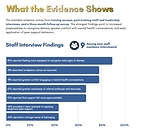
Among nine APC staff members interviewed following Veteran MILE, 89% reported feeling more equipped to recognize early signs of distress, 78% reported greater comfort engaging in mental health conversations, and 67% reported greater awareness of referral pathways and resources.

At a three-month follow-up, 82% of 17 respondents reported using the benefits of reciprocal peer support in everyday life and 94% reported feeling comfortable having an open and vulnerable conversation about mental health with peers. Among 13 participants who had established a post-training goal, 12 (92%) reported following through on it.

“This work asks a question that is bigger than whether someone completed a mental health training,” said Dr. Trina Clayeux, CEO of Give an Hour. “Are people more prepared to notice when someone may be struggling? Will they start the conversation? Can they listen without feeling responsible for fixing everything? And can we build that capacity into the organizations and communities veterans already trust? APC is giving us an important early look at what that can mean in practice.”

A Partnership Built Around Veteran Success

The Veteran MILE story did not begin with a single training or organization.

Give an Hour and University of Phoenix began partnering in support of veterans in 2017. In 2022, following findings from the University of Phoenix Career Optimism Index® study, Give an Hour was engaged as a subject-matter expert to develop resources supporting veteran success in the workplace.

Give an Hour subsequently convened an industry advisory group that included organizations such as Amazon, CVS, Booz Allen Hamilton and Magellan Health. Over more than a year, perspectives from that group helped shape the framework that would ultimately become Veteran MILE.

That work was complemented by University of Phoenix’s 2023 Military Transition Survey, conducted by The Harris Poll, and the development of an employer resource introduced in 2024 to help organizations understand veteran workforce needs and support workplace wellness.

The evolution of this work reflects a shared interest between Give an Hour and University of Phoenix in moving from identifying challenges facing veterans to developing practical approaches that can be implemented in the environments where veterans work, connect and build community.

“Our work with Give an Hour has shown that supporting veterans in the workplace means paying attention to well-being as well as skills and opportunity they bring forward into the workforce,” said Christina Neider, EdD, Vice Provost of Colleges at University of Phoenix, who served more than 11 years in the U.S. Air Force. “Earlier research helped us identify challenges veterans face, while this case study offers an encouraging early look at how organizations can equip more people to recognize distress, listen and connect peers with appropriate support.”

From Training to Practice

APC participated in three linked Veteran MILE sessions from January through March 2026, with 37 attendees across the series.

Training and engagement focused on recognizing early signs of distress, active listening, reciprocal peer support, healthy boundaries and “supporting without shouldering,” referral pathways, leadership modeling and creating environments where mental health conversations can occur safely.

But the case study was designed to look beyond whether participants simply valued the training.

Staff and leadership interviews captured examples of the learning being applied in everyday situations. One employee noticed that a veteran seemed different, approached him and created space for him to talk. The employee specifically noted that before the training, they likely would not have initiated the conversation.

Others described listening before trying to solve a problem, becoming more comfortable sitting with another person’s experience, recognizing behavioral changes and independently navigating supportive conversations that previously may have been escalated immediately to leadership.

From Individual Skills to Organizational Capacity

One of the most significant emerging findings may be less about any single skill and more about where responsibility for support sits within an organization.

APC entered Veteran MILE with an existing culture centered on veteran well-being, connection and community. The case study therefore does not conclude that Veteran MILE created a new culture at APC.

Instead, the emerging evidence suggests Veteran MILE helped strengthen and distribute the capacity to put that culture into practice across more people. APC leadership described staff showing greater independence in recognizing concerns, initiating supportive conversations and responding appropriately rather than automatically escalating every situation to a small group of leaders.

The emerging progression documented through the case study is:

Training → Capability → Application → Organizational Capacity → Emerging System

For Give an Hour, that progression represents an important distinction between delivering mental health education and beginning to build sustainable capacity within the organizations and communities surrounding veterans.

Why Upstream Capacity Matters

Veteran mental health and suicide remain urgent national challenges. The case study recognizes that suicide prevention cannot rely on clinical intervention alone and highlights the importance of hope, purpose, community, connection and comprehensive systems of support.

Veteran-serving and veteran-employing organizations can occupy an important upstream position: creating environments where people notice changes, build trust, initiate conversations earlier and connect veterans to additional support when needed.

Veteran MILE is designed to help strengthen that capacity without asking participants to become clinicians.

Instead, the model focuses on practical capabilities: recognizing, listening, connecting, maintaining appropriate boundaries and understanding when additional support is needed.

What Comes Next

The findings from APC remain early.

The current case study does not establish long-term sustainability, reduced burnout, staff-retention effects, veteran-level mental health outcomes or replication across locations. Those questions represent important opportunities for continued evaluation.

At APC, the work is already moving into its next phase. Give an Hour and APC are moving forward with peer support groups designed to reinforce skills, deepen ongoing support and begin building a broader peer-support ecosystem. Future measurement will examine continued application, staff wellness, referral behavior, integration into organizational processes, veteran experiences and the potential for replication.

For Give an Hour, the larger opportunity is to continue learning from APC while exploring how Veteran MILE can strengthen other organizations and communities serving and employing veterans.

“Awareness matters, but awareness cannot be the endpoint,” said Clayeux. “The opportunity is to equip more people to turn awareness into action; to notice, listen, connect and know when someone may need additional support. That’s how we begin moving from individual skills toward shared capacity.”

Explore the Veteran MILE Case Study

Read the complete Adaptive Performance Center + Veteran MILE Case Study, explore key findings and learn more about Veteran MILE at giveanhour.org/veteran-mile/.

About Give an Hour

Give an Hour® is a social impact organization dedicated to transforming mental health care through innovation, collaboration, and community-centered approaches. We develop accessible, barrier-free programs that empower individuals to take charge of their emotional well-being while supporting those who serve them, including mental health professionals, peer supporters, and community partners.

Our mission is to connect people to peers, clinical care, and education that honors their agency, humanity, and capacity to heal, ensuring that mental health support is found in community, not just systems.

About University of Phoenix

University of Phoenix is Built for Real Life. 50 Years Strong. The University innovates to help working adults enhance their careers and develop skills in a rapidly changing world through flexible online learning, relevant courses, academic AI pillars, and skills-mapped curriculum for associate, bachelor’s and master’s degree programs. Active students and alumni have access to Career Services for Life® resources including career guidance and tools. For more information, visit phoenix.edu.


View original content to download multimedia:https://www.prnewswire.com/news-releases/give-an-hour-releases-new-veteran-mile-case-study-showing-early-impact-of-mental-health-training-in-a-veteran-serving-organization-302932183.html

SOURCE University of Phoenix

Continue Reading

Technology

InsurGrid Launches AI-Powered Policy Change Monitoring to Flag Cancellations, Non-Renewals and Coverage Changes for P&C Agencies

Published

on

By

Connected client policies now refresh automatically every 15 days, with field-level change history and alerts that tell agents exactly what changed before renewal

SAN FRANCISCO, Nov. 6, 2026 /PRNewswire/ — InsurGrid, the policy data collection and AI workflow platform for property and casualty insurance agencies, today launched Policy Change Monitoring. The release automatically refreshes declaration pages and policy data for connected clients every 15 days, uses AI-powered extraction to turn the updated documents into structured policy data, and alerts agencies when a policy is cancelled, reinstated, renewed, not renewed, or materially changed.

Until now, the policy data an agency collected at intake started going stale as soon as it was saved. Carriers change premiums, adjust limits and deductibles, add or drop vehicles and drivers, and issue non-renewals, and agents usually find out when the client calls or the renewal arrives. Policy Change Monitoring keeps that data current and shows agents what changed, so producers can reach clients while there is still time to remarket.

The timing reflects a more volatile market. J.D. Power’s 2025 U.S. Insurance Shopping Study found that 57% of auto insurance customers shopped for a new policy in the past year, up from 49% and the highest rate in the study’s 19-year history. In homeowners insurance, a Senate Budget Committee review of non-renewal data from 23 insurers, representing about two-thirds of the U.S. homeowners market, found non-renewals rising from 2018 through 2023, with the highest rates concentrated in flood- and wildfire-exposed counties.

InsurGrid serves more than 2,500 agents, has collected more than 100,000 declaration pages, has processed more than 500,000 declaration pages through AI extraction, and has supported more than $250 million in closed premium. The platform connects to more than 450 carriers.

CEO Rohit Mittal explained the thinking behind the release: “An agency’s policy data is only useful if it’s current. Agents shouldn’t learn about a non-renewal or a premium jump from an upset client. Policy Change Monitoring keeps checking connected policies in the background and tells the right person what changed, field by field, so they can call the client first and decide what to do next.”

Key Features

Automatic 15-Day Refresh — Connected client policies are re-checked every 15 days. Updated declaration pages and the full policy record, including coverages, discounts, drivers, vehicles, dwellings and claims, are refreshed in place, without creating duplicate clients or policies.AI-Powered Extraction on Every Refresh — InsurGrid’s extraction engine re-reads each updated declaration page and converts it into structured, review-ready policy data, the same data that feeds policy comparison, proposals, ACORD forms and rating integrations.Cancellation and Non-Renewal Alerts — When a refresh finds a cancelled or non-renewed policy, the agency gets an email right away, so producers can step in before the client is left without coverage.Change Detection and Field-Level History — Each refresh is classified into named events (Cancelled, Reinstated, Renewed, Not Renewed, or Changed) with a field-by-field view of old and new values for premium, limits, deductibles, coverages, vehicles, drivers and dwellings.Agency Notification Controls — Agency admins choose which events trigger email alerts and who receives them: the client’s assigned agent, all admins, or selected team members.Safe, Complete Updates — A refresh is applied only when the full update succeeds. If a carrier login changes or a refresh fails, the existing policy data stays as it was, the policy card shows a “Sync paused — action needed” status with the reason, and the agency is notified so the client can reconnect.

How Agencies Use It

Policy Change Monitoring supports the renewal and retention work agencies already do. A non-renewal alert gives a producer time to remarket before the term ends. A material change, such as a premium increase, a lowered limit or a removed driver, gives the producer a reason to review coverage with the client. A cancellation alert lets a CSR follow up before a coverage gap develops. Each alert is also a revenue opportunity: a reason to re-quote, add coverage or round out an account. Agencies can also keep watching connected policies for clients who left in the past year, so a premium jump or non-renewal on their current policy becomes a timely reason to win them back. A licensed producer reviews every alert and decides what to do with it.

Also New from InsurGrid

Commercial Comparison Exports — Commercial policy comparisons can now be downloaded as PDF or Word documents for general liability, BOP, workers’ compensation, commercial auto, commercial property, cyber, inland marine and commercial umbrella.Policy Extraction API — Agencies and technology partners can now call InsurGrid’s policy extraction engine through an API-key authenticated public API.Agency Management System Export — Agents can export client documents and policy data to their agency management system and track push status from the InsurGrid dashboard.

Availability

Policy Change Monitoring is rolling out to InsurGrid customers on the $99-per-month plan. Automatic refresh applies to supported carrier connections that do not require multi-factor authentication at each login. Policies collected by manual upload are not refreshed automatically.

For more information or to book a demo, visit https://insurgrid.com.

About InsurGrid

InsurGrid is a policy data collection and AI workflow platform for property and casualty insurance agencies. Founded in 2019 and headquartered in San Francisco, InsurGrid turns declaration pages and carrier documents into structured, quote-ready policy data for intake, policy comparison, renewal, ACORD and COI, proposal and rating workflows, with a licensed producer reviewing every output. A Helium Ventures company, InsurGrid serves more than 2,500 agents, connects to more than 450 carriers, and has supported more than $250 million in closed premium.

Media Contact

InsurGrid: media@insurgrid.com | (628) 246-0040

View original content to download multimedia:https://www.prnewswire.com/news-releases/insurgrid-launches-ai-powered-policy-change-monitoring-to-flag-cancellations-non-renewals-and-coverage-changes-for-pc-agencies-302931668.html

SOURCE InsurGrid

Continue Reading

Technology

In HelloNation, Real Estate Expert Tammy Jo Budzynski Details What to Know before Buying a Home in East Grand Rapids Michigan

Published

on

By

A new article covers key steps first-time buyers should take to navigate the competitive East Grand Rapids housing market.

EAST GRAND RAPIDS, Mich., Nov. 6, 2026 /PRNewswire/ — What should first-time buyers understand before they begin their search in East Grand Rapids? A HelloNation article published with insights from Tammy Jo Budzynski provides the answer, walking readers through the preparation and decision-making steps that matter most in this market.

Buying a home in East Grand Rapids Michigan comes with a level of competition that can catch unprepared buyers off guard. The HelloNation article explains that the area has a well-established reputation for limited housing inventory and strong buyer demand, which means well-priced properties can receive multiple offers shortly after they list. Going into the process with the right preparation makes a real difference in the outcome.

One of the most important steps the article highlights is getting pre-approved for a mortgage before beginning a home search. Pre-approval is different from pre-qualification because it involves a lender reviewing credit history, income, and assets in detail before issuing a letter that states how much a buyer qualifies to borrow. In East Grand Rapids, sellers and their agents expect buyers to have this documentation in place before any offer is submitted.

The Real Estate Expert’s insights also address the importance of understanding your full budget, not just the number on a pre-approval letter. The article explains that property taxes, homeowner’s insurance, maintenance costs, and any applicable homeowner association fees all affect what a buyer can realistically afford each month. East Grand Rapids tends to carry higher property tax assessments than some surrounding areas, which makes reviewing those figures before finalizing a price range an important step.

School district access is one of the primary reasons buyers pursue homes in East Grand Rapids. The article notes that school boundaries do not always align with city borders, which means a home on one street may fall into a different district than a property just a few blocks away. Verifying school boundaries before making an offer is presented as an essential step for any family with school-age children.

Beyond schools, the article describes a range of community amenities that contribute to the area’s consistent appeal, including local parks, shopping corridors along Breton Road and Wealthy Street, and recreational access near Reeds Lake. These features have helped East Grand Rapids maintain steady demand from both families and professionals over time.

The article also covers the role of contingencies in protecting buyers during a competitive offer process. Inspection and financing contingencies provide important safeguards if unexpected issues arise after a purchase agreement is signed. The article acknowledges that some buyers choose to reduce contingencies to strengthen their offers, but it emphasizes that understanding the trade-offs clearly before doing so is an essential part of making a sound decision.

Working with a Real Estate Expert who has direct experience in East Grand Rapids neighborhoods is presented as one of the most practical steps any buyer can take. A knowledgeable local professional understands which streets are most in demand, how recent comparable sales affect pricing, and how to structure an offer that is competitive without taking on unnecessary risk. For anyone buying a home in East Grand Rapids Michigan, that kind of local insight can make the difference between securing the right property and missing the opportunity entirely.

How Competitive Is the East Grand Rapids Housing Market? What Buyers Need to Know features insights from Tammy Jo Budzynski, Real Estate Expert of Grand Rapids, Michigan, in HelloNation.

About HelloNation 

HelloNation is a premier media platform that connects readers with trusted professionals and businesses across various industries. Through its innovative “edvertising” approach that blends educational content with storytelling, HelloNation delivers expert-driven, good-news articles that inform, inspire, and empower. Covering topics from home improvement and health to business strategy and lifestyle, HelloNation highlights leaders making a meaningful impact in their communities.

View original content to download multimedia:https://www.prnewswire.com/news-releases/in-hellonation-real-estate-expert-tammy-jo-budzynski-details-what-to-know-before-buying-a-home-in-east-grand-rapids-michigan-302932195.html

SOURCE HelloNation

Continue Reading

Trending