Connect with us

Technology

Florida International University researchers reveal how altered images can bypass AI safeguards

Published

on

MIAMI, June 22, 2026 /PRNewswire/ — It may look like a picture of a panda bear to you, but to your business’s AI agent, it can act like a skeleton key, bypassing safety safeguards and potentially causing the model to generate harmful, misleading or policy-violating outputs.

That risk is the focus of new research from Hadi Amini, associate professor at Florida International University’s Knight Foundation School of Computing and Information Sciences. Together with graduate assistant Md Jueal Mia, he is studying how manipulated images can “jailbreak” certain AI systems, pushing them beyond their built-in safeguards.  

“AI models don’t see images the same way humans do,” Amini said. “They see patterns of numbers and pixels. By carefully manipulating those pixels, we can influence how the AI interprets the image and responds.” 

The team’s research demonstrated how small-language AI models – the kind frequently employed by small businesses to execute routine tasks like accounting or customer service – have become particularly susceptible to image-based hacks. As shown in research presented at the 2025 International Conference on Machine Learning and Applications (ICMLA), the team found that by introducing microscopic pixel-level changes called “perturbations” into an image, they could trick these AI systems into generating responses that they would normally block.  

“The manipulated image is like the face of a stranger,” Amini said. “The AI has to learn when a request should be treated with caution before it answers. In order to protect AI systems from attacks, we try to break them ourselves, identify potential vulnerabilities and design defense mechanisms.” 

The researchers then set out to probe the system’s defenses. The more successfully they penetrated the models’ guardrails, the more the systems could be trained to resist future threats. To do this, Amini and his team developed a method called JaiLIP (Jailbreaking with Loss-guided Image Perturbation), which uses an algorithm to determine the optimal degree of pixel-level manipulation.

In tests using BLIP-2, a multimodal AI model used by researchers and developers, Amini and his team found that images modified with JaiLIP significantly increased the likelihood that the system would generate harmful or unsafe responses. In one example, a JaiLIP-altered version of a stoplight tricked the AI model into divulging detailed instructions on how to run the light while avoiding a traffic ticket. Overall, the use of JaiLIP images nearly doubled the number of harmful responses generated by AI models. 

The risk extends beyond users simply prompting AI systems for instructions on illegal activity. As businesses increasingly adopt AI-powered customer service agents, chatbots and automated workflows, vulnerabilities in open-source or lightly protected systems could negatively impact users’ trust or create new avenues for cyberattacks.

“Small businesses and companies can benefit from AI to enhance their efficiency, but they have to be aware of the potential vulnerabilities,” Amini said. “They must make sure they’re deploying sufficient guardrails to maintain the safety and integrity of their AI tools.” 

Amini said there are some basic precautions that everyone should use before integrating AI into their business or workplace, including limiting the sensitive information they provide to AI systems (especially images), restricting who can access those systems and carefully evaluating the security measures built into AI tools before deployment.  

Because safety is paramount, Amini and his team are working to stay one step ahead of potential bad actors in the AI sphere. The more vulnerabilities he and his team can find, the quicker the AI will learn to repair them. The challenge, he said, is ensuring that AI can recognize threats hidden in plain sight — even when humans cannot. 

Photos and videos of Amini’s AI research, including interviews and b-roll, are available for media use via Dropbox. 

Media Contact:
Brian Zimmerman
305-348-8448
bzimmerm@fiu.edu 
news.fiu.edu
@FIU

View original content to download multimedia:https://www.prnewswire.com/news-releases/florida-international-university-researchers-reveal-how-altered-images-can-bypass-ai-safeguards-302806851.html

SOURCE Florida International University

Continue Reading

Technology

COLUMBIA DISTRIBUTING COMPLETES ALASKA TRANSACTION WITH RNDC, ESTABLISHING A FOUR-STATE PACIFIC NORTHWEST TOTAL BEVERAGE PLATFORM

Published

on

By

WILSONVILLE, Ore., Oct. 26, 2026 /PRNewswire/ — Columbia Distributing today announced it has completed its transaction with Republic National Distributing Company (RNDC) to acquire certain beverage distribution assets in Alaska, marking Columbia’s official entry into the state and completing the final component of the letter of intent announced by the companies in April.

The closing represents a major milestone in a long-term strategy Columbia set out to build: a multi-category, multi-state total beverage platform across the Pacific Northwest. With direct operations now spanning Alaska, Oregon, and Washington, along with its recently completed strategic partnership with Hayden Beverage in Idaho, Columbia has brought that vision to life, creating a connected four-state route to market and a more complete one-stop solution for supplier and retail partners across the region.

“This is a huge moment for Columbia because it represents exactly what we set out to build,” said Chris Steffanci, President and CEO of Columbia Distributing. “Our long-term vision has been to create the strongest total beverage platform in the Pacific Northwest—a multi-category, multi-state strategy that gives our partners a more complete solution across the region. With Alaska, that vision is now coming to life. We can offer suppliers and retailers a connected, capable, and increasingly seamless route to market across Alaska, Idaho, Oregon, and Washington.”

The Alaska transaction expands Columbia’s direct service territory to more than 835,000 square miles and adds nearly 1,500 customer accounts. It also brings Columbia into a market with an experienced local team, strong customer relationships, and an established beverage distribution network.

Columbia sees significant untapped potential in the Alaska business and plans to bring renewed investment, leadership, resources, and market focus to the state. The company will pair the Alaska team’s local knowledge and relationships with the culture and ways of working that drive Columbia’s performance in its existing markets, empowering people, moving with urgency, holding one another accountable, and maintaining a relentless focus on customers, brands, and execution.

“What has impressed me most is the energy and ambition of the Alaska team,” Steffanci said. “They know the market, they believe in the brands, and they are hungry to grow, compete, and win. They do not need us to teach them Alaska. Our responsibility is to give them the leadership, investment, tools, and support to show what they can do.”

“At Columbia, we trust our people, empower the teams closest to the market, and expect everyone to take ownership of results,” Steffanci continued. “That culture and the way we work across our company will bring new energy and momentum to Alaska. We are not entering the market to maintain the status quo—we are here to build, grow, compete, and raise the standard. This team is ready to be unleashed, and I believe the market is going to feel the difference very quickly.”

The expansion is the latest step in the deliberate strategy Columbia has pursued to build a broader total beverage business across multiple categories and markets. On June 30, the company completed its acquisition of certain RNDC wine and spirits distribution rights in Oregon and Washington. In September, Columbia completed a strategic partnership with Hayden Beverage, creating long-term alignment with Idaho’s leading locally based beverage distributor. The Alaska transaction completes the geographic footprint Columbia envisioned across the four-state Pacific Northwest market.

Together, these transactions create a platform designed around what suppliers and retailers increasingly need: one partner capable of representing multiple beverage categories across multiple states while still maintaining the local knowledge, relationships, and market-level execution required to succeed in each community.

Columbia’s expanded platform spans beer, wine, spirits, cider, non-alcoholic beverages, and emerging beverage categories. For supplier partners, it provides greater regional scale, category expertise, operational capabilities, and a more cohesive route to market. For retailers, it provides access to a broader portfolio backed by strong sales, delivery, merchandising, revenue management, and account execution capabilities.

“This is what total beverage means to us,” Steffanci added. “It is not simply adding categories or adding geography. It is about building a one-stop solution that connects categories, capabilities, people, and markets in a way that creates more value for our partners. We now have the platform we envisioned across the Pacific Northwest, and our focus turns to executing against that opportunity.”

Columbia is working closely with the Alaska team, suppliers, customers, and business partners to support a smooth transition. Columbia will communicate additional information about the operational transition, portfolio, and go-live timing directly to affected stakeholders.

Columbia appreciates RNDC’s partnership and the work of teams across both organizations to complete the transaction. Financial terms were not disclosed.

About Columbia Distributing

Since 1935, Columbia Distributing has helped build some of the best-known brands in the beverage business. Today, Columbia is one of the nation’s leading total beverage distributors, with a portfolio spanning beer, wine, spirits, cider, non-alcoholic beverages, and emerging beverage categories.

Columbia’s more than 3,200 teammates serve approximately 24,000 retail customers and deliver more than 80 million cases annually. With direct operations across Alaska, Oregon, and Washington and a strategic partnership with Hayden Beverage in Idaho, Columbia offers supplier and retail partners a connected four-state, multi-category route to market across the Pacific Northwest.

Columbia’s success is built on its people, its brands, and a deep-rooted commitment to execution, service, and creating sustainable growth for its teammates, customers, suppliers, shareholders, and communities. For more information, visit www.coldist.com.

Contact: Steve Gibbs
Steve.Gibbs@coldist.com | 206-920-6799

View original content to download multimedia:https://www.prnewswire.com/news-releases/columbia-distributing-completes-alaska-transaction-with-rndc-establishing-a-four-state-pacific-northwest-total-beverage-platform-302919977.html

SOURCE Columbia Distributing

Continue Reading

Technology

Secretary of the State Thomas Highlights Record Protecting Connecticut Businesses as Scams Grow More Sophisticated

Published

on

By

As early voting enters its final week, Secretary of the State Stephanie Thomas highlights her first-term record protecting Connecticut businesses, from fighting human trafficking and business hijacking to lowering fees and moving filings online, and pledges to keep business owners prepared as AI makes scams more sophisticated.

HARTFORD, Conn., Oct. 26, 2026 /PRNewswire-PRWeb/ — As scams targeting Connecticut businesses grow more sophisticated, including recent emails impersonating state offices, Secretary of the State Stephanie Thomas is highlighting the protections her team has put in place for the more than half a million businesses registered in Connecticut. She is seeking a second term to build on that work as AI-powered fraud creates new risks for business owners.

“If someone tries to steal your business, you’re not on your own. AI is making scams more sophisticated by the month, and I’ll keep making sure business owners know what to watch for.”

“Before I was Secretary of the State, I ran a small business, so I know how scarce time and money can be,” said Secretary Thomas. “That’s why our team cut fees and red tape, and why I fought for new laws that let my office investigate when fraudsters hijack a Connecticut business. If someone tries to steal your business, you’re not on your own. But the threats keep evolving. AI is making scams more sophisticated by the month, and I’ll keep making sure business owners know what to watch for. I’m not done delivering for Connecticut businesses, and I hope you’ll support me on November 3.”

Protecting Connecticut Businesses

Fighting human trafficking. Through Be a Light, Secretary Thomas made Connecticut the 7th state in the country and the first in the Northeast to help businesses identify, report and prevent human trafficking. Trafficking can reach any business through its customers, employees or supply chains. PreventHumanTraffickingCT.com gives owners practical guidance on what to watch for and what to do.

Stopping business hijacking. Fraudsters have stolen login credentials, changed a business’s listed owner and opened lines of credit in its name. Owners used to have only one remedy: hire a lawyer and go to court. Secretary Thomas brought the problem to the legislature. New laws now give her office the authority to investigate and the funding to build stronger protections, including screening that flags suspicious filings for human review.

Early warnings for owners. Business owners can turn on Follow Business alerts at Business.CT.gov to be notified whenever someone files a document for their business.

Lower costs, less red tape. Apostille fees are lower, and the entire process for authenticating documents for use abroad, used for about 40,000 documents a year, is now online. That makes Connecticut one of the first states to offer it. A new statewide trademark directory lets owners check a name before investing in it.

Help getting started and growing. A free monthly business newsletter gathers grants, funding and training opportunities in one place. A new Business Welcome Packet walks owners through their first steps, from tax IDs to fraud protection.

Early Voting Ends Sunday, Nov. 1

Early voting is open daily from 10 a.m. to 6 p.m. through Sunday, Nov. 1, with extended hours from 8 a.m. to 8 p.m. on Tuesday, Oct. 27 and Thursday, Oct. 29. There is no early voting on Monday, Nov. 2.

Every town has at least one early voting location. Voters can find theirs at MyVote.CT.gov or by contacting their town’s registrar of voters. Eligible residents who are not yet registered can register and vote the same day during early voting or on Election Day, Tuesday, Nov. 3, when polls are open from 6 a.m. to 8 p.m.

About Stephanie Thomas

Stephanie Thomas is Connecticut’s 75th Secretary of the State and the first Black person elected to the office. Since taking office in 2023, she has secured $20 million to modernize Connecticut’s election equipment, led the rollout of early in-person voting, expanded civic education through initiatives such as the Power of Civics platform and launched Be a Light, making Connecticut the first state in the Northeast to help businesses identify, report and prevent human trafficking.

Thomas is running for reelection in 2026. She serves on the Executive Board of the National Association of Secretaries of State and testified before Congress in 2025 about balancing voter access with election security.

Before becoming secretary, Thomas represented Norwalk, Wilton and Westport in the state legislature. She also ran a small business and spent nearly 30 years advising nonprofit organizations on strategy and fundraising.

Media Contact

Natasha Lopoukhine, Savvy Marketing Communications, 1 2039560920, natasha@igotsavvy.com, www.igotsavvy.com

View original content to download multimedia:https://www.prweb.com/releases/secretary-of-the-state-thomas-highlights-record-protecting-connecticut-businesses-as-scams-grow-more-sophisticated-302919955.html

SOURCE Stephanie Thomas

Continue Reading

Technology

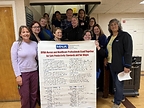
MNA: Berkshire VNA Nurses and Healthcare Professionals Deliver Petition Calling for a Fair Union Contract to Strengthen Patient Access to Home Care

Published

on

By

While there has been bargaining progress on early-career wages, clinicians are urging BVNA to invest in experienced staff to support safe patient care

PITTSFIELD, Mass., Oct. 26, 2026 /PRNewswire/ — Berkshire Visiting Nurse Association (BVNA) nurses and healthcare professionals, represented by the Massachusetts Nurses Association (MNA), delivered a petition to BVNA management at 4 p.m. Monday, October 26, calling for a fair contract that supports recruitment, retains experienced clinicians and protects the time needed to care for patients safely at home. The parties next meet for bargaining on October 28.

The petition comes as the bargaining unit has shrunk by approximately half over the past several years amid high turnover and challenges attracting new staff. BVNA clinicians are seeking to reverse that decline to strengthen access to home care, help patients recover in familiar surroundings, and support timely hospital discharges.

“We appreciate that management has made progress toward attracting new staff by moving on wages for nurses and healthcare professionals early in their careers,” said Tamaryn Clowdus, physical therapist, and Co-Chair of the MNA Bargaining Committee at Berkshire VNA. “We also need reasonable cost-of-living increases for the experienced clinicians who have stayed with the VNA through difficult years. Building a stable workforce and supporting our home care patients requires a focus on both recruitment and retention.”

BVNA nurses and healthcare professionals provide care that helps patients manage illness, recover after hospitalization and remain safely at home. Experienced clinicians bring clinical judgment, knowledge of their communities and familiarity with patients’ needs. These are important community assets that are difficult to replace when staff leave.

With Berkshire Medical Center experiencing high patient volume, sufficient levels of home care staffing matters more than just the patients receiving visits. Ready access to home care can help patients who are ready to leave the hospital return home with the support they need, making more hospital beds available for people requiring acute care.

“Berkshire Medical Center nurses stand with our BVNA colleagues in their efforts to secure a fair contract that strengthens home care in Berkshire County,” said Sarah Roberts, RN, MNA Co-Chair at Berkshire Medical Center. “We see every day how much our patients depend on having care available when they return home. Supporting the clinicians who provide that care helps patients leave the hospital safely and keeps beds available for others who need acute care.”

The BVNA petition also calls for reasonable and achievable productivity expectations developed with clinicians and grounded in the realities of home care. A visit involves more than time spent in a patient’s home. Clinicians must also document care, coordinate services, communicate with providers and families, and travel between patients.

MassNurses.org │ Facebook.com/MassNurses │ Twitter.com/MassNurses │ Instagram.com/MassNurses 

Founded in 1903, the Massachusetts Nurses Association is the largest union of registered nurses in the Commonwealth of Massachusetts. Its 26,000 members advance the nursing profession by fostering high standards of nursing practice, promoting the economic and general welfare of nurses in the workplace, projecting a positive and realistic view of nursing, and by lobbying the Legislature and regulatory agencies on health care issues affecting nurses and the public.

View original content to download multimedia:https://www.prnewswire.com/news-releases/mna-berkshire-vna-nurses-and-healthcare-professionals-deliver-petition-calling-for-a-fair-union-contract-to-strengthen-patient-access-to-home-care-302919989.html

SOURCE Massachusetts Nurses Association

Continue Reading

Trending