Connect with us

Technology

AI Initiatives Deliver Limited Returns When Organizations Automate Tasks Instead of Redesigning Processes, Says Info-Tech Research Group

Published

on

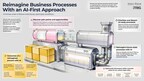
Many organizations are limiting the impact of AI by applying it to individual tasks instead of redesigning the workflows, decisions, and handoffs that shape business outcomes. Info-Tech Research Group’s recent blueprint, Reimagine Business Processes With an AI-First Approach, provides a three-phase framework to help IT, business, and operations leaders identify high-value opportunities, assess process readiness, and design AI-enabled workflows that can scale beyond surface-level automation.

ARLINGTON, Va., June 23, 2026 /PRNewswire/ – As organizations accelerate AI adoption, many continue to apply the technology to isolated tasks rather than redesigning the business processes that drive meaningful outcomes, according to new findings from Info-Tech Research Group. The global research and advisory firm’s blueprint, Reimagine Business Processes With an AI-First Approach, provides a structured methodology to help leaders move from fragmented AI experimentation to intentional process transformation.

Info-Tech’s research shows that business, IT, and operations teams often lack a shared way to identify, evaluate, and prioritize which processes are suitable for AI-enabled redesign. Many organizations also focus heavily on AI’s potential value while giving less attention to the risks, feasibility constraints, and readiness gaps that can affect whether a process is truly suitable for redesign.. Without that alignment, AI initiatives can remain disconnected, reinforce legacy workflows, and deliver only incremental efficiency gains. The blueprint addresses these challenges by helping organizations discover high-impact opportunities, diagnose current-state process limitations, and design future-state workflows that place AI at the core of how work is performed.

“AI will not transform organizations unless it transforms how work actually happens,” says Mahmoud Ramin, research director at Info-Tech Research Group. “Applying AI to individual tasks may create short-term efficiency, but meaningful value comes from redesigning entire workflows so intelligence is embedded where decisions are made, handoffs occur, and outcomes are shaped.”

Info-Tech’s Three-Phase, AI-First Methodology to Reimagine Business Processes

Info-Tech’s Reimagine Business Processes With an AI-First Approach blueprint introduces a three-phase methodology to help organizations move beyond ad hoc AI use cases to intentional, AI-first process design:

Phase 1: Discover Pain Points and Opportunities – Build a cross-functional working group, inventory key business processes, and assess each process for AI suitability, value, and risk.

Phase 2: Prioritize and Dissect AI-Ready Processes – Shortlist the strongest candidates for redesign, map current-state workflows, and identify bottlenecks, handoffs, decision delays, and other friction points.

Phase 3: Reimagine Future-State Processes With AI – Apply AI opportunity dimensions, redesign the future-state workflow, assess feasibility, and document the new process using the Process Reimagination Canvas.

The blueprint also identifies five AI opportunity dimensions that can help teams rethink workflows end to end: knowledge retrieval, language generation and summarization, forecasting and pattern detection, intelligent routing and decisioning, and computer vision and document understanding.

To support execution, the Reimagine Business Processes With an AI-First Approach blueprint is accompanied by two deliverables: a Process Discovery and Evaluation Workbook to assess readiness and prioritize opportunities, and a Process Reimagination Canvas to summarize redesigned workflows in an executive-ready, one-page format.

“Organizations often ask which AI use cases to prioritize, but the better question is which processes should change and why,” explains Ramin. “Leaders should focus on redesigning workflows before investing further in tools, so AI is applied where it can meaningfully improve decisions, reduce friction, and deliver sustained value.”

By following Info-Tech’s method, IT and business leaders can shift from task-level automation to scalable process transformation, identifying high-impact, process-specific opportunities that align with business strategy and support long-term resilience and growth. 

For exclusive and timely commentary from Info-Tech’s experts, including Mahmoud Ramin, and access to the complete Reimagine Business Processes With an AI-First Approach blueprint, please contact pr@infotech.com.

About Info-Tech Research Group

Info-Tech Research Group is the “get things done” partner for over 30,000 IT, HR, and marketing leaders worldwide. The fastest growing research and advisory firm, Info-Tech enables leaders to make well-informed decisions and transform their organizations through AI, strategic foresight, step-by-step methodologies, practical tools, industry-leading advisory, and training programs. For nearly 30 years, tens of thousands of private and public organizations have trusted Info-Tech to lead their most important initiatives through periods of change and deliver outcomes that truly matter.

To learn more about Info-Tech’s HR research and advisory services, visit McLean & Company, and for data-driven software buying insights and vendor evaluations, visit the firm’s SoftwareReviews platform.

Media professionals can register for unrestricted access to research across IT, HR, and software and hundreds of industry analysts through the firm’s Media Insiders program. To gain access, contact pr@infotech.com.

For information about Info-Tech Research Group or to access the latest research, visit infotech.com and connect via LinkedIn and X.

View original content to download multimedia:https://www.prnewswire.com/news-releases/ai-initiatives-deliver-limited-returns-when-organizations-automate-tasks-instead-of-redesigning-processes-says-info-tech-research-group-302808130.html

SOURCE Info-Tech Research Group

Continue Reading

Technology

Trinasolar Vertex N Modules Selected for 562MWdc Dầu Tiếng 5 Floating Solar Project in Vietnam

Published

on

By

HO CHI MINH CITY, Vietnam, Sept. 9, 2026 /PRNewswire/ — Trinasolar, a global leader in smart PV and energy storage solutions, has been selected to supply its Vertex N 730–735W n-type i-TOPCon modules for the 450MWac and 562MWdc Dầu Tiếng 5 Floating Solar and Storage Project in Tây Ninh Province, Vietnam.

Developed by DT5.1 Energy JSC, a member of Xuan Cau Holdings, Dầu Tiếng 5 broke ground on 4 August 2026 and is scheduled to begin commercial operation in December 2027. The project is expected to generate approximately 808GWh of clean electricity annually for Vietnam’s national power system.

Dầu Tiếng 5 also builds on Trinasolar’s experience in floating solar in Vietnam. In 2020, Trinasolar supplied 210 Vertex bifacial modules for the 50.6MW Dầm Trà Ổ floating solar project in Bình Định Province. The latest Dầu Tiếng 5 project extends that experience to a significantly larger utility-scale development using Trinasolar’s n-type i-TOPCon Vertex N technology.

Located in a semi-submerged area of Dầu Tiếng Lake, Dầu Tiếng 5 combines a 562MWdc floating solar array with a humid, water-based operating environment. For this application, Trinasolar’s Vertex N (NEG21C.20) modules provide high power output of 730–735W and a low-voltage design that supports higher string power, helping reduce module count and optimise balance-of-system requirements across the floating solar array. Its bifacial dual-glass design, with bifaciality of 80±5%, enables additional rear-side generation where irradiance reaches the back of the module, supporting higher energy yield from the available project area. The dual-glass construction and independently verified resistance to potential-induced degradation further support long-term reliability under the project’s operating conditions.

“This is one of the first projects to implement the Direct Power Purchase Agreement (DPPA) mechanism. This project brings to life a long-awaited regulatory framework. The mechanism fosters sustainable growth for both power generators and large-scale electricity consumers, while contributing significantly to the development of a competitive electricity market” said the owner representative of DT5.1 Energy JSC.

“Dầu Tiếng 5 reflects the growing scale and ambition of Vietnam’s solar market,” said Elva Wang, Group Director of South, Southeast and Central Asia, Trinasolar Asia Pacific. “Trinasolar has supported floating solar in Vietnam since the Dầm Trà Ổ project in 2020 and has since built further experience across major floating solar projects in Singapore, Malaysia and Thailand. Dầu Tiếng 5 brings that experience to a much larger utility-scale development and reflects the level of supply and project support we can bring to Vietnam as the market continues to grow.”

Dầu Tiếng 5 also highlights the potential for floating solar to support Vietnam’s renewable energy expansion by making use of suitable water and semi-submerged areas for large-scale clean energy generation. Through projects such as Dầu Tiếng 5, Trinasolar is bringing its utility-scale floating solar experience to support the development of this emerging application in Vietnam.

View original content to download multimedia:https://www.prnewswire.com/apac/news-releases/trinasolar-vertex-n-modules-selected-for-562mwdc-du-ting-5-floating-solar-project-in-vietnam-302873470.html

SOURCE Trina Solar Energy Development Pte. Ltd.

Continue Reading

Technology

Smartling Deepens Investment in Europe, Names Anna Schlegel GM, EMEA

Published

on

By

Appointment of 30-year globalization leader marks the next phase of Smartling’s European growth, with increased regional investment and senior leadership closer to customers as enterprise adoption of AI-powered translation accelerates.

DUBLIN, Sept. 9, 2026 /PRNewswire/ — Smartling, the AI translation company, today named Anna Schlegel General Manager, EMEA, strengthening its regional leadership as the company continues to invest in growth across Europe. Schlegel will lead Smartling’s EMEA go-to-market strategy, working closely with the company’s established teams across the region to deepen customer relationships, accelerate growth, and help European enterprises scale their global businesses through modern, enterprise-grade localization.

Schlegel brings more than 30 years of experience in international growth and product strategy, most recently as General Manager of Global at Procore Technologies, with earlier senior leadership roles at Cisco, VMware, and NetApp. She has also served in the Parliament of Catalonia, Spain, as Vice President of the Legislative Committee for EU Affairs and External Action. She is the author of Truly Global and co-founder and president of Women in Localization.

“Europe is already an important market for Smartling, and we’re continuing to invest in the people, presence, and capabilities that bring us closer to our customers,” said Bryan Murphy, CEO of Smartling. “Anna understands both what it takes for global enterprises to grow across markets and the unique expectations European companies have as they adopt AI. Her leadership will help us deepen those relationships, accelerate our growth, and deliver even more value to customers across the region.”

Schlegel will also help customers across Europe navigate rapidly evolving expectations around AI, data privacy, governance, and global content, while strengthening Smartling’s regional partnerships.

“Europe is at a pivotal moment for enterprise AI. Some organizations are already deploying AI at scale, while others are determining where it can create the greatest business value. What unites them is the need to adopt AI responsibly, with the quality, governance, transparency, and trust European enterprises and their customers expect, and in alignment with the EU AI Act,” said Schlegel. “Smartling already has strong customers, teams, and momentum across Europe. I’m excited to build on that foundation, get even closer to our customers in-market, and help organizations turn AI-powered localization into a trusted driver of global growth.”

This fall, Schlegel will join customers and industry leaders across Europe as part of Smartling’s seven-stop Global Ready Europe roadshow, from September 29 through October 9. The events will bring together senior localization, product, and marketing leaders to discuss AI translation strategy, executive buy-in, and the future of global content.

For more details, visit Smartling’s Global Ready Europe event series.

About Smartling

Smartling is transforming how global enterprises create, manage, and scale multilingual content in the AI era. Its LanguageAI™ platform combines AI translation, workflow automation, and quality assurance infrastructure to help organizations automate multilingual content operations at enterprise scale. Trusted by leading global brands, Smartling enables companies to move faster globally while maintaining the quality, trust, and oversight required for enterprise AI translation.

For more information, visit Smartling.

View original content to download multimedia:https://www.prnewswire.co.uk/news-releases/smartling-deepens-investment-in-europe-names-anna-schlegel-gm-emea-302872625.html

Continue Reading

Technology

New ABB and BCG report highlights growing role of direct current technologies in future power systems

Published

on

By

Rapid expansion of AI computing, increasing electrification and rise of renewable energy are driving renewed interest in DC technology as part of future electrical systemsBoth AC and DC systems have strategically important roles in meeting future electricity demandEstablishing common standards and developing DC-specific skills can help accelerate deployment

ZURICH, Sept. 9, 2026 /CNW/ — ABB today published a new report, The Strategic Case for Hybrid AC/DC Power: Shaping the Transition to the Next Electrical Architecture, developed in collaboration with Boston Consulting Group (BCG). The report makes the case that direct current (DC) technology is moving from the periphery to the center of industrial, commercial, and digital infrastructure – and that the decisions made by business leaders and policymakers in the next two to three years will determine who shapes that transition and who inherits it.

The future of power distribution is not an either-or choice between alternating current (AC) and direct current, but a hybrid system that combines the strengths of both technologies. While AC will remain the backbone of most transmission and regional distribution networks, DC is expected to play an increasingly important role within facilities where many major energy sources and loads already operate natively on direct current. The fastest-growing technologies, including solar photovoltaic systems, batteries, electric vehicles, AI data centers and many industrial automation systems, are inherently DC-based. As these technologies scale, reducing the number of power conversion steps between generation, storage and consumption can improve efficiency, increase the usable capacity of an existing grid connection and simplify integration.

The report identifies AI data centers as one of the most immediate drivers of DC adoption. As AI workloads continue to increase power density requirements, conventional electrical architectures are reaching practical limits. The report finds that 800 VDC distribution is emerging as the defining architecture for next-generation AI infrastructure, enabling operators to maximize compute capacity within constrained grid connections while improving energy efficiency.

At the same time, the shift is also relevant for a range of other key industries with the research highlighting several opportunities beyond data centers. Automation-intensive manufacturing facilities, commercial buildings and, over the longer term, buildings can also benefit from DC systems or subsystems through lower conversion losses, more effective integration of onsite renewables and storage, and enhanced operational flexibility.

“In a world that will require more power while operating within the constraints of existing infrastructure, enabling broader adoption of DC systems will require stronger collaboration among business leaders, policymakers and technology stakeholders, as well as greater attention to the role DC can play,” said Morten Wierod, Chief Executive Officer of ABB. “For more than 25 years, ABB’s DC solutions have helped customers reduce conversion losses, improve power transfer efficiency and lower electricity demand. To enable broader adoption where the business case is strongest, we need common technologies, harmonized standards, and the workforce capabilities to support implementation at scale. AC and DC each have important roles to play, and together they can help build a more efficient, resilient and future-ready electrical system.”

As part of the report, ABB and BCG address several long-standing misconceptions that have slowed DC adoption concluding that concerns around scale, safety and economics increasingly reflect outdated assumptions rather than the capabilities of today’s technologies. Instead, fragmented standards and a shortage of DC-specific skills are seen as the primary challenges that need to be addressed urgently to accelerate deployment.

ABB was the first company to demonstrate the energy-saving potential of DC in vessels with a DC-based onboard power system that achieved fuel savings of up to 27 percent and launched the industry’s first solid state circuit breaker in 2022. With more than 700 DC-related patents, ABB is now bringing DC distribution to a much broader range of applications, including electric transport, microgrids and data centers. It is also working with industry partners to explore how DC distribution can support low-carbon aluminum production and the production of green hydrogen.

The full report is available at: 
https://www.abb.com/global/en/company/innovation/hybrid-ac-dc-power 

ABB is a global technology leader in electrification and automation, enabling a more sustainable and resource-efficient future. By connecting its engineering and digitalization expertise, ABB helps industries run at high performance, while becoming more efficient, productive and sustainable so they outperform. At ABB, we call this ‘Engineered to Outrun’. The company has over 140 years of history and around 110,000 employees worldwide. ABB’s shares are listed on the SIX Swiss Exchange (ABBN) and Nasdaq Stockholm (ABB). www.abb.com

For more information please contact:
Media Relations
Phone: +41 43 317 71 11
Email: media.relations@ch.abb.com

Investor Relations
Phone: +41 43 317 71 11
Email: investor.relations@ch.abb.com

ABB Ltd
Affolternstrasse 44
8050 Zurich
Switzerland


View original content:https://www.prnewswire.com/news-releases/new-abb-and-bcg-report-highlights-growing-role-of-direct-current-technologies-in-future-power-systems-302873218.html

SOURCE ABB Ltd

Continue Reading

Trending