Connect with us

Technology

Why the Smartest Brands Now Run Like Television Shows

Published

on

SANTA MONICA, Calif., July 2, 2026 /PRNewswire/ — In a new analysis, creative studio della explains why every prestige television series has someone whose name most viewers never learn. Not the star, and not the director of any single episode, but the showrunner, the person who holds the entire season in their head at once. The showrunner decides how a throwaway line in the pilot pays off in the finale, keeps the tone steady across a dozen directors, and protects the story from the hundred small compromises that would otherwise pull it apart. When the job is done well, audiences never notice it is being done at all. The world simply feels whole.

That figure has quietly become one of the most useful ways to describe what a modern brand needs, and what many brands, stretched across an ever-expanding number of screens and platforms, no longer have.

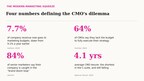
The pressure on marketing leaders has rarely been higher. Average marketing budgets fell to 7.7% of company revenue in 2024, down from 9.1% a year earlier and well below the roughly 11% that was standard before the pandemic, according to Gartner’s annual CMO Spend Survey. In the same survey, 64% of chief marketing officers said they lacked the budget to fully execute their strategy. And the person accountable for all of it does not stay long: the average CMO now lasts about 4.1 years, the shortest tenure in the C-suite, according to Spencer Stuart’s 2025 study.

Squeezed on both budget and time, marketers tend to spend on what they can measure. That instinct has a name. In a Gartner survey, 84% of senior marketing executives said their company was caught in what analysts call the “brand doom loop,” a cycle in which teams pour money into short-term, trackable performance tactics while starving the slower work of brand building, then must spend even more the following quarter to hold the same ground. The trap is expensive. Gartner’s analysis found that over-indexing on performance can cut overall revenue return on investment by as much as 40%, while rebalancing toward brand, typically directing 40% to 60% of spend to brand building, can lift it by roughly 90%.

While budgets shrink, the surface area a brand has to cover keeps growing. Brands posted an average of 9.5 times a day across social networks in 2024, and in consumer categories the figure runs far higher, according to the social-management platform Sprout Social. Audiences expect brands to keep pace: about three-quarters of social users say a company should respond within 24 hours, and Sprout’s 2025 index found that reactions to cultural moments tend to land only if they arrive within 24 to 48 hours. Miss the window, and the moment is gone.

This is the bind. One tempting response is the traditional model: deliberate, high-craft and often so slow that the moment has passed by the time the work is ready. The other is the content-mill model: fast and cheap, producing enough posts to fill a feed but rarely enough coherence to build anything. Speed without a story is noise. Story without speed is irrelevance.

The showrunner idea offers a third path, which is why the metaphor has begun to circulate among marketers. A showrunner is not simply a faster producer or a more prolific one. The role exists to hold one thing steady, the vision, while everything else moves quickly around it. Applied to a brand, that means a single owner of the story who decides what belongs and what does not, keeps the voice consistent whether the output is a six-second clip or a national campaign, and moves at the speed the culture demands precisely because the larger world is already mapped.

Notably, the industry’s own data is turning back toward coherence over raw volume. After years of chasing trends, some of the most admired brands on social, such as Duolingo and Nutter Butter, have won by committing to consistent, recognizable storylines rather than a scattershot of one-off posts. Sprout Social’s trend analysis now advises brands to post less often but more purposefully. In other words, the discipline that makes a television series memorable (continuity, a point of view, a world an audience can return to) is the same discipline that increasingly separates brands that matter from brands that merely publish.

None of this asks marketers to abandon performance marketing or to spend money they do not have. The showrunner mindset is mostly about sequencing and ownership: mapping the full range of places a brand shows up before deciding where to act, treating the gaps as the roadmap, and giving one person or team clear responsibility for keeping the whole thing coherent as it grows. It reframes “always-on” from a demand to produce endlessly into a commitment to stay considered, to keep studying the brand and the culture between big moments so the next move is never made cold.

The approach will not lengthen a CMO’s tenure or restore a pre-pandemic budget. But in what Gartner has called an “era of less,” coherence is one of the few forms of leverage still available without a bigger check. The brands that will hold attention are the ones that feel authored rather than assembled: the ones with someone, somewhere, holding the whole season in their head.

This story was produced by della, an always-on creative studio that helps brands build and maintain coherent content across every audience touchpoint. Learn more at della.one.

Sources & Methodology

Marketing budgets (7.7% of revenue, down from 9.1%) and the finding that 64% of CMOs lack budget to execute strategy: Gartner CMO Spend Survey 2024 (survey of CMOs and marketing leaders in North America and Northern/Western Europe, February–March 2024).

The “brand doom loop” (84% of senior marketers) and the performance-vs-brand ROI figures: Gartner research, reported by MediaPost.

Average CMO tenure of 4.1 years: Spencer Stuart CMO Tenure Study 2025.

Posting frequency (9.5 posts/day), 24-hour response expectations, the 24–48 hour window for cultural reactions, and guidance to post less but more purposefully: Sprout Social (2025 Sprout Social Index and trend analysis).

View original content to download multimedia:https://www.prnewswire.com/news-releases/why-the-smartest-brands-now-run-like-television-shows-302817100.html

SOURCE della

Continue Reading

Technology

PRC-Saltillo Acquires Ner Chat, Bringing Minspeak® Symbols to Glint Visual Support Platform

Published

on

By

Acquisition brings together AAC expertise and school-focused innovation, with plans to add familiar Minspeak symbols to Glint and help educators and clinicians spend more time supporting communication.

WOOSTER, Ohio, Oct. 22, 2026 /PRNewswire/ — PRC-Saltillo, a global leader in augmentative and alternative communication (AAC), today announced the acquisition of Ner Chat, creator of Glint, a visual-support creation platform that helps educators and specialists turn hours of visual-support preparation into seconds.

The acquisition brings together two organizations with a shared mission: making communication support easier to create, easier to implement, and more accessible for the individuals who rely on it every day.

As an initial collaboration, the organizations are working to bring PRC-Saltillo’s Minspeak® symbols to Glint; the familiar symbols used in LAMP Words for Life® and Unity® AAC apps, as well as Minspeak-based systems on Genesis®, NovaChat®, Accent®, and Via® devices.

For teams supporting a child who uses a Minspeak-based AAC system, the planned addition will create a simpler path to building visual supports and lite-tech backup AAC with familiar symbols. Educators and clinicians will be able to create classroom activity boards, visual schedules, choice-making materials, and communication supports using the symbols many learners already know through LAMP Words for Life, Unity, and other Minspeak-based systems.

Founded in 2024 by Dylan Makani and Scott Soifer, Ner Chat created Glint to make assistive technology easier to bring into schools. Glint gives educators, therapists, and support teams a fast way to create personalized visual supports from simple text prompts, turning hours of manual creation into seconds so more time can be devoted to supporting learners and communication.

PRC-Saltillo brings six decades of AAC leadership to the partnership. As the company celebrates its 60th anniversary in 2026, the acquisition reflects its continued commitment to supporting communicators, families, clinicians, and educators through innovative communication solutions and implementation support.

“Our history is built on relationships with people who use AAC and the families, educators, and clinicians supporting them. Those teams tell us what they need. We want to make it easier to create useful materials with the symbols a child already knows and spend more time supporting communication,” said Sarah Wilds, CEO of PRC-Saltillo.

Glint already creates schedules, social narratives, communication boards, and other visual supports from text prompts, with options for QR-code sharing in more than 50 languages. Adding Minspeak symbols will help connect that creation process with the communication tools children and their teams already use.

“We built Glint to help educators and therapists turn their ideas into visuals without spending hours preparing materials,” said Dylan Makani, Co-Founder & CEO of Ner Chat. “Working with PRC-Saltillo brings deep AAC experience to that goal. We’re excited to help teams create supports with familiar symbols, personalize them for each learner and get back to supporting communication.”

The companies plan to demonstrate a beta featuring Minspeak symbols in Glint at the Closing The Gap Conference, with customer availability to follow. This marks the first collaboration between the two organizations, with additional innovations planned for the future.

While Ner Chat is now part of the PRC-Saltillo community, Glint will continue to operate under its existing brand identity. Together, the companies are working toward a straightforward goal: familiar tools, easier preparation, and more opportunities for children to communicate and participate throughout their day.

About PRC-Saltillo

Founded in 1966, PRC-Saltillo is a pioneer and global leader in augmentative and alternative communication (AAC) technology for individuals with complex communication needs. The company offers a full range of speech-generating devices, industry-leading AAC apps, and research-based vocabulary systems. PRC-Saltillo is 100% employee-owned and headquartered in Wooster, Ohio, with subsidiaries in the United Kingdom, Australia, Canada, Germany, Singapore, and India.

About Glint

Glint helps educators and specialists create the visual supports their learners need, communication boards, visual schedules, social narratives, and more, in seconds instead of hours. No design skills, no starting from scratch, no late nights. Just the right visual, ready when you need it. Founded in 2024 by Dylan Makani and Scott Soifer and headquartered in New York, Glint supports tens of thousands of educators across hundreds of school districts. Learn more at nerchat.com.

View original content to download multimedia:https://www.prnewswire.com/apac/news-releases/prc-saltillo-acquires-ner-chat-bringing-minspeak-symbols-to-glint-visual-support-platform-302915910.html

SOURCE PRC-Saltillo

Continue Reading

Technology

RemoteThreat Expands Executive Leadership Team with Appointment of Joe Castellanos as Vice President of Product and Taylor Pettis as Vice President of Marketing

Published

on

By

Veteran product and marketing leaders from Bugcrowd and SOCRadar join after RemoteThreat emerged from stealth with the O/C/O Platform and $7 million in pre-seed funding

FULTON, Md., Oct. 22, 2026 /PRNewswire/ — RemoteThreat, the AI-enabled offensive cyber operations company, today announced the expansion of its executive leadership team with the appointments of Joe Castellanos as Vice President of Product and Taylor Pettis as Vice President of Marketing. The two executives join founders Chris Thompson, Chief Executive Officer, and Shawn Jones, Chief Technology Officer, along with Rob McCall, Chief Operating Officer, as the company accelerates deployment of the O/C/O Platform, the first commercial, fully integrated, end-to-end platform for offensive cyber operations.

The appointments come just weeks after RemoteThreat emerged from stealth with $7 million in pre-seed funding led by Osage University Partners and DataTribe, a strategic advisory partnership with The Nakasone Group, and membership in USSOCOM’s Special Operations Forces Rapid Acquisition Consortium for Emerging Requirements (SOF RACER). Castellanos will lead product vision and roadmap for the O/C/O Platform. Pettis will lead global marketing strategy and growth initiatives to establish RemoteThreat as a globally recognized leader in offensive cybersecurity.

“We are building the most sophisticated offensive cyber operations platform in the market today, and that requires an experienced leadership team that can execute. Joe and Taylor bring the background and skillsets we need to operate in this space,” said Chris Thompson, Co-Founder and CEO of RemoteThreat. “While we launched just a few weeks ago, our team and the market are already moving at a pace that requires relentless execution. Joe has taken products from concept to significant revenue at some of the most demanding companies in security and identity. Taylor has built the brands behind multiple high-growth technology companies. Together they give us the product and go-to-market leadership to turn that momentum into category leadership.”

Joe Castellanos, Vice President of Product

Castellanos is an enterprise product executive with more than 15 years of experience building and scaling cybersecurity products. He spent the first half of his career on the defensive side of security, launching Entra ID Governance at Microsoft, leading Salesforce’s internal identity governance platform, and launching Okta DynamicScale. Along the way, he watched organizations pour huge budgets into security controls with no way of knowing whether they would hold up against a real adversary. That led him to offensive security, first at AppOmni, where he launched AppOmni Discovery, and then at Bugcrowd, where he led the entire product portfolio, including its expansion into AI penetration testing with Pathseeker. He has brought multiple products from concept to significant revenue scale and led high-performing product teams at startups and global technology organizations. He has presented at Microsoft Ignite and Oktane.

At RemoteThreat, Castellanos leads the company’s product strategy and development, shaping solutions that advance offensive cyber operations and deliver measurable value to enterprise red teams, government mission teams, and defense partners.

“Red teams are being asked to emulate adversaries whose capabilities evolve faster than the tools built to model them. RemoteThreat is the first company I have seen answer that with an integrated platform instead of another point tool,” said Castellanos. “The founders have spent their careers running the kinds of operations this platform is built for. My job is to make sure the O/C/O Platform keeps pace with what those operators need next, and that we ship it faster than anyone expects.”

Taylor Pettis, Vice President of Marketing

Pettis is a global marketing executive with more than 20 years of experience helping early-stage and private equity-backed technology companies accelerate growth, build market leadership, and scale for long-term success. Throughout his career, he has guided multiple organizations through critical growth phases, including cybersecurity companies Code42, Intel 471, and SOCRadar. His expertise spans demand generation, product marketing, brand strategy, go-to-market execution, and building high-performing marketing organizations.

As Vice President of Marketing, Pettis leads RemoteThreat’s global marketing strategy and growth initiatives, focused on establishing RemoteThreat as a world-renowned cybersecurity brand while scaling the business for meaningful and sustainable growth.

“RemoteThreat has the three things every marketer wants and almost never gets at once: a category that is being defined in real time, a product that is years ahead of the market, and founders who are the most credible voices in it,” said Pettis. “The company’s launch out of stealth showed how quickly this team moves. My focus is on making sure every red team leader, mission owner, and defense partner knows RemoteThreat is the name in offensive cyber operations.”

A Team Built to Outpace the Adversary

Castellanos and Pettis join a leadership team of offensive security veterans. Thompson and Jones founded RemoteThreat after decades of building and leading adversary simulation teams, developing malware and offensive tooling, and executing red team operations against defense targets, nuclear power plants, critical infrastructure providers, and some of the world’s largest financial institutions. McCall joined after years of venture investing in early-stage cybersecurity and AI startups, he most recently led customer success and support at Randori (acquired by IBM), one of the first Continuous Automated Red Team (CART) vendors.

“The gap between what AI-enabled adversaries can do and what red teams can emulate is widening every month. Closing it is an engineering problem and a product problem,” said Shawn Jones, Co-Founder and CTO of RemoteThreat. “Joe has shipped products operators actually adopt, in environments where the bar is unforgiving. Having that discipline alongside our research and engineering teams means the platform gets better at the speed our customers need.”

“In the weeks since launch, demand from enterprise red teams and mission teams has outpaced even our own projections,” said Rob McCall, Chief Operating Officer of RemoteThreat. “Scaling to meet that demand without losing the precision our customers expect is the job in front of us. Joe and Taylor bring the operating rigor and the growth playbooks to do it. This is the team that takes RemoteThreat from a launch to a category leader.”

Building on Launch Momentum

RemoteThreat emerged from stealth earlier this month with the launch of the O/C/O Platform, which brings eight connected systems into one operational picture to plan, execute, and adapt offensive cyber operations: mission planning, native command-and-control (C2), implants, initial-access frameworks, advanced capabilities, obfuscation pipelines, analysis engines, and AI-assisted operation. AI-enabled and built for expert operators, the platform equips enterprise and critical infrastructure red teams to emulate sophisticated adversaries and outpace frontier model advancements in cyber capabilities, while enabling U.S. government mission teams and vetted defense partners to conduct offensive cyber operations at mission speed.

Since launch, the company has announced $7 million in pre-seed funding led by Osage University Partners and DataTribe, a strategic advisory partnership with The Nakasone Group, founded by retired four-star U.S. Army General Paul M. Nakasone, former director of the National Security Agency and commander of U.S. Cyber Command, membership in USSOCOM’s SOF RACER consortium, and a capability integration partnership with Talon Defense. The company is actively hiring senior operators, researchers, and engineers across its offensive capability, platform, and go-to-market teams.

The O/C/O Platform is available now to qualified enterprise, U.S. government, and vetted defense industry customers. To request access or schedule a briefing, visit remotethreat.com.

About RemoteThreat

RemoteThreat is the offensive cyber operations platform. Built by experienced offensive operators for internal red teams and defense industry partners, it combines deep capability, precise control, and human-machine operation at mission speed. RemoteThreat. The O/C/O Platform. Learn more at remotethreat.com.

View original content to download multimedia:https://www.prnewswire.com/news-releases/remotethreat-expands-executive-leadership-team-with-appointment-of-joe-castellanos-as-vice-president-of-product-and-taylor-pettis-as-vice-president-of-marketing-302916224.html

SOURCE RemoteThreat

Continue Reading

Technology

Mission North Joins Forces with cred to Lead New Era of Thought Leadership and Live Events

Published

on

By

Acquisition expands Mission North’s capabilities in executive positioning, thought leadership and live eventscred will retain its brand and operate independently under founder and CEO Caitlin Bartley

SAN FRANCISCO and NEW YORK, Oct. 22, 2026 /PRNewswire/ — Mission North, a communications agency for consequential companies, today announced it has acquired cred, a communications agency specializing in thought leadership and events for innovation brands.

Mission North acquires cred, expanding its executive positioning, thought leadership and live events capabilities.

cred builds thought leaders by securing earned speaking opportunities on the world’s most important stages and producing experiences from intimate VIP dinners to large-scale conferences. cred’s clients include high-growth startups, Fortune 500 companies and investors across the same segments Mission North serves, including B2B and consumer technology, AI, healthcare and financial services. The partnership deepens and expands Mission North’s capabilities in executive positioning, thought leadership and live events at a moment when earned, in-person visibility matters more than ever.

“In a world of endless content, real relationships matter more than ever, and those are built in rooms and on stages, not just in feeds,” said Mission North’s Co-CEOs Bill Bourdon and Tyler Perry. “Caitlin and the cred team are the best in the business at making that happen. As AI reshapes how we communicate, the companies that win will be the ones that show up in person.”

AI has made it easy to generate infinite content, but much harder to build trust. Whether it’s an executive on stage, a customer dinner, a flagship conference or a strategic industry convening, events build the relationships and trust other channels can’t match. Together, Mission North and cred will give clients integrated thought leadership and event capabilities to elevate their executives and brands across earned media, speaking, podcasts, owned events and social content.

“cred has grown on the strength of our work and the relationships we’ve built over the last decade,” said Caitlin Bartley, CEO, cred. “Mission North is the clear partner to help us go further. This partnership lets us bring our approach to more companies who see the value of live experiences, and do it while doubling down on what’s always set us apart: our people and our clients.”

cred will retain its brand and operate under its existing leadership, with strategic backing from Mission North. Bartley will continue to serve as CEO of cred, partnering closely with Mission North’s leadership team to build, market and deliver new client solutions.

About cred
cred is a communications agency specializing in thought leadership and events for innovation brands. The agency positions executives and secures speaking engagements on stages like SXSW, HumanX and Milken, and produces experiences from VIP dinners to large-scale conferences. cred’s current and former clients include high-growth startups and Fortune 500 companies, such as Notion, Together AI, Pinterest, Cisco and Salesforce.org. For more information visit credpr.com.

About Mission North
Mission North is a strategic communications agency for consequential companies to accelerate their market impact at every growth stage. The agency is headquartered in New York and San Francisco, with hubs in Los Angeles, Boston, Washington, D.C. and Portland, Oregon. For more information visit missionnorth.com.  

Media Contact:

Shara Seigel, vice president, Media Strategy at Mission North – sseigel@missionnorth.com 

View original content to download multimedia:https://www.prnewswire.com/news-releases/mission-north-joins-forces-with-cred-to-lead-new-era-of-thought-leadership-and-live-events-302916189.html

SOURCE Mission North

Continue Reading

Trending