Connect with us

Technology

Mercantile Space Partners with Rivada for Secure Connectivity

Published

on

The Outernet’s backbone in space brings an unparalleled level of security to Government & Enterprise communications

Outernet is a constellation of 600 ultra-secure, networked low-earth orbit satellitesCombining the speed of fiber with the reach of satelliteOrbital mesh network with no terrestrial gateways ensures security by design

MUNICH, July 9, 2026 /PRNewswire/ — Mercantile Space, a leading communications technology company, is partnering with Rivada Space Networks to provide a unique next generation connectivity network with the necessary security and performance to drive digital innovation and transformation. Rivada has now lined up over $US20 billion of business globally for its unique LEO network.  

Mercantile Space alongside its parent company Mercantile Communications, is a premier telecommunications provider in Nepal specializing in satellite solutions and wireless network systems.  The company is a trusted IT partner offering cutting-edge technology solutions, from cybersecurity and cloud services to managed IT and data center management, designed to enhance operational efficiency, security and business growth. With the increasing demand to move large quantities of data securely and quickly around the world placing existing digital infrastructure under greater pressure than ever, organisations in banking, security, defense and telecommunications are looking for innovative and future-forward networking technologies that are secure, fast and reliable.

As the first unified global communications network, Rivada’s Outernet is transformative. A global low-latency point-to-point network of 600 low earth orbit (LEO) satellites, it is a unique next-generation constellation combining inter-satellite laser links with advanced onboard processing and routing to create a ubiquitous optical mesh network in space. This “orbital network,” in which data stays in space from origin to destination, creates an ultra-secure satellite network with pole-to-pole coverage, offering end-to-end latencies much lower than terrestrial fiber over long distances. And by routing traffic on a physically separated network in space, it provides a layer of defense for any organization that needs to share data securely between widely distributed sites.

Mercantile Space will harness Rivada’s Outernet to address critical infrastructure limitations in the region and provide resiliency for secure, sovereign data connectivity for enterprise and government networks. Nepal’s rugged terrain presents severe geographic obstacles for traditional fiber or cable deployments. By leveraging the Outernet’s advanced satellite architecture, Mercantile will be able to bridge these connectivity gaps in remote or underserved areas. The Outernet’s fast, seamless and secure connectivity will ramp up network performance and enable true digital transformation and new business opportunities through multi-gigabit bi-directional performance, combined with worldwide reach.

Amod Pratap Rana, Director Telecom Services at Mercantile Space said: “Our goal is to ensure our customers have sovereign data connectivity, carrier ethernet resilience and a ubiquitous network which bridges connectivity gaps.” He added: “Rivada is building a uniquely capable LEO architecture in effect a highly secure global communications backbone in space. The Outernet not only strengthens digital infrastructure on a global scale, but it also provides an innovative platform for our customers to expand their capabilities to meet new security needs.”

Declan Ganley, CEO, Rivada Space Networks, said: “We are delighted to be working with Mercantile Space to enhance their portfolio of communications services. The space domain now plays a critical role in securing network infrastructure and addressing rising data sovereignty and security demands. Unlike traditional “gap-filler” LEO systems which bridge the last mile between the satellite and the nearest terrestrial gateway, Rivada’s game-changing Outernet is a fully independent and inter-connected private space network that re-defines connectivity in terms of security, latency, capacity, efficiency, and coverage. Our unique gateway-less architecture is fast becoming the system of choice for secure data communications.”

About Rivada Space Networks
Rivada Space Networks GmbH is deploying the first true “Outernet”: a global, low-latency, point-to-point connectivity network of LEO satellites. By connecting its satellites with lasers, Rivada will provide resellers and B2B customers with the ability to securely connect any two points on the globe with low latency and high bandwidth. The constellation, comprising 600 low-earth-orbit communications satellites, will represent a fundamental change in the availability of secure, global, end-to-end enterprise-grade connectivity for Telecom, Enterprise, Maritime, Energy and Government Services markets. Rivada Space Networks is a wholly owned subsidiary of Rivada Networks, Inc. www.rivadaspace.com    

Follow Rivada Space Networks on: 
LinkedIn: https://www.linkedin.com/company/rivada-space/
Twitter: @rivadaspace  

Media Contacts 

Melanie Dickie, Chief Marketing & Communication Officer
Rivada Space Networks GmbH
Tel: +31 6 14 22 97 62
Email: mdickie@rivadaspace.com 

Brian Carney, SVP Corporate Communications 
Rivada Networks, Inc
Tel: +1 (207) 256-0386
Email: bcarney@rivada.com  


View original content to download multimedia:https://www.prnewswire.com/news-releases/mercantile-space-partners-with-rivada-for-secure-connectivity-302821732.html

SOURCE Rivada Space Networks

Continue Reading
Click to comment

Leave a Reply

Your email address will not be published. Required fields are marked *

Technology

LONGi at UNCCD COP17: Li Zhenguo Explains Two Technological Pathways for PV-Powered Food Security

Published

on

By

ULAANBAATAR, Mongolia, Aug. 23, 2026 /PRNewswire/ — From August 17 to 28, 2026, the 17th session of the Conference of the Parties to the United Nations Convention to Combat Desertification (UNCCD COP17) is being held in Ulaanbaatar, Mongolia. During the conference, LONGi participated in several side events, systematically presenting the enormous potential of PV technology to enhance the resilience of global food supply, and officially released its solutions for PV-powered food security.

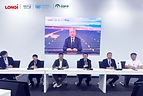
At a side event titled “From Desert to Asset – Comprehensive Solutions for Integrated PV-Based Ecological Restoration,” co-hosted by the School of Social Sciences of Tsinghua University and the China Green Foundation, Li Zhenguo, founder and Chief Technology Officer of LONGi, joined via video link and noted that traditional food production relies heavily on natural photosynthesis and climatic conditions. Extreme weather events such as droughts and floods have severely impacted agricultural production, and global climate change is placing unprecedented pressure on an already fragile food supply system. However, as costs decline, PV technology can not only reduce carbon emissions but also offer a new solution for enhancing the resilience of global food supply.

Li Zhenguo recently published a forward-looking Perspective article titled “Photovoltaics for food security” in the leading international academic journal Nature Sustainability, in which he systematically set out two technological pathways with practical application prospects.

Pathway 1: PV-driven artificial synthesis of starch from carbon dioxide. PV-generated electricity is used to electrolyze water and produce green hydrogen, which is then coupled with captured CO₂ to synthesize green methanol. This methanol is subsequently converted into starch through oxidation, polymerization, and other processes. Compared with the solar energy utilization efficiency of about 2% in traditional natural photosynthesis, this pathway can raise efficiency to 7–10%. Calculations show that deploying PV on just 3.7% of the Sahara Desert could generate 26 trillion kWh of green electricity, enough to synthesize 3 billion tonnes of food and meet the current global food demand.

Pathway 2: PV-driven “energy-water-food” nexus system. By building PV power plants in desert areas, the shading effect of PV modules reduces soil moisture evaporation, improves the soil microclimate, and lowers irrigation requirements. Combined with PV-powered seawater desalination and inter-regional water transfer projects, this approach can gradually transform desert land that was previously unsuitable for cultivation into arable farmland.

In fact, LONGi has already been actively exploring this approach in the Kubuqi Desert in Inner Mongolia, China – generating electricity on the panels, planting crops under the panels, and raising livestock between the panel rows. Under the PV panels, the once barren land is being revitalized. This practice verifies the feasibility of integrated PV-ecology-agriculture development and provides a replicable Chinese solution for the coordinated development of ecological restoration and food production in desertification-prone areas.

The theme of this year’s COP17 is “Restoring Land, Restoring Hope.” LONGi actively participated in multiple side events, engaging in in-depth exchanges with government agencies, scientists, and corporate representatives from around the world, and sharing Chinese experience in the deep integration of PV with desertification control and ecological restoration.

From cutting-edge laboratory exploration to on-the-ground validation in deserts, PV is evolving from an energy solution into a cornerstone of sustainable development. Looking ahead, LONGi will leverage Solar (PV)-plus-Storage technologies to actively address climate change, continue to promote the deep integration of PV with ecology, agriculture, water resources and other fields, build a more resilient global sustainable development system, and ensure that more affordable, safer, and more accessible green energy truly benefits everyone.

View original content to download multimedia:https://www.prnewswire.com/news-releases/longi-at-unccd-cop17-li-zhenguo-explains-two-technological-pathways-for-pv-powered-food-security-302857968.html

SOURCE LONGi

Continue Reading

Technology

IBM and the USTA Introduce New AI-Powered Fan Experiences for 2026 US Open

Published

on

By

NEW YORK, Aug. 24, 2026 /PRNewswire/ — IBM (NYSE: IBM) and the United States Tennis Association (USTA) today announced new and enhanced AI-powered fan features coming to USOpen.org and the US Open app for this year’s tournament. Three new, enhanced AI-powered innovations are designed to help fans cut through the noise, stay closer to the action and experience the US Open in a more personalized way than ever.  Since 1992, IBM and the USTA have brought some of the most advanced digital experiences in sports to more than 14 million global tennis fans annually.

This year’s tournament comes at a time when audience demand for AI-powered features is gaining momentum, as accuracy, not speed, shapes the digital sports experience. According to a new global survey also out today from Morning Consult and commissioned by IBM, 91% of global tennis fans surveyed use sports apps during events, with high trust (64%) in AI-powered sports content.

At the heart of this year’s experience is the all-new Live Updates homepage — a smarter, more personalized way for fans to follow the action that matters most to them. Fans can prioritize their favorite players and quickly zero in on the matches, insights and stories they care about most.

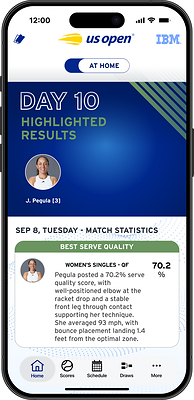
A new Serve Quality metric puts a whole new spin on how fans watch serves. Available across all 254 singles matches, the AI-powered tool uses advanced limb-tracking technology developed with IBM Bob to help analyze the precise mechanics of every serve – with 21 data points across the body and racquet, tracked 50 times per second. That means everything from wrist flex to the transfer of energy from a player’s legs through their torso is captured, generating roughly 1.2 billion data points over the course of the tournament. The continuous stream of live data — including efficiency, accuracy, consistency and ball toss — is managed by IBM Confluent. The result: a Serve Quality score generated in near real-time, giving fans a new way to understand what makes a great serve great.  

Also new this year, Key Moments takes the popular live Likelihood to Win feature a step further, helping fans understand not just who’s winning – but why. Available for all singles matches, Likelihood to Win calculates each player’s probability of victory using an AI-powered analysis of current and historical statistics, expert opinion and match momentum. Key Moments provides additional, richer information, to summarize the swings, turning points and momentum shifts that change each match in an instant.

The enhanced Match Chat acts as an interactive companion throughout each match, letting fans ask questions in their own words to get instant, conversational answers.   Some responses now go beyond text, bringing in relevant photos and video to add even more context. Match Chat, powered by watsonx Orchestrate, draws on an expanded mix of live match data, analysis and historical information. A collection of AI agents and fit-for-purpose models trained in the USTA’s editorial style and the language of tennis make responses feel right at home on the court.

“Our work with IBM this year has been game-changing, pushing the boundaries of what’s possible in digital fan engagement,” said Brian Ryerson, Senior Director, Digital Strategy, USTA. “By leveraging their AI capabilities, we’re delivering new, innovative, and highly personalized content and insights to our millions of fans worldwide, while significantly enhancing our ability to tell compelling stories throughout every match of the US Open.”

“Our partnership with the USTA continues to redefine digital sports experiences,” said Jonathan Adashek, Senior Vice President, Chief Global Affairs Officer at IBM. “We can take millions of live data points streaming from the court and automatically route them into workflows that deliver usable insights in minutes and hours. These capabilities of Confluent, Bob and other IBM technologies help deliver a more intelligent experience, drawing greater value from data and changing the game for the US Open.”

The 2026 US Open runs from August 23 – September 13. Explore these IBM technologies and more by visiting USOpen.org and/or the US Open app available in the Apple and Android app stores on all mobile devices.

About IBM
IBM is a leading provider of global hybrid cloud and AI, and consulting expertise. We help clients in more than 175 countries capitalize on insights from their data, streamline business processes, reduce costs and gain the competitive edge in their industries. Thousands of governments and corporate entities in critical infrastructure areas such as financial services, telecommunications and healthcare rely on IBM’s hybrid cloud platform and Red Hat OpenShift to affect their digital transformations quickly, efficiently and securely. IBM’s breakthrough innovations in AI, quantum computing, industry-specific cloud solutions and consulting deliver open and flexible options to our clients. All of this is backed by IBM’s long-standing commitment to trust, transparency, responsibility, inclusivity and service. Visit www.ibm.com for more information.

Media contact:

Paul Pettas
IBM
paulpettas@ibm.com

View original content to download multimedia:https://www.prnewswire.co.uk/news-releases/ibm-and-the-usta-introduce-new-ai-powered-fan-experiences-for-2026-us-open-302857821.html

Continue Reading

Technology

IBM Study: Sports Fans Want Streamlined Digital Experiences as Platform Choices Expand

Published

on

By

AI use among surveyed sports fans increased in 2026, with accuracy driving fan trustNearly half of respondents would download a single, consolidated sports app — but only about 3 in 10 would pay for oneManaging multiple subscriptions has become a source of frustration for surveyed sports fans

ARMONK, N.Y., Aug. 24, 2026 /PRNewswire/ — New research commissioned by IBM (NYSE: IBM) reveals the digital expectations of surveyed sports fans are rising as they navigate more platforms, subscriptions and technology.

According to the latest IBM Sports Intelligence Report*, based on responses from more than 20,000 sports fans across 12 countries, 46% of those surveyed say their expectations for digital sports experiences are higher than they were one to two years ago. That shift is already visible in their viewing habits. Thirty percent (30%) of surveyed fans say they are most likely to use a subscription streaming service to watch live sports, nearly even with the 29% who select linear broadcast. Respondents who watch sports through digital platforms – such as streaming services — cite convenience (43%) and access to exclusive content (27%) as the top reasons for choosing digital viewing over linear.

AI usage gains momentum, as accuracy shapes the AI-powered sports experience
AI use among all respondents increased from 52% to 69% year over year, while 59% say they trust AI-generated sports content — down from 63% last year. As AI becomes more widely utilized, the data suggest that familiarity may be a factor in driving trust: surveyed fans who already use AI trust AI-generated sports content nearly three times more than those who do not (74% vs. 27%). According to the research, accuracy matters more to fans than speed: 44% of respondents prioritize highly accurate sports information compared with 23% who prioritize speed, while accuracy is the top driver of trust in AI-powered insights, cited by 45%.

Sports apps emerge as a central hub for fandom
Nearly three-quarters (72%) of surveyed fans report using sports apps. A similar share (74%) say they trust sports apps and digital platforms to provide accurate and reliable information, second only to traditional broadcasters at 79%. Many are also seeking a more consolidated experience. While 47% of respondents say they would be likely to download and use a centralized sports app, only 29% are willing to subscribe and pay for one. Premium live viewing and having all content in one place are top potential drivers of paid sports app subscriptions at 61% each, followed closely by exclusive content and an ad-free experience, both at 58%. 

Among surveyed sports app users, 40% cite having information in one place as the leading motivator for using sports apps, while 35% use them for real-time updates when unable to watch or listen to an event. In addition, 30% of these respondents say they use live statistics and analytics more than they did one to two years ago, making it the fastest-growing app feature measured. Apps also extend beyond information and engagement to transactions. In the past year, 33% of surveyed users bought tickets, 30% ordered food or beverages at a live event, and 29% purchased merchandise through a sports app.

“Sports fans want reliable, connected digital experiences that bring everything together in one place so they don’t need to toggle back and forth between multiple apps,” said Kameryn Stanhouse, Vice President, Sports and Entertainment Partnerships, IBM. “As fans’ digital expectations keep growing, the organizations that earn their trust will be the ones that combine accuracy with streamlined experiences that put the power in fans’ hands.”

Other key findings:

More platform choices add complexity for fans: 39% of surveyed fans report frustration with managing multiple subscriptions to watch sporting events they care about, rising to 46% among Gen Z respondents.Fans expect their viewing habits to evolve: 75% of respondents believe their sports viewing habits will change in the next two to three years, including 89% of Gen Z and 84% of Millennial fans. More than one-third (36%) of all surveyed fans expect to watch more live broadcast or streaming events.Sports creators influence fans well beyond the game: Nearly half (49%) of surveyed fans follow sports creators, increasing to about 6 in 10 among Gen Z and Millennial fans. Their reach extends past sports, with 70% of surveyed followers confirming creators shape their opinions or awareness in areas such as fashion, music or technology, including 22% who say creators influence multiple aspects of their lifestyle.

To view the full study, visit: https://newsroom.ibm.com/image/IBM+Sports+Intelligence+Report+August+2026.pdf 

*Study Methodology
This survey was commissioned by IBM and conducted by Morning Consult in June 2026 among a total sample of 20,589 sports fans ages 18 and older in the US, Canada, the UK, France, Germany, Italy, Spain, India, the UAE, Saudi Arabia, Mexico and Brazil. The interviews for each country were conducted online, and the data is unweighted, with ~2,000 responses per market in the US, Canada, the UK, France, Germany, Italy, Spain, and India and ~1,000 responses per market in the UAE, Saudi Arabia, Mexico and Brazil.

To qualify for this survey, respondents must be at least an average sports fan and follow one or more of the following sports: soccer, cricket, tennis, basketball, baseball, rugby, golf, American football, F1 racing, track and field, swimming, and the Olympics.

About IBM
IBM is a leading provider of global hybrid cloud and AI, and consulting expertise. We help clients in more than 175 countries capitalize on insights from their data, streamline business processes, reduce costs and gain the competitive edge in their industries. Thousands of governments and corporate entities in critical infrastructure areas such as financial services, telecommunications and healthcare rely on IBM’s hybrid cloud platform and Red Hat OpenShift to affect their digital transformations quickly, efficiently and securely. IBM’s breakthrough innovations in AI, quantum computing, industry-specific cloud solutions and consulting deliver open and flexible options to our clients. All of this is backed by IBM’s long-standing commitment to trust, transparency, responsibility, inclusivity and service. Visit www.ibm.com for more information.

Media contact:

Marisa Conway
IBM Corporate Communications
conwaym@us.ibm.com

View original content to download multimedia:https://www.prnewswire.com/news-releases/ibm-study-sports-fans-want-streamlined-digital-experiences-as-platform-choices-expand-302857492.html

SOURCE IBM

Continue Reading

Trending