When Healthcare Meets AI: A New Era of Ecosystem-wide Innovation Is Accelerating
BEIJING, July 10, 2026 /PRNewswire/ — On July 4, the Medical AI Ecosystem Innovation Forum and iMedLoop Global Medical Imaging Data Platform Launch was held in Beijing.
Jointly organized by Liaowang Finance, under Liaowang Weekly, and Diagens Technology, the event was guided by the theme of “AI for Science”, bringing together stakeholders from government, industry, academia, research, and healthcare across the medical AI ecosystem. More than 100 representatives attended the forum, including experts and leaders from the Chinese Academy of Sciences, the Chinese Academy of Engineering, the China National Health Association, the China Academy of Information and Communications Technology (CAICT), the Cyberspace Administration of Zhejiang Province, Zhejiang Cancer Hospital, Ruijin Hospital Affiliated to Shanghai Jiao Tong University School of Medicine, Hangzhou Data Group, and Legend Holdings.
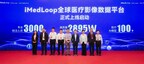
During the event, Diagens Technology officially launched the iMedLoop Global Medical Imaging Data Platform, a proprietary platform developed specifically for the medical AI industry. More than 30 strategic cooperation agreements were also signed. Together, these initiatives establish a practical platform for collaboration among government, industry, academia, research, and healthcare sectors to advance the high-quality development of medical AI, while providing infrastructure to support China’s participation in the global medical AI ecosystem.
Unlocking the Full Value of Data for Medical AI
As the digital economy converges with the Healthy China strategy, artificial intelligence has become a key driver of new-quality productive forces in healthcare. With the continued advancement of tiered diagnosis and treatment, precision medicine, and smart hospitals, medical imaging has become an essential foundation for disease screening, clinical diagnosis, and medical research. As a result, the value of medical imaging data continues to grow, making compliant data circulation and utilization an inevitable direction for industry development. China’s National Data Administration, in its Action Plan for the Development of Trusted Data Spaces (2024–2028), has explicitly identified healthcare as one of the priority sectors for the development of trusted data spaces.
During the keynote session, Professor Chen Runsheng, bioinformatician and researcher at the Institute of Biophysics, Chinese Academy of Sciences, delivered a presentation entitled “Technical Principles and Future Challenges of Large AI Models.” He explained the technological foundations, innovative nature, and future prospects of large AI models, noting that artificial intelligence has become deeply integrated into medical imaging and is increasingly serving as an essential analytical tool. He remarked that AI can integrate the knowledge and expertise of medical imaging specialists, bringing together multiple analytical approaches to deliver high-quality imaging analysis capabilities. In his view, AI’s greatest strength lies not only in processing vast volumes of imaging data, but also in consolidating the knowledge and experience of multiple experts, overcoming the limitations of individual interpretation in ways that traditional manual image reading cannot achieve.
Drawing on frontline experience in hospital digital and smart transformation, Cai Xiujun, Academician of the Chinese Academy of Sciences and President of Sir Run Run Shaw Hospital, vividly demonstrated the innovative applications of AI in healthcare. Through practical examples — including remote robotic surgery, remote ultrasound diagnosis, intelligent pre-consultation systems, and AI-assisted medical imaging diagnosis — he demonstrated the innovative applications of AI in healthcare. Academician Cai emphasized that the core value of medical AI lies in solving real clinical challenges, improving the capabilities of primary healthcare institutions, and continuously enhancing patient experience. He also identified data quality, data scale, and data security as the three critical factors determining the success of AI applications in healthcare. Poorly standardized or low-quality data, he noted, directly reduces AI performance and ultimately limits its clinical value and broader adoption. He called on the industry to prioritize standardized medical data governance and robust compliance and security frameworks as the foundation for AI-enabled healthcare.
Academician Dong Jiahong of the Chinese Academy of Engineering, Dean of the School of Clinical Medicine at Tsinghua University and President of Beijing Tsinghua Changgung Hospital, stated that the engineering foundations for AI hospitals are now in place, driven by the simultaneous maturation of three pillars: the commercialization of AI-powered medical devices, the advancement of large medical AI models to near-specialist levels of clinical reasoning, and the engineering development of AI agents. Unlike smart hospitals, internet hospitals, or medical alliances, AI hospitals, he explained, are built upon digital twins and powered by AI-native operational logic. Such hospitals fundamentally reshape the entire healthcare workflow — from perception and cognition to decision-making and service delivery — enabling seamless integration of online and offline healthcare while providing proactive, lifecycle-wide health management that truly realizes the vision of AI Healthcare.
Dou Xizhao, President of the China National Health Association, observed that medical AI is rapidly evolving from isolated product applications toward comprehensive, ecosystem-driven development. Industry competition, he said, is no longer defined solely by algorithms and models, but increasingly by data resources, standards, application scenarios, innovation ecosystems, and integrated service capabilities. He emphasized that medical imaging data, given its scale, value, and broad applicability, provides a critical foundation for AI-assisted diagnosis and medical research innovation. He called on all stakeholders to strengthen open collaboration and, under the principles of legal compliance and data security, fully unlock the value of medical data so that it can better serve medical research, clinical practice, and industrial innovation.
Building a Trusted Industrial Foundation for Medical Imaging AI
Building a trusted collaborative platform that spans the entire medical imaging data lifecycle is fundamental for the industry to overcome development bottlenecks and achieve large-scale adoption.
At the event, Dr. Song Ning, Chairman of the Board and Chief Executive Officer of Diagens Technology, officially unveiled the iMedLoop Global Medical Imaging Data Platform. He noted that there are more than 3,000 medical imaging indications worldwide, while traditional AI model training typically requires hundreds of thousands of annotated images, with each annotation taking approximately one hour. Even if hundreds of thousands of imaging, pathology, and laboratory professionals across China devoted one hour per day to annotation work, completing the annotations for all projects would still take more than a thousand years.
To address the industry’s heavy reliance on annotated data for model training, Diagens Technology launched iMedImage®, the world’s largest medical imaging foundation model by parameter scale in its field, in May 2025. According to Dr. Song, the foundation model reduces the amount of annotated data required for disease-specific model training to one two-hundredth of traditional levels, shortens development cycles to one-twelfth, and reduces both development costs and computing expenses to one-tenth. Leveraging this foundation model, Diagens has participated in six national and provincial-level major projects and collaborated with 87 leading hospitals over the past 12 months to train 145 vertical AI models.
Regarding data annotation, Dr. Song identified four major pain points in current global annotation tools: inconsistent data formats that are difficult to process, low manual annotation efficiency, uneven annotation accuracy, and challenges in multi-person collaboration and quality control. To address these issues, Diagens introduced iMedStudio, a new-generation intelligent annotation tool featuring four core capabilities: multimodal integration, human-AI collaboration, precise segmentation, and intelligent arbitration.
iMedLoop integrates the iMedImage® foundation model, the iMedStudio intelligent annotation tool, and the iMedMaaS online model training and deployment platform to create a closed-loop ecosystem for medical data annotation and circulation, vertical model training, and model deployment. The platform is now officially open, with more than 3,000 professional annotators onboarded, 28.95 million high-quality data records and over 100 medical AI models deployed, and active participation from multiple data suppliers, AI healthcare companies, and ecosystem partners, establishing a strong resource and industrial foundation for the global medical AI industry.
Dr. Song stated that the platform is committed to deep integration of technology, data, and application scenarios, and that through the joint efforts of hospitals, research institutions, and technology companies, China’s medical AI industry has the potential to become a new pillar of the global healthcare sector.
Collaboratively Building an Innovative Medical AI Ecosystem
The high-quality development of medical AI requires coordinated efforts from diverse stakeholders. A roundtable discussion was held during the forum, bringing together representatives from basic research, clinical practice, policy and standards, and platform operations to discuss the construction of an industry-wide innovation ecosystem.
Academician Zhan Qimin of the Chinese Academy of Engineering, Director of the National Institute of Health Data Science at Peking University, stated that AI is driving oncology toward more personalized and precise treatment. “In the past, treatments were often broad and one-size-fits-all, without sufficient consideration for individual differences and precision. Such approaches could lead to significant side effects and limited efficacy. Today, by combining multi-omics data with AI analysis and applying the insights to pathology slides, it is becoming possible to provide each cancer patient with a truly tailored treatment plan.” He also highlighted AI’s potential in drug discovery, including shorter development cycles, lower costs, and higher success rates. In his view, the integration of AI and medicine is shortening the distance between the laboratory and the clinic, providing sustained momentum for the evolution of the medical AI ecosystem.
Zhang Hong, Deputy Party Secretary and Executive President of Zhejiang Cancer Hospital, emphasized the importance of real-world clinical application scenarios within ecosystem collaboration. He argued that for AI to be adopted in hospitals, it must meet three requirements: improved efficiency, ease of use, and data security. “All three standards are indispensable.” Clinical practice, he said, is both the ultimate testing ground for AI value and the source of feedback that drives technological iteration. Only when hospitals can afford to use AI and use it effectively can AI complete the value loop from research to application.
Ren Jiuxuan, Deputy Director of the Digital Health Department at the Institute of Cloud Computing and Digitalization of the China Academy of Information and Communications Technology, stated that the healthy development of the medical AI ecosystem depends on a unified evaluation framework. “We are building a dual-track evaluation system covering both laboratory testing and clinical validation. In addition to general model capability assessments, we have introduced testing for AI agents capable of multi-turn dialogue, because real clinical diagnosis is an interactive process in which patients and doctors gradually uncover information together rather than providing all information to AI at once.” He noted that China has advantages in data resources and application scenarios, that the diversity of domestic AI products already exceeds that of the United States, and that the computing gap between the two countries is narrowing. He believes that high-quality medical datasets will experience explosive industry growth within the next one to two years.
From the perspective of industrial practice, Dr. Song Ning explained the technological foundation of ecosystem collaboration. “iMedImage® is the technological foundation; without it, building an ecosystem would be like building a castle on sand. iMedLoop is the collaborative platform that integrates annotation, governance, validation, and the entire workflow.” He emphasized that the platform will remain open and work with medical institutions, research organizations, and industry partners to lower the barriers to AI-driven healthcare innovation. “The greatest challenge remains technological breakthroughs. Once the underlying technology advances, regulation and commercialization will gradually follow. What is required is long-term commitment.”
Zheng Mingzhi, former Vice Chairman of the Zhejiang Federation of Industry and Commerce and Vice President of the Zhejiang Merchants Development Institute, remarked that the future of medicine belongs not only to those who understand AI, but also to those who can apply AI appropriately. He stressed that the healthcare industry must keep pace with the AI era and make AI a true clinical support tool and assistant for physicians. In this process, he said, the iMedLoop platform is poised to play a very important role.
A strategic cooperation signing ceremony for the co-development of the medical AI ecosystem was also held during the forum. Hangzhou Data Group, Legend Holdings, the Wenzhou Municipal Health Commission, Zhengzhou People’s Hospital, the School of Mathematics, Physics and Medicine of Zhejiang Normal University, InferVision, and dozens of other institutions reached cooperation agreements. Leveraging the iMedLoop platform, the parties will collaborate on data governance, algorithm innovation, model development, and clinical validation to build a comprehensive medical AI innovation ecosystem, explore new pathways for improving healthcare delivery, and contribute to the advancement of the Healthy China initiative.
View original content to download multimedia:https://www.prnewswire.com/apac/news-releases/medical-ai-ecosystem-innovation-forum-and-imedloop-global-medical-imaging-data-platform-launch-held-in-beijing-302822664.html
SOURCE Diagens Technology










 Technology2 days ago
 Technology2 days ago

 Technology2 days ago
 Technology1 day ago
 Technology5 days ago
 Technology20 hours ago