Connect with us

Technology

Beazley Security Expands Exposure Management Suite with Third-Party Risk and Dark Web Monitoring

Published

on

New modules provide continuous visibility into supply chain risks and monitors for compromised credentials to help organizations preemptively avoid potential compromise

WEST HARTFORD, Conn., July 14, 2026 /PRNewswire/ — Beazley Security today announced the launch of two new modules within its Exposure Management platform: Third-Party Risk Monitoring (TPRM) and Dark Web Monitoring (DWM). Together, these capabilities extend visibility beyond an organization’s direct attack surface to two of the fastest-growing attack paths: vendor-related cyber risks as well as stolen credentials that are often visible in infostealer logs before they ever reach dark web marketplaces.

The expanded capabilities reinforce Beazley Security’s mission to help organizations move from reactive security practices to continuous, intelligence-driven exposure management. They will be demonstrated during Black Hat USA, August 4-6 in Las Vegas.

Expanding visibility across today’s most critical attack paths

Cyber risks increasingly originate outside traditional network boundaries. Two of the fastest-growing sources are weak links in trusted third-party vendors, and stolen credentials obtained through breaches, malware, or underground marketplaces.

“Threats are no longer confined to your own environment,” said Alton Kizziah, CEO of Beazley Security. “Vendor exposures and compromised credentials are now primary attack paths. By bringing these capabilities into our Exposure Management platform, we give our clients the visibility to prioritize what actually matters and take action before attackers do.”

Together, TPRM and DWM expand Beazley Security’s Exposure Management platform to address these risks, helping clients avoid costly breach response or ransomware remediation.

Third-Party Risk Monitoring: Continuous, context-driven supply chain risk intelligence

TPRM enables organizations to continuously assess and prioritize cyber risk across their vendor ecosystem using an outside-in approach based on observable exposure rather than static questionnaires. Instead of relying on periodic assessments, organizations gain continuous visibility into vendor risk and can focus on the third parties that present the greatest real-world exposure. Each vendor receives a 0–100 risk score that reflects not only their externally observable security posture, but also the context of their relationship with the client, including the level of access they have to systems and data, and their criticality to business operations. This contextualized score is accompanied by detailed findings and actionable risk reduction guidance, enabling security teams to prioritize remediation efforts based on the vendors that pose the greatest business risk.

Dark Web Monitoring: Early detection of compromised credentials

Dark Web Monitoring (DWM) extends Exposure Management into the deep and dark web, where stolen credentials are bought, sold, and weaponized. The product continuously monitors sources such as dark web forums, ransomware leak sites, infostealer logs, and underground marketplaces to identify exposed credentials linked to an organization’s domains. Because stolen credentials remain one of the most common initial access methods, early detection and remediation closes the window before attackers can turn access into a foothold.

Unified exposure management across internal and external risk

With the addition of TPRM and DWM, Beazley Security’s Exposure Management platform gives organizations a more complete, continuous view of their external risk landscape. This is further enhanced by Beazley Security Labs’ insight into how breaches actually happen, the initial access methods threat actors use, and the exposures most likely to lead to real incidents.

Specific features of each module include:

Third-Party Risk Monitoring

Dark Web Monitoring

Continuous vendor exposure visibility
Monitoring of internet-facing assets, services, software, and known exploited vulnerabilities across vendor environments
Dynamic, evidence-based risk scoring
Vendors receive continuously updated 0-100 risk scores based on real-world findings rather than static questionnaires
Business context-aware prioritization
Risk scoring incorporates client-defined factors such as system access, data sensitivity, and operational criticality, ensuring scores reflect real business impact 
Threat intelligence integration
Findings are enriched with intelligence from Beazley Security Labs, prioritizing exposures tied to active exploitation
Vendor engagement and remediation support
Actionable reporting helps organizations drive more effective security conversations with suppliers

Continuous credential exposure monitoring
Detection of leaked, stolen, or compromised credentials associated with corporate domains across dark web sources and information stealer logs
High-confidence threat signals
Compromised credentials represent one of the most reliable early indicators of potential breach activity 
Centralized alerting and context
Alerts delivered through the VERACIS™ platform include affected credentials, exposure details, and associated threat intelligenceRapid response enablement
Insights and guidance allow organizations to quickly reset credentials, enforce MFA, and investigate unauthorized access before attackers act
Risk-based prioritization
Severity indicators highlight the exposures most likely to result in material impact

Both modules are:

Delivered within the VERACIS™ platform for centralized visibilityIntegrated with existing Exposure Management workflowsDeployable without agents or direct system accessDesigned to provide value within minutes of activation

For organizations seeking additional support, the Exposure Management suite integrates with Beazley Security’s Managed Extended Detection and Response (MXDR) service for 24/7 monitoring and response.

For full information about Exposure Management features, tiers, and availability, visit https://beazley.security/solutions/exposure-management.

To schedule a demo or meet during Black Hat USA, visit https://beazley.security/events/black-hat-usa-2026.

About Beazley Security

Beazley Security is a global cyber security services firm committed to helping clients develop true cyber resilience. We combine decades of cyber security protection, detection, response, and recovery expertise with the actuarial precision and risk mitigation capability of our parent company, Beazley Insurance. Current operations include USA, Canada, the UK, Germany, France, Spain, and Singapore.

For more information, visit the Beazley Security website.

View original content to download multimedia:https://www.prnewswire.com/news-releases/beazley-security-expands-exposure-management-suite-with-third-party-risk-and-dark-web-monitoring-302824116.html

SOURCE Beazley Security

Continue Reading
Click to comment

Leave a Reply

Your email address will not be published. Required fields are marked *

Technology

Ramp Launches Ramp for Construction to Help Companies Catch Job Overruns Before Month-End

Published

on

By

New capabilities automate job coding for field crews and give finance real-time visibility and control across every project

NEW YORK, July 14, 2026 /PRNewswire/ — Ramp today launched Ramp for Construction, a suite of construction-specific capabilities across Ramp’s financial operations platform to help general contractors, builders, and subcontractors control spend at the job level, protect margins, and catch overruns before they happen.

For many construction firms, overruns surface at month-end, after card charges, invoices, approvals, and job codes have finally been reconciled—and after the margin is already gone. The problem is fragmentation: cards in one place, AP in another, approvals over email, and job coding in spreadsheets. In a nearly $2.2 trillion U.S. industry built around tight job-level margins, disconnected systems make it harder for contractors to see and control spend in real time.

Ramp for Construction connects the field and back office at the point of spend. Field crews get a simpler way to make purchases, capture receipts, and confirm job details without sorting through irrelevant codes or chasing paperwork weeks later. Finance teams get cleaner project data from the start, managed centrally and synced with the systems they already use.

“I drop the invoice in and Ramp pulls all the amounts, retainage included, and matches it against what’s committed on the PO,” said David Anderson, Accountant at Dick Anderson Construction. “It updates in real time as I enter invoices and change orders, so when it’s time to release, I just check the balance in Ramp and release it, no separate report needed.”

Ramp for Construction adds construction-specific capabilities across Ramp’s cards, expense, and accounts payable platform:

Less admin for field crews: Ramp AI pre-fills the job, phase, and cost code based on the field worker and expense, so crews simply one-click review and confirm. Mobile and SMS receipt capture keeps submissions quick.Project-based approvals: Route expenses and bills to the project manager accountable for each job, giving construction firms a first line of defense to review spend, catch issues, and maintain control before costs are approved.Real-time project visibility: Ramp tracks card, bill, and purchase order activity to show actuals vs budget as spend happens on each project.Automated retainage tracking: Ramp tracks retainage from purchase order through release, helping general contractors enforce holdbacks, reduce manual spreadsheet work, and protect against financial risk.Compliant subcontractor payments: Ramp checks that lien waivers, W-9s, and certificates of insurance meet company policy before payment, helping teams reduce risk without adding manual review to every payout.

“Construction firms should have the visibility they need to manage project profitability in real time,” said Geoff Charles, Chief Product Officer at Ramp. “Every card swipe and invoice should hit the right job, cost code, and budget the moment money moves. Ramp for Construction gives finance teams the controls to enforce compliance, protect margins, and act with confidence as projects evolve.”

Ramp for Construction is already helping firms improve operations. More than 70% of receipts are matched within 24 hours, field teams submit 2.7x more transactions with accurate cost coding at the time of submission, and teams save more than 15 hours each month through automated retainage tracking and compliance document reviews.

Ramp for Construction supports Viewpoint Vista, Viewpoint Spectrum, Sage 100 Contractor, Sage 300 CRE, Sage Intacct, Sage Intacct Construction, CMiC, Acumatica, NetSuite, and QuickBooks Online.

Ramp for Construction is available now. Learn more at ramp.com/construction.

About Ramp

Ramp is how companies save time and money on every dollar they spend. It’s the smart financial infrastructure behind every card swipe, invoice, and reimbursement – streamlining approvals, processing payments, and closing the books automatically. More than 70,000 organizations, from family farms and space startups to the Fortune 100, have saved over $12 billion and 27 million hours with Ramp. For the median customer, that translates to 5% savings on expenses and 16% revenue growth in their first year. Founded in 2019, Ramp powers over $200 billion in purchases annually. Learn more at www.ramp.com.

* Ramp does not include bank transfers or non-monetized payments when calculating Total Purchase Volume.

press@ramp.com

View original content to download multimedia:https://www.prnewswire.com/news-releases/ramp-launches-ramp-for-construction-to-help-companies-catch-job-overruns-before-month-end-302824818.html

SOURCE Ramp

Continue Reading

Technology

Eagle Hill Retention Index: Employee Retention Outlook Softens as Workers Reassess Their Options

Published

on

By

Declining Compensation Sentiment and Renewed Confidence in Job Opportunities Signal Growing Attrition Risk—Especially Among Millennials

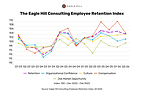
ARLINGTON, Va., July 14, 2026 /PRNewswire/ — The latest Eagle Hill Consulting Employee Retention Index declined 1.3 points in the second quarter of 2026 to 104.2, marking its lowest level in the past year and signaling that U.S. workers will be less likely to remain in their current roles over the next six months. While retention remains relatively strong by historical standards, the latest data suggest employers may be entering a period of increased workforce mobility.

The decline comes as employees grow less satisfied with their compensation while simultaneously growing more optimistic about opportunities in the external job market. Notably, these shifts occurred even as employees’ confidence in organizations and satisfaction with workplace culture improved.

“Today’s workforce is sending employers a nuanced message,” said Melissa Jezior, president and chief executive officer of Eagle Hill Consulting. “Employees generally feel good about their organizations and workplace culture, but many are questioning whether their compensation and long-term growth opportunities are keeping pace with the market. When workers begin to believe they have better options elsewhere, retention risks increase, even inside organizations with strong cultures.”

The findings come as the broader labor market sends mixed signals. The latest Job Openings and Labor Turnover Survey (JOLTS) showed job openings holding steady at 7.6 million, exceeding expectations and suggesting opportunities remain available for workers considering a move. At the same time, the June jobs report showed hiring slowed considerably, highlighting a labor market that is cooling but continues to offer opportunities for skilled talent.

“Employers shouldn’t interpret a slower hiring market as a reason to become complacent,” Jezior added. “Workers are evaluating the entire employee experience, not just whether they have a job, but whether they see a future with their employer. Organizations that invest in career development, leadership, culture, and meaningful rewards will be in the strongest position to retain critical talent as mobility begins to increase.”

Key Retention Index Indicators

Compensation Indicator: Declined 5.6 points, representing the only indicator to weaken this quarter.Job Market Opportunity Indicator: Increased 1.9 points, reflecting growing optimism about external job opportunities.Organizational Confidence Indicator: Increased 0.9 points, rebounding after two consecutive quarters of decline.Culture Indicator: Increased 0.3 points, continuing its steady upward trend for a fourth consecutive quarter.

Millennials Emerge as the Biggest Retention Risk
Although overall retention outlook declined modestly, the largest shift occurred among Millennials. Millennials experienced a 6.1-point decline in the Retention Index, signaling that they pose an attrition risk. They were the only generation to report declines across organizational confidence, compensation, and culture while simultaneously expressing greater confidence in outside job opportunities.

As Millennials increasingly occupy management, leadership, and specialized professional roles, this shift could have outsized implications for organizations.

“Millennials now represent the backbone of leadership pipelines across many organizations,” said Jezior. “When this generation begins questioning whether to stay, employers risk losing institutional knowledge, leadership continuity, and future executives. The findings underscore why retaining high-potential talent must be a core business and workforce planning priority, not just an HR initiative.”

Generational Gap Begins to Narrow
Unlike previous quarters, retention outlooks across generations became more closely aligned.

Gen Z reported a modest decline.Millennials experienced the sharpest drop.Gen X became more likely to stay.Baby Boomers also showed improved retention sentiment.

Compensation Increasingly Drives Retention Decisions
The Compensation Indicator experienced its sharpest decline in recent quarters, suggesting employees are placing greater emphasis on total rewards, future earning potential, and advancement opportunities.

Combined with improving perceptions of external job opportunities, the findings indicate workers may increasingly compare what they receive today against what they believe they could earn elsewhere.

The Eagle Hill Employee Retention Index is a first-of-a-kind market indicator that tracks worker sentiment across four proven drivers of retention: organizational confidence, culture, compensation, and job market opportunity.

The Organizational Confidence Indicator measures how confident employees are in their organization’s future and leadership.The Culture Indicator looks at employee sentiment about their workplace culture, connections, and whether they feel valued and recognized.The Compensation Indicator measures how employees view their compensation, benefits, and ability to grow their compensation at their organization.The Job Market Opportunity Indicator measures how employees perceive external prospects for employment and job security in the near term.

Each month, the Eagle Hill Consulting Employee Retention Index measure shifts in workforce retention based upon ongoing employee opinion surveys on factors related to worker intentions to change jobs. As the Employee Retention Index increases, it signals an increase in retention in the next six months. As the Employee Retention Index decreases, it signals to employers that workers are more likely to leave their jobs, and organizations can expect more turnover in the next six months.

The Eagle Hill Consulting Employee Retention Index is based on a monthly omnibus survey conducted by IPSOS of a nationally representative sample of U.S. adults employed full- or part-time. Quarterly indices and reports are issued based on a minimum of 1,200 aggregated responses per quarter. Respondents are polled on a range of workforce topics including organizational confidence, culture, compensation, and job market opportunity.
The survey commenced in December 2022, and the most recent data was collected from April and June 2026.

Eagle Hill Consulting LLC is an award-winning business that provides unconventional management consulting services in the areas of Organizational Performance, Business Intelligence, Technology Enablement, Talent, and Change Management. The company’s expertise in delivering innovative solutions to unique challenges spans across Fortune 500 companies, government agencies, and global nonprofits. Eagle Hill has offices in the Washington, D.C. metropolitan area, Boston, MA, and Seattle, WA. More information is available at www.eaglehillconsulting.com.

View original content to download multimedia:https://www.prnewswire.com/news-releases/eagle-hill-retention-index-employee-retention-outlook-softens-as-workers-reassess-their-options-302825245.html

SOURCE Eagle Hill Consulting LLC

Continue Reading

Technology

New Flywheel Report Shows How Brands Can Turn Fragmentation into a Competitive Advantage

Published

on

By

The Big Shift outlines how a Total Commerce approach can connect media, retail, trade and consumer engagement as shopping journeys become increasingly complex.

BALTIMORE, July 14, 2026 /PRNewswire/ — Flywheel, a leader in commerce and technology solutions and part of the Omnicom (NYSE: OMC) Integrated Media offering, today released The Big Shift: From Managing to Mastering Fragmentation, a new white paper examining how AI-powered search, social commerce, retail media and organizational silos are reshaping the way brands drive growth.

While 80% of consumers (OM Research, Connected Commerce 2024) now take a non-linear path to purchase, many brands still manage media, retail, trade, and shopper marketing through separate teams, budgets, and performance metrics. According to Flywheel, that disconnect leads to wasted media investment, missed sales opportunities, unmeasured promotional impact, and reduced organizational agility.

The report argues that brands must adopt a Total Commerce approach, a business model that unifies consumer discovery, retail activation, media investment, trade planning, and measurement into one operating system focused on business outcomes rather than channel performance.

“The way consumers discover and buy products has fundamentally changed,” said Mike Feldman, SVP Commerce at Flywheel. “A shopper might discover a product through a creator, research it through an AI assistant, purchase it through a retailer marketplace and pick it up in-store, all within a few hours. The brands winning today are not treating those moments as separate channels. They are organizing around one connected consumer journey.”

The report notes that TikTok generated $33.1 billion in gross merchandise volume in Q1 2026, surpassing eBay and demonstrating how quickly discovery and purchase are converging on a single platform.

The report identifies three forces accelerating the fragmentation challenge:

Consumer discovery has fundamentally changed. Social platforms have become primary discovery engines, with 73% of Gen Z and 67% of Millennials (Salsify, 2025) citing social media as their main source for learning about new products. Nearly half of social media users have also used influencers in their purchase journey.AI is becoming a new discovery channel. Thirty-six percent of consumers, including 45% of Gen Z and 51% of Millennials (OM Research – GEO Update April 2026) say they have shifted most of their searches from traditional search engines to generative AI platforms.Retailers have become media companies. Retailers now operate advertising businesses, premium content platforms and closed-loop measurement capabilities that increasingly connect media exposure to purchase behavior.

The report arrives as marketers grapple with many of the same trends that dominated conversations at this year’s Cannes Lions Festival of Creativity, including creator commerce, retail media, and AI-powered discovery. Against that backdrop, The Big Shift emphasizes the continued importance of physical retail, arguing that while discovery increasingly happens across creators, AI, retail media and connected TV, the shelf remains one of the most critical moments in the consumer journey.

“The physical shelf is still one of the most important moments in commerce, but it is no longer where the consumer journey begins,” said Phil Camarota, Chief Creative Officer at Flywheel and President of the Cannes Lions Creative Commerce Jury. “By the time a shopper reaches a store or product page, they have already been influenced by creators, retail media, reviews, AI recommendations and countless other touchpoints. The brands that succeed are creating one connected experience, across all those moments.”

The report also highlights Flywheel client Danone’s “Become a Home’Rista” campaign as an example of Total Commerce in action. Built around the insight that many consumers believed barista-quality coffee required professional expertise, the program connected influencer content, retail media, digital shelf activation and in-store experiences across multiple retailers. The campaign generated 641 million impressions and multi-brand halo sales across Danone’s portfolio.

Ariel Dalton, Head of Strategic Insights, Planning & Connected Commerce at Danone shared: “We uncovered what we call the ‘barista gap’ and built a campaign that inspires consumers to recreate and elevate the coffeehouse experience at home. The success of this campaign demonstrated the power of pairing a compelling consumer insight with the strength of Danone’s portfolio, to deliver a daily ritual that feels both elevated and unique to the consumer. What began as a pilot in 2025 has evolved into one of our flagship programs, scaling across multiple retail activation nationwide.

“Fragmentation leaves brands with a simple choice: manage it or master it,” Feldman said. “Brands that own consumer journeys across channels, orchestrate with retailers around shared outcomes and align internally around one set of goals will create competitive advantage. The brands that master fragmentation will define the next era of commerce.” 

About Flywheel:

Flywheel, a leader in commerce and technology solutions and part of the Omnicom (NYSE: OMC) Integrated Media offering, provides best-in-class service that combines tailored expertise with advanced software solutions to help clients drive incremental sales, market share, profitability, and measurable commerce growth.

A leader across major marketplace platforms, Flywheel combines global scale and influence with a customized, client-centric approach designed to deliver impactful business outcomes. Client success remains at the center of the company’s mission.

With operations across the Americas, Europe, APAC, and China, Flywheel is widely recognized for the scale of its retail media capabilities, while delivering value across the entire commerce ecosystem. The company helps brands navigate the evolving commerce landscape through integrated solutions built to accelerate growth and performance.

View original content to download multimedia:https://www.prnewswire.com/news-releases/new-flywheel-report-shows-how-brands-can-turn-fragmentation-into-a-competitive-advantage-302822256.html

SOURCE Flywheel Digital

Continue Reading

Trending