Connect with us

Technology

Paintless Dent Repair Costs Explained in HelloNation Featuring Dent Repair Expert Leo Plourde

Published

on

The article examines how paintless dent repair compares with traditional body work in cost, repair time, and preservation of a vehicle’s finish.

BROOKLYN, N.Y., July 20, 2026 /PRNewswire/ — Is paintless dent repair actually cheaper than traditional body shop repairs for fixing minor vehicle damage? The answer is explored in a HelloNation article, which explains how this repair method can reduce costs while preserving a vehicle’s original finish, featuring insights from Dent Repair Expert Leo Plourde.

The HelloNation article explains that paintless dent repair, often called PDR, has become a widely used option for repairing minor dents and door dings. The process restores the shape of the metal without disturbing the factory paint, which helps avoid many of the steps required in traditional body work.

According to the article, conventional body shop repair often involves sanding the damaged area, applying primer, repainting the panel, and blending the new paint with surrounding surfaces. Each of these steps adds time, labor, and material costs to the repair process.

Paintless dent repair approaches the problem differently. The article describes how technicians use specialized tools to carefully reshape the metal from behind the panel, gradually returning it to its original form. Because the factory paint remains intact, repainting and blending are not required in many cases.

The article notes that this difference is a key reason paintless dent repair can be more affordable than traditional body shop repair. By eliminating paint materials and reducing labor hours, the overall dent repair cost can be significantly lower for minor damage.

The HelloNation article also explains that the speed of the process contributes to its cost effectiveness. Small dents and door dings can often be repaired during a single appointment, allowing vehicle owners to return to their normal schedules quickly.

Dent Repair Experts point out that shorter repair times also reduce indirect costs for drivers. When repairs are completed within hours rather than days, drivers may avoid expenses associated with rental vehicles or alternative transportation.

Another factor influencing dent repair cost is the size and location of the damage. The article notes that minor dents and shallow hail damage are typically well suited for paintless dent repair because the metal can be reshaped without affecting the paint surface.

However, the article also explains that not every dent can be repaired with this method. Deeper creases, damage that has cracked the paint, or dents located on certain panel edges may require traditional body shop repair or a combination of repair techniques.

In these cases, the article advises that experienced technicians can evaluate the damage and recommend the most appropriate solution. Dent Repair Experts often determine whether paintless dent repair alone will restore the panel or whether a hybrid repair approach may be needed.

The HelloNation article also discusses how paintless dent repair can affect insurance decisions. Because the repair cost is typically lower, some drivers choose to handle small dents without filing an insurance claim, which may help avoid increases in premiums.

Insurance companies frequently recognize paintless dent repair as a reliable solution for damage such as hail dents or parking lot door dings. The article explains that reputable repair shops familiar with insurance procedures can also help customers navigate claim documentation when necessary.

Convenience is another advantage discussed in the article. Traditional body work may require several days or even weeks depending on paint curing and shop workload. Paintless dent repair, by comparison, is often completed the same day.

The article concludes that paintless dent repair offers a practical option for many common forms of cosmetic vehicle damage. By preserving the vehicle finish and reducing labor requirements, the method often delivers an efficient balance between quality and affordability.

Is Paintless Dent Repair Cheaper Than Traditional Body Work? features insights from Leo Plourde, Dent Repair Expert of Brooklyn, New York, in HelloNation.

About HelloNation
HelloNation is a premier media platform that connects readers with trusted professionals and businesses across various industries. Through its innovative “edvertising” approach that blends educational content and storytelling, HelloNation delivers expert-driven articles that inform, inspire, and empower. Covering topics from home improvement and health to business strategy and lifestyle, HelloNation highlights leaders making a meaningful impact in their communities.

View original content to download multimedia:https://www.prnewswire.com/news-releases/paintless-dent-repair-costs-explained-in-hellonation-featuring-dent-repair-expert-leo-plourde-302829691.html

SOURCE HelloNation

Continue Reading

Technology

Radha Exports partners with Körber for advanced warehouse automation in Singapore

Published

on

By

SINGAPORE, Oct. 5, 2026 /PRNewswire/ — Körber today announced a new partnership with Radha Exports Pte Ltd (Radha) to deploy a high-density automated pallet storage and interfloor conveying system. The technology will be integrated into Radha’s new state-of-the-art facility on Pandan Road, Singapore, enhancing operational efficiency across their operations.

Established in 1995, Radha is a leading FMCG retailer in Singapore, operating more than 200 outlets through ABC Bargain Centre, ValuDollar and Japan Home. As an importer, wholesaler and retailer, Radha sought a future-ready solution to optimise space, streamline material flow and support continued growth.

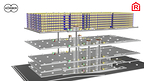
To meet these requirements, Körber engineered a solution that integrates a five-floor interfloor pallet lifter system with advanced smart shuttle technology. This high-density automated storage system will accommodate nearly 9,000 pallets within a compact volumetric space of approximately 61,200 m³, enabling seamless, accelerated goods movement across multiple facility levels.

Körber will integrate its Warehouse Control System (WCS) with Radha’s Warehouse Management System (WMS), linking storage and material flow to create a coordinated warehouse operation.

“As our retail footprint expands, automation has become essential to managing higher volumes and accelerating fulfillment. Körber partnered closely with our team to understand our operational needs and develop a scalable solution that meets today’s needs while supporting future growth,” commented Sunil Advani, Chief Operating Officer, Radha Exports Pte Ltd.

For Körber, the project demonstrates the value of combining proven technologies with a customer-focused approach. Louis Kok, Head of Marketing & Sales, Körber Business Area Supply Chain Singapore, said: “Radha’s multi-floor operations demanded a customized approach. Through transparent communication and close collaboration, we developed a system tailored to their workflows, building on our track record of delivering warehouse automation solutions in Singapore and across Southeast Asia.”

“Across APAC, different industries and markets present varying growth opportunities. Our vertical strategy helps us recognize these market dynamics and bring the right solutions and capabilities together with the industry expertise, to respond to specific requirements of our customers by creating greater value for our customers and Radha Exports Pte Ltd is a perfect example,” says Suunil Dabral, Senior Vice President & Regional Head APAC, Körber Business Area Supply Chain.

About Körber’s Business Area Supply Chain 

Supply chains are growing more complex every day. At Körber, we provide a comprehensive range of proven, end-to-end supply chain solutions tailored to any business size or growth strategy. Our customers optimize their supply chains through a portfolio spanning software, automation, mail and parcel solutions, robotics, and material handling, supported by the expertise to tie it all together. By connecting technologies and capabilities across the entire supply chain, Körber helps businesses turn their operations into a competitive advantage with leading technology to fuel what’s next.

The Business Area Supply Chain is part of Körber, a global technology company for intelligent manufacturing and supply chains solutions. Find out more on www.koerber.com.

Inquiries:

Louis Kok
Head of Marketing & Sales
Körber Supply Chain SG Pte Ltd
+65 6841 7073
info.sc.sgp@koerber-supplychain.com

View original content to download multimedia:https://www.prnewswire.co.uk/news-releases/radha-exports-partners-with-korber-for-advanced-warehouse-automation-in-singapore-302897764.html

Continue Reading

Technology

Nearly Half of Asia Pacific Consumers Open to Using Stablecoins in the Next Five Years, Visa Study Finds

Published

on

By

Findings from Visa Consumer 360 research, surveying 14,250 consumers across 14 Asia Pacific markets, point to growing interest in stablecoins.

SINGAPORE, Oct. 5, 2026 /PRNewswire/ — Visa, a world leader in digital payments, today released new survey findings on stablecoin awareness and consumer sentiment in Asia Pacific. The research reveals growing interest in practical uses such as everyday spending, travel and cross-border money movement, while limited understanding and concerns around trust remain barriers to wider use.

As stablecoins move beyond their crypto-native roots, consumers are beginning to view them less as a crypto-trading instrument and more as a potential tool for everyday spending, travel and cross-border transfers. Yet misconceptions remain widespread, with close to half believing stablecoins can only be used to buy or sell other cryptocurrencies. Turning this interest into everyday utility will depend on making stablecoins easier to understand and use through trusted, familiar and regulated payment experiences.

“We’re seeing a meaningful shift in how consumers across Asia Pacific think about stablecoins,” said Nischint Sanghavi, Head of Digital Currencies, Asia Pacific at Visa. “Consumers are beginning to see how stablecoins could support the ways they already spend and move money, particularly through online purchases, travel and cross-border transfers. The opportunity now is to turn that interest into trusted and familiar payment experiences that work at scale.”

Consumers show rising interest in everyday stablecoin use

Across Asia Pacific, 46% of consumers say they are likely to use stablecoins within the next five years, compared with 16% who have used them in the past 12 months. Interest extends to everyday online purchases, travel spending and overseas shopping, pointing to potential use beyond investment or crypto trading. Cross-border money movement is another area of potential, with 49% believing stablecoins could become a common way to move money across borders within five years.

This points to possible relevance for remittances, international transfers and other payment needs. Yet understanding has not caught up with these emerging use cases: 49% of consumers who are aware of stablecoins still believe they can only be used to buy and sell other cryptocurrencies.

Market-level findings show where stablecoin awareness and intent are strongest across Asia Pacific. Hong Kong (84%), India (80%) and Thailand (77%) recorded the highest awareness, while Vietnam (67%) and India (67%) showed the strongest intent to use stablecoins within the next five years. These findings highlight the importance of making stablecoins available through secure payment experiences consumers already recognise and trust. Visa is already working with banks, regulated financial institutions and payment partners to connect stablecoin capabilities with familiar ways to pay and move money.

Stablecoin awareness is mainstream, but trust and understanding remain barriers

Stablecoins have entered mainstream awareness across Asia Pacific, with 66% of consumers aware of them. Yet only 6% demonstrate an accurate understanding of how stablecoins work, while misconceptions remain with 41% believing that stablecoins always increase in value.

Trust is also holding consumers back. Among those who are aware of stablecoins but have never used them, 38% cite concerns about fraud or scams, while 36% point to a lack of understanding. Consumers show the strongest preference for regulated institutions, with government or central bank-linked entities (27%) and banks or regulated financial institutions (26%) ranking as the most trusted providers.

While interest is growing, adoption will depend less on awareness alone and more on whether stablecoins can be made understandable, secure and useful in everyday payment contexts. The findings underscore the need for trusted and familiar ways to access stablecoins. Visa is working with banks, regulated financial institutions and payment partners to bring greater security, compliance and usability to stablecoin-enabled experiences, including through the Visa Stablecoin Platform, which helps clients mint, move and manage stablecoins.

“This research confirms what we’ve been building toward,” added Nischint. “Consumers want stablecoins to feel like a natural part of the payments they already trust, not a separate system. Our role is to connect emerging stablecoin technology with the secure, familiar payment experiences consumers rely on every day.”

About Visa Consumer 360 study

The Visa Consumer 360 study was commissioned in 2026, with fieldwork conducted between June and July 2026. The study surveyed 14,250 consumers aged 18 to 65 across 14 Asia Pacific markets: Mainland China, Taiwan, Hong Kong, Japan, Korea, Singapore, Malaysia, Thailand, Indonesia, the Philippines, Vietnam, India, Australia and New Zealand.

About Visa

Visa (NYSE: V) is a world leader in digital payments, facilitating transactions between consumers, merchants, financial institutions and government entities across more than 200 countries and territories. Our mission is to connect the world through the most innovative, convenient, reliable and secure payments network, enabling individuals, businesses and economies to thrive. We believe that economies that include everyone everywhere, uplift everyone everywhere and see access as foundational to the future of money movement. Learn more at Visa.com.

View original content to download multimedia:https://www.prnewswire.com/apac/news-releases/nearly-half-of-asia-pacific-consumers-open-to-using-stablecoins-in-the-next-five-years-visa-study-finds-302897844.html

SOURCE Visa Worldwide Pte Ltd

Continue Reading

Technology

Payward and Singapore Gulf Bank Partner to Bring 24/7 Settlement to Institutional Digital Asset Markets

Published

on

By

Payward has integrated SGB Net, Singapore Gulf Bank’s real-time clearing network, allowing institutional clients in Asia and the Gulf region to settle instantly at any hour. SGB will also onboard Kraken Prime as an additional source of digital asset liquidity.

SYDNEY, Oct. 5, 2026 /PRNewswire/ — Payward, the unified financial infrastructure platform behind Kraken, and Singapore Gulf Bank (SGB), a fully licensed digital bank regulated by the Central Bank of Bahrain, today announced a strategic partnership to bring always-on settlement to institutional digital asset markets available to specific jurisdictions only. 

With this partnership, Payward has integrated SGB Net, SGB’s real-time multi-currency clearing network. It allows institutional clients of both firms to now settle transactions instantly, 24 hours a day, seven days a week. The settlement offering initially starts with US dollar transactions for a select number of clients, with plans to expand to more clients and additional currencies over time.

Settlement between banks and trading venues have historically taken days and been held to fixed cut-off times, even as digital asset markets trade around the clock. Through SGB Net, an SGB client can deposit funds with Payward and put them to work instantly, at any hour. SGB is also partnering with Kraken Prime, Payward’s full-service prime brokerage solution, to access liquidity for its digital asset offerings. Over the coming months, it will draw on Payward’s markets to price trades for its own customers.

SGB launched SGB Net in 2025 for digital asset businesses with growing operational needs, and the network has since scaled to process more than $20 billion in fiat transactions each month. SGB is backed by Mumtalakat, Bahrain’s sovereign wealth fund, and by Singapore’s Whampoa Group, and it onboards corporate clients digitally across markets.

“Exchanges, payment providers, OTC desks and fintechs all run into the same banking constraint. Settlement stops when the business day does, while their markets do not. SGB has built settlement infrastructure that reflects the future of digital asset banking and payments,” said Mark Greenberg, Chief Commercial Officer of Payward. “Every regulated bank we connect with this way brings us closer to a world where settlement and cross-border payments happen in real time, wherever our clients are.”

“Access to liquidity is only useful if clients can move funds when they need to,” said Shawn Chan, Chief Executive Officer, SGB. “By connecting SGB Net with Payward and partnering with Kraken Prime, we are bringing settlement and liquidity closer together, giving clients more flexibility in how they fund and manage their digital asset activity.”

To support clients across borders and asset classes, SGB offers corporate and personal banking accounts to businesses and individuals worldwide, combining multi-currency accounts, international payments and remote account opening with access to digital asset services.

The partnership is part of enhancing Payward Banking, the money layer behind the Payward platform, which modernizes how clients move cash across deposits, payments, cards, custody, and lending. As digital asset markets and traditional banking offerings converge, clients expect their cash to move as quickly as the assets they trade. Working with leading regulated banks lets Payward bring that speed to new markets, and Payward will keep adding banking partners to offer a broader suite of banking services to clients worldwide.

About Payward:

Payward, Inc. is a unified financial infrastructure platform that powers a family of products advancing an open, global financial system. Built on a single shared architecture, Payward enables customers to hold, trade, earn, pay, and invest across asset classes without friction or fragmentation.

At its core, Payward provides the infrastructure layer behind Kraken and a growing set of purpose-built products, including NinjaTrader, Breakout, xStocks, and CF Benchmarks.

Payward separates infrastructure from product expression. Each product surface is designed for a specific customer segment, regulatory regime, and use case, while operating on the same global foundation:

One global liquidity poolOne unified risk and margin engineOne collateral and settlement systemOne compliance and licensing framework

This shared architecture allows Payward to scale efficiently, launch new products at low marginal cost, and serve diverse global markets while maintaining consistent risk management, regulatory integrity, and operational resilience.

For more information about Payward, please visit www.payward.com.

About Singapore Gulf Bank:

Singapore Gulf Bank (SGB) is the bank for all of finance, serving businesses and individuals worldwide. Backed by Whampoa Group, a Singapore-based investment holding company, and Mumtalakat, Bahrain’s sovereign wealth fund, SGB is fully licensed and regulated by the Central Bank of Bahrain.

For more information, visit https://www.sgb.com/

View original content:https://www.prnewswire.co.uk/news-releases/payward-and-singapore-gulf-bank-partner-to-bring-247-settlement-to-institutional-digital-asset-markets-302897780.html

Continue Reading

Trending