Connect with us

Technology

Tencent Cloud Unveils a Major Upgrade to Its Agent Development Platform, Launching an Enterprise-Grade AgentOps Platform to Bring AI Agents into Production at Scale

Published

on

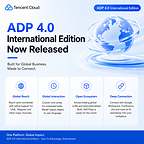
SHANGHAI, July 21, 2026 /PRNewswire/ — Tencent Cloud, the cloud business of global technology company Tencent, today announced a major enhancement to its Agent Development Platform (ADP) International Edition, evolving it into a comprehensive, enterprise-grade AgentOps platform designed to help enterprises move AI agents from experimentation into production at scale. The enhancement was unveiled at the 2026 World Artificial Intelligence Conference (WAIC) in Shanghai and is now available to customers worldwide.

Delivered in ADP’s 4.0 international release, the update introduces two headline capabilities — the Smart Desk and Claw Mode, powered by the Agentic Loop. Together with Connector, Skills, Knowledge Base, MCP and Agent Portal, ADP 4.0 now connects the entire enterprise agent lifecycle — from building and connecting, to distribution and governance — giving enterprises a single foundation to develop, deploy and manage AI agents reliably and at scale.

Today, enterprises seeking to rebuild their operations with AI Agents often face three critical challenges:

Individual pilots are easy to initiate but difficult to scale;Powerful models are challenging to integrate with existing legacy systems;Deployed Agents present difficulties in security governance and cost control.

Tencent Cloud ADP 4.0 addresses these challenges systematically by unlocking long-horizon, self-coding capabilities for complex tasks through Claw Mode, connecting enterprise systems and capability assets through nearly 40 Connectors and over 150 Skills, while moving security governance upstream to the very source of development. This enables enterprises to rapidly develop Agents while keeping them running in real business environments in a stable, secure, and controllable way.

To date, Tencent Cloud ADP has been deployed across retail, finance, government, manufacturing, and other industries, where teams have used AI Agents to support on tasks such as intelligent Q&A, customer service, marketing content generation and business analysis.

How Smart Desk Serves as a Unified Agent Entry Point

The newly launched Smart Desk serves as the unified, user-facing entry point of Tencent Cloud ADP 4.0, addressing two needs at once: enterprises can build Agents at scale, while employees can complete everyday tasks with a single sentence. Within the same workspace, users can build scalable Agents for their organization using natural language, or handle personal tasks just as they would with an everyday office assistant. Agent capabilities can also be integrated into existing enterprise systems—office software, ERP, CRM, customer service, and more—so that Agents “grow” on top of existing workflows without tearing anything down.

Smart Desk dramatically cuts the cost of building. Setting up a knowledge-based intelligent Q&A assistant once required manually configuring more than a dozen parameters. Now a single sentence can complete the entire configuration automatically, enabling it to go live within minutes. For more complex workflows such as multi-intent customer service, users simply describe the logic, and the system automatically generates a complete flow—intent routing, knowledge-base Q&A, human handoff, and more—packaged and ready to import. When a single Agent isn’t enough, users can orchestrate a collaborative team of Agents with a single command, with the system automatically assigning responsibilities, prompts, and task handoffs. The Smart Desk also integrates with the Skills Marketplace, packaging mature capabilities—such as contract review, financial analysis, and invoice entry—into reusable enterprise-grade Skills that can be shared and continuously refined across the organization. In doing so, Smart Desk brings “usable by everyone” and “enterprise-grade control” together in a single entry point.

How Upgraded Claw Mode Resolves Complex, Long-Horizon Tasks

For complex tasks that lack fixed rules, span long chains, and resist form-based configuration, Tencent Cloud Agent Development Platform (ADP) 4.0 adds a fourth building mode—Claw Mode. It can create Agents that autonomously write and run code in a cloud sandbox, call enterprise Skills, and execute long-running tasks. Once created, these Agents can be integrated into business systems via API/Web interfaces and reach employees and customers through channels such as LINE and Telegram. Creators do not need to fill out any forms; they simply describe their needs in natural language, and the platform automatically generates prompts, mounts knowledge bases, configures tools, and orchestrates workflows.

ADP 4.0 also supports two-way invocation between Agents and Workflows: Workflows handle steps with clear-cut rules, balancing stability with predictable token consumption. When unstructured judgment or open-ended tasks arise, they invoke a Claw Mode Agent to fully leverage the model’s capabilities. This gives enterprises the flexibility to integrate deterministic processes with intelligent decision-making.

Connecting Enterprise Systems, Knowledge, and Tools to Embed Agents into Workflows

To address the pain point of “powerful models that cannot reach enterprise production systems,” ADP 4.0 uses Connector, Skills, plugins, Knowledge Base, and MCP to turn an enterprise’s scattered business resources into callable and reusable AI assets.

The Connector framework offers nearly 40 curated Connectors in the first batch, supporting integration with high-frequency systems such as CRM, ERP, ticketing, customer service, knowledge bases, and document systems, and covering mainstream international SaaS applications like Google Workspace, Confluence, and Jira. Agents can directly read, retrieve, and perform operations such as querying, analysis, generation, and routing.

The upgraded Skills Marketplace now supports 150+ Skills. Business teams can package custom Skills into shared enterprise plugins that enter the enterprise zone for use only after passing security checks and approval.

More than 50 scenario-based templates and industry-curated applications shorten the path from zero to one. The upgraded Model Marketplace enables enterprises to select leading international models alongside their own self-hosted models, with native compatibility for the OpenAI standard protocol.

In addition, ADP 4.0 supports multiple entry points—platform, browser, Office, Chat channels, and API/SDK—embedding Agents into employees’ daily work scenarios.

End-to-End Governance from Development to Launch: Clearing the “Security Gate” Before Production

To tackle the challenge of “Agents that run but whose security and cost cannot be controlled,” ADP 4.0 moves governance upstream to the source of development, building a security control system that spans the full Agent lifecycle around permission management, Skills governance, runtime observability, and deployment compliance.

For permission management, ADP 4.0 supports a layered architecture at the enterprise, workspace, and application levels, combined with a Role-Based Access Control (RBAC) role-permission matrix to achieve dual-dimension isolation of functional and data permissions. For Skills governance, custom Skills must pass security checks—static code scanning, data-access review, outbound-network review, dependency allowlisting—and multi-level approval before entering the enterprise zone to become shareable and schedulable enterprise assets. For observability and governance, enterprises can use Agent Portal to centrally manage Agents across platforms and scenarios, and use business and resource dashboards to monitor key metrics such as call volume, response quality, operating cost, and errors in real time, enabling rapid issue identification and optimization.

Wu Yunsheng, Vice President of Tencent Cloud and Head of the Tencent Cloud Agent Development Platform, emphasized that enterprise-grade Agents are not merely about who can build them the fastest, but rather about who can keep Agents operating on the front lines of business in a stable, secure, and sustainable manner. ADP aims to provide enterprises with a production-ready AgentOps foundation—one that enables them to build Agents quickly, connect these Agents to systems and distribute them to the front lines, and operate them continuously under a framework of permissions, security, evaluation, and observability, truly unlocking productivity value.

Learn more about Tencent Cloud ADP: Build AI Agents with RAG+LLM, Workflow & Multi-Agent Capabilities

###

About Tencent Cloud:

Tencent Cloud, one of the world’s leading cloud companies, is committed to creating innovative solutions to resolve real-world issues and enabling digital transformation for smart industries. Through our extensive global infrastructure, Tencent Cloud provides businesses across the globe with stable and secure industry-leading cloud products and services, leveraging technological advancements such as cloud computing, Big Data analytics, AI, IoT, and cybersecurity. It is our constant mission to meet the needs of industries across the board, including the fields of gaming, media and entertainment, finance, healthcare, real estate, retail, travel, and transportation.

View original content to download multimedia:https://www.prnewswire.com/apac/news-releases/tencent-cloud-unveils-a-major-upgrade-to-its-agent-development-platform-launching-an-enterprise-grade-agentops-platform-to-bring-ai-agents-into-production-at-scale-302830352.html

SOURCE Tencent Cloud

Continue Reading

Technology

SKYWORTH Solar Announces Global Launch of Solavita as a Smart Microgrid Brand

Published

on

By

SHENZHEN, China, Oct. 31, 2026 /PRNewswire/ — SKYWORTH Solar has officially announced the global launch of Solavita, its dedicated brand for smart microgrid solutions. Positioned strategically as “A Smart Microgrid Expert for Diverse Energy Scenarios,” Solavita consolidates the company’s extensive solution portfolio and service infrastructure under a unified global identity, building upon its rapidly expanding international footprint.

Addressing Grid Flexibility and Long-Term System Value

The launch comes as electricity systems face growing demands for flexibility. The International Energy Agency’s 2026 mid-year electricity update highlights the importance of flexible resources and more efficient use of infrastructure as renewable generation expands. For customers, the priorities vary by market: managing electricity costs, using more locally generated solar power, or maintaining essential loads where grid supply is unreliable.

“As renewable energy becomes more distributed, the long-term performance of the whole system becomes increasingly important,” said Fan Ruiwu, Chairman of SKYWORTH Solar. “We see that performance as the foundation of our international energy business. With Solavita, we are bringing our capabilities together around a common approach to solution development and service, while working with local partners to adapt delivery to each market. Our focus is on the value these systems provide throughout their life.”

Solutions for Different Energy Needs

To address the dual challenges of grid volatility and operational cost, Solavita engineers its systems around a core architectural philosophy prioritizing grid-forming stability, intelligent automation, cross-generation efficiency, and multi-tier security. Translating these technical principles into practical applications, the brand introduces a comprehensive solution matrix tailored to specific market demands.

For residential users, the SolaHome suite utilizes an advanced Home Energy Management System (HEMS) to seamlessly coordinate rooftop solar, battery storage, and flexible domestic loads like heat pumps and EV chargers. In markets with dynamic electricity tariffs, such as Germany, HEMS automates energy dispatch to capitalize on low-price periods. This practical value is evidenced by a recent residential installation in Jesteburg, Germany, combines 18.9 kW of rooftop solar with 20.48 kWh of battery storage. Solavita reports nearly €50 in electricity-price arbitrage benefits during the first month of dynamic-tariff operation.

Expanding beyond the home, the portfolio scales up with SolaBiz, which integrates distributed solar, commercial storage, and smart dispatch to help factories and retail spaces manage peak-demand costs and safeguard against grid disruptions.

For larger utility and off-grid demands, SolaMatrix delivers scalable, containerized storage and microgrid management focused on stabilizing renewable integration in weak grid environments.

Finally, ensuring energy access in highly mobile contexts, SolaGo offers plug-and-play balcony solar and portable power systems for outdoor activities and critical emergency backup, completing Solavita’s end-to-end coverage of modern energy applications.

Global Engineering Foundation and Ecosystem Delivery

To guarantee the reliable implementation and long-term asset value of these diverse solutions, SKYWORTH Solar underpins Solavita with a robust global engineering foundation.

On the technology front, the Smart Microgrid Technology Centre connects cutting-edge research with product engineering, supported by academic collaborations with Tianjin University and Hainan University. This pipeline is further strengthened by a comprehensive Haikou test platform—scheduled for commissioning by the end of 2026—to rigorously validate grid-connected, islanded, and grid-forming systems.

The InfraCosmos Digital Platform supports lifecycle data management, operational monitoring and fault identification. It connects system information with service and maintenance, helping teams monitor performance and respond to operating issues.

Beyond hardware and software, this foundation extends to flexible supply chain execution and strategic project delivery. Solavita employs F+D+EPC+O (Financing, Development, Engineering, Procurement, Construction, and Operations) framework for large-scale, asset-light project coordination, alongside a localized PD2C cooperation model actively deployed in markets like Germany and Italy to ensure rapid, market-specific service.

These capabilities underpin Solavita’s positioning as a smart microgrid expert, connecting system development with local delivery and ongoing service. The aim is to make integrated energy systems practical to deploy and support in each market.

View original content to download multimedia:https://www.prnewswire.com/apac/news-releases/skyworth-solar-announces-global-launch-of-solavita-as-a-smart-microgrid-brand-302925531.html

SOURCE SKYWORTH Solar

Continue Reading

Technology

TCL Donates Ultra-Low-Power Display System to the Youth Olympic Village, Bringing Advanced Display Technology to Everyday Use

Published

on

By

The donation of the display, featuring TCL CSOT’s high-brightness Field Sequential Color technology, continues TCL’s long-term commitment to the African market

DAKAR, Senegal, Oct. 31, 2026 /PRNewswire/ — TCL, a Worldwide Olympic and Paralympic Partner, donated an ultra-low-power display system powered by solar energy to Université Amadou Mahtar Mbow (UAM) in Senegal. Delivering outdoor brightness at roughly half the power consumption of comparable displays, the system will serve as an information hub on the UAM campus, which will also serve as the Youth Olympic Village during the Dakar 2026 Youth Olympic Games.

Attendees at the donation ceremony included IOC President, Kirsty Coventry; UAM President, Professor Mababa Diagne; Senegal Higher Education Minister, Boubacar Camara; TCL Charity Ambassador, Jacky Heung; and General Manager of TCL Industries’ Middle East and Africa Marketing Division, Naimin Yang.

“Powered by TCL’s advanced display technology, this new display system will create new possibilities for our campus facilities and support development for both students and faculty,” said Professor Diagne.

Advanced Display Technology Delivers Best in Brightness and Efficiency

The donated system features a TCL CSOT 75-inch high-brightness Field Sequential Color (FSC) display capable of delivering 4,000-nit brightness at approximately 300W. By eliminating conventional color filters and generating color through the sequential switching of red, green and blue light, FSC technology enhances light utilization with transmittance over 15%.

The technology reflects TCL CSOT’s continued pursuit of improved display performance and energy efficiency, bringing advanced screens into everyday settings through TCL’s broader Screen Universe vision. Installed at UAM, the display will serve as an outdoor information hub, remaining bright and clear even in direct sunlight.

TCLArt and TCLYoung Champion Local Art and the Next Generation of Creators

Beyond technology, TCL also supports local culture in Dakar through its art-focused initiative, TCLArt. TCL participates in the Yeesal urban art initiative, which works with Senegalese artists and communities to create large-scale public murals. The project supports 43 artists, especially creators under 35, whose works draw inspiration from African athletes, cultural diversity, and youth aspirations. These murals will become permanent features of Dakar’s urban landscape, celebrating local creativity while reflecting TCL’s commitment to the next generation of creative talent through TCLYoung.

From Local Presence to Shared Growth: TCL Deepens its Footprint in Africa

Both the donation and Yeesal partnership build on a presence in Africa stretching back more than two decades. TCL first entered the African market in 2004. Today, TCL TVs and home appliances are sold in nearly 50 African countries across the continent, supported by six sales subsidiaries and three regional business units. TCL continues to strengthen its retail presence across the region, including with the opening of the first TCL brand experience store in Africa in Johannesburg, and the establishment of its own retail and distribution channel in Kenya.

Through its established business network and localized operations, TCL continues to build closer connections with African customers and consumers, combining global technological capabilities with a deeper understanding of local markets to better serve people across the region.

About TCL

Founded in 1981, TCL is dedicated to empowering smarter, healthier lifestyles through next-generation experiences.

Today, with 50 R&D centers and 47 manufacturing bases globally, TCL operates in over 160 countries and regions, reinforcing its position as a globally competitive smart technology brand. To further inspire greatness, TCL has become an official Worldwide Olympic and Paralympic Partner in the Home Audiovisual Equipment and Home Appliances category.

https://www.tcl.com/global/en

View original content to download multimedia:https://www.prnewswire.com/news-releases/tcl-donates-ultra-low-power-display-system-to-the-youth-olympic-village-bringing-advanced-display-technology-to-everyday-use-302925532.html

SOURCE TCL Technology Group Corporation

Continue Reading

Technology

GAC Wins 8 Awards, Including 4 First Prizes, Showcasing Technological Innovation Strength

Published

on

By

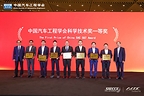
SUZHOU, China, Oct. 31, 2026 /PRNewswire/ — On October 28, GAC won 8 awards at the 2026 China-SAE Science and Technology Award ceremony in Suzhou, Jiangsu. In the fields of automotive chips, electric drive, vehicle safety, intelligent driving governance and body design, four first prizes were awarded to two GAC-led projects and two GAC-participated projects, and one GAC-led project won second prize.

In chips, GAC’s led project built a full-chain path from vehicle definition to scale application, working with 105 partners to apply nearly 400 chip models and over 1,000 domestic chips. The HYPTEC GT Special Edition, China’s first ICV with 100% domestically designed chips, has been launched.

In electric drive, GAC pioneered mass production of amorphous alloy stators and carbon-fiber high-speed rotors, becoming the world’s only company to mass-produce amorphous alloy automotive motors. Its amorphous ribbon is just 0.025 mm thick. The motor reaches 99.03% peak efficiency, 17.29 kW/kg power density (@1000V)—nearly three times the industry mainstream—and 30,000 rpm maximum speed; system CLTC efficiency reaches 94.184%. For users, energy consumption drops 4%, and range rises 30-50 km with the same battery capacity. It has been applied to HYPTEC, AION and AISTALAND models and promoted to other automakers. The related precision manufacturing technology won the Gold Medal with Congratulations of the Jury at the 51st International Exhibition of Inventions of Geneva.

In safety, the GAC-led project with Tsinghua University won second prize. It developed China’s first ASIL-D fully domestic safety controller, real-time risk quantification, active-suspension side-impact mitigation, a rear-window airbag and an “automaker-traffic police-hospital” integrated rescue model. It has been applied to 20 models with cumulative sales of 1.446 million units.

In addition, GAC’s participated L2-L4 safety governance project helped establish a full-lifecycle system covering pre-admission, in-process supervision and post-event traceability. Its participated BIW project features an AI-based body design system that generates concept schemes within 5 hours, with over 95% stiffness prediction accuracy and over 30% higher design efficiency; it has been applied to the second-generation GAC GS8, GAC ES9 and GAC All-new S7.

Looking ahead, GAC will uphold innovation-driven development, advance core technology breakthroughs and commercialization, and support high-quality development of China’s auto industry.

For further information about GAC, please visit: https://www.gacgroup.com/en or follow us on social.

View original content to download multimedia:https://www.prnewswire.com/news-releases/gac-wins-8-awards-including-4-first-prizes-showcasing-technological-innovation-strength-302925529.html

SOURCE GAC

Continue Reading

Trending