Connect with us

Technology

AI-Driven Cardiac Diagnostics Market to Reach USD 2.8 Billion by 2036 Amid Rising Demand for Faster and Data-Driven Cardiac Care | Future Market Insights

Published

on

NEWARK, Del., July 29, 2026 /PRNewswire/ — According to Future Market Insights, the AI-Driven Cardiac Diagnostics Market is valued at USD 903.2 million in 2026 and is projected to reach USD 2,805.1 million by 2036, expanding at a 12.0% CAGR during the forecast period. According to the latest market study, growth is driven by increasing cardiovascular disease prevalence, rising demand for early risk identification, growing adoption of artificial intelligence-enabled healthcare solutions, and the need to improve diagnostic efficiency across hospitals and cardiac care facilities.

Healthcare providers are increasingly adopting AI-powered diagnostic platforms to enable faster ECG interpretation, cardiac imaging analysis, and risk assessment. Hospitals are using these solutions to reduce diagnostic delays, prioritize critical cases, and improve workflow efficiency while maintaining clinical oversight.

The growing cardiovascular disease burden is accelerating investment in AI-driven cardiac diagnostics. Healthcare systems are seeking scalable solutions to manage rising patient volumes, specialist shortages, and complex cardiac monitoring needs, driving demand for machine learning, cloud-based platforms, and integrated clinical workflows.

Get detailed market forecasts, competitive benchmarking, and pricing trends: https://www.futuremarketinsights.com/reports/sample/rep-gb-34098 

Key Market Numbers

Metric

Value

Market Value (2026)

USD 903.2 Million

Forecast Value (2036)

USD 2,805.1 Million

CAGR (2026–2036)

12.0 %

Leading Technology

Machine Learning (30.5%)

Leading Application

Arrhythmia Detection (31.4%)

Leading End User

Hospitals (33.5%)

Leading Deployment

Cloud-Based (64.0%)

Fastest Growing Country

South Korea (13.4% CAGR)

Market Growth Accelerates Through 2036

The AI-driven cardiac diagnostics market is expected to experience consistent expansion throughout the forecast period, increasing from USD 903.2 million in 2026 to USD 2,805.1 million by 2036, representing an absolute growth opportunity of USD 1,901.9 million.

Growth is supported by rising healthcare digitization, increasing cardiovascular disease screening requirements, and wider integration of AI into diagnostic workflows. Hospitals are moving beyond standalone diagnostic tools toward connected platforms that combine automated analysis, clinical decision support, and centralized data management.

Segment Analysis

Technology:

Machine Learning accounts for approximately 30.5% of the AI-driven cardiac diagnostics market in 2026.

Machine learning technologies are widely adopted due to their ability to analyze ECG patterns, identify abnormalities, support risk prediction, and improve classification accuracy. Their flexibility allows healthcare providers to apply AI capabilities across multiple cardiac diagnostic applications.

Cardiology departments are increasingly using machine-learning-powered systems to prioritize abnormal results, reduce manual review workload, and improve diagnostic efficiency.

Application:

Arrhythmia Detection represents approximately 31.4% of market demand in 2026.

Arrhythmia detection remains the leading application segment due to the high volume of ECG data generated across hospitals, outpatient centers, and remote monitoring services. AI algorithms help identify irregular heart rhythms, support early intervention, and reduce the burden on cardiac specialists.

Increasing adoption of wearable cardiac monitoring devices and continuous ECG monitoring solutions is further expanding opportunities for AI-based rhythm analysis.

End User:

Hospitals account for approximately 33.5% of the market in 2026.

Hospitals remain the dominant end-user segment due to their access to advanced diagnostic equipment, specialist teams, and large volumes of cardiac patient data.

Hospital networks are adopting AI-driven cardiac diagnostic platforms to improve workflow coordination between cardiology, radiology, and emergency care departments. Integration with electronic health records and existing clinical systems is becoming a key factor influencing purchasing decisions.

Deployment:

Cloud-Based deployment is projected to maintain approximately 64.0% market share from 2026.

Cloud-based platforms are gaining traction due to their scalability, centralized software management, and ability to support multi-site healthcare networks. Hospitals and diagnostic providers prefer cloud solutions because they reduce infrastructure requirements and simplify software updates.

However, healthcare providers continue evaluating data security, compliance requirements, and service reliability before large-scale implementation. Vendors offering secure cloud environments with strong interoperability capabilities are expected to gain competitive advantages.

Access the Complete Report in PDF Format: https://www.futuremarketinsights.com/reports/brochure/rep-gb-34098 

Country Growth Outlook

Country

CAGR (2026–2036)

South Korea

13.4 %

USA

12.8 %

Germany

10.7 %

UK

10.3 %

Japan

9.2 %

South Korea is expected to record the fastest growth, supported by connected hospital networks, digital healthcare infrastructure, and increasing adoption of AI-enabled diagnostic workflows.

The USA continues to represent a significant growth market due to advanced healthcare infrastructure, reimbursement pathways, and strong investment in artificial intelligence-based medical technologies.

Germany and the UK are witnessing increasing adoption driven by healthcare digitalization initiatives and demand for evidence-based diagnostic solutions. Japan’s growth is supported by an aging population and the need for efficient cardiac care management.

Competitive Landscape

Competition in the AI-driven cardiac diagnostics market is focused on algorithm performance, clinical validation, workflow integration, and healthcare system compatibility.

Leading companies are developing AI platforms that combine ECG interpretation, cardiac imaging analysis, predictive analytics, and clinical decision-support capabilities.

Key companies operating in the market include:

GE HealthCarePhilipsEko HealthHeartflowAliveCorTempus AIViz.aiCleerlyCardiologs (Philips)

Market participants are strengthening their positions through regulatory approvals, strategic partnerships, cloud-based platforms, and integration with existing hospital information systems.

Analyst Perspective

“AI-driven cardiac diagnostics is moving from experimental adoption toward practical clinical implementation. The commercial success of these platforms will depend on measurable improvements in diagnostic efficiency, workflow integration, and clinician confidence. Companies that combine validated algorithms with scalable deployment models will be better positioned for long-term growth.”— Anurag Sharma, Principal Analyst at Future Market Insights

Frequently Asked Questions

What is the projected size of the AI-Driven Cardiac Diagnostics Market by 2036?
The market is projected to reach USD 2,805.1 million by 2036.

What is the CAGR of the AI-Driven Cardiac Diagnostics Market?
The market is expected to grow at a 12.0% CAGR between 2026 and 2036.

Which technology segment leads the market?
Machine Learning leads the technology segment with approximately 30.5% share in 2026.

Which application segment dominates the market?
Arrhythmia Detection leads the application segment with approximately 31.4% share in 2026.

Which end user generates the highest demand?
Hospitals account for approximately 33.5% market share in 2026.

Which country is expected to record the fastest growth?
South Korea is forecast to grow at 13.4% CAGR through 2036, making it the fastest-growing market.

FMI Custom Research: Strategic Intelligence for Confident Decision-Making

In today’s rapidly evolving business environment, leadership teams need more than market data—they need clear, actionable intelligence tailored to their strategic objectives. FMI’s Custom Research solutions are designed around the specific business questions organizations need answered, enabling executives to evaluate growth opportunities, validate investments, assess competitive dynamics, and reduce uncertainty before making critical decisions. By combining deep industry expertise, primary research, and proprietary market intelligence, FMI delivers insights that help organizations move from assumptions to evidence-based strategies with greater speed and confidence.

Key Executive Benefits

• Decision-Ready Insights: Research tailored to your specific business challenges, growth plans, and investment priorities.
• Reduced Strategic Risk: Validate market opportunities, customer demand, and competitive positioning before committing resources.
• Market Entry Confidence: Assess opportunity size, regulatory barriers, channel dynamics, and competitive landscapes with precision.
• Competitive Advantage: Gain proprietary intelligence unavailable through syndicated reports or internal datasets.
• Faster Growth Decisions: Accelerate expansion, product development, portfolio optimization, and investment planning.
• Primary Market Validation: Access real-world customer, buyer, and stakeholder insights that support high-confidence decision-making.
• Global Industry Expertise: Powered by 100+ analysts, 20,000+ published reports, and 1.6 million+ hours of research experience.
• Proven Track Record: Over 7,000 market-entry engagements completed across six regions and 14 industry sectors with strong client retention.

Business Impact

FMI helps organizations transform market complexity into strategic clarity, enabling leadership teams to identify growth opportunities faster, optimize resource allocation, strengthen competitive positioning, and make high-stakes business decisions with confidence.

To explore how FMI Custom Research can support your strategic priorities, please connect with our team at – sales@futuremarketinsights.com 

Related Reports:

Cardiac Ambulatory Monitoring Patch Data Services Market: https://www.futuremarketinsights.com/reports/cardiac-ambulatory-monitoring-patch-data-services-market 

Cardiac Rhythm Management Devices Market: https://www.futuremarketinsights.com/reports/cardiac-rhythm-management-devices-market 

Cardiac Ambulatory Monitoring Market: https://www.futuremarketinsights.com/reports/cardiac-ambulatory-monitoring-market 

Cardiac Rhythm Remote Monitoring Devices Market: https://www.futuremarketinsights.com/reports/cardiac-rhythm-remote-monitoring-devices-market 

Cardiac Ultrasound Systems Market: https://www.futuremarketinsights.com/reports/cardiac-ultrasound-systems-market 

About Future Market Insights (FMI)

Future Market Insights (FMI) is a global market intelligence and consulting firm providing comprehensive market research, competitive intelligence, and strategic business insights across industries. The firm delivers detailed forecasts, technology analysis, and data-driven recommendations that support informed decision-making for manufacturers, investors, distributors, and policymakers worldwide.

For Press & Corporate Inquiries
Rahul Singh
AVP – Marketing and Growth Strategy
Future Market Insights, Inc.
+91 8600020075
For Sales – sales@futuremarketinsights.com
For Media – Rahul.singh@futuremarketinsights.com
For web – https://www.futuremarketinsights.com/


View original content to download multimedia:https://www.prnewswire.co.uk/news-releases/ai-driven-cardiac-diagnostics-market-to-reach-usd-2-8-billion-by-2036-amid-rising-demand-for-faster-and-data-driven-cardiac-care–future-market-insights-302837545.html

Continue Reading

Technology

Raytron Industrial Launches TN660 and TN463 Thermal Cameras for Dynamic Testing and Continuous Condition Monitoring

Published

on

By

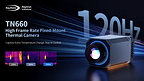
YANTAI, China, Oct. 22, 2026 /PRNewswire/ — Raytron Industrial today announced the launch of two new products: the TN660 High Frame Rate Fixed-Mount Thermal Camera and the TN463 Fixed-Mount Thermal Camera. Both offer 640 × 512 imaging with synchronized image and temperature data. The TN660 delivers full-frame 120 Hz acquisition for moving targets and transient thermal processes, while the TN463 provides 60 Hz imaging for routine inline inspection and continuous equipment monitoring.

Full-Resolution Imaging for Different Process Speeds

Featuring a 12 μm uncooled VOx detector, the TN660 achieves 120 Hz at its native resolution without windowing, preserving spatial detail and scene coverage. Frames are approximately 8.33 ms apart, helping engineers examine rapid heating, cooling, and short-duration thermal events in research, industrial automation, and transportation applications.

The TN463 uses the same detector resolution and pixel pitch. Its 60 Hz output supports routine production cycles and long-term temperature trend analysis. To accommodate different installation requirements, the TN463 offers 6.9 mm, 9.1 mm, 19 mm, and 25 mm lenses, while the TN660 is available with 9.1 mm and 25 mm lenses.

From Event-Triggered Capture to Synchronized Analysis

Both cameras support hardware and software triggering to coordinate acquisition with equipment actions. An external signal through the I/O (input/output) interface can initiate capture at a defined process stage. For example, a heat-press start signal can trigger the TN660 to record the thermal sequence, reducing unnecessary recording and review work.

Synchronized output pairs temperature readings with corresponding thermal images. Raytron Industrial’s TI Studio software supports simultaneous preview and analysis of up to four cameras, with temperature and temperature-rise alarms to flag abnormal conditions. Engineers can review recordings, examine and export historical temperature curves, and generate reports, linking equipment events with thermal data for further analysis.

Temperature Measurement and System Integration

Both models measure temperatures from −20°C to 150°C and 100°C to 650°C, with an accuracy of ±2°C or ±2% of the reading, whichever is greater. Ethernet and USB connectivity support data acquisition, while compatibility with industrial protocols such as Modbus TCP allows temperature data to be incorporated into existing control and monitoring systems.

With a choice of 60 Hz and 120 Hz imaging, the TN463 and TN660 allow users to match thermal acquisition to their process requirements, from continuous equipment monitoring to dynamic testing.

For Further Information

Email: sales@raythink-tech.com
Website: https://www.raythink-tech.com/

View original content to download multimedia:https://www.prnewswire.co.uk/news-releases/raytron-industrial-launches-tn660-and-tn463-thermal-cameras-for-dynamic-testing-and-continuous-condition-monitoring-302916778.html

Continue Reading

Technology

4SiGHT Supply Chain Group Welcomes Joanne Strong as Senior Vice President, Delivery Excellence and Innovation

Published

on

By

Industry-recognized WMS leader and AI-driven delivery innovator joins 4SiGHT to lead delivery as one of North America’s largest dedicated Manhattan Active® implementation partners accelerates its growth

WAYNE, N.J., Oct. 22, 2026 /PRNewswire-PRWeb/ — 4SiGHT Supply Chain Group, one of North America’s largest dedicated Manhattan Associates implementation partners, today announced the appointment of Joanne Strong as Senior Vice President of Delivery Excellence and Innovation. Strong joins the executive leadership team and will lead all client delivery across the firm.

4SiGHT has built something rare in its 18 years of operations: deep Manhattan expertise, exceptional talent, industry reputation, singular focus on Manhattan Associates, and a culture that puts client success at the center of everything it does.

The appointment comes during a year of rapid growth for 4SiGHT. Now in its 18th year, the firm has grown to more than 70 full-time associates in 2026 and continues to add Manhattan Active® talent across its warehouse, labor, transportation, and organizational change management practices. Strong’s newly created role is dedicated to ensuring that this growth is matched by an uncompromising standard of quality across every engagement.

“Delivery is our product. Every go-live, every client reference, and every renewal comes down to how well we execute,” said Frank Camean, President and CEO of 4SiGHT. “As 4SiGHT scales, we made a deliberate decision to put a senior executive in charge of one thing: the quality, consistency, and continuous improvement of how we deliver for our clients. Joanne has built and led delivery organizations at real scale, she knows the Manhattan Associates platform from the inside, and she has a proven record of innovation to make implementations faster and more predictable. Joanne is exactly the leader our clients deserve as we enter our next chapter. We are all honored and excited to have her join the team and can’t wait to see what the future brings.”

Strong brings more than a decade of experience with Manhattan Associates and enterprise warehouse management. She most recently served as WMS Practice Lead, directing a multimillion-dollar WMS practice that delivered supply chain transformation programs for Fortune 500 companies in retail, consumer products, and life sciences.

A recognized voice in the supply chain industry, Strong delivered keynote addresses at the 2025 Stratify Executive Forum and at Parcel Forum 2026, has been a featured panelist at MODEX, and has appeared on The New Warehouse and Bloomberg’s Talking Transports podcasts. She holds a B.B.A. in Management Information Systems from the University of Georgia’s Terry College of Business.

“4SiGHT has built something rare in its 18 years of operations: deep Manhattan expertise, exceptional talent, industry reputation, singular focus on Manhattan Associates, and a culture that puts client success at the center of everything it does,” said Strong. “The depth of Manhattan knowledge and real-world implementation experience across the organization is truly unique in the industry. My focus is on elevating an already outstanding client experience by combining that expertise with proven delivery practices, innovative methodologies, implementation accelerators, AI-enabled tools and capabilities. We have an incredible opportunity to help clients achieve faster outcomes, greater confidence in execution, and long-term business value. I’m honored to join the team at such a pivotal moment in its growth and excited for what we will accomplish together.”

About 4SiGHT Supply Chain Group

4SiGHT specializes in supply chain software implementations, with a primary focus on the Manhattan Associates product suite of applications. Our seasoned professionals average more than 19 years of experience helping companies across all industries solve their distribution, fulfillment, and transportation challenges. Together with our strategic partners, our collective team includes more than 100 associates. No other firm in North America brings this depth of Manhattan Active® expertise, and we look forward to expanding our team with additional talent in the months ahead. As a testament to the value our clients place on our expertise, experience, and integrity, 4SiGHT has received multiple industry awards. For more information, please visit 4sight.com or email us at in4mation@4sight.com.

Media Contact

Jenae Cahanes, 4SiGHT Supply Chain Group, 1 9734350025, jenae.cahanes@4sight.com, 4sight.com

LinkedIn

View original content:https://www.prweb.com/releases/4sight-supply-chain-group-welcomes-joanne-strong-as-senior-vice-president-delivery-excellence-and-innovation-302916680.html

SOURCE 4SiGHT Supply Chain Group

Continue Reading

Technology

UL Research Institutes Releases New Report Defining Roadmap for Next-Generation Wildfire Risk Intelligence

Published

on

By

New findings identify critical gaps and opportunities in wildfire risk modeling to strengthen community protection

COLUMBIA, Md., Oct. 22, 2026 /PRNewswire/ — As destructive wildfires increasingly threaten communities across the globe, a new report from UL Research Institutes’ Fire Safety Research Institute examines the strengths and limitations of current wildfire risk models and provides a roadmap for more comprehensive wildfire risk intelligence.

“Wildfire Risk Modeling Evaluation Findings and Community Perspectives” details findings from the 2026 Wildfire Risk Modeling Exercise, a first-of-its-kind collaborative effort that evaluated a diverse set of wildfire risk models using common scenarios and datasets. The exercise included approximately 20 organizations across academia, government, national laboratories, nonprofits, and the private sector.

For fire service leaders, emergency managers, and public safety officials, the report provides a practical framework for evaluating which modeling capabilities are best suited to specific community needs and decisions. Applied effectively, these tools can help practitioners identify where risk is greatest, prioritize mitigation investments, strengthen evacuation and preparedness planning, and make more informed decisions before, during, and after a wildfire.

“The Wildfire Risk Modeling Exercise was a convergent test and evaluation of the diverse models available to characterize wildfire risk today. These results revealed broader insights about the state of the science, prioritized gaps, and the investments needed to advance wildfire risk intelligence,” said Rebecca Harned, principal research scientist for Fire Safety Research Institute and the report’s lead author. “The findings provide a critical foundation for shaping the next decade of research, innovation, and operational capability. This report also serves as an important resource for local and state fire service and public safety agencies, providing an evidence-based framework for selecting wildfire risk modeling capabilities and applying them effectively to assess and manage community risk.”

Key Findings From the Wildfire Risk Modeling Exercise

The results from the exercise demonstrate that no single model can capture the full complexity of wildfire risk, nor should one be expected to. Instead, the report identifies an opportunity to build a new generation of wildfire risk intelligence by connecting complementary models, datasets, and scientific approaches. Doing so can help close critical gaps between modeling wildfire hazard and understanding what ultimately matters to communities — which people, property, and assets are at risk, why they are vulnerable, what the consequences could be, and which actions can most effectively reduce those risks.

To realize that vision, the report recommends building an interoperable modeling ecosystem spanning the full wildfire risk assessment pathway, from ignition and landscape fire spread through structure exposure, community impacts, and economic consequences. It also calls for stronger shared core data and standards, improved transparency and explainability, expanded decision-support tools, and greater use of ensemble modeling. Together, these advances could transform wildfire modeling from a collection of specialized capabilities into an integrated risk intelligence framework that better supports decisions before, during, and after wildfire events.

About the Fire Safety Research Institute

UL Research Institutes’ Fire Safety Research Institute advances fire science and fire safety knowledge to reduce risk, save lives, and protect property. We conduct rigorous research, outreach, and education in collaboration with the fire service, fire safety professionals, policymakers, communities, and an international network of partners. Together, we develop tools, resources, and strategies that improve fire safety outcomes worldwide. To learn more, visit fsri.org. Follow Fire Safety Research Institute on Instagram, Facebook, and LinkedIn.

About UL Research Institutes

UL Research Institutes is a nonprofit research organization dedicated to advancing public safety through scientific discovery. Since 1894, our research has advanced our mission toward a safer, more secure, and sustainable future. Focused on global risks from fire mitigation and air quality to safe energy storage and digital privacy, we conduct rigorous independent research, analyze safety data, and partner with experts to uncover and act on existing and emerging risks to human safety. Discover more at UL.org.

About the Exercise

The 2026 Wildfire Risk Modeling Exercise was designed as an open, collaborative and non-competitive effort. Each model submission was evaluated by multiple reviewers through two complementary evaluation streams: science and technical evaluation and user and practitioner evaluation. Participating organizations applied their models to standardized scenarios representing wildland, wildland-urban interface, and urban environments, with results evaluated by scientific experts and operational practitioners. The exercise was designed not to rank models, but to identify their strengths, limitations, and opportunities for integration.

For more information and to read the full report, visit FSRI.org.

View original content to download multimedia:https://www.prnewswire.com/news-releases/ul-research-institutes-releases-new-report-defining-roadmap-for-next-generation-wildfire-risk-intelligence-302916462.html

SOURCE UL Research Institutes

Continue Reading

Trending