Connect with us

Technology

Action1 Survey Finds AI Adoption Falls Far Short of Sysadmin Expectations

Published

on

Only 16% have implemented AI for patch management despite 67% predicting full automation by 2026; security and reliability concerns keep humans in control

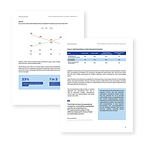
HOUSTON, July 30, 2026 /PRNewswire/ — Action1, a leading provider of autonomous endpoint management (AEM) solutions, recently recognized by Inc. 5000 as the fastest-growing private software company in America, today released its fourth annual 2026 Survey Report: AI Impact on Sysadmins, revealing a significant gap between how quickly system administrators expected AI to transform their work and the technology’s real-world implementation.

In 2024, sysadmins predicted that AI would fully automate many major IT workflows within two years. By 2026, adoption – even at a level below full automation – remained dramatically lower across nearly every area measured.

The largest gaps include:

Patch management optimization: 67% predicted full automation by 2026, while only 16% report implementation today.Server CPU and memory monitoring: 70% predicted full automation, compared with 20% implementation.Vulnerability prioritization: 66% predicted full automation, compared with 17% implementation.Incident detection and remediation: 67% predicted full automation, compared with 19% implementation.Compliance analysis: 62% predicted full automation, compared with 28% implementation.Log analysis: 83% predicted full automation, compared with 50% implementation.

The findings demonstrate that moving AI from promise to operational use has proven slower and more complex than sysadmins anticipated, particularly in security and infrastructure workflows that require organizational context, risk assessment and accountability.

“AI adoption has not stalled; it has become more selective as sysadmins gain firsthand experience with the technology’s strengths and limitations,” said Gene Moody, Field CTO at Action1. “Sysadmins are comfortable using AI to analyze information, reduce noise and recommend actions, but they understand that an incorrect decision affecting production systems, vulnerabilities or access controls can have serious consequences. The emerging model is supervised AI, with experienced administrators retaining authority over high-impact decisions.”

Conducted for the fourth consecutive year and released in conjunction with System Administrator Day 2026, the survey gathered insights from over 1,000 sysadmins worldwide. Key findings include:

Troubleshooting Comes Closest to Earlier Expectations: In 2024, 52% of sysadmins predicted full automation within two years; by 2026, 47% report using AI for troubleshooting, primarily for hypotheses and recommendations, not independent resolution.AI Is Becoming Mandatory Before It Becomes Fully Trusted: Organizations requiring AI use rose from 15% in 2023 to 34% in 2026, even as 23% of respondents report never using AI professionally.Sysadmins’ AI Understanding Is Growing: Fifty-eight percent now say they understand how to integrate AI into their work, up from 24% in 2023, though concerns about reliability, security and oversight remain.Security and Reliability – Not Job Replacement – Are the Greatest Barriers: Data privacy and accuracy concerns lead at 74%, followed by loss of control (58%) and cost (55%), while only 24% cite job replacement.Adoption Is Strongest in Analytical and Advisory Workflows: AI use is highest in log analysis (50%) and troubleshooting (47%), with lower adoption in areas involving production changes, credentials or policy.

Sysadmins Set Clear Limits on AI in Patch Management

Sysadmins are willing to trust AI with analysis and routine decisions—such as assessing patch severity (51%) or scheduling updates (47%), but draw a firm line at actions that affect production systems or override policy. Only 17% would allow AI to independently decide when to patch production servers, and just 11% would permit it to override existing patching policies. Most prefer AI to recommend actions, with humans retaining final approval for high-impact decisions.

Supervised AI Emerges as the Preferred Operating Model

Across the report, AI adoption is strongest in analytical and advisory roles and weakest where actions could directly impact production environments or security controls. The findings point to a supervised model in which AI supports decision-making, while sysadmins maintain oversight, validate outputs and approve critical actions.

To view the full report, please visit: https://www.action1.com/2026-ai-impact-on-sysadmins-survey-report/ 

About Action1

Action1 is an autonomous endpoint management platform trusted by many Fortune 500 companies. Cloud-native, infinitely scalable, highly secure, and configurable in 5 minutes—it just works and is always free for the first 200 endpoints, with no functional limits. By pioneering autonomous OS and third-party patching with peer-to-peer patch distribution and real-time vulnerability assessment without needing a VPN, it eliminates routine labor, preempts ransomware and security risks, and protects the digital employee experience.

In 2025, Action1 was recognized by Inc. 5000 as the fastest-growing private software company in America. The company is founder-led by Alex Vovk and Mike Walters, American entrepreneurs who previously founded Netwrix, a multi-billion-dollar cybersecurity company.

Follow the company on LinkedIn, Reddit and X.

View original content to download multimedia:https://www.prnewswire.com/news-releases/action1-survey-finds-ai-adoption-falls-far-short-of-sysadmin-expectations-302839076.html

SOURCE Action1 Corporation

Continue Reading
Click to comment

Leave a Reply

Your email address will not be published. Required fields are marked *

Technology

Bold Security Extends Endpoint Data Protection to Every AI Interaction

Published

on

By

Bold introduces new layer of endpoint protection, securing data as it moves to copilots, agents, and the tools employees use every day.

NEW YORK, July 30, 2026 /PRNewswire/ — Bold Security today announced a new layer of data protection covering the full range of AI interactions on the endpoint: from prompts and clipboard activity in web-based copilots to file access, MCP payloads, and commands issued by autonomous agents. This announcement extends Bold’s on-device data protection across these AI workflows, giving security teams control at a layer they’ve never been able to fully see.

The endpoint has become the primary place where sensitive data is exposed to AI—and one of the fastest-growing sources of enterprise data risk. According to the Cloud Security Alliance, 65% of enterprises reported an AI-related incident in the past year, and 61% of those incidents involved data exposure. Nearly every one of these interactions touches the endpoint. It’s where data, users, and AI converge—and the one layer network and cloud tools can’t reach. Desktop AI apps can bypass the proxy entirely, while agents communicate and extract data through channels like desktop applications and the command line. DLP was never built to solve that.

“For years, endpoint data exposure was an accepted compromise. Security teams relied on DLP to protect what they could, knowing there were blind spots they couldn’t easily close,” said Nati Hazut, Co-Founder and CEO of Bold. “AI turned those blind spots into one of the biggest challenges enterprises face, because the data organizations care about most now moves through entirely new interactions.”

That gap is what Bold closes. Seeing these interactions is only the start: governance tools can flag that someone used an AI tool, but not what data was involved or whether it was a risk. That takes understanding the data itself, and the context around it: who’s acting, where it’s going, how sensitive it is. The same upload can be routine or a serious risk depending on all of it. That distinction is what Bold makes, on the device, in real time.

Bold now protects every AI interaction on the endpoint:

Web-based AI: prompts, clipboard, and uploads into copilots and chat tools, tied to the account being used.Desktop AI apps: clipboard, uploads, local file access, and the payloads passed through MCP.AI agents and CLI: full sessions, local and remote MCP, and the commands agents run on a user’s behalf.

Bold’s on-device AI monitors and analyzes every one of these interactions locally, in real time, keeping productive AI use flowing and stopping risky activity, without data ever leaving the endpoint.

Bold’s new AI data protection layer is in private preview. Read more about it on our blog and see it in action next week at Black Hat, booth #2970.

About Bold
Bold is real-time data security for the modern endpoint. Bold runs AI directly on the device to classify data by meaning, understand how people and AI interact with it, and prevent sensitive data from leaving in real time. Bold classifies any data, no regex required, and its decisions reflect the account, the destination, and the sensitivity of the data involved. Raw data stays on the endpoint. The result: protection against real risk without slowing people down. Companies like Tekion, eCapital, HiBob, and Cresta trust Bold. Bold can be reached at info@bold.security.

Contact:
Ignacio Ramirez
ignacio@switchpr.com
1-415-517-6708

View original content to download multimedia:https://www.prnewswire.com/news-releases/bold-security-extends-endpoint-data-protection-to-every-ai-interaction-302839086.html

SOURCE Bold Security

Continue Reading

Technology

Balance Point Announces its Investment in ShipSigma

Published

on

By

WESTPORT, Conn., July 30, 2026 /PRNewswire/ — Balance Point Capital Advisors, LLC (“Balance Point”), in conjunction with its affiliated funds, is pleased to announce its investment in ShipSigma (the “Company”). Balance Point provided debt and equity capital to facilitate Inverness Graham Investments’ (“IGI”) recapitalization of the Company.

Founded in 2018, ShipSigma has become a leading parcel and supply-chain optimization partner for small and medium-sized enterprises. Powered by more than 20 billion parcel and less-than-truckload data points, ShipSigma analyzes each customer’s shipping profile to identify and execute opportunities for greater efficiency and savings. The Company combines proprietary cost modeling with carrier expertise to optimize contracts and automate invoice audits.

“Balance Point is thrilled to partner with ShipSigma and IGI on this transaction and support the Company’s next phase of growth” said Adam Sauerteig, Partner at Balance Point. “We believe ShipSigma provides immediately quantifiable and impactful savings for customers in a complex and ever-changing parcel shipping ecosystem, and we look forward to supporting the Company’s expansion.”

“Balance Point continues to be a value-added partner to Inverness Graham,” said IGI Principal Ryan Geary. “ShipSigma represents the fourth executed investment with Balance Point over the past few years; we appreciate their strong support for our investment approach, and we look forward to continuing to find ways to work with Balance Point in the future.”

About Balance Point

Balance Point is an alternative investment manager focused on the lower middle market. With approximately $2.4 billion in assets under management, Balance Point invests debt and equity capital in select lower middle market companies across a variety of investment vehicles. Balance Point takes a long-term, partnership approach to investing and is committed to building lasting relationships with its partners, management teams and intermediaries. Balance Point is a registered investment advisor. Further information is available at www.balancepointcapital.com.

About ShipSigma

ShipSigma is a tech-enabled parcel spend management platform serving middle-market shippers. The Company uses proprietary analytics and carrier contract expertise to offer a white glove service that helps businesses negotiate better contracts with shippers, monitor ongoing contract compliance, and audit invoices. To learn more, visit www.shipsigma.com.

About Inverness Graham

Inverness Graham is a Philadelphia-based, operationally focused private investment firm that partners with innovative, high-growth businesses where technology is transforming traditional industry. With more than $1.8 billion in assets under management, Inverness Graham brings institutional-scale capabilities to the North American lower middle market while maintaining a focused partnership approach with founders and management teams. To learn more, visit www.invernessgraham.com 

Adam H. Sauerteig
Office: 203-652-8555
asauerteig@balancepointcapital.com

View original content to download multimedia:https://www.prnewswire.com/news-releases/balance-point-announces-its-investment-in-shipsigma-302838192.html

SOURCE Balance Point Capital

Continue Reading

Technology

Nuclearn Launches Equipment AI for Real-Time Alarm Diagnosis and Insight at Nuclear Plants

Published

on

By

New AI-powered workflow connects sensor data, work history, and plant documentation, so teams can diagnose equipment issues and manage alarms in minutes, with more confidence.

PHOENIX, July 30, 2026 /PRNewswire/ — Nuclearn, a leading provider of AI solutions purpose-built for the nuclear industry, today announced the launch of Equipment AI, a new product that connects sensor data, work history, operator logs, condition reports, procedures, design documents, and maintenance guidance into a single AI-powered workflow. The product helps nuclear teams diagnose equipment issues and manage alarms in real time and with more confidence.

“Alarm fatigue and the loss of institutional knowledge as our most experienced engineers retire are two of the biggest risks facing this industry,” said Brad Fox, CEO of Nuclearn. “Equipment AI addresses both at once – putting decades of plant experience in front of the engineer at the moment they need it. Leveraging AI to create a meaningful shift in how nuclear utilities approach plant reliability is why we started Nuclearn in the first place, and Equipment AI is a direct result of that mission.”

Nuclear plants monitor thousands of components, and even a routine day can bring a steady stream of low level alarm notifications. Separating a nuisance alarm from a genuine equipment concern is a full-time job, yet the information needed to make that call, including sensor trends and the plant record behind them, typically lives across multiple disconnected systems. Most AI tools analyze either sensor data or maintenance records, but rarely both. Equipment AI reasons across time-series data and unstructured plant information in a single platform, producing a complete picture rather than an isolated chart, alarm, or work order. Beyond sharper diagnostics, it’s also helping the industry preserve decades of engineering knowledge as it prepares for its next generation of workers.

Equipment AI brings together nuclear domain knowledge, utility data integrations, and source-grounded AI workflows, giving teams a purpose-built way to connect equipment data, plant documentation, and operational context in one place. It is built for the systems nuclear teams already use, including plant historian (PI) data, work order systems, and CAP/condition report platforms, and is designed with the security, traceability, and audit-trail requirements the industry expects.

“Most tools challenge teams to find and aggregate sensor trends supporting the paperwork, and the applied first principles engineering behind it. Equipment AI does both at once, giving engineers the full picture of what a piece of equipment has been telling them, not just a fragment of it,” said Lorenzo Slay, Vice President of Product at Nuclearn. “This is especially true in nuclear power, where the context behind an alarm often lives in a work order, a condition report, or a procedure written years ago. Equipment AI brings all of that together in real time, so teams can make a faster, better-informed call.”

Equipment AI is already live at several nuclear plants, where teams are seeing significant improvements in alarm response time and diagnosis speed. It is available for immediate purchase. Visit https://nuclearn.ai/our-product/equipment-ai/ for more information about Equipment AI or to request a demo.

About Nuclearn

Nuclearn is an AI solutions company built by nuclear professionals, for nuclear professionals. Founded in 2021 by industry veterans Brad Fox and Jerrold Vincent, the company develops secure, on-premise, Part 810–compliant AI platforms designed specifically for the nuclear sector.

Utilities face documentation-heavy processes, complex compliance requirements, and rising workforce challenges. Nuclearn’s flagship solutions, including AtomAssist, CAP AI, Engineering AI, and Performance Improvement AI, address these needs by reducing repetitive tasks, improving accuracy, and strengthening regulatory confidence. Each solution is trained on nuclear-specific data, purpose-built to integrate with existing systems such as Maximo and SAP, and equipped with features for traceability, auditability, and safety-conscious decision support.

Headquartered in Phoenix, Arizona, Nuclearn already supports utilities across the U.S., Canada, and the U.K., with deployments live at dozens of reactors. Learn more at www.nuclearn.ai.

Media Contacts

Nuclearn
Brian Critchfield
Vice President of Marketing
brian@nuclearn.ai

Demarco Strategy Group for Nuclearn:
Karen DeMarco
karen@demarcostrategygroup.com

View original content to download multimedia:https://www.prnewswire.com/news-releases/nuclearn-launches-equipment-ai-for-real-time-alarm-diagnosis-and-insight-at-nuclear-plants-302838403.html

SOURCE Nuclearn.ai

Continue Reading

Trending