Connect with us

Technology

CityUHK tops Hong Kong universities in funding under the RGC’s two flagship research schemes, securing three projects including a five-year Areas of Excellence project

Published

on

HONG KONG, July 30, 2026 /PRNewswire/ — Scholars at City University of Hong Kong (CityUHK) achieved outstanding results in the latest Research Grants Council’s (RGC) Areas of Excellence (AoE) Scheme and Theme-based Research Scheme (TRS). A total of three flagship research projects received funding, representing a record high for the University, while the total funding secured was the highest among all universities in Hong Kong. The achievements reflect strong recognition of CityUHK’s cutting-edge research excellence and its continuous contributions to the strategic development of Hong Kong and the nation.

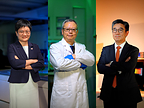
The three five-year research projects are led by Professor Wang Xun-li, Chair Professor in the Department of Physics; Professor Zhang Hua, Herman Hu Chair Professor of Nanomaterials and Director of the Hong Kong Institute for Clean Energy; and Professor Wang Jianping, Dean of the College of Computing.

The project led by Professor Wang Xun-li received HK$50 million (approximately US$6.41 million) under the AoE Scheme to establish the Hong Kong Centre for Neutron Scattering (HKCNS), a world’s premier neutron scattering research platform based at CityUHK in collaboration with other local universities.

Closely aligned with the technological development strategies of the Guangdong-Hong Kong-Macao Greater Bay Area (GBA), the project will strengthen strategic collaboration between Hong Kong and the China Spallation Neutron Source (CSNS) in Dongguan, a world-class scientific facility. It aims to enhance Hong Kong’s research capabilities, accelerate materials discovery and technology development, and promote talent cultivation and international collaboration across the GBA.

“Hong Kong has established strong research foundations in neutron scattering, supported by several internationally recognised leaders and a cohort of early- to mid-career scholars whose expertise spans instrument design, advanced experimentation and sophisticated data analysis,” said Professor Wang. “CityUHK has taken the lead in establishing the Guangdong-Hong Kong-Macao Neutron Scattering Laboratory and the Chinese Academy of Sciences-Hong Kong Joint Laboratory for Neutron Scattering. We have also played a key role in the design and development of China’s first total-scattering neutron diffractometer, the Multi-Physics Instrument, whose technical performance and scientific output have reached world-class standards. In addition, CityUHK has established an effective innovation ecosystem that facilitates the translation of frontier research into practical applications.”

The AoE Scheme funds two to three projects annually across Hong Kong, each led by an internationally renowned scholar. The scheme aims to strengthen Hong Kong’s leadership in strategic research areas and advance its development into a world-class hub for research and innovation.

Led by Professor Zhang, the project titled “Novel Unconventional Cu-based Catalysts for CO₂ Conversion towards Scalable Production of Value-added Chemicals” secured HK$39.64 million (approximately US$5.08 million) under the TRS. The project focuses on frontier developments in green technology and clean energy. It integrates AI-guided catalyst design with unique Phase Engineering of Nanomaterials (PEN) technology to synthesize novel catalysts, efficiently converting waste carbon dioxide into high-value chemicals, such as ethylene and ethanol, on a scalable industrial level.

It actively aligns with the HKSAR Government’s Climate Action Plan 2050 and the national “Dual Carbon” strategy. The project will collaborate with over ten enterprises in Hong Kong and the Chinese Mainland, leveraging CityUHK’s “HK Tech 300” programme to accelerate commercialisation.

“With the urgent global demand for sustainable green technology and decarbonisation, CityUHK will continue to provide a one-stop R&D roadmap covering material design, theoretical modelling and scalable production,” said Professor Zhang. “By deepening collaboration with industry, we aim to translate research outcomes into tangible economic and social benefits.”

Also funded under the TRS, receiving HK$55.69 million (approximately US$7.14 million), was a project led by Professor Wang Jianping, titled “SynapseCity: AI Driven Urban Emergency Response and Rescue”, a flagship AI initiative targeting urban public safety and emergency management. The project aims to build “SynapseCity”, the world’s first privacy-preserving, cross-departmental emergency coordination platform.

By leveraging Multi-Agent Systems to eliminate data silos, SynapseCity provides real-time analysis, knowledge sharing and decision support for extreme weather events and emergencies. The project has garnered support from over 20 government, industry and academic institutions locally and globally, including the Hong Kong Fire Services Department, the Hong Kong Police Force, the Hong Kong Observatory, Towngas, China Taiping Insurance and the University of Cambridge.

“Looking ahead to smart city development, urban public safety faces increasingly complex and dynamic challenges,” said Professor Wang. “Traditional, fragmented emergency networks can no longer meet the demands for real-time cross-departmental collaboration. CityUHK has a strong research foundation and interdisciplinary advantages in AI, smart cities, structural and infrastructure safety and lifecycle maintenance, as well as disaster- and climate-resilient cities. Through this project, our team will drive interdisciplinary and inter-institutional collaboration, providing key technical support for public safety and resilience building in Hong Kong and smart cities worldwide.”

A total of 30 CityUHK’s scholars participating in the above three CityUHK-led projects. In addition, CityUHK scholars are involved in six other AoE/TRS projects jointly led by other universities. Notably, all four projects awarded funding under the RGC’s AoE Scheme this year include the participation of CityUHK researchers, highlighting the University’s strong influence and leadership in cross-institutional research collaboration.

Media enquiries:
Him Chak, Communications and Institutional Research Office, CityUHK (Tel: 3442 6807)

View original content to download multimedia:https://www.prnewswire.com/apac/news-releases/cityuhk-tops-hong-kong-universities-in-funding-under-the-rgcs-two-flagship-research-schemes-securing-three-projects-including-a-five-year-areas-of-excellence-project-302838862.html

SOURCE CITY UNIVERSITY OF HONG KONG

Continue Reading

Technology

Rockwell Automation Receives Eight Brandon Hall Group HCM Excellence Awards

Published

on

By

India-based Gurukul leadership development program wins four Gold and four Silver honors in the 2026 Brandon Hall Group HCM Excellence Awards

NEW DELHI, Sept. 23, 2026 /PRNewswire/ — Rockwell Automation, Inc. (NYSE: ROK), the world’s largest company dedicated to industrial automation and digital transformation, announced that its India-based Gurukul leadership development program has received eight awards at the 2026 Brandon Hall Group HCM Excellence Awards®. The program earned four Gold and four Silver awards, receiving recognition for all eight submissions entered across four disciplines.

In Learning & Development, the Gurukul program received three Gold awards for Best Competencies & Skill Development, Best Use of a Blended Learning Program and Best Learning Team. In Talent Management, the program earned two Silver awards for Best High Potential Development and Best Succession & Career Management. In Leadership Development, it received Gold for Best Unique or Innovative Leadership Development Program and Silver for Best Leadership Development Program. The program also earned Silver for Best Program for Upskilling Employees in the Future of Work discipline.

The Brandon Hall Group HCM Excellence Awards recognize organizations that successfully develop and deploy programs, strategies, technologies and solutions that deliver measurable business results and advance excellence in human capital management. Each submission is evaluated by an independent panel of Brandon Hall Group analysts, industry experts and experienced practitioners against criteria including business need, program design, innovation, adoption and organizational impact.

The Gurukul program was designed to prepare high-potential team leads for broader enterprise roles as Rockwell Automation India evolves into a strategic Global Capability Center. Developed with Chrysalis HRD Pvt Ltd., the nine-month program combined leadership assessments, experiential workshops, simulations, action learning projects, global mentoring and coaching to strengthen strategic thinking, commercial awareness and stakeholder influence. All 15 participants completed the leadership journey, with a participant satisfaction score of 4.9 out of 5. During the program, eight participants were promoted and three others transitioned into expanded or different roles, while manager feedback identified improvements in enterprise perspective, collaboration and leadership ownership.

“This recognition from Brandon Hall Group is a testament to Rockwell Automation India’s commitment to developing talent and creating a future-ready workforce. Through Gurukul, we have built a learning ecosystem that empowers employees to continuously grow, embrace new opportunities, and develop the leadership capabilities needed for tomorrow’s challenges. Winning eight awards across learning, talent management, leadership development, and future of work categories is an honor that reflects the impact of our people-first approach and the remarkable contributions of our teams,” said Abhishek Misra, Head Human Resources – India, Rockwell Automation.

“Every year, the HCM Excellence Awards remind us that innovation is ultimately about impact. The organizations recognized this year have demonstrated that great HR and learning strategies don’t just improve programs, they strengthen organizations, empower people and deliver measurable business results. We are honored to celebrate their achievements,” said Rachel Cooke, COO of Brandon Hall Group™ and HCM Excellence Awards® Program Leader.

For more information about the awards, visit the official Brandon Hall Group announcement.

About Rockwell Automation: Rockwell Automation, Inc. (NYSE: ROK), is a global leader in industrial automation and digital transformation. We connect the imaginations of people with the potential of technology to expand what is humanly possible, making the world more productive and more sustainable. Headquartered in Milwaukee, Wisconsin, Rockwell Automation employs approximately 26,000 problem solvers dedicated to our customers in more than 100 countries as of fiscal year end 2025. To learn more about how we are bringing the Connected Enterprise® to life across industrial enterprises, visit www.rockwellautomation.com.

View original content to download multimedia:https://www.prnewswire.com/in/news-releases/rockwell-automation-receives-eight-brandon-hall-group-hcm-excellence-awards-302887280.html

Continue Reading

Technology

As the Industry Revisits What Premium Customers Value, LEPAS Shares Its Own Perspective

Published

on

By

BARCELONA, Spain, Sept. 23, 2026 /PRNewswire/ — As the automotive industry revisits what premium customers value, LEPAS, Chery Auto’s mid-to-premium new energy vehicle (NEV) brand, is setting out its own perspective. For LEPAS, premium is defined by elegance: design people connect with, technology that stays in the background, and a cabin that makes every journey feel composed.

“We believe premium is something you experience every day, not only on special occasions,” said a LEPAS spokesperson. “It is the calm of a quiet cabin, the pleasure of a considered design and the feeling that a car fits the way you live. That is what we mean by elegant mobility, and it guides every product we create.”

LEPAS expresses this view through three brand pillars. Leopard Aesthetics draws on the poise and agility of the leopard to shape a distinctive design language. Elegant Technology, built on the LEX Platform, aims to make cockpit and safety technology intuitive. Exquisite Space combines thoughtful space planning, comfortable materials, acoustic refinement and everyday practicality.

The LEPAS L6 brings these ideas into the cabin. At the 2026 Torino Automotive Design Award (TADA), announced on Sept. 11, 2026 in Turin, Italy, the LEPAS L6 received the Best Interior Design Award in the City Car category. The 2026 edition evaluated 87 models across City Car, Family Car and Premium Car categories. The jury highlighted the L6’s spacious and refined cabin, its premium materials and flexible storage, and the natural integration of technology throughout the interior.

The cabin features a flat rear floor, a gull-wing wraparound layout and NVH optimisation designed to support a calm interior atmosphere. The LEPAS L6 EV has launched in Thailand; specifications and availability vary by market.

LEPAS believes customers should be free to choose the powertrain that suits their lives. Its portfolio covers multiple powertrain technologies for different market needs, with NEV models launched in markets including Thailand and Indonesia and pre-sales underway in selected European markets. Within Chery Group, the iCAUR brand is also preparing to enter several European markets.

In October, LEPAS will host its inaugural Global Elegant Lifestyle Week under the theme “TOGETHER IN ELEGANCE” during the 2026 Chery International User Summit, bringing together users, partners and cross-industry guests to explore how elegance can shape everyday mobility.

View original content:https://www.prnewswire.co.uk/news-releases/as-the-industry-revisits-what-premium-customers-value-lepas-shares-its-own-perspective-302887449.html

Continue Reading

Technology

Brain-Inspired AI Neo-lab Xisiid Intelligence Raises Seed Funding

Published

on

By

The Company Unveils the First Brain-Inspired Self-Evolving Foundation System at the Shanghai Pujiang Innovation Forum

SINGAPORE, Sept. 23, 2026 /PRNewswire/ — Xisiid Intelligence, an AI neo-lab exploring new paradigms for next-generation artificial intelligence, announced the completion of a RMB 25 million seed round. The funding will primarily support continued research and development of its Brain-Inspired Self-Evolving Foundation System and the joint development of AI applications with domain experts.

As AI agents move beyond conversational applications toward increasingly complex professional workflows, Xisiid Intelligence is developing a new approach designed to help AI systems learn from real-world task execution and continuously build reusable capabilities.

The company also made its public debut at the recent Shanghai Pujiang Innovation Forum, a high-level international science and technology forum jointly hosted by the Ministry of Science and Technology of the People’s Republic of China. At the forum, it introduced its technical vision and multidisciplinary team and unveiled its proprietary foundation system.

The Next Phase of AI: From Content Generation to Reliably Completing Complex Tasks

The way large language models (LLMs) are evaluated is reaching a pivotal transition. Industry attention is shifting beyond generation and reasoning performance on static benchmarks toward a more demanding question: Can AI reliably complete complex, real-world tasks?

In high-stakes professional fields such as investment banking, management consulting, and cross-border legal practice, a single assignment may require processing large volumes of heterogeneous documents, coordinating workflows across multiple software applications, and reasoning through complex, multi-step processes with iterative verification.

Current state-of-the-art LLMs, however, still struggle with complex, long-horizon tasks. As task length and complexity increase, they remain vulnerable to reasoning drift, compounding errors, and inconsistent execution. Frontier agent benchmarks highlight this gap. Across both APEX-Agents, which evaluates complex tasks spanning multiple applications, and Harvey LAB, which assesses professional legal deliverables, even state-of-the-art models continue to face challenges in reliably completing end-to-end work. Recent public results from Harvey LAB, for example, show that under its rigorous All-Pass standard, leading models still achieve end-to-end task completion rates of below 20%.

“Current AI systems have already achieved remarkable capabilities in generation and reasoning, but in mission-critical environments, the real test is whether AI can reliably complete complex, multi-step work over extended task horizons, like a human expert,” said Dr. Chua Yam Song, Founder of Xisiid Intelligence. “Increasing model parameters alone cannot solve the challenges of reliable execution and cumulative learning. Our approach, Brain-inspired Intelligence for Artificial Intelligence (BI4AI), goes beyond replicating the physical structure of the brain. Instead, we draw on the principles by which biological intelligence organizes cognition, memory, learning, and adaptive feedback—moving AI from a computation-centric paradigm toward a memory-centric one.”

A Dual-System Architecture for Reliable Execution and Continual Learning

To translate this memory-centric philosophy into an engineering architecture, Xisiid Intelligence has developed a dual-system architecture comprising System 1 and System 2, integrating a proprietary language model layer with structured memory layer.

System 1: Fast Execution Through Latent-Space Interaction

System 1 serves as the high-speed execution layer for frequent tasks. Powered by their proprietary latent exchange protocol, it enables vector-based interaction at the internal representation layer, allowing functional modules to exchange states directly rather than relying on decoding and encoding of text.

Conventional agent frameworks typically coordinate modules through prompts and natural-language context. As task horizons expand, larger context windows increase token overhead while important information can become diluted or lost. By using latent exchange protocol, Xisiid Intelligence aims to reduce communication overhead and information loss across complex workflows.

System 2: Task-Centric Hierarchical Memory

System 2 functions as a task-centric hierarchical memory system. Beyond factual knowledge, it captures reusable workflows, decision heuristics, and experience derived from previous task execution.

When the system encounters non-standard or unfamiliar situations, it can retrieve relevant prior experience to provide task-specific constraints, execution guidance, and decision support. This allows accumulated experience to become reusable rather than requiring each task to effectively start from scratch.

Together, System 1 and System 2 form a continual-learning loop driven by real-world task feedback:

Execution –> Feedback –> Generalization –> Consolidation

Within this loop, validated skills and experience can be progressively consolidated into reusable system and model capabilities. The evolution process is governed by evaluation, gating, and rollback mechanisms designed to keep updates controlled and reversible.

As experience accumulates, the system can progressively adapt to the workflows, knowledge, and operating environments of individual professionals and organizations.

Xisiid Intelligence reports that the architecture has already completed initial milestone validation. In benchmark evaluations covering complex professional tasks, its agent system—powered by models of approximately 30 billion parameters—has demonstrated performance comparable to frontier models with more than one trillion parameters, effectively supporting fully private, on-premise deployment.

A Multi-disciplinary Team Advancing Brain-Inspired Intelligence

The technical roadmap of Xisiid Intelligence is grounded on years of interdisciplinary research and engineering across computational neuroscience, brain-inspired computing, artificial intelligence, and large-scale systems.

Founder Dr. Chua Yam Song has extensive experience in computational neuroscience and neuromorphic computing. His previous roles include serving as Principal Investigator for the Neuromorphic Program at the Agency for Science, Technology and Research (A*STAR), Singapore; Chief Researcher of Neuromorphic Computing at Huawei 2012 Labs; Chief Expert and Director of a leading Chinese Neuromorphic Computing Laboratory. He currently leads and participates in several Chinese National research initiatives, including projects under the China Brain Project.

At the 2024 World Internet Conference, Dr. Chua introduced NaoQi-SuWen, the first brain-inspired medical language model developed in China. In 2025, leveraging on common core technologies Qixin, a language model designed for emotional companionship, was also launched. He also contributed to the development of a general-purpose neuromorphic cloud platform capable of supporting both large language models and brain simulations up to 10 billion neurons.

Brain-inspired technologies developed under his leadership have been deployed across healthcare, electric power, energy, transportation, and agriculture, reflecting end-to-end experience spanning algorithm research, software development, and large-scale cloud-edge computing systems.

Building on this foundation, Xisiid Intelligence has assembled a multi-disciplinary team spanning computational neuroscience, neuromorphic computing, large-model algorithms, cognitive science, and systems engineering. The team combines rigorous academic research with extensive industry experience, with research published in leading international venues including Nature Machine Intelligence and IEEE Transactions on Neural Networks and Learning Systems (IEEE TNNLS).

This enables Xisiid Intelligence to connect insights from biological intelligence with current AI approaches such as large language models, agentic systems, memory architectures—advancing a new generation of brain-inspired innovation designed for complex, real-world tasks.

From Co-Creation to Own Intelligence

Xisiid Intelligence is currently working with institutional clients across professional domains including investment decision-making, legal due diligence, and enterprise operational governance, validating its Brain-Inspired Self-Evolving Foundation System in real-world workflows.

Through continued human-AI interaction, this experience can be consolidated into persistent and reusable organizational memory, enabling the system to develop capabilities increasingly aligned with expertise and technical know-how of each organization.

The system can also be deployed on-premise, allowing mission-critical data, proprietary workflows, and accumulated organizational knowledge to remain within enterprise-controlled environments. Over time, organizations may then build an intelligence asset that is progressively accumulated and owned within the organization itself.

With the new funding, Xisiid Intelligence will continue advancing its core architecture and deepen co-creation with professional institutions across knowledge-intensive domains.

The Company sees this as critical to the transition of AI from content generation to the reliable completion of real-world tasks, and continually evolving through real-world execution.

Its long-term vision is to enable every individual and enterprise to build intelligence they truly own—intelligence that learns, evolves, and compounds over time.

This is “Own Intelligence.”

Media Contact: 
Name : Yang Chen
Email: chenyang@xisiid.com
Website: www.xisiid.com 

View original content to download multimedia:https://www.prnewswire.com/apac/news-releases/brain-inspired-ai-neo-lab-xisiid-intelligence-raises-seed-funding-302887454.html

SOURCE Xisiid Intelligence

Continue Reading

Trending