Connect with us

Technology

Smallest.ai gets $21 Million in Funding to Build Voice 4.0, the Next Generation of Enterprise Voice AI


Published

on

Raises $13 million Series A led by Seligman Ventures, bringing total funding to more than $21 millionIntroduces Voice 4.0 and Hydra, an asynchronous AI architecture designed  to make AI conversations as natural, responsive and scalable as human dialoguePulse STT and Lightning TTS rank among the top choices for enterprises on Artificial Analysis, leading on speed and cost efficiency across the global leaderboard

SAN FRANCISCO, July 30, 2026 /PRNewswire/ — Smallest.ai, a San Francisco-based foundational AI research lab building the next generation of real-time voice AI infrastructure for enterprises, today announced it has surpassed $21 million in total funding following the close of a $13 million Series A led by Seligman Ventures with participation from Sierra Ventures and 3one4 Capital.

Industry forecasts expect the global Voice AI market to grow from $2.4 billion in 2024 to $47.5 billion by 2034, however, less than 1% of today’s global voice interactions are powered by AI. Enterprises continue to struggle with systems that sound robotic, fail under real-world complexity, introduce latency, and create operational challenges around reliability, compliance and governance. Smallest.ai is expanding its core voice AI platform across financial services, healthcare, contact centers, and business process outsourcing, where organizations are increasingly looking to deploy AI-powered voice agents at scale.

“Voice AI has gone through three generations of innovation, but each generation has ultimately hit the same wall,” said Sudarshan Kamath, founder and CEO of Smallest.ai. “The industry has focused on making models larger when the real challenge is architectural. Humans don’t wait for someone to finish speaking before they begin thinking. We listen, think, and respond simultaneously. Voice AI needs to work the same way. That’s why we built Smallest.ai around a real-time architecture that processes speech as it arrives, enabling faster, more natural conversations without sacrificing intelligence. By rethinking the stack instead of simply scaling models, we’re reducing latency to the point where voice interactions feel genuinely human.”

The End of Voice 3.0

Voice technology has evolved through three major eras:

Voice 1.0: Interactive Voice Response (IVR) systems built around rigid phone trees and menu navigation.Voice 2.0: Machine learning-powered voice bots capable of basic intent recognition but unable to handle complexity.Voice 3.0: Generative AI voice agents powered by large language models that sound more natural but still rely on multiple disconnected systems working sequentially.

Today’s voice agents typically require a chain of separate technologies, including speech recognition, language models, text-to-speech systems, orchestration layers, memory systems, and guardrails. The result is high latency, brittle performance, and conversations that still feel distinctly artificial.

Beyond Voice 3.0: Introducing Voice 4.0 

Smallest.ai characterizes its innovation as Voice 4.0, a paradigm shift toward AI architectures that process listening, reasoning, action, and response in parallel. Rather than executing these functions sequentially, Voice 4.0 enables them to happen simultaneously, allowing AI systems to respond while conversations are still unfolding.

Hydra: The Architecture Behind Voice 4.0

At the center of Voice 4.0 is Hydra, Smallest.ai’s speech-to-speech model designed around asynchronous intelligence. Rather than waiting for one process to finish before starting another, Hydra performs multiple tasks in parallel, enabling real-time conversational flow, mid-conversation tool use, natural interruptions, and significantly lower latency.

Together, Hydra and Pulse STT Pro are designed to support real-time conversational interactions, with transcription latency measured in milliseconds rather than seconds.

The Smallest.ai Models

Smallest.ai’s broader platform includes Pulse STT Pro and Lightning V3.1, which rank among the top voice AI models on Artificial Analysis for speed, quality, and cost efficiency. Built for enterprise-scale deployments, Pulse STT Pro supports 38 languages and combines low-latency transcription with capabilities such as speaker diarization, emotion detection, code-switching, noise reduction, and built-in PII and PCI redaction.

Customers use Smallest.ai to automate enterprise voice workflows, reducing support costs by up to 80% while improving agent productivity by as much as 10x.

“Voice AI is creating a real impact on life and work,” said Ashish Kakran, Managing Partner at Seligman Ventures. “Developers now increasingly talk to their machines instead of typing code. Smallest.ai is taking a fundamentally different approach to the category by rethinking architecture itself. Customers get an efficient vertically integrated stack and don’t need to waste time stitching models together. We believe the next generation of enterprise voice will be powered by Smallest AI.”

Smallest.ai currently works with organizations managing large-scale voice operations, including RingCentral, Truecaller, Readymode, Piramal, Kogta, Pocket, and others. The company has nearly 60 employees and plans significant expansion over the next year as demand for enterprise voice AI accelerates.

About Smallest.ai
Smallest.ai is a foundational AI research lab building the next generation of real-time voice AI infrastructure for enterprises. The company develops speech recognition, speech generation, and speech-to-speech systems designed to enable natural, scalable AI conversations across customer service, healthcare, financial services, and other high-volume communication environments. Headquartered in San Francisco, Smallest.ai serves enterprises globally through its Voice 4.0 platform and proprietary AI models. The company is backed by Seligman Ventures, Sierra Ventures, 3one4 Capital, Better Capital, Upsparks Capital, Schema Ventures, Tiny VC, DeVC, Mission Street Capital, and other angel investors.

View original content to download multimedia:https://www.prnewswire.com/news-releases/smallestai-gets-21-million-in-funding-to-build-voice-4-0–the-next-generation-of-enterprise-voice-ai-302839266.html

SOURCE Smallest.ai

Continue Reading

Technology

In HelloNation, Custom Fabrication Expert Mark Coyle Explains a Common Mistake in Custom Aluminum Design

Published

on

By

The article explains why smart geometry, not thicker walls, creates stronger, more efficient aluminum components.

ROCHESTER, N.Y., Oct. 24, 2026 /PRNewswire/ — What early design choice causes many custom aluminum projects to become heavier, costlier, or harder to manufacture? That question is addressed in a HelloNation article featuring insights from Custom Fabrication Expert Mark Coyle of American Custom Metals, Inc. in Rochester, New York, that outlines how misunderstanding aluminum behavior leads designers to rely on thick walls instead of stronger geometry.

The article begins by explaining that many people assume thicker walls automatically make aluminum parts stronger. It notes that aluminum does not respond to wall thickness the way steel does. Instead, its performance is shaped by how the metal flows through the extrusion die. The article states that custom aluminum design is more effective when profiles use ribs, chambers, and flanges to create stiffness without adding unnecessary weight. This guidance helps readers understand why adding material often increases cost without improving strength.

The article also highlights that thicker walls change how aluminum moves during extrusion. When heavy areas fill more slowly, the metal cools unevenly and can develop stress that only appears later. The HelloNation piece explains that well-balanced geometry keeps extrusion smooth and predictable. This consistency makes it easier to maintain dimensional accuracy across long production runs. By focusing on geometry, custom aluminum design avoids the problems that come with slow extrusion speeds and uneven cooling.

Another insight in the article centers on how ribs and internal supports influence stability. It describes how a thin wall supported by a properly placed rib often performs better than a thick wall with no reinforcement. This happens because the rib helps distribute load, improve stiffness, and guide the aluminum as it cools. The article explains that this structural approach makes custom aluminum design more efficient and gives designers more control over how the final part behaves under pressure.

The article also shows why early collaboration between designer and fabricator prevents costly changes. It states that a fabricator familiar with extrusion can catch potential issues before a die is built. Small adjustments to corners or transitions can remove weak points or improve metal flow. The article notes that this teamwork keeps the design aligned with real-world production. By working together early, both sides reduce the risk of redesigning the die after the first test run.

Machining is another area where the article explains how wall thickness affects performance. Features such as deep pockets or sharp internal angles may require slow feed rates or special tooling. When walls are thicker than needed, those areas can become difficult to machine cleanly. The article states that thoughtful custom aluminum design makes machining more predictable. Small changes, such as adding radiused edges or sizing features to match standard tools, help shorten cycle times and prevent tool wear.

Thermal behavior receives detailed attention as well. The article explains that aluminum retains heat differently depending on the mass of each section. Thicker walls hold heat longer, which increases the chance of distortion during extrusion, machining, or finishing. When a design uses geometry to create strength, the material cools more evenly. This reduces warping and helps long profiles stay aligned. The article notes that stable cooling is important for components that require a precise fit and consistent shape throughout an entire production run.

Cost is also a key topic in the article. It states that heavier profiles increase material use, extrusion time, and tooling needs. A custom aluminum design that relies on geometry instead of mass lowers material consumption and keeps the fabrication process efficient. The article explains that lighter parts are easier to handle, ship, and assemble. This saves money across multiple stages of production and supports long-term manufacturing efficiency.

The article also notes that smart custom aluminum design creates profiles that behave predictably during extrusion and machining. Smooth transitions, balanced wall dimensions, and structural features help reduce the chance of distortion or dimensional drift. These elements also lower scrap rates and support reliable performance. By using geometry instead of excess material, designers build parts that maintain strength without compromising manufacturability.

As the article concludes, it emphasizes that avoiding thick walls is one of the best ways to improve performance and lower cost. It states that the most dependable custom aluminum components come from designs that use structural features to strengthen the profile. When designers understand how aluminum behaves at each stage of extrusion and machining, they create parts that are strong, efficient, and consistent from batch to batch. This approach turns custom aluminum design into a predictable process rather than a series of uncertain adjustments.

A Common Mistake in Custom Aluminum Design features insights from Mark Coyle, Custom Fabrication Expert of Rochester, NY, in HelloNation.

About HelloNation
HelloNation is America’s Good News Network, a premier media platform built on the idea that good news travels faster when real people tell real stories. Through its community-focused publications and innovative “edvertising” approach, HelloNation delivers content that informs, inspires, and spotlights the leaders making a meaningful impact in their communities.

View original content to download multimedia:https://www.prnewswire.com/news-releases/in-hellonation-custom-fabrication-expert-mark-coyle-explains-a-common-mistake-in-custom-aluminum-design-302918282.html

SOURCE HelloNation

Continue Reading

Technology

World Young Scientist Summit 2026 Opens in Wenzhou, Zhejiang

Published

on

By

WENZHOU, China, Oct. 24, 2026 /PRNewswire/ — This is a report by China Daily:

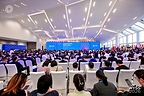
On October 24, the World Young Scientist Summit 2026 opened in Wenzhou, Zhejiang. The event is hosted by the China Association for Science and Technology (CAST), the Zhejiang Provincial People’s Government, and the World Association of Young Scientists. Nearly 800 representatives, including scientists, educators, and entrepreneurs from more than 60 countries and regions, are attending the summit.

He Junke, Vice President of CAST in charge of daily work and First Secretary of its Secretariat; Lian Yimin, Chairman and Party Group Secretary of the Zhejiang Provincial Committee of the Chinese People’s Political Consultative Conference; Marcelo Knobel, Executive Director of The World Academy of Sciences; and Zhang Zhenfeng, Member of the Standing Committee of the CPC Zhejiang Provincial Committee and Secretary of the CPC Wenzhou Municipal Committee, attended the summit and delivered remarks. Yao Gaoyuan, Vice Governor of the Zhejiang Provincial People’s Government, presided over the first segment of the plenary session.

With the theme “Gathering Talents Worldwide to Create a Better Future,” the summit’s annual agenda is “Global Youth Action in the AI Era: Building a Sustainable Future.” It aims to draw on the insights of young people around the world, deepen international sci-tech cooperation, and jointly address questions about young people, science, the world and the future.

Efim Zelmanov, Fields Medalist and Foreign Member of the Chinese Academy of Sciences; Chen Yunji, Deputy Director of the Institute of Computing Technology, CAS, and Director of the National Key Laboratory of Processor Chips; Mary Garson, President of the International Union of Pure and Applied Chemistry; and Lu Chaoyang, Member of the Standing Committee of CAST, Executive Dean of the Shanghai Institute of Advanced Study, University of Science and Technology of China, and Chairman of the Council of the World Association of Young Scientists, delivered keynote speeches respectively on education reform in the AI era, AI and processor chips, young women scientists’ participation in science, and quantum computing. They explored new opportunities for scientific research, talent cultivation, and international cooperation in the AI era.

This year’s summit placed greater emphasis on the growth needs of young scientists, with young talents under the age of 45 accounting for 88 percent of participants. It aimed to build a cluster of international journals, bring together young scientific talent, facilitate a batch of international collaborative projects and advance the application and commercialization of scientific and technological achievements. The summit released the Report on the Distribution and Mobility of Young Scientists in the Field of Embodied Intelligence, launched the World Young Scientist Summit Partner Journal Program and the 2026 World Young Scientist Innovation and Entrepreneurship Growth Support Program. It also published the “Young Scientist Pioneers 2035” list and announced the 2026 Sustainable Development Young Scientist Award. The awards were presented to four Chinese and foreign scientists.

Chen Tianrun, Founder of Hangzhou Moxin Technology Co., Ltd.; Yuan Yang, Assistant to the Dean of the Institute for Interdisciplinary Information Sciences at Tsinghua University; and two of the 2026 Sustainable Development Young Scientist Award winners, César de la Fuente and Nicola Segata, among other Chinese and foreign young scientist representatives, spoke at the flash-talk session to share their research practices and reflections.

In addition, the conference focused on fields such as future manufacturing, quantum information, embodied intelligence, brain-computer intelligence, environmental science, deep-sea resources, and life and health, and held 12 parallel forums. It also included the “Gravitation π” Future Technology and Concept Products Exhibition and Exchange, local thematic side events, and sci-tech and humanities study visits, further building an interdisciplinary, cross-regional and cross-sector platform for youth sci-tech exchange and cooperation.

View original content to download multimedia:https://www.prnewswire.com/news-releases/world-young-scientist-summit-2026-opens-in-wenzhou-zhejiang-302918664.html

SOURCE China Daily

Continue Reading

Technology

The Ultimate Send-off to Summer: CSTS Debuts Global Entertainment IP PremierX at New York’s Pier 17, Ushering in a New Era of Live Entertainment


Published

on

By

NEW YORK, Oct. 24, 2026 /PRNewswire/ — CSTS Enterprises (‘CSTS’), a New York-based sports, entertainment, integrated media and travel technology group, today announced the official launch of PremierXTM, its flagship live entertainment brand, with a landmark Halloween Weekend event “AFTER DARK” at The Rooftop at Pier 17 in New York on October 30, 2026.

Capping off Seaport’s 2026 Summer Season in unforgettable fashion, the grand finale brings a powerhouse lineup of stars to the PremierXTM stage at Pier 17, featuring Lil Xan, Armani White, DJ Soda, Nate Wyatt, and surprise A-list guest headliners. Set against the iconic Manhattan skyline, the landmark eventing unites chart-topping hip-hop and high-octane electronic music for a festival-grade experience as The Rooftop at Pier 17 transforms into the city’s premier live music destination.

Building on the momentum of the PremierXTM After Party for the 2026 World Cup Final that took place in New York on July 19th, “AFTER DARK” signals the official debut of PremierXTM, a proprietary, New York – born global entertainment IP created by CSTS to deliver defining cultural experiences at the intersection of music, sport, art and lifestyle. Centred on the power of cultural crossover, PremierXTM serves as an international bridge connecting East and West, modern innovation and timeless classical, while uniting world-class artists, creators, performers and audiences through the universal language of entertainment and premium live experiences.

The launch also marks the beginning of a promising relationship with Pier 17, providing a world-class stage for PremierXTM to accelerate its growth in the U.S. and engage international audiences over the long term. By combining PremierXTM’s global entertainment vision with Pier 17’s iconic waterfront setting, the partnership aims to create a premier destination for live experiences, empowering both platforms to expand their global reach, deepen audience engagement, and drive sustainable growth.

As a key pillar of CSTS’ integrated ecosystem spanning entertainment, sports, travel, integrated media and marketing solutions, PremierXTM further strengthens the Group’s ability to create high-impact experiences that connect audiences, destinations and brand partners. With the global live entertainment market projected to grow from approximately US$203 billion in 2025 to US$270 billion by 2030[1], PremierXTM is well-positioned to capitalize on the growing demand for premium, experience-led entertainment while creating long-term value to the Group through recurring audience engagement, tourism and brand partnerships.

“PremierX TM represents a significant milestone in CSTS’ evolution from a leading operator of global sports and hospitality platforms into a creator of world-class entertainment experiences,” said Abel Zhao, Group CEO and Executive Director at CSTS Enterprises. “The season finale at Pier17 marks the beginning of an exciting new chapter for CSTS as we expand our entertainment footprint and introduce a platform designed to deliver iconic live experiences and bring together artists and audiences from across the globe.”

“PremierXTM was built from the ground up as a bespoke platform to champion multicultural talent and visionary creative performers.” said Jason Liu, Regional Director of CSTS USA. “Starting from New York, we are building a scalable global brand that brings iconic live experiences to audiences worldwide while expanding our presence across key entertainment hubs in North America, Asia and Europe.”

Following its New York launch, PremierXTM plans to expand through a broader international rollout across North America, Asia and Europe, with future editions planned as part of a growing network of recurring live entertainment properties and flagship cultural events.

For ticket information on PremierXTM: “AFTER DARK”, visit
https://www.axs.com/events/1644912/after-dark-tickets

About CSTS Enterprises

CSTS Enterprises is an integrated media, entertainment, sports, and travel technology group. Headquartered in New York City, the company develops and partners with intellectual properties and brands to deliver compelling experiences that connect with audiences across the world. In addition to its own initiatives, including Generation CTM and PremierXTM, it collaborates with international IPs including FIFA World Cup, UEFA European Championship, and Formula 1.

CSTS integrates experiential marketing, travel, data, and technology to deliver seamless end-to-end audience experiences. The company engages consumers across physical events and digital channels, executing at scale worldwide, turning complex activations into co-ordinated, measurable outcomes.

[1] Source: Industry research by Markets and Markets, Live Entertainment Market Size, Share, Latest Trends & Growth Analysis, 2025-2030, Live Entertainment Market Size, Share, Latest Trends & Growth Analysis, 2025-2030.


View original content to download multimedia:https://www.prnewswire.com/news-releases/the-ultimate-send-off-to-summer-csts-debuts-global-entertainment-ip-premierx-at-new-yorks-pier-17-ushering-in-a-new-era-of-live-entertainment-302918645.html

SOURCE CSTS Enterprises

Continue Reading

Trending