Connect with us

Technology

Rainfall Health Applauds CMS on Latest Innovative Push Toward Universal Episode-Based Payment Models


Published

on

CJR-X final rule represents a new era of value-based care at a national scale, holding all acute-care hospitals accountable for care related to joint replacements, with bold moves away from fee-for-service.

SAN FRANCISCO, July 31, 2026 /PRNewswire/ — Today, the Centers for Medicare & Medicaid Services (CMS) issued the fiscal year 2027 Inpatient Prospective Payment System (IPPS) final rule. Within this 1,500+ page annual rule, the Comprehensive Care for Joint Replacement Expansion (CJR-X) was codified – signifying the country’s firm transition to value-based payment models. Building off of the CMS’s codification of the Transforming Episode Accountability Model (TEAM) last July, this move will catalyze the nationalization of episode-based payment models for surgical care, setting up the framework for other payers to follow.

CJR-X is the CMS Innovation Center’s (CMMI) first expanded model implemented by the Trump Administration. Further, it is one of only a few models that have even met expansion criteria in the greater initiatives around reducing waste in healthcare by managing care across the post-acute setting. This is largely due to the success of CJR, which produced $112.7 million in savings to Medicare in the last two years and ran from April 2016 to December 2024. Its successor, CJR-X, will now launch January 1, 2028, impacting nearly all US acute care hospitals through the 90-day episode of care post-discharge.

CMS projects CJR-X will generate $725 million in net Medicare savings across its first five performance years, building on the original CJR model’s track record in net Medicare savings while maintaining quality for over 98,000 knee and hip replacement patients across 323 hospitals.

“Today’s news signifies that value-based surgical care is now the permanent direction of our healthcare system and an important frontier for AI leadership for the country,” said Eddie Qureshi, CEO and Founder of Rainfall Health. “While CJR-X is a small part of the larger IPPS rule, the impacts are transformational. CMS is requiring hospitals to hold themselves accountable in the new value-based era, giving them an unprecedented opportunity to invest in care coordination infrastructure, episode analytics, and post-acute partnerships.”

Rainfall Health was created specifically for these value-based CMS payment models, providing an AI platform that is built to help hospitals comply with federal mandates like TEAM and CJR-X. The platform utilizes AI’s advanced processing to collect, standardize, and report on patient outcomes so that hospitals can properly track patients and keep them connected with their provider.

“CMS is demonstrating a renewed commitment to value-based care – representing a new era of surgical care models,” said David Shulkin M.D., the Ninth Secretary of the US Department of Veterans Affairs and Chair of the RAIN Advisory Committee. “Though it was CJR-X codified today, impacting lower extremity joint replacements, a natural next step is to broaden the model to the other surgical procedures covered in TEAM – including CABG or spinal fusion. Providers are finding AI solutions that help them remain accountable to these new mandates.”

Hospitals nationwide will face significant financial penalties if they are unable to deliver on the requirements listed in CJR-X. However, Rainfall Health sees additional compliance rules as a clear opportunity to invest in a new standard of care and access for their patients, bringing in technology advancements and a strengthened relationship with post-acute care partners.

To learn more about Rainfall and its offerings for hospitals impacted by CJR-X and TEAM, visit the website here.

About Rainfall Health:
Rainfall Health is an AI-driven compliance and reimbursement platform helping hospitals and medical groups navigate new federal mandates such as CMS’s TEAM model and CJR-X. The company is shaping a new national standard for mandated care model compliance through the RAIN Compliant™ designation which is a verifiable, AI-enabled framework adopted by hospitals, payers, and clinical partners. Rainfall works with health system executives, physician groups, and post-acute partners to automate complex regulatory requirements, improve care-quality performance, and unlock new Medicare revenue streams. Follow Rainfall Health on LinkedIn and Twitter.

View original content to download multimedia:https://www.prnewswire.com/news-releases/rainfall-health-applauds-cms-on-latest-innovative-push-toward-universal-episode-based-payment-models-302840389.html

SOURCE Rainfall Health

Continue Reading

Technology

Independent research firm names RWS a Leader in latest Localization Services analyst report

Published

on

By

RWS achieves maximum scores across 18 criteria, including Vision; Innovation; AI search, semantics, and knowledge enablement; and Hyperlocalization and cultural adaptation

MAIDENHEAD, England, Sept. 24, 2026 /PRNewswire/ — RWS (AIM: RWS.L), a global AI solutions company, today announced that it has been named a Leader in The Forrester Wave™: Localization Services, Q3 2026.

The evaluation assesses localization service providers across their current offerings, strategy and customer feedback, providing enterprises with an independent view of the market.

Forrester’s report describes RWS as bringing ‘one of the field’s clearest views of localization as AI infrastructure.’

RWS scores 5.0 across 18 criteria

RWS received the highest possible score of 5.0 in 18 of the 27 criteria evaluated.

These include Vision; Innovation; LLM investment and modernization; Data, model and AI risk controls; AI search, semantics and knowledge enablement; Hyperlocalization and cultural adaptation; Context and data strategy; Regulated localization and compliance; Multimodal localization and Talent strategy.

To RWS, the breadth of these scores reflects how localization is changing as enterprises adopt AI across global content and customer experiences. Technology can increase speed and scale, but organizations still need the language, cultural and domain expertise to make that content accurate, relevant and trusted in every market.

Forrester’s evaluation also acknowledges RWS’s ‘superior hyperlocalization, AI-readiness services, context handling, and multimodal localization…’

Forrester’s take. The report identifies that ‘RWS is a strong fit for global enterprises, especially those in regulated or brand-sensitive markets that need cultural relevance and compliance across all touchpoints.’

Benjamin Faes, Chief Executive Officer of RWS, said:

“For us, being named a Leader reflects the leadership RWS has built over many years of investment in language technology, AI and specialist expertise. What’s particularly encouraging is the breadth of the assessment – from vision and innovation to AI, hyperlocalization and regulated content.

“I’d also like to acknowledge the rigor of Forrester’s evaluation. They looked closely across our strategy and capabilities and spoke directly with our customers. That makes the findings particularly meaningful to us – especially hearing customers describe RWS as a highly trusted partner and an extension of their own teams.

“For our customers, that combination of technology, expertise and trust matters. They want to move faster with AI without losing the cultural understanding, control and quality their brands depend on. That’s exactly where we believe RWS has an important role to play.”

RWS combines proprietary technology with a global network of cultural, language, data and domain specialists to help enterprises create, transform and manage content across markets.

As AI becomes more deeply embedded in global content operations, RWS is developing its technology and services around a simple principle: AI works better when it understands the language, culture and context of the people it serves.

Access The Forrester Wave™: Localization Services, Q3 2026 to explore the full evaluation.

About us

RWS is a global AI solutions company empowering the world’s most trusted enterprise AI.

Our proprietary Cultural Intelligence Layer, powered by 250,000+ data specialists, cultural and language experts and deep domain professionals, backed by 47+ patents, makes enterprise AI culturally fluent, contextually accurate and secure, ensuring every interaction reflects a brand’s tone, context and customer values.

Through our Generate, Transform and Protect segments, we deliver intelligent content, enterprise knowledge, large-scale localization and IP protection for global growth. Trusted by 80+ of the world’s top 100 brands, RWS provides the confidence, governance and expertise organizations need to deploy AI safely, responsibly and at scale. Headquartered in the UK, RWS is listed on AIM.

More information: rws.com.

Notes to editors:

Forrester does not endorse any company, product, brand, or service included in its research publications and does not advise any person to select the products or services of any company or brand based on the ratings included in such publications. Information is based on the best available resources. Opinions reflect judgment at the time and are subject to change. This report is part of a broader collection of Forrester resources, including interactive models, frameworks, tools, data, and access to analyst guidance. For more information, read about Forrester’s objectivity here.

View original content to download multimedia:https://www.prnewswire.co.uk/news-releases/independent-research-firm-names-rws-a-leader-in-latest-localization-services-analyst-report-302888009.html

Continue Reading

Technology

Pearson research warns of a ‘triple capability gap’ emerging as AI adoption outpaces education and training in skilled occupations
Published

on

By

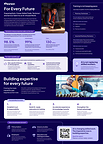
SHANGHAI, Sept. 24, 2026 /PRNewswire/ — Pearson (FTSE: PSON.L) today launched new research, For Every Future: Preparing Early-Career Skilled Trade, Technical and Service Talent for an AI-Infused World, at the WorldSkills International Conference 2026 in Shanghai. The report finds that as AI transforms skilled occupations, early-career talent is entering the workforce without the job-specific AI literacy, human skills, and practical experience it needs.

What’s new: Pearson’s research warns of a growing ‘triple capability gap’ opening across skilled trade, technical and service occupations that keep hospitals, factories and infrastructure operating. This challenge is being driven by two trends. AI is reshaping these jobs faster than education and training systems can adapt, while experienced workers are retiring and taking decades of practical knowledge with them. Together, these shifts are changing how expertise is built – leaving a new generation of workers at risk of becoming AI-rich but experience-poor.

As a result, employers increasingly need workers who can combine three capabilities at once: the judgment to apply AI safely and effectively, the human skills AI can’t replace, and the hands-on expertise traditionally passed from one generation to the next. Left unaddressed, Pearson cautions the gap could make it harder for employers to maintain safety standards, sustain essential services and support economic growth.

Why it matters: The challenge is no longer simply filling jobs. Skilled trade, technical and service occupations remain essential to modern economies, but the way expertise is developed within these careers is shifting. As AI reshapes these professions and experienced workers leave the workforce, the “triple capability gap” is making it harder for employers to sustain essential services and economic growth.

Key findings:

AI is rapidly reshaping occupations not typically associated with the AI conversation. The bulk of the AI conversation has been centered on office-based knowledge work, but less attention has been given to how AI is changing skilled trade, technical and service jobs.  As AI becomes embedded in their daily work, judgment, safety and human oversight become even more valuable. The challenge is ensuring education, training, and workplace learning keep pace with the changing nature of these roles. For example, one UK pharmacy industry participant said it takes 2-3 years to revise pharmacy technician education and training standards, while fewer than half of industrial machinery mechanics feel their training is preparing them for AI-enabled work.

Demand is rising for skilled trade, technical and service workers-at the same time these jobs are being reshaped by AI. Much of that demand will be driven by people retiring or leaving skilled jobs. 99% of skilled job openings in the UK, and 98.5% in the US, stem from replacing workers who retire, change careers, or leave the workforce. It’s not only about filling jobs; it’s about developing expertise faster and ensuring practical knowledge is passed from one generation to the next.

A new triple capability gap is emerging, changing how expertise is built. Skilled trade, technical, and service workers face a unique challenge. Their jobs require three things simultaneously: role-specific AI literacy and critical judgment (understand when to use AI, when to question it and how to apply it safely and responsibly), the human capabilities (communication, collaboration, adaptability, emotional intelligence and learning agility), and the institutional knowledge that retiring experts are taking with them.

Closing these gaps requires education, training, and workplace learning to evolve. They must build role-specific AI literacy and critical judgment, strengthen durable human capabilities, and expand opportunities to develop practical know-how through mentoring, observation, feedback, simulation, and hands-on experience.

The cost of inaction is significant. If these challenges aren’t addressed, employers will struggle to find and develop the skilled workers they need, while expertise gaps could affect safety-critical occupations and essential services. 98% of surveyed pharmacy technicians rated exactness and accuracy as extremely important, while 44% rated the consequences of error as extremely serious. 

What people are saying: Sharon Hague, President, English Language Learning & UK CEO, Pearson, said: “We’re entering a period where many of the workers who keep hospitals, factories and critical infrastructure running will need three things at once: the judgment to work safely with AI, the human skills technology can’t replace, and the hands-on expertise traditionally learned from experienced colleagues. The challenge is that demand for these workers is rising just as many experts are retiring and taking decades of practical knowledge with them. If we don’t rethink how expertise is developed, the gap between what employers need and what workers can do will continue to grow.”

The report: Read For Every Future: Preparing Early-Career Skilled-Trade, Technical and Service Talent for an AI-Infused World 

About the Research: The research combines labour market and AI exposure analysis in the US, UK and China with surveys, interviews and roundtables involving employers, educators, industry bodies, workforce experts, students and early-career workers, plus in-depth analysis of pharmacy technician and industrial machinery mechanic roles.

Related Pearson News

New Pearson and AWS Research: Only 14% of UK Learners Consider Themselves Highly AI-ReadyNew Pearson and AWS Research: The U.S. Helped Build the AI Economy. The Next Opportunity is Preparing Graduates to Thrive in it.Entry-Level Work Remains Essential: 94% of HR Leaders Expect AI to Create New Entry-Level Roles, Pearson and Cognizant Study Reveals

About Pearson
At Pearson, our purpose is simple: to help people realize the life they imagine through learning. We believe that every learning opportunity is a chance for a personal breakthrough. That’s why our c. 18,000 Pearson employees are committed to creating vibrant and enriching learning experiences designed for real-life impact. We are the world’s lifelong learning company, serving customers in nearly 200 countries with digital content, assessments, qualifications, and data. For us, learning isn’t just what we do. It’s who we are. Visit us at plc.pearson.com

Media Contact
Greg.Forbes@pearson.com 

View original content to download multimedia:https://www.prnewswire.com/news-releases/pearson-research-warns-of-a-triple-capability-gap-emerging-as-ai-adoption-outpaces-education-and-training-in-skilled-occupations-302887581.html

SOURCE Pearson

Continue Reading

Technology

Yeastar Launches NovoOne, an AI-native Multi-tenant Communications Platform for Service Providers


Published

on

By

XIAMEN, China, Sept. 24, 2026 /PRNewswire/ — Yeastar, a global leader in Unified Communications solutions, today announced the official launch of NovoOne, an AI-native, carrier-grade multi-tenant communications platform purpose-built for MSPs, ITSPs, telecom resellers, and carriers managing large and growing user bases.

Today’s communication service providers face a trade-off: traditional carrier-grade platforms offer scale but often held back by fragmented components, slow R&D, and legacy UIs, while modern SaaS UC platforms limit customization and inflate costs as they grow. NovoOne eliminates the trade-off, pairing SaaS-grade experience with carrier-grade resilience, control, scalability, and economics.

Built on a next-gen multi-tenant PBX core, NovoOne enables providers to manage unlimited users and tenants from a single deployment with hard per-tenant isolation. Its Kubernetes-native infrastructure scales horizontally to cut server costs, while high availability and geo-redundancy ensure resilient service delivery. Service providers can confidently grow their customer base or enter new markets at lower costs.

Beyond its carrier-grade foundation, NovoOne helps providers differentiate. Alongside full phone system features, it delivers native softphone apps for seamless mobility, rich APIs for easy customization, plus powerful built-in AI capabilities (AI Agent, transcription, sentiment analysis, and more) that open new, higher-value services.

NovoOne also delivers total commercial control. Tenant-level white-labeling, flexible packaging, and built-in reseller management put margins and branding entirely in providers’ hands. Additionally, NovoOne’s concurrent-call-based licensing model enables highly profitable oversubscription, makes it easy to support thousands of customers with just a handful of licenses.

“Service providers shouldn’t have to choose between scale, control, resilience, and profitability,” said Arya Zhou, Head of Yeastar Global Sales. “We built NovoOne to end that compromise. By combining carrier-grade multi-tenancy with rich features and solid control, we give our partners the foundation to scale their communications business profitably, on their own terms.”

Register for Yeastar’s virtual launch event or download NovoOne solution brief here.

About Yeastar

Yeastar is a global UCaaS provider dedicated to driving channel success. We empower service providers to scale profitably using our AI-powered communications systems and platforms for business phone, contact center, messaging, and collaboration. Anchored by an “easy-first” philosophy and backed by a complete portfolio spanning hardware, software, and multi-tenant cloud, along with a strong ecosystem and full white-label support, Yeastar equips 9,000+ partners to deliver reliable, cutting-edge innovation to over 650,000 users worldwide. Visit www.yeastar.com to learn more.

View original content to download multimedia:https://www.prnewswire.com/apac/news-releases/yeastar-launches-novoone-an-ai-native-multi-tenant-communications-platform-for-service-providers-302876189.html

SOURCE Yeastar

Continue Reading

Trending