Connect with us

Technology

University of Phoenix white paper introduces predictive framework for improving workforce engagement and wellness

Published

on

Author Dr. Jeffery Rhymes draws on organizational research and 2026 Career Optimism Index® findings to examine how alignment among workplace experience, employee perception and capability can shape trust, belonging and career optimism

PHOENIX, July 31, 2026 /PRNewswire/ — University of Phoenix has published a new white paper, “Aligning Experience and Perception: A Predictive Framework for Improving Workforce Engagement, Wellness, and Career Optimism,” by Jeffery Rhymes, DMgt, MBA, faculty in College of Doctoral Studies and fellow with the University’s Center for Organizational Wellness, Engagement, and Belonging (CO-WEB). In the paper, Rhymes introduces the Employee Experience Perception Alignment Model, a leadership framework proposing that workforce outcomes are influenced not only by the experiences organizations intend to create, but also by how employees interpret those experiences and assess their own capabilities.

The framework draws on organizational research and findings from the 2025 and 2026 Career Optimism Index® studies to examine a growing workforce challenge: Employees’ capabilities, confidence and expectations may be evolving faster than the organizational systems designed to support them. The 2025 study found that 51% of employees reported burnout and 43% lacked access to development opportunities, even as 86% actively sought opportunities to grow. The 2026 findings indicate that artificial intelligence is adding a new dimension to this gap, with 75% of employees reporting increased confidence and 66% reporting greater control over their careers because of AI adoption.

“Organizations can design thoughtful programs, policies and employee experiences, but their impact ultimately depends on how employees interpret them,” said Rhymes. “As artificial intelligence expands employees’ capabilities, confidence and expectations, leaders need to understand whether organizational intent, employee perception and workforce capability are moving in the same direction. Treating that alignment as a leading indicator can help organizations identify risks to trust, wellness, belonging and engagement before they become more difficult to address.” 

How the Employee Experience Perception Alignment Model works

The model integrates concepts from social exchange theory, employee engagement research, organizational justice, sensemaking and self-efficacy. It organizes workforce alignment around four interconnected elements:

Organizational experience: The actions, systems and experiences an organization intends to provideEmployee perception: How employees interpret organizational actions through leadership behavior, communication, context and prior experienceEmployee capability: Employees’ perceived control, skill development and adaptability, including their ability to use emerging technologies such as AIEmployee outcomes: Engagement, organizational trust, workplace wellness, belonging and career optimism

The paper proposes that alignment among organizational experience, employee perception and capability can serve as a leading indicator of workforce outcomes. Higher alignment may support stronger trust, engagement, wellness, belonging and career optimism, while lower alignment may signal disengagement, cultural friction, reduced trust and increased turnover intent.

Artificial intelligence is reshaping employee capability and expectations

According to the paper, AI is no longer functioning only as a productivity tool. Employees are also using emerging technologies to develop skills, increase autonomy and navigate career decisions more independently. As their capabilities expand, employees may evaluate workplace systems differently, comparing the development opportunities available within their organizations with possibilities outside them.

This creates a new form of workforce misalignment. Employees may remain in their roles for stability while simultaneously preparing for career mobility, making engagement increasingly conditional rather than committed. Organizations that continue investing in employee experience without accounting for changing employee capabilities and expectations may struggle to achieve consistent outcomes.

Workforce data highlights potential alignment gaps

The paper draws on findings from the Career Optimism Index studies to illustrate the urgency of improving alignment between organizational systems and employee needs:

51% of employees reported experiencing burnout43% lacked access to professional development opportunities86% were actively seeking opportunities to develop new skills21% reported a decline in their sense of career control75% reported greater confidence because of AI adoption66% reported greater control over their careers because of AI adoption

Together, the findings suggest that organizations face both an experience gap and a pace gap: Employees want opportunities to grow, and AI may be accelerating their capabilities and expectations more quickly than workplace systems can adapt.

Five actions leaders can take to improve workforce alignment

Rhymes identifies five practical actions organizations can take to better understand and address potential alignment gaps:

Conduct perception and capability audits. Regularly assess how employees interpret workplace experiences and whether organizational systems support their evolving skills and capabilities.Implement real-time feedback mechanisms. Use ongoing communication, employee voice and feedback systems to identify emerging concerns before they negatively affect engagement, trust or wellness.Prioritize internal mobility and development pathways. Create clear opportunities for employees to build skills, pursue growth and envision a future within the organization.Align leadership behavior with organizational messaging. Ensure that leadership decisions and behaviors consistently reflect stated organizational values and commitments.Treat perception and capability as leading indicators. Evaluate employee perceptions and capabilities alongside traditional workforce measures to gain an earlier view of organizational health.

The paper also encourages organizations to integrate AI into workforce strategy, foster psychological safety and better align talent acquisition, talent management and talent development systems.

About the author

Rhymes serves as doctoral faculty at the University of Phoenix College of Doctoral Studies and is a Fellow-in-Residence of CO-WEB. As an organization and technology operational readiness leader with over 20 years of consulting experience, he specializes in enhancing employee experiences, leading high-performing teams, driving strategic talent management initiatives and making complex concepts accessible through clear and engaging communication. Rhymes earned his Doctorate in Management and MBA from University of Phoenix, and a bachelor’s in computer science from Southern University and A&M College.

The full white paper is available on the University of Phoenix Research Hub.

About University of Phoenix
University of Phoenix is Built for Real Life. 50 Years Strong. The University innovates to help working adults enhance their careers and develop skills in a rapidly changing world through flexible online learning, relevant courses, academic AI pillars, and skills-mapped curriculum for associate, bachelor’s and master’s degree programs. Active students and alumni have access to Career Services for Life® resources including career guidance and tools. For more information, visit phoenix.edu.

About the College of Doctoral Studies
University of Phoenix’s College of Doctoral Studies focuses on today’s challenging business and organizational needs, from addressing critical social issues to developing solutions to accelerate community building and industry growth. The College’s research program is built around the Scholar, Practitioner, Leader Model which puts students in the center of the Doctoral Education Ecosystem® with experts, resources and tools to help prepare them to be a leader in their organization, industry and community. Through this program, students and researchers work with organizations to conduct research that can be applied in the workplace in real time.

View original content to download multimedia:https://www.prnewswire.com/news-releases/university-of-phoenix-white-paper-introduces-predictive-framework-for-improving-workforce-engagement-and-wellness-302840220.html

SOURCE University of Phoenix

Continue Reading

Technology

Stand8 Expands Nearshore Operations for 24×7 Enterprise IT Support

Published

on

By

Mexico-based delivery teams give large enterprises U.S.-aligned coverage, multilingual support, and scalable service operations

LOS ANGELES, Sept. 25, 2026 /PRNewswire/ — Stand8, a global technology consulting and services leader, today announced the expansion of its nearshore operations in Mexico to support large enterprise clients with 24×7 Service Desk, Network Operations Center, and technology operations services. The model combines specialized bilingual professionals with Stand8’s people-first, white-glove approach and integrates into clients’ existing platforms, service levels, and governance models.

Enterprises need dependable coverage across time zones, consistent service experiences, and the flexibility to scale when business demand changes. Stand8’s nearshore model extends internal teams with professionals aligned to U.S. operating hours and able to support global schedules as needed. The result is greater responsiveness, less pressure on onshore teams, and more predictable service delivery without sacrificing visibility or control.

“Enterprise support should feel seamless to end users and dependable to the leaders accountable for it,” said Bryce Prunty, Executive Vice President at Stand8. “Our Mexico operation gives clients access to specialized people and continuous coverage aligned to their business, with the governance, transparency, and high-touch service needed to operate at scale.”

Enterprise Nearshore Support Built to Scale

24×7 Service Desk and NOC coverage aligned to U.S. and global operating hoursDirect integration with enterprise platforms and client-specific tools, workflows, and reportingEscalation coordination and service delivery aligned to client SLAs and governanceScalable teams that can expand with volume, geography, or new operational needs

Stand8 is already applying the expanded Mexico operation in complex enterprise environments. Current engagements include 24×7 multilingual Service Desk support for leading global media and entertainment organizations and 24×7 NOC managed services for a global communications infrastructure provider. In each case, Stand8 teams work within established client workflows, tools, escalation paths, and operating requirements.

Clients can add adjacent capabilities as their needs evolve while maintaining a consistent delivery relationship.

About Stand8

Stand8 is a global technology consulting and services leader that helps businesses transform and scale through tailored IT solutions. With a 99% client retention rate and more than 15 years of results, Stand8 integrates seamlessly into client operations while delivering secure, compliant, and personalized technology services.

For more information, visit stand8.io.

View original content to download multimedia:https://www.prnewswire.com/news-releases/stand8-expands-nearshore-operations-for-24×7-enterprise-it-support-302890466.html

SOURCE Stand 8

Continue Reading

Technology

LUG Sports Group Named One of Canada’s Top Growing Companies for Second Consecutive Year

Published

on

By

TORONTO, Sept. 25, 2026 /CNW/ — LUG Sports Group Inc. (“LUG”), one of North America’s largest recreational sports leagues, announced today that it has ranked No. 146 out of 375 companies on the 2026 Report on Business magazine’s list of Canada’s Top Growing Companies. This marks LUG’s second straight year on the list. LUG also was ranked No. 5 on the Arts, Entertainment, and Recreation list.

Canada’s Top Growing Companies ranks Canadian businesses on three-year revenue growth. LUG earned its spot with a 174% growth rate over the past three years and a 239% growth rate over five years.

LUG reimagines recreational sports for college students and young adults, running leagues in hockey, women’s hockey, flag football, softball, soccer, lacrosse and pickleball. Every league is built around pro-level energy, standout content, and a community that extends well beyond game day. With more than 150,000 players all time across 85+ cities, LUG is North America’s go-to destination for adult and college social sports leagues.

“Making this list once was a milestone. Making it two years in a row is validation in the consistency of what we are trying to create,” said Ethan Wright and Ray Abramson, Presidents and Co-Founders of LUG Sports. “For more than a decade, we’ve grown LUG across college campuses and cities with one goal: give every player a premium, social sports experience that makes the average joe feel like a pro. This recognition belongs to our players, our community, and our HQ team that keeps raising the bar.”

With an expanded head office team and scalable infrastructure in place, LUG is well positioned to continue driving their brand in the fragmented adult sports market. As AI becomes increasingly embedded in everyday life, the value of real-world experiences, genuine connection, and community will only grow. LUG creates that “third space” for Millennials and Gen Z today, with Gen Alpha not far behind, positioning the brand to lead the next generation of social sports.

About LUG Sports Group

LUG Sports Group Inc. is one of North America’s largest recreational sports leagues, with more than 25,000 active players across 85+ cities. LUG builds sports programs for college students, with active leagues at 100+ campuses, before transitioning players into adult programming.

View original content to download multimedia:https://www.prnewswire.com/news-releases/lug-sports-group-named-one-of-canadas-top-growing-companies-for-second-consecutive-year-302890476.html

SOURCE LUG sports Group Inc

Continue Reading

Technology

AI Apps and Agents Are Taking Off. Gen Can Help People Understand What Happens to Their Data.

Published

on

By

Gen data shows nearly 1/3 of people use AI apps and agents, as the company expands its Agent Trust Hub with the new AI Data Checker

MOUNTAIN VIEW, Calif., Sept. 25, 2026 /PRNewswire/ — AI is moving beyond answering questions. Increasingly, people are asking AI to act on their behalf, from researching purchases and planning trips to managing everyday tasks and handling their finances. New telemetry from Gen (NASDAQ: GEN) shows just how quickly that shift is happening, with nearly one in three desktop users now interacting with agentic AI services.

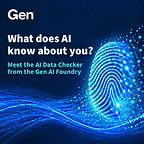
Today, Gen is responding to that shift with the beta launch of AI Data Checker, developed by the Gen AI Foundry, the company’s hub for emerging AI innovation. The latest tool from its Agent Trust Hub, AI Data Checker is designed to make it easier for people to understand how popular AI apps and agents handle their data. 

As AI becomes more capable, people are also being asked to place more trust in it. Agents are increasingly accessing personal information, preferences, browsing activity, or other data to complete tasks. Yet it is not always easy for people to understand what information an AI service collects, how that information may be used, or what choices they have.

Gen created the Agent Trust Hub (ATH) to close that gap, giving people greater visibility, understanding and control as they use AI assistants and agents. Since launching in February, the ATH has expanded to include VPN for Agents, the industry’s first AI-native VPN purpose-built for autonomous agents, and Sage, the first consumer agentic security layer available through Norton AI Agent Protection in Norton 360.

With AI Data Checker, Gen is expanding that work from protecting how agents operate to helping people better understand the data relationship behind the AI tools they use.

Making AI privacy easier to understand
The AI Data Checker brings information about AI data practices into one place, helping people explore what different AI services may collect and how their information may be used.

People can simply enter their email or username, and the AI Data Checker will provide a list of connected AI apps and services the person uses. The tool also scans for non-AI accounts where you may have connected and potentially shared personal information. From there, people can see what information or data the service collects, whether information may be used to improve or train AI models, how long information may be retained, and what privacy controls are available.

Rather than expecting people to read lengthy privacy policies or become experts in AI data practices, the AI Data Checker is intended to give them a clearer starting point.

“AI is becoming much more personal because we’re asking it to do more for us,” said Howie Xu, Chief AI & Innovation Officer at Gen. “That can be incredibly useful, but people should understand what they’re giving an AI access to in return. The AI Data Checker is about making that easier to see, so people can make choices about the AI tools they use with more confidence.”

From understanding AI to protecting people using it
Visibility is just one part of building trust in AI, but it needs to go hand-in-hand with protection. Gen’s family of brands already offer a number of products that protect against AI scams and the dangers of agentic AI, including Norton Genie Scam Detector, Norton AI Agent Protection, Deepfake Detection in the Norton and Avast brands, and other products and features. That protection is expanding as people look for AI assistants they can trust with more of their digital lives. The new Norton Family Assistant, for example, is a private AI assistant, supported by Norton technology, that can handle tasks with your permission and manage your digital life.

Gen also offers those who are interested to sign up for early access to upcoming products and services designed to address some of the emerging concerns as people increasingly rely on AI assistants and agents.

The AI Data Checker is available now at https://ai.gendigital.com/ where you can also sign up for early access to Gen’s tools designed to help people live fearlessly in the AI world. 

About Gen
Gen (NASDAQ: GEN) is a global company dedicated to powering Digital Freedom through its trusted consumer brands including Norton, Avast, LifeLock, MoneyLion and more. The Gen family of consumer brands is rooted in providing financial empowerment and cyber safety for the first digital generations. Today, Gen empowers people to live their digital lives safely, privately and confidently for generations to come. Gen brings award-winning products and services in cybersecurity, online privacy, identity protection and financial wellness to millions of people in more than 150 countries. Learn more at GenDigital.com.

About Gen AI Foundry
Rooted in Gen’s commitment to safety and transparency, the Gen AI Foundry is the engine behind its most recent AI innovations, from AI-powered security experiences to autonomous financial helpers and identity agents. It also serves as the place where core trust infrastructure is developed and operationalized, including the Agent Trust Hub, extending protection across the agent lifecycle from verification to execution. Here, Gen’s AI strategy becomes real through visible ventures, prototypes, working products, partnerships and an open ecosystem designed to shape and secure the AI era with and for both people and agents. 

Media Contact
Brittany Posey
Gen
Press@GenDigital.com

View original content to download multimedia:https://www.prnewswire.com/news-releases/ai-apps-and-agents-are-taking-off-gen-can-help-people-understand-what-happens-to-their-data-302890485.html

SOURCE Gen Digital Inc.

Continue Reading

Trending