Connect with us

Technology

Disrupting Startup Failure Curve: Why Money and Skills Alone Are Not Enough

Published

on

On Disruption Interruption, Sean Reel explains why accelerators that focus on capital and training can miss the assumptions driving business failure. Ignite Bermuda uses enablement, minimum viable product (MVP) testing, and human-centered AI tools to help entrepreneurs identify barriers and learn faster.

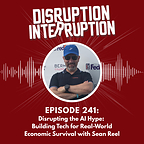
TAMPA BAY, Fla., Aug. 6, 2026 /PRNewswire/ — Only 57.3% of U.S. business establishments born in 2018 were still operating five years later, according to the U.S. Bureau of Labor Statistics. Yet many accelerator models still treat failure as a normal cost of entrepreneurship instead of asking why businesses with capital, skills, and training continue to collapse. On this episode of Disruption Interruption, host Karla Jo Helms (KJ) speaks with Sean Reel, Executive Director of Ignite Bermuda, about why capital and training cannot rescue a company based on untested assumptions. Reel argues that founders need more than funding and education; they need a way to identify barriers before they spend valuable resources. “If you gave them the skills and the money, they would still fail,” Reel says.

The Accelerator Model Misses the Real Problem

For Reel, the broken part of the accelerator model is not education. Many programs provide training, tools, capital, and access, but still fail to change the founders’ underlying assumptions. The result is that entrepreneurs may become better prepared to execute a plan that was flawed from the start.

That problem does not stop with startups. Reel argues that midmarket and large companies are now facing the same pressure to rethink how they test ideas, protect resources, and respond to disruption. “What do we need to do today to innovate faster than we’ve ever innovated before?” he says. In his view, the lesson is to “take everybody on an entrepreneurial journey,” where failure is not treated as collapse, but as the place where learning happens.

Too many companies still spend heavily before they know whether the market will support the idea. Reel points to the minimum viable product (MVP), as a way to challenge that habit. “MVPs are about taking the smallest amount of money, smallest amount of time, and testing an assumption,” he says.

Building People Who Build Businesses

Instead of a traditional coaching model that tells founders what to do, Ignite Bermuda uses an enablement model that helps entrepreneurs reach the answers themselves. “I won’t tell you what to do,” he says. “I’ll guide you to the self-awareness where you can make your own decisions.”

That approach has helped the company defy the standard failure curve. Reel says the organization has reached an 80% success rate while supporting 600 businesses, creating 250 jobs, and adding about $10 million to Bermuda’s local gross domestic product each year. In one case, he describes working with an entrepreneur who believed she needed to grow from $7,000 to $10,000 a month before leaving her job. After being asked what problem she was solving and for whom, she repositioned the business and generated $70,000 in seven days.

The accelerator is applying the same logic to Spark AI, a small language model built around Bermuda-specific knowledge and the organization’s enablement model. The goal is not to let AI tell founders what to do, but to help them ask better questions. “It’s not AI. It’s not artificial,” Reel says. “It’s just another tool, but if you don’t put the human factor in, good luck.”

Ignite Bermuda’s mission is broader than startup formation. Reel says the organization has helped build companies, save struggling businesses, and support entrepreneurs solving local problems, from health monitoring to affordable funerals. But the core output is human capability. “We’re not building great businesses,” he says. “We’re building great people who will build great businesses.”

Links

Disrupting the AI Hype: Building Tech for Real-World Economic Survival with Sean Reel

Disruption Interruption is the podcast where you will hear from today’s biggest Industry Disruptors. Learn what motivated them to bring about innovation and how they overcame opposition to adoption.

https://omny.fm/shows/disruption-interruption/disrupting-the-ai-hype-building-tech-for-real-world-economic-survival-with-sean-reel

LinkedIn: https://www.linkedin.com/in/seanreeluk 
Company Website: http://www.ignitebermuda.com 

About Disruption Interruption™
Disruption is happening on an unprecedented scale, impacting all manner of industries — MedTech, Finance, IT, eCommerce, shipping, logistics, and more — and COVID has moved their timelines up a full decade or more. But WHO are these disruptors and when did they say, “THAT’S IT! I’VE HAD IT!”? Time to Disrupt and Interrupt with host Karla Jo “KJ” Helms, veteran communications disruptor. KJ interviews bad asses who are disrupting their industries and altering economic networks that have become antiquated with an establishment resistant to progress. She delves into uncovering secrets from industry rebels and quiet revolutionaries that uncover common traits — and not-so-common — that are changing our economic markets… and lives. Visit the world’s key pioneers that persist to success, despite arrows in their backs at www.disruption-interruption.com.

About Sean Reel
Sean Reel is the executive director of Ignite Bermuda, an entrepreneurship ecosystem and accelerator focused on helping founders build stronger businesses through mindset, enablement and practical testing. Over seven years, he has helped Ignite support 600 businesses, create 250 jobs and contribute about $10 million annually to Bermuda’s local economy. Reel is also an entrepreneur working on ventures including Spark AI and Smart Hydration, and his work centers on helping founders, companies and communities use limited time, money and resources more effectively.

About Karla Jo Helms
Karla Jo Helms is the Chief Evangelist and Anti-PR® Strategist for JOTO PR Disruptors™. Karla Jo learned firsthand how unforgiving business can be when millions of dollars are on the line — and how the control of public opinion often determines whether one company is happily chosen, or another is brutally rejected. Being an alumnus of crisis management, Karla Jo has worked with litigation attorneys, private investigators, and the media to help restore companies of goodwill into the good graces of public opinion — Karla Jo operates on the ethic of getting it right the first time, not relying on second chances and doing what it takes to excel. Helms speaks globally on public relations, how the PR industry itself has lost its way, and how, in the right hands, corporations can harness the power of Anti-PR to drive markets and impact market perception.

References

U.S. Bureau of Labor Statistics. (2024). Business Employment Dynamics twentieth anniversary! bls.gov/spotlight/2024/business-employment-dynamics-twentieth-anniversary/U.S. Bureau of Labor Statistics. (2024, March 4). 1-year survival rates for new business establishments by year and location. bls.gov/opub/ted/2024/1-year-survival-rates-for-new-business-establishments-by-year-and-location.htm

Media Inquiries:
Karla Jo Helms
JOTO PR™
727-777-4629

View original content to download multimedia:https://www.prnewswire.com/news-releases/disrupting-startup-failure-curve-why-money-and-skills-alone-are-not-enough-302844079.html

SOURCE Disruption Interruption

Continue Reading

Technology

DAXIO Sets Three-Year Public-Market Pathway Towards a $1 Billion Valuation

Published

on

By

Founder-owned trade show and commercial-technology company combines 12 specialist US events, proprietary DealConnect technology, $35.7 million in annual commercial capacity and a high-margin AI-powered operating model

WEST PALM BEACH, Fla., Sept. 21, 2026 /PRNewswire-PRWeb/ — DAXIO today set out its three-year pathway towards a public-market listing and a $1 billion enterprise valuation.

“With 12 specialist events, proprietary DealConnect technology and $35.7 million in annual commercial capacity, DAXIO has a defined three-year pathway to a $1 billion valuation and public-market listing.” — Dawn Barclay-Ross, Founder and Chief Executive, DAXIO

Founded and wholly owned by international trade show organizer Dawn Barclay-Ross, DAXIO has established a portfolio of 12 specialist US events supported by proprietary DealConnect technology, qualified Hosted Buyer programmes and a portfolio-wide AI operating system.

The portfolio contains approximately $35.7 million in maximum annual commercial inventory capacity: $32.2 million in stand inventory and $3.54 million in sponsorship, advertising and Thought Leadership opportunities.

At 35%, 60% and 85% inventory realization, annual portfolio revenues are approximately $12.5 million, $21.4 million and $30.4 million respectively.

DAXIO’s current cost model indicates the potential for portfolio contribution margins above 90% at scale, reflecting its AI-powered infrastructure, centralized technology and capital-efficient operating structure.

“The next billion-dollar exhibition business will not resemble the last generation of exhibition groups,” said Barclay-Ross, Founder and Chief Executive of DAXIO.

“It will combine deep industry expertise with proprietary technology, intelligent automation and disciplined commercial execution. It will be faster, leaner and more accountable for the business value created at every event. That is DAXIO.”

Twelve events. One scalable commercial platform.

DAXIO’s 2027 portfolio comprises InfraBuild, PowerXpo, EnerWasteXpo, AgriTechXpo, BioGenomic Health Expo, Advanced Medical Device Show, NextGen MedTech Xpo, InsureCap, SmartMfg, AerospaceXpo, DefenseXpo and TalentTech.

Together, the events establish DAXIO across infrastructure, energy, environmental services, agriculture, healthcare, medical technology, insurance, manufacturing, aerospace, defense and workforce technology.

The portfolio has capacity for up to 5,856 stand-equivalent positions across the full commercially deployable event footprint.

Its multi-sector structure creates diversified revenue opportunities through stand sales, sponsorship, advertising, Thought Leadership, commercial partnerships and technology.

DealConnect moves the model beyond networking

DAXIO’s principal technology asset is DealConnect, created by Barclay-Ross to move business-event matchmaking beyond profile-swiping, unqualified introductions and chance encounters.

DealConnect assesses more than 500 data points across capability, compliance and financial dimensions to identify stronger-fit commercial opportunities during DAXIO events.

It operates alongside DAXIO’s qualified Hosted Buyer programmes. Approved buyers with purchasing responsibility and confirmed budgets may receive flights and hotel accommodation in return for agreeing to attend scheduled meetings with exhibitors during the event.

“Attendance is not the commercial outcome,” Barclay-Ross said. “The outcome is whether the right organizations meet, whether the opportunity is credible and whether that conversation can progress into business. DealConnect is designed around that standard.”

A three-year pathway to public markets

DAXIO’s public-market pathway is structured around five measurable drivers:

Converting revenue across the existing 12-event portfolioExtending the portfolio into further specialist and international marketsEstablishing recurring commercial revenues through DealConnectPreserving high margins through AI-powered executionAchieving institutional standards of governance, reporting and financial control 

Barclay-Ross has applied 25 years of international trade show and business-development experience to create an integrated exhibitions and commercial-technology company without the inherited cost base of a conventional exhibition group.

DAXIO is wholly founder-owned and independent of private-equity ownership, institutional exhibition groups and external corporate control.

“The first 12 events give DAXIO significant commercial scale. DealConnect creates proprietary technology value. Our AI operating system provides the execution capacity to operate across multiple specialist markets while protecting margin,” Barclay-Ross said.

“The pathway is already defined: convert the existing inventory, extend the portfolio, establish recurring technology income and enter the public markets as a high-growth exhibitions and commercial-technology company.

“The platform exists. The commercial capacity is quantified. The margin model is compelling. The route is repeatable. DAXIO’s pathway to a $1 billion valuation is underway.”

Strategic capital window closes September 25

DAXIO’s current $200,000 strategic-capital participation window closes on Friday, September 25, 2026.

The capital will be deployed directly into revenue-generating activity across the existing portfolio, including exhibitor and sponsor acquisition, qualified-buyer development, commercial marketing, technology deployment and sales execution.

The current financing provides a time-limited opportunity for eligible investors to participate at the beginning of DAXIO’s three-year public-market pathway.

Confidential company and investment information is available to eligible investors and professional advisers directly from DAXIO.

About DAXIO

DAXIO is a founder-owned, independent trade show and commercial-technology company headquartered in Florida.

Its portfolio comprises 12 specialist US business events supported by proprietary DealConnect technology, qualified Hosted Buyer programmes and an AI-powered operating infrastructure.

DAXIO is executing a three-year pathway towards a $1 billion enterprise valuation and public-market listing.

Media and investor enquiries

Dawn Barclay-Ross
Founder and Chief Executive
DAXIO
dawn@infrabuildXpo.com
+1 561 785 3120

Media Contact

Dawn Barclay-Ross, Capital Connect International Events Inc dba DAXIO, 1 5617853120, dawn@capitalconnectevents.com, https://www.infrabuildxpo.com/

View original content to download multimedia:https://www.prweb.com/releases/daxio-sets-three-year-public-market-pathway-towards-a-1-billion-valuation-302884930.html

SOURCE Capital Connect International Events Inc dba DAXIO

Continue Reading

Technology

OpenCV Introduces Enterprise Support for Companies Building Products with Computer Vision

Published

on

By

Three service tiers offer long-term maintenance, OpenCV-certified binaries and direct engineering support. OpenCV remains free and open source.

PALO ALTO, Calif., Sept. 21, 2026 /PRNewswire/ — OpenCV today announced OpenCV Enterprise, a paid maintenance and engineering offering for organizations that depend on OpenCV in their products. The program brings together support for established deployments, priority help with production issues and ongoing engineering collaboration through three tiers: OpenCV Enterprise LTS, OpenCV Enterprise Premier and OpenCV Enterprise Partnership.

Organizations can explore the tiers and register at opencv.org/enterprise.

OpenCV Enterprise is a maintenance and engineering offering for organizations that depend on OpenCV in their products.

OpenCV Enterprise builds on OpenCV’s existing engineering collaborations with companies including Qualcomm Technologies and Arm. These efforts include strengthening native OpenCV support for Windows on Snapdragon through builds, automated testing and optimization, and improving performance on Arm-based platforms through integrations such as Arm KleidiCV. The Enterprise offering brings this platform engineering experience to organizations maintaining their own OpenCV-based products.

For companies building industrial inspection systems, medical imaging applications, robotics and embedded devices, maintaining a computer vision library is an ongoing engineering responsibility. An upgrade can require extensive integration and regression testing. Staying on an older version means continuing to assess security issues, maintain builds and resolve defects. OpenCV Enterprise helps companies manage that work within an agreed support scope and product lifecycle.

“Companies need to support the products their customers already use while continuing to develop what comes next,” said Dr. Satya Mallick, CEO of OpenCV. “OpenCV Enterprise gives those teams a direct engineering relationship with OpenCV, with clear responsibilities for maintenance, testing and support. The library remains free and open source.”

Three tiers for different product needs

OpenCV Enterprise LTS — US$150,000 per year. For teams maintaining a stable OpenCV integration over a defined product lifecycle. LTS includes applicable security backports, covered severe-defect remediation, agreed regression testing, a named service owner and 10 engineering days annually. It helps companies keep established products supported while planning upgrades around their own release schedules.OpenCV Enterprise Premier — US$250,000 per year. For teams that need priority engineering support when OpenCV issues affect production or delay releases. Premier builds on LTS with a named technical lead, product-specific qualification, monthly technical reviews and 30 engineering days annually. It gives engineering teams a clear escalation path and additional capacity to address deployment-specific problems.OpenCV Enterprise Partnership — from US$400,000 per year. For organizations requiring continuing engineering collaboration across custom forks, platforms and hardware generations. Partnership builds on Premier with 60 reserved engineering days annually, an agreed development backlog and quarterly roadmap planning. Work can include optimization, fork maintenance, test integration and scoped migration or porting. 

Every delivered Enterprise binary will be certified by OpenCV

Certification ties each supplied binary to its source, build configuration and qualification results. Deliverables include signed builds, source and patches, a software bill of materials, test results, change notes and a release certificate for the supported configurations.

For companies maintaining private OpenCV forks, the service can also address gaps in automated testing and ongoing maintenance. An internal fork may not have the breadth of build-and-test coverage available through OpenCV’s continuous integration infrastructure. Enterprise qualification defines the configurations and regression checks needed for the customer’s deployment; it does not imply testing on every hardware platform.

OpenCV certification applies to the supplied software and agreed configurations. Customers retain responsibility for final product validation and any required regulatory or functional-safety approvals.
The tiers use three-year agreements billed annually. Initial qualification is priced separately, and support for older releases or private forks begins with a supportability assessment. Covered components, configurations, service windows and maintenance commitments are defined in the agreement.

Organizations can explore the tiers and register at opencv.org/enterprise. Registration creates no purchase commitment. OpenCV Enterprise is an optional paid service; OpenCV remains free and open source.

About OpenCV

OpenCV is an open-source library for computer vision, image processing and AI. It is operated by the Open Source Vision Foundation, a nonprofit supporting the beneficial use of computer vision through open collaboration and freely available software. Learn more at opencv.org.

Media contact

Phil Nelson 
Director of Content & Creative, OpenCV 
phil@opencv.org

View original content to download multimedia:https://www.prnewswire.com/news-releases/opencv-introduces-enterprise-support-for-companies-building-products-with-computer-vision-302885058.html

SOURCE OpenCV

Continue Reading

Technology

NICB Announces Leadership Transition

Published

on

By

OAK BROOK, Ill., Sept. 21, 2026 /PRNewswire/ — The National Insurance Crime Bureau (NICB), the insurance industry’s association dedicated to predicting, preventing, and prosecuting insurance crime and fraud, announces that David Glawe will step down as President and Chief Executive Officer in October after six years of service leading the nonprofit organization.

“On behalf of the Board of Governors, I want to thank David for his six years of service to NICB and his commitment to its important mission,” said Nick Seminara, Chairman of the NICB Board of Governors. “We appreciate his contributions to the organization and wish him well as he prepares for his next chapter.”

Glawe reflected on his time with NICB and the organization’s mission:

“It has been a privilege to serve NICB and to work alongside such a talented and committed team. I have tremendous respect for the work they do every day and for the mission we share—bringing together the insurance industry, law enforcement, and our many partners to fight insurance fraud and crime and protect the public.

I am proud of what we have accomplished together over the past six years and grateful for the dedication, expertise, and commitment I have seen throughout the organization.”

Glawe will work with the Board and NICB leadership team through his departure to support an orderly transition. The Board will announce its leadership transition plans at the appropriate time.

NICB remains focused on its mission and on continuing to strengthen its capabilities and partnerships in the fight against insurance crime and fraud.,

About the National Insurance Crime Bureau: Headquartered in Oak Brook, Ill., the National Insurance Crime Bureau (NICB) is the nation’s leading not-for-profit organization exclusively dedicated to combatting and preventing insurance crime through Intelligence, Analytics, and Operations; Education and Crime Prevention; and Strategy, Policy, and Advocacy. NICB is supported by more than 1,200 property and casualty insurance companies and self-insured organizations. To learn more, visit NICB.org.

View original content to download multimedia:https://www.prnewswire.com/news-releases/nicb-announces-leadership-transition-302885047.html

SOURCE National Insurance Crime Bureau (NICB)

Continue Reading

Trending