Connect with us

Technology

Cosign Launches in Houston as Record Apartment Supply Fails to Fix Renter Access

Published

on

Third-Party Guarantor Platform Helps Increase Apartment Approvals as Houston Vacancy Remains Elevated

HOUSTON, Aug. 7, 2026 /PRNewswire/ — Cosign, a third-party lease guarantor platform and cosigner alternative designed to expand renter access while protecting property owners, has launched in Houston, addressing a disconnect that’s become common across the metro: thousands of new apartments, and qualified renters still getting turned away.

According to data from CoStar, Houston’s apartment market reflects a growing disconnect between record supply and apartment approvals. Metro vacancy sits at 12.5%, with roughly 21,000 of the nearly 88,000 apartments delivered since 2023 still sitting vacant. As lease-ups slow and competition intensifies, nearly two-thirds of apartment communities are offering concessions, including six to eight weeks of free rent in many supply-heavy submarkets, while rent growth remains negative for the first time in more than a decade. Rather than relying solely on deeper discounts to reduce vacancy rates, more operators are looking for ways to expand apartment approvals by qualifying renters who can afford the rent but fall just short of traditional credit score or screening requirements.

At Keener Management, that mismatch was showing up week after week. With 14 communities across the Houston MSA, management adopted Cosign as a cosigner alternative to solve exactly that problem. When renters fall just short of standard qualification criteria and have no cosigner to rely on, Cosign steps in as a qualified third-party guarantor and cosigner alternative, allowing Keener’s Houston-area properties to increase apartment approvals while maintaining financial protections. As a lease guarantor, Cosign helps operators reduce vacancy rates by approving qualified renters who would otherwise be denied.

“At Keener Management, the challenge isn’t attracting renters, it’s finding qualified applicants without creating unnecessary friction,” said Elizabeth Ortiz, property manager of Keener Management. “That’s where Cosign, a third-party guarantor, has made a real difference. When prospective residents fall just short of our standard qualification criteria and don’t have a traditional cosigner, Cosign gives us the confidence to approve applicants we might have otherwise declined. Since introducing Cosign as an option, we’ve been able to increase approved applications while providing a smoother leasing experience for both our team and our residents.”

Founded by real estate owners and operators, Cosign’s guarantor platform evaluates payment behavior and recency rather than relying solely on a credit score, helping owners increase apartment approvals and reduce vacancy rates without relying exclusively on concessions.

“Houston has more apartments than it’s had in years, but that hasn’t solved the approval problem,” said Zach Schofel, co-founder and CEO of Cosign. “Owners are still saying no to renters who can afford the rent, simply because of a technicality. Cosign lets Keener and other operators say yes more often without adding risk.”

For more information, visit www.rentwithcosign.com and follow on social media @rentwithcosign.

About Cosign
Cosign is a real estate technology company and lease guarantor service that bridges the gap between qualified renters and landlords. Founded by real estate professionals, Cosign’s mission is to expand housing access through data-driven underwriting that considers payment behavior, not just credit scores. Active in more than 500,000 units across 3,000+ communities nationwide, Cosign is helping modern operators approve more qualified renters in both tight and oversupplied markets. For more information, visit www.rentwithcosign.com

View original content to download multimedia:https://www.prnewswire.com/news-releases/cosign-launches-in-houston-as-record-apartment-supply-fails-to-fix-renter-access-302845290.html

SOURCE Cosign

Continue Reading

Technology

SEMICONDUCTOR INDUSTRY TAKES TALENT PIPELINE TO PRIMARY SCHOOLS AND ACROSS ASIA

Published

on

By

New initiatives will reach more than 4,000 youths in Singapore, introduce semiconductor concepts from age 10, and connect emerging talent across Asia

SINGAPORE, Sept. 24, 2026 /PRNewswire/ — Singapore’s semiconductor sector is widening its talent pipeline, with new initiatives reaching students from primary-school age through to university, while giving youths more opportunities to experience the industry first-hand and build connections across the region.

The global semiconductor industry will need more than one million additional skilled workers by 2030, according to Deloitte, intensifying competition for engineers and technical talent. The scale of the challenge means the industry needs to widen the pipeline earlier and strengthen connections between technical education and industry.

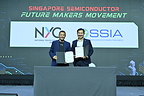
Announced by the Singapore Semiconductor Industry Association (SSIA), the initiatives include a primary-school engagement pilot, a three-year partnership with the National Youth Council (NYC), a semiconductor future makers camp and SSIA’s first regional student talent exchange.

“Building talent does not start at hiring. Semiconductors are behind almost everything we use, yet much of the industry remains unseen by young people,” said Ang Wee Seng, Executive Director of SSIA.

“It is not about asking children to choose a career early. It is about widening what they can imagine for their future and giving them the exposure and connections to see where they could contribute.”

MORE FIRST-HAND EXPOSURE TO SEMICONDUCTOR CAREERS

Under a three-year partnership between SSIA and NYC, the semiconductor industry will support up to 1,000 Job Taster opportunities and 300 industry mentors, alongside broader industry engagement expected to reach more than 4,000 youths.

Part of the SG Youth Plan, the partnership will provide opportunities including micro-work experiences, job shadowing, company learning journeys, project challenges and short-term work attachments, alongside mentoring by semiconductor professionals.

“As we expand Job Taster and mentoring opportunities under the SG Youth Plan, our partnership with SSIA will give youths first-hand exposure to the semiconductor industry and connect them with professionals who can help them better understand the pathways and possibilities ahead,” said David Chua, Chief Executive Officer of the National Youth Council.

MAKING SEMICONDUCTOR TECHNOLOGY VISIBLE EARLIER

At the primary-school level, SSIA will introduce a two-year pilot for students aged 10 and above using LEGO® Education’s Computer Science & AI solution, coupled with semiconductor context provided by SSIA and industry.

The pilot aims to reach more than 600 students. Using physical models, programmable motors and colour sensors, students will explore coding, computational thinking and age-appropriate AI concepts while learning how chips enable sensors, smart devices, robots and AI applications.

SSIA and ams OSRAM are also developing a Semiconductor Future Makers Camp for children and youths aged seven to 16, planned for 2027. As Founding Industry Partner, ams OSRAM will contribute engineers, mentors and hands-on experiences around light, sensing and semiconductor technologies.

CONNECTING EMERGING TALENT ACROSS ASIA

SSIA also launches its first Regional Student Talent Exchange, bringing together more than 50 students and educators from India, Indonesia, Malaysia, Vietnam and Singapore.

Participants span disciplines including IC design, VLSI and embedded systems, electronics engineering and manufacturing, wearable electronics and computer science. The exchange will connect them with peers, industry leaders and Singapore’s semiconductor ecosystem before they enter the workforce.

 “By bringing students from different markets and technical disciplines together early, we want them to build the relationships and regional perspective they will need in an industry where innovation, manufacturing and supply chains cross borders,” said Wee Seng.

“Semiconductors are a regional and global industry, and the talent driving this sector must have the same international outlook. Early opportunities for students to engage with industry and peers across borders can help build the networks, knowledge and perspectives that will shape their future careers,” said H.E. Trần Phước Anh, Ambassador of Vietnam to Singapore.

“NIELIT greatly values its collaboration with the Singapore Semiconductor Industry Association (SSIA), which provides a meaningful platform for strengthening India–Singapore cooperation in the semiconductor and electronics ecosystem. The participation of students and faculty from NIELIT Deemed to be University campuses in the SSIA Regional Exchange and Summit 2026 is an important step towards providing our young talent with international exposure, industry insights and opportunities for knowledge exchange.

“Through this collaboration, NIELIT and SSIA are creating valuable avenues for academic–industry engagement, capacity building and development of globally relevant semiconductor talent. We look forward to further deepening this partnership and building stronger bridges between the semiconductor ecosystems of India and Singapore,” said Prof. M. M. Tripathi, Director General, NIELIT.

View original content to download multimedia:https://www.prnewswire.com/apac/news-releases/semiconductor-industry-takes-talent-pipeline-to-primary-schools-and-across-asia-302888618.html

SOURCE Singapore Semiconductor Industry Association

Continue Reading

Technology

Saudi: One Destination, Endless Ways to Explore

Published

on

By

Saudi Tourism Authority and Wego launch a new campaign inspiring MENA traveller to discover more of Saudi

DUBAI, UAE, Sept. 24, 2026 /PRNewswire/ — The Saudi Tourism Authority (STA) and Wego, the number one travel app and largest online travel marketplace in the Middle East and North Africa (MENA), have partnered to launch a new destination campaign inviting travellers across the region to discover Saudi through its diverse destinations, rich culture and heritage, natural landscapes, entertainment and year-round experiences.

From the vibrant energy of Riyadh and the historic character of Jeddah to AlUla’s ancient landscapes and the Red Sea coastline, Saudi brings together distinctly different destinations and experiences within a single journey. The campaign will showcase this diversity, inspiring travellers to discover more of Saudi and build journeys around their individual interests and travel styles.

Families can combine cultural attractions with entertainment and outdoor activities, while couples and leisure travellers can explore coastal escapes, dining, shopping and wellness. Travellers seeking adventure and discovery can experience archaeological sites, mountain landscapes, desert activities, diving and water experiences along the Red Sea, alongside local traditions and authentic Saudi hospitality.

Mamoun Hmidan, Chief Business Officer at Wego, said: “Travellers across the MENA region are increasingly looking for destinations that give them the freedom to build a trip around their own interests. Saudi is particularly well positioned for this, bringing together culture, nature, entertainment, adventure, and leisure within one destination. Through our partnership with the Saudi Tourism Authority, we want to make that breadth easier to discover and inspire travellers to experience different sides of Saudi, whether they are returning to Saudi or planning their first visit.”

Saudi’s year-round calendar further expands the possibilities for regional travellers, with cultural festivals, live entertainment, sporting events and seasonal programmes bringing destinations to life throughout the year. During Saudi Winter, visitors can enjoy a diverse programme of events and outdoor experiences across destinations including Riyadh, Jeddah, AlUla, Diriyah and the Eastern Province, while Jeddah will welcome Gulf Cup 27 from 23 September to 6 October 2026, giving Gulf travellers another reason to experience the city beyond the stadiums.

Through the campaign, STA and Wego will reach travellers across MENA with destination-led editorial content, travel inspiration, and digital activations showcasing Saudi throughout the travel-planning journey. The collaboration will help travellers discover more of Saudi and turn that inspiration into their next Saudi journey.

About Wego

Wego is the number one travel app and the largest online travel marketplace in the Middle East and North Africa (MENA). Combining a dynamic travel marketplace with on-platform bookings, Wego enables travelers to easily search, compare, and book flights and hotels across hundreds of airlines, hotels, and online travel agencies. Beyond its B2C marketplace, Wego also operates WegoPro, a next-generation business travel platform, and WegoBeds, a MENA-focused bedbank. The company is dual-headquartered in Singapore and Dubai with offices in Bangalore and Mumbai.

For more information, visit www.wego.com


View original content to download multimedia:https://www.prnewswire.com/news-releases/saudi-one-destination-endless-ways-to-explore-302885813.html

SOURCE Wego

Continue Reading

Technology

AI adoption across automotive value chain to surge as sector grapples with rising competition: PwC

Published

on

By

AI and advanced technology adoption across the automotive value chain to surge – from 47% of companies using them today to 72% in 2030Almost half (46%) of automotive executives identify new entrants from adjacent industries, such as technology and energy, as a key source of competition over the next five yearsAlmost two-thirds (64%) are pursuing ecosystem participation as technology re-shapes the mobility experience – rising to 80% among the top 20% of ‘future-fit’ automotivesBattery electric vehicles are expected to grow from 18% to 30% of production volume over the next five years – while traditional internal combustion engine (ICE) share is expected to fall from 60% to 41%Respondents expect 33% of revenue to come from new customers within five years – such as commercial fleet operators, mobility service providers, and governments

LONDON, Sept. 24, 2026 /PRNewswire/ — The use of AI and other advanced technologies across the automotive value chain is expected to surge over the next five years, with the proportion of companies using them rising from 47% today to 72% in 2030, according to PwC’s inaugural Global Automotive Outlook, launched today.

At the same time, more than half (51%) see AI as one of the most important technologies for achieving their strategic goals, more than the two-fifths (41%) who cite battery and electric powertrains. More than one-third (39%) cite in-vehicle software connectivity.

This growing focus on technology – across manufacturing, R&D, supply chains, sales and corporate functions – comes as rising competition, new customer bases and electrification in the sector re-shapes consumer expectations and as digital-first, software-enabled vehicles become core to the mobility experience.

Harald Wimmer, Global Automotive Leader, PwC Germany, said:

“The vehicle is no longer defined by the steel that leaves the factory – it is increasingly being defined by software, digital services and data analytics. As the sector faces increased competition and technology re-shapes the mobility experience, automotive makers must be putting their digital strategies front-and-centre if they are to unlock growth.”

Almost half (46%) view entrants from adjacent industries – especially technology and energy – as a key source of competition over the next five years.

But the research finds a significant divide in how companies are positioned to respond: four-fifths (80%) of ‘future-fit’ automotives identified in PwC’s analysis report a high tolerance for strategic risk-taking, compared with less than half (49%) of other companies.

‘Future-fit’ companies show greater appetite for strategic risk and growth

As automotive companies face increased competitive pressure, almost two-thirds (64%) are pursuing ecosystem participation – the most frequently cited strategic move.

Among the top 20% of ‘future-fit’ companies identified in PwC’s research, this rises to 80%.

Much of that ecosystem focus will be around technology. Automotive companies expect technology companies to displace industrial manufacturers as their most important collaborators over the next five years. The proportion of original equipment manufacturers (OEMs) rating autonomous driving and advanced driver assistance systems (ADAS) as a top-three revenue source rises from 9% today to 24% in 2030.

‘Future-fit’ automotive companies are also more likely to report highly developed software engineering and AI capabilities (71% vs. 45%), to be expanding into new customer segments (86% vs. 71%), to have a high tolerance for strategic risk-taking (80% vs. 49%), and to be expanding into offerings beyond automotive (72% vs. 45%).

Yet the findings point to a tension between investing for today’s returns and funding tomorrow’s growth. While 76% of companies say they allocate capital to the highest-return initiatives, 73% say their manufacturing and operations investments are primarily aimed at productivity and efficiency. Just 12% say those investments are primarily aimed at growth and increasing market share.

Capability gaps add to the challenge. Half (51%) cite talent shortages and 45% cite current workforce skills among the biggest barriers to creating, delivering and capturing value, while AI and software engineering are among the capabilities respondents identify as most critical.

Electric vehicle production to swell as new growth markets emerge

Electric vehicle production is expected to swell – with battery electric vehicles (BEV) expected to grow from an average of 18% of production volume to 30% within five years. Traditional internal combustion engines (ICE) are projected to fall from 60% to 41%.

In China, the shift is far sharper – battery electric vehicles (BEVs) are expected to rise to 40% (up from 29%), while ICE falls to 29% (from 43%).

As the consumer landscape shifts, geography is also rapidly transforming where automotive companies are projected to see the most growth.

Less than one-third (26%) cite Western Europe as a top three growth market over the next five years (down from 44% today), while South Asia and Southeast Asia are projected to see the greatest growth – rising from 24% to 45%, and 31% to 44%, respectively.

At the same time, the traditional consumer is shifting. Respondents expect 33% of revenue to come from new customers within five years – such as commercial fleet operators, mobility service providers, and governments – up from 21% today.

Future-proofing automotive companies for the mobility age

For automotive companies to future-proof their businesses for the mobility age, the report suggests they should:

Reframe the strategic question from sector to domain – companies that continue to define themselves as vehicle manufacturers will be left behind.Become active participants in ecosystems – being embedded in an ecosystem is the fastest way to leverage cross-sector insight and expertise.Shift capital allocation logic from returns to options – ‘future-fit’ companies fund specific bets whose ROI is not yet visible while incumbents must build the new business while winding down the old.Think more like a technology company – automotives must look beyond the core product to the wider mobility experience.

Harald Wimmer, Global Automotive Leader, PwC Germany, concluded:

“Automotive executives understand the disruption underway – from software to AI to energy – but their ability to act decisively is constrained by governance rooted in legacy priorities. To succeed, automakers must evolve their governance to balance capital discipline with the agility and strategic options needed to fund the next wave of innovation.”

Notes to Editors

About PwC’s 2026 Global Automotive Outlook
PwC’s Global Automotive Outlook is based on a survey of 720 automotive executives across 33 countries and territories, with detailed analysis on China, Germany, India, Japan, and the United States. Conducted in Spring 2026, the research explores the challenges and opportunities facing the industry now and over the next five years, charting the capabilities and strategies that will make players ‘future-fit’ for the future. The survey identifies three distinct archetypes shaping the sector – inward-looking industrialists, growth-orientated diversifiers and product-focused digitisers, each with their own strengths and weaknesses. You can learn more about the archetypes and takeaways at www.pwc.com

About PwC 
At PwC, we help clients build trust and reinvent so they can turn complexity into competitive advantage. We’re a tech-forward, people-empowered network with more than 360,000 people in 130+ countries and territories. Across audit and assurance, tax and legal, deals and consulting, we help clients build, accelerate, and sustain momentum. Find out more at www.pwc.com.  

View original content to download multimedia:https://www.prnewswire.co.uk/news-releases/ai-adoption-across-automotive-value-chain-to-surge-as-sector-grapples-with-rising-competition-pwc-302888194.html

Continue Reading

Trending