Connect with us

Technology

Grupo Supervielle Reports 2Q26 Results

Published

on

⁠Return to profitability, with Adjusted ROAE of 12.4% excluding extraordinary severance charges from the rightsizing plan

Group headcount reduced 17% vs. year-end 2025, with AR$42 billion in annualized personnel savings and full run-rate benefit from 3Q26

⁠NPL ratio improved to 5.5%, 210 bps below industry, with net cost of risk further easing to 5.6%

BUENOS AIRES, Argentina, Aug. 10, 2026 /PRNewswire/ — Grupo Supervielle S.A. (NYSE: SUPV; BYMA: SUPV), (“Supervielle” or the “Company”) a universal financial services group headquartered in Argentina with a nationwide presence, today reported results for the three- and six-month period ended June 30, 2026.

Starting 1Q20, the Company began reporting results applying Hyperinflation Accounting, in accordance with IFRS rule IAS 29 (“IAS 29”) as established by the Central Bank. 

Commenting on second quarter 2026 results, Patricio Supervielle, Grupo Supervielle’s Chairman & CEO, noted: The second quarter confirmed that the earnings recovery we anticipated in the first quarter is now underway. At the same time, the transformation of our operating model is beginning to translate into a structurally lower cost to serve, positioning us to compete more effectively by delivering simple, agile financial experiences, deepening principal bank relationships, and supporting a broader range of transactional, savings and credit needs as the cycle turns. We reported net income of AR$12.8 billion, equivalent to 4.4% ROAE. Excluding the extraordinary severance charges and salary savings associated with our rightsizing plan launched in March, structural net income reached AR$41.9 billion, equivalent to a 14.4% structural ROAE. Group headcount is now 17% below year-end 2025 with the implementation of these significant structural savings now largely in place. The full benefit is anticipated to become increasingly visible over the coming quarters.

Core earnings dynamics also continued to strengthen. Net interest income increased 13.1% sequentially, driving an 8.3% increase in net financial income. Net interest margin expanded to 20.3% from 17.7% in the prior quarter, supported mainly by a faster decline in funding costs as market interest rates settled at lower levels. While margin expansion benefitted temporarily from the lagged repricing of assets, the improvement provides further evidence of the recovery in our underlying earnings capacity. The efficiency ratio improved to 63.4% from 68.9% supported by stronger revenues, while excluding extraordinary severance charges it stood at 52.3%.

Credit demand and transactional activity in the private sector remained subdued during the quarter, reflecting a still-uneven recovery in economic activity and household demand. In this context, we prioritized disciplined origination and attractive risk-adjusted returns over volume. As a result, the loan book declined 1.4% sequentially, moderating from the 5.6% sequential contraction in the first quarter. Deposits increased 4.7% sequentially, further strengthening our liquidity position.

Asset quality improved during the quarter. The NPL ratio edged down to 5.5%, 210 bps below industry levels while net cost of risk further eased to 5.6% from 6.0%. NPL formation declined for a second consecutive quarter, and the stock of non-performing loans in constant pesos has decreased every month since February. These trends reflect the collection and refinancing initiatives implemented since December 2025, together with a more selective underwriting.

During the quarter we continued to advance our ecosystem strategy. Our recently launched alliance with Aerolíneas Argentinas strengthens the value proposition for our premium Identité segment and reinforces the differentiated positioning of our platform.  More recently, we entered into an agreement with Flash Argentina, created as part of the Mercado Libre ecosystem, to exclusively provide secured financing for used-vehicle transactions on the marketplace beginning in 4Q26. At IOL, assets under custody increased 11% sequentially in U.S. dollar terms, supported by onboarding of high-value clients and by increased mutual fund holdings in the retail segment, early evidence that our strategic shift towards this segment is beginning to translate into results.

Looking ahead, Argentina’s macro backdrop continues to normalize at a faster pace than at the start of the year. Monthly inflation moderated to below 2% for the first time in almost a year, the fiscal anchor delivered another semiannual primary surplus, country risk narrowed materially and the Central Bank continued to build reserves. Beyond these improvements in macroeconomic stability, a structural shift is under way toward an investment- and export-led growth model, supported by energy, mining and a growing pipeline of long-term projects under the RIGI framework. 

With Argentina moving into this new phase, our priorities are clear: sustain the improvement in asset quality, capture the structural savings generated by the transformation of our operating model; and selectively resume growth in strategic products and economic sectors, keeping a clear focus on disciplined risk management and profitability. With a leaner cost structure, improving earnings capacity, and a solid CET1 ratio of 14.2%, Grupo Supervielle is well positioned to strengthen returns and capture the significant long-term growth opportunity presented by the normalization of Argentina’s financial system,” concluded Mr. Supervielle.

Second quarter 2026 Highlights

PROFITABILITY

The Company reported an Attributable Net Income of Ps.12.8 billion in 2Q26, compared to an Attributable Net Loss of Ps.18.2 billion in 1Q26 and Attributable Net Income of Ps.18.2 billion in 2Q25. In 1H26, the Company posted an Attributable Net Loss of Ps.5.4 billion, compared to an Attributable Net Income of Ps.29.4 billion in 1H25. During the quarter, the Company continued implementing the headcount rightsizing plan initiated in 1Q26 across its Banking ecosystem to align its workforce with the shift toward a more efficient distribution model, as a growing share of customer activity migrates to digital and virtual hub service channels. Group headcount was 17% below year-end 2025 levels by quarter-end. Excluding the related extraordinary severance charges, the Company posted an Adjusted Net Income of Ps.36.2 billion in 2Q26 and Ps.43.4 billion in 1H26. 

Operating conditions continued to improve during 2Q26, supported by the ongoing disinflation process and the decline in interest rates that began in March. Lower rates throughout April, May and June further eased funding costs, supporting financial intermediation and a more stable operating environment. In this context, quarterly profitability benefited from stronger than anticipated growth in net financial margin, as funding costs repriced downward faster than interest-earning assets, driving a sequential expansion in spreads. Operating expenses remained broadly stable sequentially and continued to include extraordinary personnel costs associated with the implementation of the headcount rightsizing plan, at levels similar to those recorded in 1Q26. These charges are associated with a structurally lower cost base expected to benefit future periods.

Loan loss provisions continued to decelerate from the previous quarter, reflecting the sustained impact of portfolio management, collection and refinancing initiatives undertaken since late 2025, together with a disciplined and cautious origination strategy. Asset quality indicators remained broadly in line with March levels, stabilizing during the quarter and supporting evidence of the early inflection in portfolio performance anticipated in 1Q26. On a year-on-year (“YoY”) basis, provisioning levels continued to reflect higher delinquency across the loan portfolio, a trend that was observed industry-wide. Additionally, the loss from the net monetary position (RECPAM) declined sequentially, reflecting lower inflation during the quarter. Taken together, these dynamics contributed to higher Net Income in the quarter. Overall, first-half results reflected a transitional period, with underlying earnings trends improving.

2Q26 ROAE was 4.4% while adjusted ROAE was 12.4%, and Structural ROAE, which reflects the full run-rate of the salary savings associated with the headcount reductions under the voluntary retirement program, as if those reductions had been fully in effect throughout the period was 14.4%. ROAA was 0.6%. 1H26 ROAE was negative 0.9%, while adjusted ROAE was 7.4%, and structural ROAE was 9.0%. 1H26 ROAA was -0.1%.

In 2Q26, the Company reported Profit Before Income Tax of Ps.19.2 billion, compared to a Loss Before Income Tax of Ps.23.9 billion in 1Q26 and a Profit Before Income Tax of Ps.18.3 billion in 2Q25. This result included approximately Ps.36.0 billion in extraordinary personnel expenses associated with the headcount rightsizing plan initiated in 1Q26. Excluding these extraordinary severance charges, Adjusted Profit Before Income Tax was Ps.55.2 billion.

During 2Q26, the Net Financial Income totaled Ps.294.5 billion in 2Q26, increasing 8.3% QoQ and 6.4% YoY. The sequential expansion reflects the decline in interest rates that began in March and continued throughout the quarter, driving a faster repricing of funding costs relative to interest-earning assets, therefore widening spreads.

Net Interest Margin (NIM) was 20.3% in 2Q26, expanding 253 bps QoQ, while declining 51 bps YoY.

The total NPL ratio was 5.5% as of June 30, 2026, down from 5.6% at the end of March 2026 and approximately 210 bps below the industry average. While the ratio continues to reflect the carry-over effects of credit stress from prior quarters in a challenging macroeconomic environment, portfolio dynamics have begun to improve, with delinquency indicators improving consistently since March. The 90-day delinquency ratio was 4.6% at the end of 2Q26, 90 bps below the reported NPL ratio. This gap reflects exposures classified as non-performing under Central Bank criteria that were performing or less than 90 days past due according to the Bank’s records. The Retail NPL ratio declined to 9.6% from 9.9% in March, while the retail 90-day delinquency ratio improved to 7.9% from 8.6%. Quarterly NPL formation declined for the second consecutive quarter and stood approximately 20% below the 4Q25 peak, with retail NPL formation down 21% from that peak. Measured in constant pesos, the stock of retail loans more than 90 days past due has declined every month since February 2026, ending the quarter 17% below its peak and 13% lower than in March. In the commercial portfolio, delinquency increased during the quarter, reflecting the lagged impact of the high-interest rate environment in prior months on SME customers, although NPL formation remained broadly stable versus 1Q26. These trends reflect improved collection and refinancing dynamics resulting from active portfolio management and a disciplined origination strategy, particularly in the retail segment, in place since early 2025. Origination cohorts since 4Q25 continue to perform meaningfully better.

Loan loss provisions (LLPs) declined 5.8% QoQ to AR$68.0 billion in 2Q26. This reduction was consistent with easing delinquency trends throughout the quarter and reflects the early benefits of the collection and refinancing initiatives implemented since December 2025, together with disciplined risk-adjusted loan origination.

The Coverage Ratio was 98.9% as of June 30. 2026, compared to 103.9% as of March 31, 2026, and 129.7% as of June 30, 2025. The 90-day delinquent loans Coverage Ratio was 111% as of June 30, 2026.

Efficiency ratio was 63.4% in 2Q26, reflecting the impact of extraordinary personnel expenses related to the implementation of the voluntary retirement and headcount rightsizing plan, partially offset by higher revenues versus the prior quarter. Excluding these items, the Efficiency ratio would have been 52.3%.

The Loans to Deposits Ratio was 72.6% as of June 30, 2026, compared to 77.1% as of March 31, 2026, and 71.7% as of June 30, 2025.

Total Deposits were AR$ 5,970.8 billion at quarter-end, increasing 4.7% QoQ and 7.5% YoY. The sequential increase was driven by asset and liability management initiatives and a seasonal increase in savings accounts.

Total Assets were AR$8,723.0 billion as of June 30, 2026, remaining flat QoQ and increasing 8.2% YoY.

The leverage ratio (Assets to Shareholders’ Equity) was 7.4x, down 10 bps QoQ, from 7.5x as of March 31, 2026, and increased 90 bps YoY, from 6.5x as of June 30, 2025. Average leverage ratio was 6.9x down 60 bps QoQ from 7.5x as of March 31, 2026, and increased 90 bps YoY, from 6.0x as of June 30, 2025. 

Total Loans amounted to AR$4,332.0 billion as of June 30, 2026, decreasing 1.4% QoQ but increasing 8.9% YoY and 153.3% since March 31, 2024. Loan growth since March 31, 2024 has significantly outpaced the industry’s 139% increase, while remaining in line with the industry on a YoY basis. The sequential decline was primarily driven by a 3.6% reduction in peso–denominated loans reflecting soft loan demand and a disciplined origination strategy focused on attractive risk-adjusted returns, while U.S. dollar loans increased 6.3% in dollar terms.

Common Equity Tier 1 Ratio (CET1) was 14.2% as of June 30, 2026, declining from 15.4% in the prior quarter but remaining 30 basis points higher than a year earlier.

View original content to download multimedia:https://www.prnewswire.com/news-releases/grupo-supervielle-reports-2q26-results-302847547.html

SOURCE Grupo Supervielle S.A.

Continue Reading

Technology

WIRobotics and Ottobock Join Forces to Expand Access to Wearable Robots Across North America

Published

on

By

The Distribution agreement covers the United States and Canada, with sales through the partnership to begin in the U.S.WIM S is available to U.S. consumers online through Ottobock’s direct-to-consumer platform and WIRobotics USA’s online store.U.S. consumers will be able to try WIM S at select orthotic and prosthetic clinics.

SEOUL, South Korea, Nov. 16, 2026 /PRNewswire/ — WIRobotics, a global robotics company led by Co-CEOs Younbaek Lee and Yongjae Kim, announced that its U.S. subsidiary, WIRobotics USA Inc., signed a distribution and sales agreement with Otto Bock HealthCare LP on October 15. Under the agreement, WIRobotics USA will supply WIM S, the company’s wearable mobility robot, and Ottobock will serve as a distribution partner in the United States and Canada.

The partnership will begin in the United States, where consumers will be able to purchase WIM S online through Ottobock’s dedicated direct-to-consumer online platform and WIRobotics USA’s online store, and try the robot initially at select orthotic and prosthetic (O&P) clinics. Based on customer feedback, the companies will consider offering hands-on experiences at more U.S. locations and extending sales through the partnership to Canada. 

The partnership brings together WIRobotics’ wearable robotics technology and Ottobock’s more than 100 years of experience in human mobility. Founded in Germany in 1919, Ottobock has established distribution, clinical care and service networks in the United States and Canada. The companies plan to collaborate on market development, brand building, product training and after-sales service, with WIRobotics USA supporting training and service operations locally.

The agreement marks a major step in WIRobotics’ global expansion. Now in its third year of commercialization, WIM has surpassed 4,000 units in cumulative sales, and the company has expanded sales beyond South Korea to markets including Europe, China and Japan. WIRobotics has been accelerating its international business, with the United States and Canada as key strategic markets. To support this growth, the company established WIRobotics USA Inc. under General Manager Jacob Kim to build local operations in North America.

The companies also see significant opportunities to extend their collaboration to WIM Medi, which WIRobotics is developing for medical use. They view WIM Medi as a natural next step for the partnership, with entry into U.S. and Canadian medical and rehabilitation channels to follow applicable regulatory authorization and a separate agreement.

“Our goal is to make wearable mobility technology easier for people to experience and integrate into everyday life,” said Younbaek Lee, co-CEO of WIRobotics. “Working with Ottobock gives us an opportunity to introduce WIM S to more people across North America. We will expand our engagement with customers in the region and strengthen WIM’s global business foundation.”

“At Ottobock, we are committed to helping people maintain mobility and independence through innovative solutions that support an active lifestyle,” said Scott Schneider, Head of Government/Medical Affairs & Future Development at Ottobock. “WIRobotics is an exceptional company whose technology closely aligns with that vision. Through this partnership, we look forward to introducing WIM S to consumers across North America, beginning with a focused U.S. launch, while exploring new ways for people to experience wearable mobility technology firsthand.“

About WIRobotics
WIRobotics is a global robotics company that develops wearable mobility robots designed to help people move more freely in everyday life. Its WIM series is sold in South Korea and international markets.  Through the development of its ALLEX humanoid robot, the company is also expanding into humanoid robotics and Physical AI. In May 2026, the company raised KRW 95 billion (approximately USD 68 million) in Series B funding to accelerate its global expansion and the commercialization of its robotics technologies. Headquartered in South Korea, the company operates in North America through WIRobotics USA Inc. For more information, visit https://usa.wirobotics.com

About Ottobock
Ottobock, a listed global MedTech champion, combines over 100 years of tradition with outstanding innovative strength in the fields of prosthetics, neuro-orthotics and exoskeletons. Ottobock develops innovative fitting solutions for people with limited mobility and is driving the digitalization of the industry. Founded in Berlin in 1919, the company has business activities in 45 countries with nearly 9,300 employees (FTEs) worldwide and operates the largest international patient care network with more than 430 patient care clinics. Ottobock is shaping the future of human bionics with a strong R&D ratio in the products and components business and over 2,600 patents and patent applications. Ottobock’s mission of improving freedom of movement, quality of life and independence is deeply rooted in the company’s DNA, as is its social commitment: Ottobock has been a partner and supporter of the Paralympics since 1988.


View original content to download multimedia:https://www.prnewswire.com/news-releases/wirobotics-and-ottobock-join-forces-to-expand-access-to-wearable-robots-across-north-america-302939726.html

SOURCE WIRobotics

Continue Reading

Technology

Ekinops unveils PTM300 compact modular platform for ultra-high-capacity datacenter connectivity

Published

on

By

New 3RU* optical platform delivers up to 32 Tb/s capacity with ultra-low power consumption per bit,  open management and multi-vendor interoperability

PARIS, Nov. 16, 2026 /PRNewswire/ — Ekinops (Euronext Paris – FR0011466069 – EKI), a leading provider of optical networks, connectivity and SASE cybersecurity solutions for telecom service providers and enterprises, today announces the release of PTM300, a new compact modular optical platform designed for high-capacity datacenter interconnect (DCI) and scale-across optical networking applications.

Designed to bring carrier-class optical transport into a datacenter form factor, PTM300 delivers up to 32 Tb/s of client and line capacity in just 3RU, supporting up to 40 x 800 Gb/s coherent pluggable interfaces.

The platform combines ultra-high density and ultra-low 0.08W per Gbps (watts per gigabit per second) power consumption with redundant power and cooling, front-to-back airflow, and Open management interface based on Openconfig and Netconf/Yang for easy integration into open, standards-based environments. It is also compatible with Ekinops’ Celestis NMS for unified network management within an Ekinops optical network further simplifying integration.

With PTM300, Ekinops is extending its optical networking portfolio to address increasing interconnection bandwidth requirements between datacenters with compact modular platforms that seamlessly enable the transition from the telco environment.

High density without compromising openness and performance

PTM300 can be deployed over direct fiber, existing Ekinops optical line systems or third-party infrastructure using alien wavelengths. Beyond DCI, it is designed to address metro, regional and long-haul transport applications as well as service regeneration for router-hosted IPoWDM applications.

*RU = Rack Unit

“The rapid growth of cloud and AI is creating unprecedented bandwidth requirements between data centers, as well a greater demand for service providers to deliver wavelength services to these locations. With PTM300, we are bringing together ultra-high capacity, ultra-low power consumption, operational simplicity and openness in a compact platform designed to help operators scale their optical networks while protecting existing infrastructure investments,” said Philippe Moulin, Chief Operating Officer of Ekinops.

PTM300 will be generally available in December 2026 with first customer deployments expected in Q1 2027.

All press releases are published after Euronext Paris market close.

Ekinops contacts

Lionel Chmilewsky, CEO
contact@ekinops.com

Mathieu Omnes, Investor relation
Tel.: +33 (0)1 53 67 36 92
momnes@actus.fr

Amaury Dugast, Press relation
Tel.: +33 (0)1 53 67 36 74
adugast@actus.fr

For more information, visit https://www.ekinops.com/

View original content to download multimedia:https://www.prnewswire.com/news-releases/ekinops-unveils-ptm300-compact-modular-platform-for-ultra-high-capacity-datacenter-connectivity-302940614.html

SOURCE Ekinops

Continue Reading

Technology

Aviemore Launches Seal-Less Magnetic Coupling Pump Platform for Liquid-Cooled AI Data Centers

Published

on

By

Integrated pump, motor and drive built for 800 VDC power and megawatt-class AI racks

CHICAGO, Nov. 16, 2026 /PRNewswire/ — Aviemore Motion Technologies today introduced its seal-less magnetic coupling pumps for liquid-cooled AI and high performance computing at SC26 in Chicago, the international conference for high performance computing. The patent-pending design eliminates the shaft seal, the most common point of wear in a coolant pump. Aviemore delivers the pump, motor and drive as one complete system under a single part number.

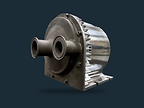
Seal-less magnetic coupling pumps with integrated drive, built in Virginia for 800 VDC AI and data center cooling.

AI racks draw 140 kW today. Racks of 240 kW are close behind and 600 kW to megawatt-class racks are in future planning. Power inside the rack is also moving from 54 VDC to 800 VDC, with the first commercial systems expected to ship in Q2 2027. Cooling units built for these racks need pumps that run nonstop, fit in tight spaces and connect directly to high-voltage DC power. Aviemore built its platform for that paradigm shift.

Nearly every watt an AI processor uses turns into heat. Removing that heat is one of the biggest jobs in a data center. Liquid cooling does it far better than air, and the pump is what keeps the coolant moving. Rack and row cooling loops are closed systems. The same coolant circulates over and over instead of being used up, which helps operators cut the water and energy spent on cooling. With no shaft seal, an Aviemore pump keeps that loop closed.

“Liquid cooling is now critical infrastructure and the pump is the one moving part every rack depends on,” said Moe Barani, CEO of Aviemore. “Most pumps on the market were designed for another era and adapted for the data center. We designed ours for where AI infrastructure is going. There is no seal to leak or wear out, the drive runs natively on 800 VDC and our team can turn a custom change in weeks instead of quarters.”

How it works

Aviemore pumps transmit torque through a magnetic coupling across a non-contact sealed barrier. Nothing passes through the wet end. There is no dynamic seal and no wear item in the fluid path. The pumps can run dry during commissioning or a loss of prime, two common causes of early pump failure. A slotless brushless DC motor and integrated drive complete the assembly. CDU builders source, qualify and service one component instead of three.

The platform covers 0.10 to 5.0 kW of output across a 12 to 800 V DC bus range.

Most pumps in data center cooling today come from legacy manufacturers that adapted designs built for other industries. They still rely on a shaft seal, a bolt-on motor and a third-party drive. Their development cycles are measured in years while AI rack designs change every year.

“The traditional pump industry is full of dinosaurs,” said Matt Carroll, VP of Engineering at Aviemore. “They are still selling the same seal, the same separate motor and the same slow change process. Data center operators are left to design around it. We started from a clean sheet. The seal is gone and the motor and drive are built in. When a customer needs a change, our engineering team turns it in weeks.”

Product lines

Rack CDU Pumps: 0.10 to 2.0 kW, 12 to 800 V DC, AC and DC drive, for in-rack and sidecar CDUsRow and Facility Pumps: 1.0 to 5.0 kW, 12 to 800 V DC, AC and DC drive, for row CDUs, coolant skids, and facility loopsOEM Custom Solutions: co-engineered and built to the customer’s architecture, with AC and DC drive options

Proven motor technology, built in Virginia

The Aviemore team has worked together for more than 25 years and has deep experience in data center thermal hardware. Its proprietary slotless motor design has shipped in more than 15,000 motors with zero motor defects. The team has been designing proprietary, patented pumps for the past 20 years and those products remain in service at hyperscale operators today.

Aviemore designs and builds its pumps in a 156,000 square foot facility in Radford, Virginia. Winding, machining, assembly and test all happen in house, which is how the company turns design changes in weeks. The quality system is built on ISO 9001 and products are UL and Intertek certifiable on request.

Data centers are often criticized for bringing few jobs to the towns that host them. Much of the hiring happens in the supply chain that builds the equipment inside. Every Aviemore pump is designed and built in Radford. That supports skilled engineering and manufacturing jobs in Southwest Virginia, and the team grows as AI demand grows.

Aviemore works with Intertek on testing and certification and with Virginia Tech on research. It also partners with the Virginia Economic Development Partnership and GO Virginia on regional industry growth.

Meet Aviemore at SC26

Supercomputing was one of the first fields to adopt direct liquid cooling. The rack densities HPC pioneered are now reaching AI data centers. The Aviemore team is at SC26 in Chicago this week to meet with HPC system builders, thermal engineers and CDU manufacturers. To schedule time or get a pump sized, contact info@aviemoretech.com.

About Aviemore

Aviemore Motion Technologies LLC designs and manufactures seal-less magnetic coupling pumps for liquid-cooled AI and data center infrastructure. Each pump combines the hydraulics, a slotless BLDC motor and an integrated drive in a single assembly. The range covers 0.10 to 5.0 kW and DC bus voltages up to 800 V. Aviemore is headquartered in Radford, Virginia. Learn more at aviemoretech.com.

Media Contact
Ben Khandan-Barani, COO
Aviemore Motion Technologies
info@aviemoretech.com | 540-922-9631
113 Corporate Drive, Radford, VA

View original content to download multimedia:https://www.prnewswire.com/news-releases/aviemore-launches-seal-less-magnetic-coupling-pump-platform-for-liquid-cooled-ai-data-centers-302939792.html

SOURCE Aviemore Motion Technologies

Continue Reading

Trending