Connect with us

Technology

Meshy releases Meshy 7, a new foundation model that sets a new bar for image-3D alignment

Published

on

Meshy 7 is built around a single standard: the 3D result should agree with the image the user brought. Meshy is also publishing how it measures that agreement — geometry scored directly against reference models held out of training, not by human preference or a vision-language judge.

SILICON VALLEY, Calif., Aug. 12, 2026 /PRNewswire/ — Meshy has released Meshy 7, its new image-to-3D foundation model, together with the method behind a new 3D geometry alignment benchmark and its first results.

WHY ALIGNMENT MATTERS NOW

The first problem with image-to-3D was whether a model could produce a usable asset at all. Broken surfaces, scrambled structure and missing limbs are now rare enough among leading models that not breaking differentiates very little.

So the question that matters has changed. An asset can look entirely reasonable and still fail to reproduce the reference: a body slightly too wide, a hand shifted out of place, an engraved line from the source image simply gone. Nothing is obviously wrong, and it is not what the user designed. That is alignment, and it separates a good 3D model from one that merely does not break.

INDUSTRY-LEADING ALIGNMENT

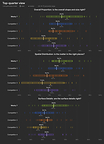
Given a single input image, Meshy 7 leads every model tested on all three aspects of alignment: 81.0% on overall proportion, 79.7% on spatial distribution, 59.8% on surface details — measured against four competing 3D foundation models on reference 3D models excluded from training, where 100% is the reference measured against itself. The pattern holds under the front view, the strictest condition, where Meshy 7 leads on aggregate and on each metric individually.

The lead is widest where the problem is hardest. Overall proportion is close across leading models now. Surface details is not — under single-view input no model tested reaches 60% — and this is where Meshy 7 pulls furthest ahead: 5.3 points clear of the closest competitor, more than twice its margin on either of the other two aspects. That is the shape of a real lead: not a fraction of a point where the field is already bunched together, but daylight on the dimension nobody has solved.

With four views the field converges: every model improves, and extra views help most on spatial distribution and surface details, the dimensions most affected by hidden geometry. The leaders end up within roughly two points of one another, and Meshy 7’s single-view lead is large enough that the closest competitor catches up rather than clearly overtakes it. Single-view input is where systems separate — and it is the condition most users are in.

Compared with Meshy 6, Meshy 7 improves alignment clearly on both geometry and texture. The benchmark above covers geometry; texture is measured separately.
 

WHERE THE DIFFERENCE SHOWS

Faces. A small geometric change is enough to alter an expression, which makes faces one of the hardest alignment tests. Across a set of portrait busts, Meshy 7 does not settle for a generic face: cheeks lift and laugh lines deepen on a smile, the brow tightens and the mouth turns down on a stern look, the face relaxes on closed eyes — while headscarf, knot and clothing stay stable.Part relationships. A mechanical object only reads as mechanical when every component sits where it belongs. On a clockwork owl of layered wing armour, exposed gears and thin legs, Meshy 7 keeps the parts distinct and placed as the concept places them, rather than collapsing the design into a bird-shaped mass.Dense surface relief. A jade medallion is almost entirely shallow relief — a dragon coiling the outer ring, dense cloud pattern, a raised centre motif, all on a nearly flat disc. Meshy 7 keeps the pattern continuous rather than fragmented, at the depth the image gives it.

Three changes got it there. The image encoder now reads the input at multiple scales and accepts higher resolution, so fine shape information survives into generation instead of being averaged out. The training data was rebuilt to a stricter standard, every sample corresponding exactly to its target geometry with style, lighting and background removed. And geometry alignment became a tracked signal inside every training cycle rather than an evaluation applied at the end — the capability users care about and the number the team optimises against are now the same number.

HOW ALIGNMENT IS MEASURED

The benchmark uses neither human preference nor a vision-language judge; it compares 3D geometry directly.

Reference 3D models held out of training are rendered into input images using known cameras. Each generative model produces a 3D result from those images, which is compared against the original reference geometry — so every test image has a known 3D correct answer. Comparing renders instead would mean estimating the source camera first, mixing camera error into the geometry error being measured.

Before scoring, each generation is aligned to its reference by translation, rotation and uniform scaling only — never stretched along a single axis, so a model’s own proportion errors cannot be corrected away. Agreement is then measured at three levels, from overall structure down to fine geometric difference. The reference set spans characters, vehicles, sculptures and thin-structure props, tested under three input conditions: front view, raised top-quarter view, and four views combined.

AVAILABILITY AND WHAT COMES NEXT

Meshy 7 went live on 10 August, open to all Meshy subscription tiers; downloading generated models requires the Pro tier or above. Ultra Mode currently supports single-view generation, with multi-view support arriving shortly. The benchmark described here will be released separately after launch. Geometry is only part of image-to-3D alignment — colour, material and pattern have their own — and a dedicated texture alignment benchmark will follow.

View original content to download multimedia:https://www.prnewswire.com/news-releases/meshy-releases-meshy-7-a-new-foundation-model-that-sets-a-new-bar-for-image-3d-alignment-302849368.html

SOURCE Meshy

Continue Reading
Click to comment

Leave a Reply

Your email address will not be published. Required fields are marked *

Technology

Greenberg Traurig Represents Moove on US$250 Million Series C Funding Round

Published

on

By

DUBAI, UAE, Aug. 12, 2026 /PRNewswire/ — A cross border team from global law firm Greenberg Traurig represented Moove, the global mobility company building the operating layer for autonomous mobility, on its US$250 million Series C funding round.

The financing round was led by Mubadala Investment Company and co-led by Woven Capital, Toyota’s Growth Fund, and Ion Pacific, valuing Moove at US$2.1 billion. The round also included participation from BlueCrest Capital Management, Sona Capital, and The Raptor Group, alongside existing investors including BlackRock, MUFG, Franklin Templeton, Uber, Left Lane, Square Associates, The Latest Ventures, and the Ontario Power Generation Pension Plan. The transaction marks a significant milestone in Moove’s growth and further strengthens its position as a leading global infrastructure platform for autonomous mobility.

The funding will support the expansion of Moove’s autonomous vehicle business, including autonomous fleet ownership and robotics-first depot infrastructure, as well as future growth initiatives and new market launches globally.

Moove is a global mobility company building the operating layer for autonomous mobility. The company finances, owns, and operates productive mobility assets for leading mobility platforms across manned and autonomous transportation. Moove operates across 13 countries and 29 cities, with approximately 42,000 vehicles and more than 3,300 employees worldwide.

The team from Greenberg Traurig’s Dubai office was led by Head of the UAE Corporate Practice Shareholder Chadi Salloum and Corporate Shareholder Krishen Patel and by Corporate Shareholder Cees v. Oevelen from Greenberg Traurig’s Amsterdam office. The team was supported by Senior Associate Maquina Lame, and Associates Abdulla Al Hashili, Justin Hool and Gabe Wijnja.

“From the outset, the GT team understood both the legal complexity and the commercial priorities of the transaction. They managed a challenging multi-jurisdictional process involving numerous counterparties with professionalism and efficiency. We valued having advisers who were not only technically capable, but who were commercially driven and were genuinely invested in getting the deal over the line. Their support was instrumental in helping us complete the most significant financing in Moove’s journey to date,” said Stavros Panayi, chief legal officer, Moove.

Greenberg Traurig launched in the Middle East in 2023 with offices in Riyadh, Dubai and Abu Dhabi. The firm has been growing steadily in the region, and planting key roots in the industries and business sectors most active in the Middle East, including real estate, infrastructure and transportation, energy and natural resources, hospitality, finance and restructuring, mergers and acquisitions, private equity, private credit, sports and entertainment — including venue, talent, entertainment, licensing, and other needs — capital markets, and arbitrations and disputes.

Greenberg Traurig’s Riyadh office is operated by Greenberg Traurig through Greenberg Traurig Khalid Al-Thebity Law Firm. Greenberg Traurig’s Dubai office is operated by Greenberg Traurig Limited. Greenberg Traurig’s Abu Dhabi office is a branch of Greenberg Traurig, P.A.

About Greenberg Traurig: Greenberg Traurig, LLP has approximately 3,000 attorneys across 51 locations in the United States, Europe, the Middle East, Latin America, and Asia. The firm’s broad geographic and practice range enables the delivery of innovative and strategic legal services across borders and industries. Recognized as a 2025 BTI “Best of the Best Recommended Law Firm” by general counsel for trust and relationship management, Greenberg Traurig is consistently ranked among the top firms on the Am Law Global 100, NLJ 500, and Law360 400. Greenberg Traurig is also known for its philanthropic giving, culture, innovation, and pro bono work. Web: www.gtlaw.com.

View original content to download multimedia:https://www.prnewswire.com/news-releases/greenberg-traurig-represents-moove-on-us250-million-series-c-funding-round-302849880.html

SOURCE Greenberg Traurig, LLP

Continue Reading

Technology

Quest Technology Management Wins Telarus Top Engagement 2025 Award

Published

on

By

Quest Recognized for Outstanding Service, Expertise and Impact for Technology Advisors in 2025

ROSEVILLE, Calif., Aug. 12, 2026 /PRNewswire/ — Quest Technology Management has been named the recipient of the Telarus Top Engagement 2025 at the 2026 Telarus Partner Summit in Dallas, Texas. The honor recognizes Quest’s outstanding 2025 contributions, including its deep technical expertise, collaborative support and commitment to helping the Telarus advisor community solve complex customer challenges.

Throughout 2025, Quest distinguished itself by giving Telarus technology advisors access to enterprise-level technology, managed services and professional expertise across cybersecurity, cloud, infrastructure and consulting. Quest works alongside advisors from the earliest stages of an opportunity through implementation and ongoing management, providing training, solution design and delivery support that helps advisors expand their capabilities, pursue larger engagements and build lasting customer relationships.

“This recognition reflects the trust that Telarus and its technology advisors place in our team,” said Tim Burke, CEO of Quest Technology Management. “Our role is to give advisors the technical depth, practical guidance and delivery resources they need to confidently take on complex opportunities. We are proud of what we accomplished together in 2025 and look forward to helping even more advisors grow their businesses and deliver exceptional outcomes for their customers.”

Quest’s vendor-neutral approach gives technology advisors the flexibility to recommend the right solution for each customer’s needs. Through technical expertise spanning cloud, cybersecurity, infrastructure and consulting, the company helps advisors support customers across a wide range of technology engagements. Training and educational resources further equip advisors to navigate complex customer conversations and grow their capabilities.

“Telarus is proud to honor Quest Technology Management as the recipient of the Telarus Top Engagement 2025, recognizing their leadership in innovation, education, and collaborative support across the channel,” said Richard Murray, Chief Commercial Officer of Telarus. “Their work in 2025 empowered our technology advisors to win more business and deliver greater value to customers. We congratulate Quest Technology Management and all the award winners for their outstanding impact.”

Click Top Suppliers Awarded at Telarus 2026 Partner Summit to learn more about the 2025 Telarus award winners.

About Quest Technology Management:
Quest is a trusted leader in providing innovative IT and cybersecurity solutions, helping businesses navigate the complexities of today’s digital landscape. With a strong commitment to delivering tailored, proactive services, Quest empowers organizations across various industries to safeguard their data and optimize their technology infrastructure. Their expert team combines deep technical expertise with a forward-thinking approach to ensure clients stay ahead of emerging threats. Quest continues to be a go-to partner for businesses seeking reliable, scalable and secure technology solutions. To learn more, visit https://questsys.com/.

About Telarus:
Telarus, a leading global technology services distributor, has devoted over two decades to fueling technology advisor growth through deep market insights, channel expertise, and an unmatched suite of services, solutions, and tools. With a focus on collaboration with advisors and suppliers, Telarus enables the modern advisor to source, purchase, and implement the right technology for the greatest impact. To learn more or become a partner, go to www.telarus.com/become-a-partner.

Quest Technology Management Media Contact:
Brittney Houser
Interdependence
420621@email4pr.com
561-602-8295

View original content to download multimedia:https://www.prnewswire.com/news-releases/quest-technology-management-wins-telarus-top-engagement-2025-award-302849989.html

SOURCE Quest Technology Management

Continue Reading

Technology

At 2026 Badge Summit, University of Phoenix leader shares strategies for meaningful digital credentials

Published

on

By

Director of Microcredentials and Innovation Credential Strategy Cate Tolnai led sessions exploring employer-informed microcredentials, veterans’ skills and the University’s million-badge journey

PHOENIX, Aug. 12, 2026 /PRNewswire/ — University of Phoenix announces that Cate Tolnai, Director, Microcredentials and Innovation Credentials Strategy, led three sessions exploring employer-informed microcredentials, veterans’ skills and the University’s million-badge journey at the 2026 Badge Summit, held July 13–15 at the University of Colorado Boulder and virtually on August 4.

Tolnai joined education and workforce leaders to examine how institutions can design digital credentials that make assessed skills more visible, meaningful and useful to learners and employers. Her sessions addressed the signals communicated by microcredentials, the experiences of veterans translating military learning into civilian contexts, and lessons from University of Phoenix’s journey to issuing more than 1 million digital badges.

Now in its 11th year, the Badge Summit brings together leaders and practitioners from K-12 education, higher education, workforce development, industry, government, nonprofit and cultural organizations to advance digital credentials, Open Badges and Learning and Employment Records.

Making microcredentials meaningful to learners and employers

During the Badgesplaining talk, “Microcredentials, Major Shrug: What Are We Really Signaling?” Tolnai examined a central challenge facing the credentialing community: While many microcredentials recognize that learning has occurred, they do not always communicate what a learner is prepared to do next.

The session explored how institutions can move beyond credentials that simply acknowledge participation or completion by incorporating employer perspectives, assessed competencies and forward-looking design. These elements can help transform a microcredential into a clearer and more differentiating signal of a learner’s capabilities.

“Digital credentials should do more than document that learning happened — they should help learners clearly communicate what they know, what they can do and how those capabilities connect to what comes next,” said Tolnai. “When institutions incorporate assessment evidence, employer voice and learner needs into credential design, badges can become trusted signals that give individuals greater agency in telling their learning and skills stories.”

Making veterans’ skills more visible

Tolnai co-led with Sanjana Seth, senior manager at Jobs for the Future (JFF), the session, “When Skills Become Visible: Veterans’ Stories from the Field,” which centered the experiences of veterans navigating the transition between military service, education and civilian employment.

The discussion explored how digital credentials and skills-based approaches can help individuals identify, validate and communicate capabilities developed through military service and other learning experiences. By making those competencies more visible and portable, credentialing systems can help veterans articulate the value of their experience in language that educational institutions and employers can more readily understand.

The session reinforced the importance of designing credential systems around the learner’s complete experience rather than limiting recognition to traditional academic pathways.

Sharing lessons from more than 1 million digital badges

In “Our Million Badge Story: A Game-Based Badging Adventure,” Tolnai led an interactive exploration of what it takes to build and scale a large digital credential ecosystem.

Rather than presenting a traditional case study, the session invited participants to navigate decisions, challenges and tradeoffs drawn from the evolution of digital badging at University of Phoenix. Topics included credential governance, assessment, technology, learner engagement, institutional collaboration and the operational considerations involved in moving from an initial credentialing concept to a sustainable ecosystem.

University of Phoenix announced in March that it had issued its 1 millionth digital badge. The milestone reflects the University’s multiyear investment in skills-aligned curriculum and credentials designed to help working adults translate learning into clear, shareable evidence of assessed capabilities.

Digital badges at University of Phoenix are grounded in demonstrated skills rather than participation alone. They are supported by faculty oversight, cross-functional governance, labor market information and industry engagement. Learners can share earned badges through professional networking platforms, digital portfolios and online resumés.

Connecting learning, assessment and career-relevant skills

Tolnai’s participation at the Badge Summit reflects the University’s broader approach to developing learning experiences that connect curriculum, assessment and skills recognition.

Associate, Bachelor’s and master’s degree programs at University of Phoenix include career-relevant skills sought by employers. As learners complete courses, they acquire skills which may be added to their professional profiles, allowing them to document progress throughout their educational journey rather than waiting until graduation to communicate what they have learned.

The University offers nearly 200 digital badge opportunities across undergraduate, graduate and professional development courses. Some badges are also organized into structured pathways that demonstrate how related competencies build over time.

“Scaling a credential ecosystem requires more than technology,” Tolnai said. “It requires shared standards, thoughtful governance, faculty engagement and a consistent focus on what will provide genuine value to learners. The Badge Summit gives practitioners an important space to share what is working, examine unresolved challenges and collaborate on a more connected credentialing ecosystem.”

About the 2026 Badge Summit

The Badge Summit is an annual gathering focused on digital badge credentials, microcredentials, Open Badges and Learning and Employment Records. The event convenes participants from education, workforce, industry, government, nonprofit and cultural organizations to share emerging practices, explore credential interoperability and advance equitable, learner-centered approaches to skills recognition.

The 2026 event included Badgesplaining presentations, Table Talks, interactive sessions and collaborative experiences designed to support practical problem-solving and cross-sector learning. A virtual Badge Summit featuring prerecorded and live sessions took place Aug. 4.

Learn more through the 2026 Badge Summit program and the Badge Summit website.

About University of Phoenix

University of Phoenix is Built for Real Life. 50 Years Strong. The University innovates to help working adults enhance their careers and develop skills in a rapidly changing world through flexible online learning, relevant courses, academic AI pillars, and skills-mapped curriculum for associate, bachelor’s and master’s degree programs. Active students and alumni have access to Career Services for Life® resources including career guidance and tools. For more information, visit phoenix.edu.

View original content to download multimedia:https://www.prnewswire.com/news-releases/at-2026-badge-summit-university-of-phoenix-leader-shares-strategies-for-meaningful-digital-credentials-302850003.html

SOURCE University of Phoenix

Continue Reading

Trending