Connect with us

Technology

The First Year of World Models: When AI’s Supply-Side Revolution Moves from Generation to Understanding the Physical World

Published

on

BEIJING, Aug. 14, 2026 /PRNewswire/ — Over the past two years, the core proposition of the AI industry has been “generation” — generating text, images, video, and music. But on July 19, 2026, at the World Artificial Intelligence Conference (WAIC), Fang Han, Chairman and CEO of Kunlun Tech (Parent company of Skywork AI), formally declared 2026 as “the first year of world models,” marking a pivotal transition in which AI evolves from content generation toward understanding and interacting with the physical world. This is not a marketing slogan. It signals that the supply-side revolution has entered its second phase: AI is no longer merely producing content — it is beginning to comprehend the physical world.

I. The Camera Analogy, Continued

This transition also echoes the camera analogy proposed by Jiao Juan, Chief Analyst for Internet and Media and Head of AI Ethics Research at Founder Securities. In Jiao’s view, when photography was invented, it did not merely add a new medium to the arts — it first destroyed the economic foundation of realist painting, then drastically lowered the cost of visual representation, and finally, on the ruins of the old supply, gave birth to an entirely new art form: cinema. The history of technology suggests that genuine revolutions do not begin by creating abundance; they begin by destroying the existing supply structure. AI’s supply-side revolution is following precisely this trajectory.

II. From “Storing Frames” to “Storing Space”: The Deepening of the Supply-Side Revolution

At the WAIC forum, the technical breakthroughs announced by Skywork AI revealed the mechanics of this deepening. Consider the most stubborn problem in world models: long-term memory. Previous models “remembered” by storing entire frames — but when the camera moved and all object positions shifted, the model could no longer recognize them. Evaluation data showed that no mainstream world model achieved an object-reappearance score above 0.6 (out of 1.0). Skywork AI’s newly released interactive world model, Matrix-Game 3.5 adopted a fundamentally different approach: instead of storing whole “photographs,” it breaks each frame into countless small patches, each tagged with its precise three-dimensional coordinates — its distance from the camera, its position in space. This mechanism, called “Patch Memory,” represents an upgrade from “storing frames” to “storing space.” The model no longer remembers “what a certain frame looked like” but rather “what exists at a certain three-dimensional location.” As the technical report states, “the problem of ‘disappearing objects’ that has plagued the industry for so long has been solved in a true sense for the first time.”

This is not an incremental improvement — it is a paradigm shift in how AI relates to physical reality. Combined with the PRoPE geometric position encoding and Warped RoPE mechanism, the model’s positional encoding evolved from merely recording “which second on the timeline” and “which row and column in the frame” into a geometrically meaningful world coordinate system. The result: a 5B-parameter model achieving real-time streaming video generation at 720P resolution and approximately 20 FPS on a single GPU, with one-minute memory capability. As the report puts it, “20 FPS is not ‘playing a video’ — it is a ‘living world’: you operate, it responds, no stuttering, no memory loss, stable visuals, fast reactions.” The supply-side revolution has produced something qualitatively new: not a video generator, but an interactive, living world.

III. Data as the Foundation: Letting AI “Understand” Rather Than Merely “See”

Beneath the technical breakthroughs lies a more foundational insight. Training a world model requires not just video, but video endowed with physical information. As the technical team recognized, “letting AI understand the physical world requires giving it data that carries physical information.” They built a multi-agent system that operates 24 hours a day, automatically surveying thousands of games and scoring them on multiple dimensions. More critically, they constructed an automated annotation pipeline that performs 3D reconstruction on every video, estimating camera pose, metric depth, and camera intrinsics for each frame. The pipeline’s output: over 5 million high-quality video segments, more than 10,000 hours of effective training data, covering over 1,200 game scenes — each carrying precise camera pose, depth maps, and text descriptions. Jiao describes this as industrial-grade infrastructure for the supply-side revolution: an “oil refinery” that turns raw pixels into training fuel with physical scale.

IV. “Not Stacking Parameters, but Clever Architecture”: The Logic of the Entry Business

Perhaps the most counterintuitive decision was the team’s choice to “almost not add any new parameters at all.” Beyond the character Reference Adapter, all of Matrix-Game 3.5’s core interactive capabilities — PRoPE geometric encoding, Patch Memory long-term memory, camera control, and dynamic-static decoupling — were implemented on the existing model architecture without additional parameter burden. This reflects a deeper design philosophy: “modular, pluggable, and transferable.” The team built the interactive framework as a lightweight “plugin system” — each module works independently and can be quickly adapted to different video foundation models. The practical benefit: “the native open-ended content generation capability of the base video model is maximally preserved.” This “not stacking parameters, but relying on clever architecture” approach reveals the essential logic of the first layer of the AIGC framework. Foundational model companies are not competing on who can pile up the most parameters — they are competing on who can establish the entry position that the entire ecosystem must pass through. The real game is architectural ingenuity and ecosystem gravity, not brute-force scale.

The open-source strategy confirms this logic. The team behind DiT, NYU Assistant Professor Xie Saining, built Solaris — the world’s first multi-person video world model — on the open-source foundation of Matrix-Game 2.0. NVIDIA and Zhejiang University’s joint work, Light Interaction, was developed on Matrix-Game 3.0. Furthermore, NVIDIA’s SANA-WM and Adobe’s RELIC, among other international leading companies’ world model projects, all use Matrix-Game-related models as comparison benchmarks. When the world’s top researchers and companies choose your foundation as their base or benchmark, the gateway position is established. This is the “positioning” phase of the gateway business — the first stage of the iOS-like three-phase path: positioning, clearing, revenue sharing.

V. Three Layers of World Models and the Concept of “Learnware”

Academic depth complemented industrial breakthroughs. Academician Zhou Zhihua of the Chinese Academy of Sciences, Professor and Vice President of Nanjing University, divided world models into a perception layer, an understanding layer, and a decision layer in his keynote speech, emphasizing that the decision layer has long faced two theoretical bottlenecks: “squared amplification of multi-step inference compound error” and “excessively high sample complexity.” He shared his team’s latest breakthrough: distribution-matching technology can compress inference error from squared to linear, while an innovative reverse application of the Bellman equation reduces the required sample size to one over the square root of T. More strikingly, he proposed the concept of “learnware” — composed of a model together with AI-automatically-generated “specifications,” allowing multiple heterogeneous models to be reused and assembled without disclosing their underlying data, opening a new path for world models to evolve from single-pipeline customization toward a growable, evolvable model ecosystem. This concept of learnware points toward a future where the supply-side revolution’s infrastructure becomes composable and reusable — models as building blocks, not monoliths.

VI. “Pores Are Acting”: The Inflection Point Signal

The most vivid signal that the supply-side revolution has crossed an inflection point came not from a technologist, but from an actor. Huang Xiaoming, Vice Chairman of the China Film Association, described seeing an AI-generated film: three months earlier, he could still discern AI traces, but upon the latest viewing, “even when told it was AI, I could no longer tell.” The detail had reached the point where “the spots and pores on the face, even the micro-expressions — the pores are acting,” which genuinely startled him. When a seasoned performer cannot distinguish AI-generated performance from the real thing, the supply-side revolution has crossed the threshold from “good enough for experiments” to “good enough to compete with traditional production.” This is the moment the camera, having destroyed realist painting, begins to give rise to cinema.

VII. Conclusion: The Supply-Side Revolution Deepens

For Skywork AI, the declaration of “the first year of world models” is not an endpoint but a starting point. As Fang Han’s three predictions suggest, world models will step out of the screen and into the physical world; the gaming industry will be the first to be transformed; and AI music and AI video tools will evolve from technical experiments into mass creation tools. The supply-side revolution is deepening: from generating content to understanding the physical world, from offline rendering to real-time interaction, from memoryless short clips to minute-level consistency.

Jiao’s camera analogy still holds: AI first disrupted the traditional supply of content production, then drastically lowered costs, and is now — through world models that understand physical reality — gestating entirely new forms. “In the next three to five years, world models will become the infrastructure of the gaming industry, and the way content is produced will be completely refreshed.” The supply-side revolution continues. What we are witnessing is not the end of one industry, but the beginning of the next.


View original content:https://www.prnewswire.com/news-releases/the-first-year-of-world-models-when-ais-supply-side-revolution-moves-from-generation-to-understanding-the-physical-world-302851691.html

SOURCE Kunlun Tech

Continue Reading

Technology

Fourth-Generation Model of the Award-Winning LDS Series of Mobile LED Displays from ViewSonic Now Shipping in Asia Pacific

Published

on

By

The LDS136-152, From the Industry Leading Mobile Direct View LED Line, Offers an All-in-One Solution with Better Accessibility and Effortless Setup

TAIPEI, Nov. 24, 2026 /PRNewswire/ — ViewSonic Corp., a leading global provider of visual and edtech solutions, announces that the latest generation of the award-winning Mobile Direct View LED display solution is now shipping in Asia Pacific. The ViewSonic LDS136-152 mobile solution delivers a large screen display in a pre-assembled design, which enables effortless setup within minutes. The LDS136-152 is a foldable 136-inch Direct View LED video wall on wheels built for maximum flexibility.

A 4th generation model, the LDS136-152 introduces beneficial upgrades that make setup and operation even easier. The motorized screen lifts higher than any other dvLED in its class, helping everyone get a clearer view of content on the screen. The new commercial-grade built-in motorized stand provides an industry-leading extra 3.7 feet of vertical adjustment. An integrated stand and display remote control allow the management of both the screen settings and motorized lift. Rear I/O ports are easy to reach and provide direct connectivity without opening panels or exposing internal boards, so connecting devices is quick and simple.

“The ViewSonic mobile dvLED solution delivers a giant LED screen that arrives ready to go, so our partners and customers can skip complex installations,” said Eric Wei, Asia Pacific General Manager at ViewSonic. “The LDS136-152 sets up in minutes and ships in a rugged flight case for easy transport and storage. Just unfold it, plug it in and you’re ready to showcase content or present messaging to your audience. It’s one of the easiest ways to get a larger-than-life, stunning display wherever you need it.”

The LDS136-152 features an integrated OPS slot to make it easy to expand the system when needed. Glue-on-Board (GOB) technology protects the LED panels from daily wear-and-tear, while its IP65 and IK06 ratings ensure resistance to bumps, dust, and moisture, ensuring that it can work in public spaces like auditoriums and lobbies. A redesigned hinge adds durability for repeated setup and transport, so the display can be used for events, trade shows and pop-up spaces. It glides silently on 360-degree wheels, making it simple to share between rooms or venues, while the foldable design fits into most elevators.

LDS136-152 All-in-One Direct View Mobile LED Display

136-inch foldable screen pre-assembled in a protective flight caseNew commercial-grade built-in motorized stand provides an industry-leading extra 3.7 feet of vertical adjustmentIntegrated stand and display remote control allow management of both the screen settings and motorized liftI/O ports are more accessible and provide direct connectivity without opening panels or exposing internal boardsGlue-on-Board (GOB) Technology is designed to provide additional resistance to impact, dust, and moisture for an IP65 rating; IK06 rating for impact protection in heavy-usage environmentsVersatile connectivity includes HDMI (x4), HDMI output (x1), SPDIF and 3.5mm Audio Out, USB connectivity, WiFi, Bluetooth, Ethernet, RS-232, and an OPS slotNative 1080p (1920×1080) Full HD resolution, 600-nit brightness, 3840Hz refresh rate, 6,500:1 contrast ratio, and dual 30W speakersSupports split-screen functionality, as well as Picture-by-Picture (from up to 4 different inputs) and Picture-in-Picture in real-time (requires an HDMI source input)With the ViewSonic AirSync software, the screen can be shared wirelessly from any device with tools such as AirPlay and Google CastCan be integrated into the Q-SYS ecosystem via a Q-SYS LIBRARY VERIFIED plug-in; also compatible with Crestron, Extron, and AMX systems

ViewSonic dvLED solutions are developed and engineered to make large-scale display solutions more accessible for AV/IT teams. With the latest features and technologies, the ViewSonic dvLED All-in-One solutions ensure easy deployment, management, and scalability for various applications and real-world environments.

The LDS mobile solution is a plug-and-play display that can be used almost anywhere without the extensive setup associated with a traditional, permanent dvLED installation. Its pre-assembled, installation-free design can help reduce deployment complexity and associated installation costs, contributing to a lower total cost of ownership (TCO). Whether in hotel conference rooms, banquet halls, or exhibition spaces, a single LDS136-152 display can be flexibly moved and used across different spaces within the same facility to accommodate diverse event and presentation needs, helping organizations maximize display utilization.

To find out more about ViewSonic, visit ViewSonic.com and follow on Facebook, YouTube, X and Instagram.

About ViewSonic 

Founded in 1987 and headquartered in Brea, California, ViewSonic is a leading global provider of visual solutions for the education, business, and consumer markets, with a presence in over 100 countries. Driven by the mission to transform education, workplaces, and lives, the company delivers a unified ecosystem of innovative hardware, software, and services that integrates seamlessly with the platforms, tools, and partners customers trust. Its product portfolio includes monitors, projectors, interactive displays, LED displays, commercial displays, video conferencing systems, and industrial solutions. Complementing its hardware is a robust suite of software offerings—including myViewBoard, ClassSwift, TeamOne, Manager, and AirSync—featuring AI-powered tools for collaboration, device optimization, and management. By empowering creativity, collaboration, and lifelong learning, ViewSonic supports customers at every stage in achieving their business and sustainability goals, creating a lasting impact and helping people everywhere connect with purpose—and See the Difference. Learn more at www.viewsonic.com.

*Actual performance, compatibility, and user experience may vary depending on system configuration, network conditions, usage environment, and other factors. Programs, pricing, specifications, and availability are subject to change without notice and may vary by country or region. Please contact your local ViewSonic representative, authorized reseller, or distributor for product availability and details. This news release contains forward-looking statements that reflect the Company’s expectations with regard to future events. Actual events could differ significantly from those anticipated in this document. Trademark footnote: ViewSonic and the ViewSonic trademarks are trademarks or registered trademarks of ViewSonic Corporation in the United States and/or other countries. All other corporate names and trademarks stated herein are the property of their respective companies.

View original content to download multimedia:https://www.prnewswire.com/apac/news-releases/fourth-generation-model-of-the-award-winning-lds-series-of-mobile-led-displays-from-viewsonic-now-shipping-in-asia-pacific-302948168.html

SOURCE ViewSonic Corp.

Continue Reading

Technology

FUJIFILM Business Innovation Singapore Launches Next-Generation A3 Color MFPs That Continue to Evolve Through Cloud and AI

Published

on

By

The Apeos C7072 Series Supports the Use of Organizational Know-how and Contributes to Reducing Environmental Impact

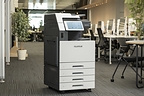
SINGAPORE, Nov. 24, 2026 /PRNewswire/ — FUJIFILM Business Innovation Singapore announces the launch of the Apeos C7072 Series, a new generation of A3 color multifunction printers (MFPs). Through cloud capabilities and AI technologies, the series helps organizations make better use of their know-how while reducing environmental impact through energy savings, resource circulation and more efficient maintenance services.

The Apeos C7072 Series is the first MFP from FUJIFILM Business Innovation to incorporate the company’s AI technologies. Using technologies developed under its AI technology brand, REiLI Business, the series captures a wide range of information within organizations, including paper documents, electronic files and faxes, and organizes and structures it in the cloud. This process transforms accumulated information into assets that can be used by AI applications and other solutions. The series will continue to expand its functions and services through the cloud, delivering new value after installation as it evolves into an information-utilization platform.

In addition, AI-enabled power savings and more efficient maintenance, together with an environmentally conscious design*1 that incorporates recycled materials, help reduce environmental impact throughout the product lifecycle and across maintenance services.

*1 FUJIFILM Business Innovation’s product-development framework, under which environmental quality targets for energy conservation, resource conservation and resource circulation are set and evaluated from the design stage, taking the entire product lifecycle into account.

Organizational Know-how Strengthens Competitiveness in the AI Era

As the use of AI expands, organizations are accumulating information through daily operations, in documents such as contracts, quotations, invoices and purchase orders. This information includes customer interaction records, operational expertise, and decision-making records that can support business growth. We refer to this accumulated information as “organizational know-how.”

However, much of this information remains stored in a variety of formats, including paper documents, electronic files or emails, and is not readily available for use in AI applications or business systems. To use AI effectively, organizations need to organize and structure their accumulated information so that it can be applied to both AI and business operations.

FUJIFILM Business Innovation believes that preparing information accumulated within organizations for use by AI and in business operations will become a new role for MFPs in the AI era. The Apeos C7072 Series encourages customers to adopt AI by organizing and structuring dispersed information and transforming it into data that can be more easily used in AI applications and business processes.

A New Generation of MFPs with Solutions That Support the Use of Organizational Know-how

Built-in Cloud Capabilities Enable Organizations to Use Documents Immediately

The Apeos C7072 Series digitizes paper documents and provides an environment in which they can be shared and used across the organization. All models feature a newly developed duplex automatic document feeder and support high-speed scanning of up to 300 pages per minute for two-sided originals*2, among the highest speeds in the industry*3. The devices can scan small originals such as business cards and receipts, together with mixed-size originals, helping users digitize a wide variety of paper documents more efficiently. The Apeos Cloud Extension cloud service*4 enables seamless hybrid work by automatically storing scanned documents and fax data in the cloud, eliminating the need for complex system integration. OCR functions recognize text in documents and can automatically assign file names. The document organization function enables users to start digitizing, sharing and utilizing documents immediately after installation.

Multi-Crop scans multiple receipts or business cards together, then separates and saves them as individual files. Dropout Color digitizes documents while excluding a specified color such as red annotations on drawings. These functions convert paper documents into easier-to-manage electronic data and can streamline everyday tasks such as expense processing and document management.

*2 When scanning both sides in a single pass, using a standard A4 landscape original at 200/300/400 dpi and saving to a mailbox.
*3 Based on FUJIFILM Business Innovation internal research of A3 color MFPs
*4 Apeos Cloud Extension requires registration.

Structuring Document Information for Use in Business Operations

The optional functions of Apeos Cloud Extension*5 enable customers to centrally manage digitized documents in the cloud. The Shared Mailbox allows documents to be shared and used across multiple locations and MFPs. Generative AI-powered OCR*6 extracts line-item information from documents such as invoices and quotations and converts it into structured data that can be used in business operations.

This helps organizations transform paper documents and other unstructured information into structured data that authorized users can search, share, analyze and use in their business processes, rather than simply storing it as an electronic file.

*5 A separate agreement is required.
*6 Based on FUJIFILM Business Innovation internal research, using the measurement method specified by the International ENERGY STAR Program.

Security Settings That Support Cloud Use

Appropriate security measures are important when organizations use cloud services and AI. The Apeos C7072 Series provides device-level enterprise security functions, including authentication, access control and log management. The new easy security setting feature simplifies the application of recommended settings for each operating environment. Secure Office Mode strengthens security while maintaining functionality, while Protect Mode is designed for environments used by an unspecified number of people, such as public facilities and schools. These modes can reduce the burden of configuring security settings.

These features help organizations apply appropriate device-security settings for each operating environment and support consistent security operations across the organization.

Improved Environmental Performance Through AI and Environmentally Conscious Design

Combining Convenience and Energy Efficiency Through AI and New Technologies

ELFEAT toner, which delivers low-temperature fusing performance, and a fuser designed for low-temperature fusing reduce power consumption during fusing and achieve industry-leading low power consumption*6. In addition, the industry-first*7 AI-controlled energy-saving feature analyzes device usage patterns and factors affecting user convenience and automatically optimizes the time before the device enters low-power or sleep mode. This can reduce standby power consumption while maintaining a smooth user experience.

Smart WelcomEyes uses new sensing technology*8 to activate the control panel automatically when a user approaches. It reduces the activation time from approximately three seconds on the previous Apeos C7071 Series to approximately one second, enabling energy-efficient operation without compromising convenience.

*6 Based on FUJIFILM Business Innovation internal research, using the measurement method specified by the International ENERGY STAR Program.
*7 Based on FUJIFILM Business Innovation internal research.
*8 Compared with the Apeos C7071 Series.

Reducing Environmental Impact Through More Efficient Maintenance Services and Resource Circulation

AI automatically detects abnormal operating sounds and sends diagnostics data to a remote monitoring system. In addition, remote monitoring of status information, such as paper jams and image-quality issues, can help service personnel identify the likely cause of an issue and the required parts before visiting the customer. This contributes to faster maintenance response times, reduced device downtime, and fewer repeat service visits, thereby helping to reduce the environmental impact of maintenance-related travel.

Recycled plastic is used in components such as exterior covers and trays, accounting for 50% of the device’s*9 total plastic content by weight. Recycled steel is also used, with recycled materials accounting for 5% by weight of all steel sheets used in the device*9. The product also adopts a design that takes reuse and recycling into account, supporting the promotion of resource circulation.

*9 With four-tray configuration. Design values by weight.

The Apeos C7072 Series Continues to Evolve as a Platform for Leveraging Organizational Know-how

The Apeos C7072 Series expands the role of the MFP into information utilization. It continues to evolve as an information-utilization platform that helps organizations make better use of their organizational know-how.

Going forward, APIs*10 and MCP*11 are expected to expand opportunities for integration with AI agents and a variety of SaaS applications. In addition to preparing information accumulated within organizations for use by AI, the company aims to expand integration with external business services. This will support the entire process from information utilization to task execution, enabling more advanced decision-making and the creation of new values.

*10 API stands for Application Programming Interface, an interface based on a set of rules for calling programs from outside a web system and enabling integration with other services.
*11 MCP stands for Model Context Protocol, a common protocol for connecting AI with external tools and databases.

Other Key Product Features

1. New Control Panel for Improved Visibility and Usability

An IPS*12 panel provides accurate color reproduction and a wide viewing angle.The new user interface features a white-based light theme and can be switched to the conventional dark theme according to the operating environment or user preference.Frequently used settings can be pinned to the home screen, making everyday operations clearer and smoother.

*12 In-Plane Switching

2. Versatile Media Support Expands In-House Production of Promotional Materials

In addition to printing envelopes*13 and postcards from the standard tray, the devices support paper weights from 52 to 300 g/m2 and long paper up to 320 x 1,200 mm. Customers can produce a variety of printed materials in-house as needed, including direct-mail postcards, envelopes, point-of-purchase materials and posters.

*13 When using the envelope attachment.

3. Compact Finisher Supporting Staple-Free Binding

The new space-saving Finisher A4 can be installed within the main unit. It supports one-position and two-position staple-free binding and can bind up to 10 sheets without metal staples.In addition to the two standard output destinations, an optional side tray provides a third destination, allowing copies, print jobs and received faxes to be separated.

4. Supporting a Quieter and Comfortable Office Environment

Enhanced low-noise design for both the main unit and finisher creates a quieter, more conducive working environment.The product meets stringent indoor air quality standards*14 for chemical emissions released from the device.

*14 Certified under UL GREENGUARD Gold, an internationally recognized third-party certification program for chemical emissions operated by UL Solutions. (Link: World’s First Multifunction Printer to Receive “UL GREENGUARD Gold Certification” | FUJIFILM Business Innovation)

Product Lineup and Key Specifications

Model Name

Speed

Features/Configuration

Apeos C3072
(Model-CPS)

Color 30ppm
Monochrome 30ppm

Copy, Print, Scan function
1 pass Automatic Duplex Scanning 300ppm
520 sheets x 4-tray + Bypass Tray 100 sheets

Apeos C3572
(Model-CPS)

Color 35ppm
Monochrome 35ppm

Apeos C4572
(Model-CPS)

Color 45ppm
Monochrome 45ppm

Copy, Print, Scan function
1 pass Automatic Duplex Scanning 300ppm
520 sheets x 4-tray + Bypass Tray 100 sheets
or 520 sheets x 2-tray + 840 sheets tray + 1,230 sheets tray + Bypass Tray 100 sheets

Apeos C5572
(Model-CPS)

Color 55ppm
Monochrome 55ppm

Apeos C6572
(Model-CPS)

Color 65ppm
Monochrome 65ppm

Copy, Print, Scan function
1 pass Automatic Duplex Scanning 300ppm
520 sheets x 2-tray + 840 sheets tray + 1,230 sheets tray + Bypass Tray 100 sheets

Apeos C7072
(Model-CPS)

Color 70ppm
Monochrome 70ppm

About REiLI Business, FUJIFILM Business Innovation’s AI Technology Brand

REiLI Business represents FUJIFILM Business Innovation’s approach to accelerating value creation and innovation through AI-enabled products and solutions.

It brings together AI capabilities with the knowledge, expertise and know-how accumulated within organizations to help customers address real-world business challenges, enhance the way they work and create new value.

Built on the Fujifilm Group’s long-standing core technologies, including image processing and natural language processing, it offers a suite of AI agents that structure and leverage information, knowledge, and know-how within organizations. These AI agents support business growth, improve the efficiency of commercial printing workflows, and drive innovation in image and texture expression.

REiLI Business aims to create a society where organizations of all sizes and across industries can use AI to create value in ways that reflect their unique strengths and business needs.

About REiLI Business >

* The services and product names mentioned in this press release are registered trademarks or trademarks of FUJIFILM Corporation and FUJIFILM Business Innovation Corp.


View original content to download multimedia:https://www.prnewswire.com/apac/news-releases/fujifilm-business-innovation-singapore-launches-next-generation-a3-color-mfps-that-continue-to-evolve-through-cloud-and-ai-302941869.html

SOURCE FUJIFILM Business Innovation Singapore

Continue Reading

Technology

Mitrade Ends Breakthrough 2026 Past 8 Million Registered Users, With Trading Volume Up 44%

Published

on

By

MANILA, Philippines, Nov. 24, 2026 /PRNewswire/ — Fast-growing global CFD broker Mitrade is closing the year strong, drawing in nearly 1.7 million new users while trading volume across the group surged 44%. In 2026, it pushed into new territories and dug deeper into established ones, refining its platform around how traders in each region handled exceptionally volatile markets.

Driving that growth, were upgrades to Mitrade’s operations, client protection and support, and a stronger reputation:

New Category 5 Capital Market Authority (CMA) licence in March, giving Mitrade regulated footing in the UAE.Grew its CFD instrument range to more than 1,100, up from 800, with selected US shares and ETFs now tradable outside regular US hoursExtended local customer support from 24/5 to 24/7Voluntary excess of loss insurance, at no extra cost, now available to eligible clients under its CySEC, CIMA, FSCA and FSC licencesReceived 13 industry awards, bringing its total to 69

Speaking about the year, Kevin Lai, Vice President of Mitrade Group, said, “Across Asia, a new generation is coming to markets through its phones, and it reacts to news in real time. What retains traders is a broker that stays dependable when markets move quickly and become unpredictable. We’re thankful that more of them chose Mitrade over the past year.”

Named AI Broker of the Year by Global Business Magazine and Best Trading Experience by Global Forex Awards, Mitrade enters 2027 with reliability at the heart of how it serves Asia’s traders.

About Mitrade

Mitrade is a globally recognised, award-winning CFD trading platform licensed under the Cayman Islands’ CIMA (SIB1612446), Mauritius’s FSC (GB20025791), Australia’s ASIC (AFSL398528), South Africa’s FSCA (FSP 54842), UAE’s CMA (20200000397), and Cyprus’s CySEC (CIF438/23). The group democratises market access, connecting 8M+ traders to 1,100+ OTC derivatives, including indices, forex, commodities, ETFs, and shares.

The platform offers millisecond execution, tight spreads, advanced risk mitigation, and multi-device compatibility, ensuring an intuitive trading experience tailored to every trader.

Trading involves risks. This article is for informational purposes only and not financial advice, an offer, or a solicitation.

Visit https://www.mitrade.com for more information.

View original content to download multimedia:https://www.prnewswire.com/apac/news-releases/mitrade-ends-breakthrough-2026-past-8-million-registered-users-with-trading-volume-up-44-302947956.html

SOURCE Mitrade Group

Continue Reading

Trending