Connect with us

Technology

Sell Wasabi Launches Marketplace for Open Access to Vetted E-Commerce Deals

Published

on

A new platform lets everyday buyers browse real, vetted Shopify and DTC stores without waiting on an insider referral.

SHERIDAN, Wyo., Aug. 17, 2026 /PRNewswire/ — Sell Wasabi has launched a two-sided marketplace designed to connect buyers with vetted, cash-flowing Shopify and direct-to-consumer stores. The website presents key information about each business in a consistent format, helping prospective buyers evaluate available opportunities and request further details through the platform.

Clearer Access to E-Commerce Opportunities

The platform was built to address the common perception that the best online business listings are passed to a small circle of preferred buyers first. Sell Wasabi instead aims to give qualified buyers a clearer view of available opportunities and the information needed to begin evaluating them.

Qualified buyers can create an account and review vetted stores, with revenue, profit, asking price, and store age listed upfront. From there, buyers can request deeper due diligence and move toward a purchase secured by a third-party escrow process, which holds funds until the agreed conditions of the sale have been met.

A Marketplace Built for Buyers and Sellers

Sell Wasabi operates as a two-sided marketplace rather than an investment fund or a fractional ownership vehicle. Buyers who complete a purchase receive 100% ownership of the store they acquire, with no shared equity or outside partner attached to the deal. Sellers gain access to Sell Wasabi’s network of thousands of active buyers, including buyers interested in making repeat acquisitions. The company supports both parties by managing evaluation, listing, buyer matching, and closing from start to finish.

The new platform includes deal alerts that notify buyers when a store matching their criteria becomes available. Sellers can also use a streamlined process designed to support an exit in as little as 30 days, depending on the transaction, with no upfront cost. Buyers can view the same core financial figures, listing details, and transaction timeline presented for each opportunity.

According to Sell Wasabi, the company has closed more than 100 transactions and brokered eight-figure e-commerce sales to date. Some transactions have closed in under 24 hours, depending on buyer readiness and deal complexity.

First-time buyers with no e-commerce background can also choose an optional done-for-you management service, which provides operational support for their newly acquired store. This may suit buyers who prefer a more hands-off role or plan to retain other professional commitments.

Experience Behind the Platform

Daniel Kenny co-founded Sell Wasabi in 2024. He spent several years building, scaling, and acquiring his own e-commerce brands before starting the company.

“We built the platform to give serious buyers access to vetted opportunities, clear business information and a structured route through the acquisition process,” said Kenny. “Our aim is to make it easier for buyers to assess each opportunity for themselves while giving sellers access to an active acquisition network.”

According to Sell Wasabi, its curated marketplace focuses on a selected range of vetted stores. Buyers and sellers receive support from a named team throughout the transaction, while the platform’s processes are designed to help suitable deals progress efficiently.

About Sell Wasabi

Sell Wasabi is an e-commerce brokerage and marketplace that helps buyers and sellers complete transactions involving profitable Shopify and direct-to-consumer stores. Sellers receive a free evaluation and can pursue a cash exit in as little as 30 days with zero upfront fees, while buyers gain access to vetted cash-flowing stores through an escrow-secured process. The company connects a network of thousands of active buyers with owners ready to exit and manages valuation, listing, buyer matching, and closing from start to finish. Learn more at sellwasabi.com.

Media Contact

Daniel Kenny
Wasabi Commerce Limited
Sellwasabi.com
+13479196943
Team@sellwasabi.com
Sheridan, United States

View original content to download multimedia:https://www.prnewswire.com/news-releases/sell-wasabi-launches-marketplace-for-open-access-to-vetted-e-commerce-deals-302853158.html

SOURCE Wasabi Commerce Limited

Continue Reading
Click to comment

Leave a Reply

Your email address will not be published. Required fields are marked *

Technology

Personal Injury Attorney Joe Stanley Highlights Post-Accident Steps to Protect an Injury Claim in HelloNation Article

Published

on

By

The article outlines how early medical care, documentation, and accurate reporting support a stronger personal injury claim.

SYRACUSE, N.Y., Aug. 17, 2026 /PRNewswire/ — What should someone do immediately after an accident to protect a future injury claim? HelloNation has published an article that provides clear guidance, drawing on insights from personal injury attorney Joe Stanley of Stanley Law Offices LLP in Syracuse.

The HelloNation article explains that taking the right steps after an accident can significantly affect the outcome of a personal injury claim. One of the most important actions is seeking prompt medical attention. Even when injuries appear minor, early treatment helps identify hidden issues and creates medical records that are essential for supporting an injury claim. These medical records serve as a foundation for demonstrating the extent and cause of injuries.

The article emphasizes that reporting the accident accurately is another critical step. Whether speaking with authorities or insurance providers, individuals should provide clear and factual information. The article notes that avoiding guesses or exaggeration helps prevent disputes later in a personal injury case. Accurate reporting in the early stages of an accident helps establish consistency and credibility throughout the injury claim process.

Documentation also plays a key role in protecting a personal injury claim. The article describes how taking photos of the accident scene, property damage, and visible injuries can provide valuable evidence. Gathering witness information is equally important, as it helps confirm what happened while details are still fresh. This combination of documentation and witness information can strengthen a claim if liability is questioned later.

The article further explains that keeping organized records is essential after an accident. Individuals should track all treatment, medical bills, and related expenses. Maintaining clear documentation of treatment and recovery allows for a more accurate calculation of damages in a personal injury case. In Syracuse and beyond, detailed documentation helps attorneys present a clearer picture of how an accident has affected a person’s life.

Another key takeaway is the importance of being cautious when discussing the accident. The article advises against talking about fault or accepting early settlement offers without legal guidance. Insurance representatives may seek quick statements that could limit the value of an injury claim. Waiting to speak with a personal injury attorney ensures that rights are protected and that communication is handled carefully.

The HelloNation article also highlights the value of tracking recovery over time. Keeping a simple journal that records symptoms, treatment progress, and daily challenges can provide additional documentation. This ongoing record supports medical records and gives a clearer view of how the injury has impacted daily life. For many individuals in Syracuse, this type of documentation can make a meaningful difference in the outcome of a personal injury claim.

Personal injury attorneys play an important role in helping individuals understand these early steps and avoid common mistakes. The article presents these actions as practical ways to build a stronger foundation for a claim without adding unnecessary complexity during an already stressful time. By focusing on medical care, accurate reporting, and thorough documentation, individuals can better protect their interests after an accident.

The article concludes that while no single step guarantees the outcome of a personal injury claim, consistent and careful actions immediately following an accident can improve clarity and strengthen a case. These efforts help ensure that medical records, witness information, and documentation all align to support a fair evaluation of the claim.

What Should You Do Right After an Accident to Protect a Future Injury Claim? features insights from Joe Stanley, personal injury attorney in Syracuse, New York, in HelloNation.

About HelloNation

HelloNation is America’s Good News Network, a premier media platform built on the idea that good news travels faster when real people tell real stories. Through its community-focused publications and innovative “edvertising” approach, HelloNation delivers content that informs, inspires, and spotlights the leaders making a meaningful impact in their communities.

View original content to download multimedia:https://www.prnewswire.com/news-releases/personal-injury-attorney-joe-stanley-highlights-post-accident-steps-to-protect-an-injury-claim-in-hellonation-article-302831975.html

SOURCE HelloNation

Continue Reading

Technology

FouAnalytics Announces Global Availability of FouAnalytics for Publishers, Decisioning Container

Published

on

By

FouAnalytics for Publishers is a collection of features that helps publishers demonstrate “humanness” — human audience quality, to drive more direct demand and higher CPM prices, and a decisioning container which helps publishers defend against unsupported clawback claims, and report on viewability and brand safety.

NEW YORK, Aug. 17, 2026 /PRNewswire/ — FouAnalytics today announced the global availability of FouAnalytics for Publishers, a suite of features specifically for publishers/sellers of digital ad inventory.

Background: when everyone was called “high quality”

For too long, reputable publishers have been lumped together with fraudulent sites and mobile apps because legacy brand safety and fraud-verification vendors reported 1% invalid-traffic (IVT) rates across everything. While legitimate publishers actually had low IVT, fraudulent sellers’ low IVT numbers were due to the failure of legacy verification vendors to detect not just bot traffic, but many other forms of ad fraud like ad stacking, pixel stuffing, apps loading webpages, aggressive ad slot refreshing, extreme ad load, to name a few.

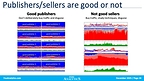
The result was a marketplace in which virtually everyone, including fraudsters, could call their inventory “high quality.” FouAnalytics for Publishers gives reputable publishers a way to show, rather than merely say, the humanness of their ad inventory, through independent analytics. In FouAnalytics, blue denotes observed human and good traffic, while red denotes bot and fraudulent traffic. This visual, evidence-based distinction, along with detailed supporting data, enables publishers to demonstrate the real human quality of their advertising inventory to support more direct buys and higher CPMs.

“Fraudsters would never deploy FouAnalytics on their sites and in their mobile apps, because they know I will catch them,” said Dr. Augustine Fou, creator of FouAnalytics.

“The commercial value for publishers is straightforward: good publishers should be rewarded for transparent, authenticated, human-quality inventory,” said Fou. “Publishers need more than another opaque IVT number. They need evidence, as in the slide above, that they can use in sales materials and buyer conversations to show why their audiences deserve more direct demand and higher CPMs. Blue means humans, and red means bots and fraud. The quality difference is dramatic and visually apparent.”

Clawback protection and AI crawler defense

Further, publishers are often confronted with clawbacks, make-good demands, or refund requests after an ad buyer or a third-party verification provider alleges elevated invalid traffic (IVT) or bot activity. These claims can materially reduce publisher revenue, damage buyer relationships, and force publishers into disputes even where they have limited visibility into the evidence behind the accusation.

AI and agentic crawler surges can create a particularly unfair double-whammy. Many publishers do not want AI crawlers harvesting their content or generating ad-bearing page loads. Even where a publisher uses robots.txt to signal that crawler access is unwelcome, a crawler may ignore that request and continue to access the site. The publisher can then face an after-the-fact buyer complaint or refund demand for a non-human traffic surge it neither wanted nor intentionally acquired.

FouAnalytics on-site measurement gives publishers visibility into these events, that are not visible in typical site analytics like Google Analytics. FouAnalytics shows detailed supporting data that helps identify, the AI crawler or automated source, including declared user agent, infrastructure or data-center origin, IP address, device or platform signals, screen and browser attributes, referring URL, and the page-request pattern. That enables a publisher to separate a real audience spike, such as a ticket sale or major news event, from a bot or AI-crawler spike that should not be counted as human traffic.

Preventing monetization of G-IVT

FouAnalytics for Publishers includes a decisioning container, which automatically filters general invalid traffic (G-IVT), including identifiable bot and AI-crawler traffic, before an ad call is made without needing any further technical development from the publisher. Rather than serving an ad first and debating non-human delivery later, publishers can use the container to avoid monetizing traffic is G-IVT.

Implementation is designed to be simple:

The publisher copies and pastes the FouAnalytics decisioning-container code into an ad slot.

The publisher copies and pastes its usual ad call into the decisioning container.

FouAnalytics automatically evaluates the visitor and decides whether the ad call should be made.

The ad call is made only when the visitor is identified as NOT G-IVT. By preventing ad delivery to identifiable bots and AI crawlers, the decisioning container reduces publisher exposure to non-human ad delivery and subsequent clawback claims.

This is a preventive control as well as an evidentiary one. On-site measurement can document an AI crawler surge and support a publisher’s response after a buyer raises concerns. The decisioning container adds an earlier control point: it can stop the normal ad call for detected G-IVT, so the publisher is less exposed to claims tied to ads served into bot or crawler traffic in the first place.

Supporting direct and curated demand

The platform is designed to help publishers support several revenue strategies:

Direct-sold campaigns where advertisers want a documented view of human audience quality, viewability, and brand safety.

Private marketplace and programmatic guaranteed deals that reward authenticated, measurable inventory.

Curated supply paths and inclusion lists for buyers seeking more transparent media environments.

Premium pricing conversations grounded in demonstrated human activity, viewability, and appropriate brand-safety reporting, rather than unsupported “high quality” assertions.

Clawback-defense discussions supported by documented, on-site evidence of human behavior and identified bot or AI-crawler surges.

G-IVT prevention through the FouAnalytics decisioning container before an ad call is made.

Publisher authentication signals that help buyers distinguish legitimate supply from domain spoofing or misrepresented bid requests.

FouAnalytics also supports a more transparent standard for verification. Publishers should not lose revenue because of unexplained negative labels, broad domain-level exclusions, or simplistic keyword-based suitability tools that confuse legitimate reporting with unsafe content. Quality measurement must be capable of recognizing the difference between a trusted publisher reporting on a difficult subject and genuinely harmful or fraudulent inventory.

“News, professional journalism, and reputable publishers have too often been caught in blunt automated brand safety filters which are based on keywords in the page url, not even in the content of the page itself,” explained Dr. Fou. “The detailed data that FouAnalytics provides was wholly unavailable by all the legacy fraud verification and brand safety vendors. This data allows both buyers and sellers to “see Fou themselves” why a single ad impression was good quality, viewable, and brand safe. Ad buyers no longer need to rely on numbers, without any evidentiary support.”

FouAnlaytics for Publishers is available to publishers seeking to validate human audience quality, document viewability and brand-safety results, equip sales teams with evidence-based materials, build a record for responding to IVT-related clawback claims, limit ad exposure to detectable G-IVT and AI crawler traffic, and create a stronger foundation for direct demand and higher CPMs.

About FouAnalytics

Created by Dr. Augustine Fou, FouAnalytics is the most trusted, and the only truly independent analytics platform for digital ads, websites, and mobile apps. The platform provides detailed analytical data so practitioners can “see Fou themselves”™ why something is “high humanness,” and troubleshoot what is not good quality. Today FouAnalytics is used globally by advertisers like Microsoft, Beiersdorf and Georgia Pacific, independent agencies and every agency holding company, as well as more than 10,000 SMBs and site owners. More details at www.fouanalytics.com.

Media Contact

Dr. Augustine Fou, CEO, FouAnalytics
augustine.fou@fouanalytics.com | (212) 203-7239

View original content to download multimedia:https://www.prnewswire.com/news-releases/fouanalytics-announces-global-availability-of-fouanalytics-for-publishers-decisioning-container-302853144.html

SOURCE FouAnalytics

Continue Reading

Technology

Demotech, Inc. Reflects on Recent NAIC 2026 Summer Meeting in Columbus, OH

Published

on

By

COLUMBUS, Ohio, Aug. 17, 2026 /PRNewswire/ — Joseph Petrelli, president and co-founder, Demotech, Inc. recently attended the National Association of Insurance Commissioners 2026 Summer meeting, held at the Greater Columbus Convention Center. Joe’s thoughts follow.

“The opening address by Virginia’s Insurance Commissioner and current NAIC President Scott A. White set the tone. After acknowledging the hospitality of Ohio’s Director of Insurance, Judith French, Commissioner Scott mentioned Ohio’s history of innovation, from Thomas Edison being born in Ohio to the Wright Brothers. His reference to innovation transitioned to the NAIC’s power of innovation and its ability to drive change. He noted that the modernization of the NAIC’s financial analysis process began in the 1990s and continues through today. In the life insurance area, the NAIC is prepared to monitor private-equity owned life insurers and scrutinize the complex investments that financial markets create.

“In the property-casualty insurance area, catastrophe risk management and climate change are being addressed. It was May 2019, when several commissioners met to view the site of the Paradise, California wildfires. I recall Commissioner Ricardo Lara’s efforts to ensure that the protection due to Californians was delivered in a timely manner. Equally important, rather than wait for a catastrophic event to occur, the Pre-Disaster Mitigation and Risk Modeling (EX) Working Group has compiled a draft model law on mitigation programs, ” Petrelli said.”

In the wake of technological advances and pre-disaster planning, Demotech is proud of the dozens of carriers that we review and rate that serve catastrophe-exposed geographical jurisdictions. These carriers have accumulated data points that permit them to refine catastrophe modeling techniques. They provide credits for mitigation technologies that will or have demonstrated the ability to prevent or moderate losses. They have reinsurance relationships that support and enhance their business models. And, by continuing to provide insurance in catastrophe exposed areas, they assist homeowners and property owners to protect the value and physical integrity of one of their largest assets; the home they live in, or the property where their office is located.

To stay in touch with Demotech, you can sign up to receive a quarterly hard copy of The Demotech Difference by mail at https://www.demotech.com/contact-demotech-2/. Alternatively, you can access current and past issues of TDD online at https://www.demotech.com/research/the-demotech-difference/.

About Demotech, Inc.
Incorporated on September 9, 1985, Demotech, Inc. is a financial analysis firm located in Columbus, Ohio. Demotech serves the insurance industry by providing objective and independent Financial Stability Ratings® (FSRs) for Property & Casualty insurance companies, Life & Health insurance companies, and Title underwriters, among others. FSRs assist independent, regional and specialty insurers by leveling the insurer ratings playing field. Over thirty-five years ago, Demotech was the first to have its rating process reviewed and accepted by Fannie Mae, Freddie Mac, and HUD. Since that time, Demotech’s FSRs have been leveling the playing field for financially stable insurers of all sizes. Since July 11, 2022, Demotech is registered with the U.S. Securities and Exchange Commission (SEC) as a nationally recognized statistical rating organization (NRSRO) in the class of ratings for Insurance Companies. Visit www.demotech.com for additional information, sign up or view The Demotech Difference.

View original content to download multimedia:https://www.prnewswire.com/news-releases/demotech-inc-reflects-on-recent-naic-2026-summer-meeting-in-columbus-oh-302853149.html

SOURCE Demotech, Inc.

Continue Reading

Trending