Connect with us

Technology

Pudu Robotics Launches PUDU MP2000, an AI-Native Pallet Handling Robot, to Simplify Autonomous Pallet Handling for Industrial Logistics


Published

on

SHENZHEN, China, Aug. 18, 2026 /PRNewswire/ — Pudu Robotics, a global leader in commercial service robotics, today announced the launch of PUDU MP2000, an AI-native pallet handling robot with a 2,000 kg payload capacity designed to simplify autonomous floor-to-floor material transport across warehouses, logistics facilities and manufacturing environments.

As industrial operations increasingly turn to robotics for repetitive material movement, autonomous pallet handling remains challenging to deploy at scale. Traditional solutions can require extensive site preparation, dedicated infrastructure and complex integration, while differences in pallet formats and operating environments can further limit flexibility.

PUDU MP2000 takes a different approach by turning autonomous pallet handling from a project-heavy deployment into a standardized robotic solution designed to work with existing operations.

Plug and Play, Deploy in Minutes

PUDU MP2000 combines multi-sensor navigation, edge intelligence and AI-native perception to simplify deployment from the outset. It can map the operating environment for autonomous navigation and workflow setup without extensive site modifications, dedicated reflectors or QR codes, or complex platform integration.

This enables rapid, minutes-level deployment, reducing the infrastructure and commissioning burden typically associated with autonomous forklift projects. For manufacturers, this can help minimize disruption when introducing automation. For logistics operators, the standardized deployment model provides greater flexibility to expand robotic capacity as operational needs evolve.

AI-Native Adaptation for Real-World Operations

Pallet handling rarely follows a single standard. PUDU MP2000 supports common pallet formats, including three-runner pallets and perimeter-base pallets, while also adapting to customized, non-standard load carriers.

Its AI-native perception enables real-time, onboard understanding of changing handling conditions—from recognizing available storage locations and identifying load positions to adjusting for pallet misalignment. PUDU MP2000 can also assess the load’s size and shape in real time to determine clearance and navigate through constrained spaces with greater precision.

By connecting perception, decision-making and execution, PUDU MP2000 enables autonomous handling that continuously adapts to the environment rather than relying solely on predefined conditions.

Fast Fork-In for High-Frequency Material Movement

PUDU MP2000 is engineered for the repetitive, high-frequency movement that defines industrial pallet logistics. Its optimized fork-handling process enables fork-in in as little as 20 seconds, helping shorten pickup cycles and keep material moving efficiently between locations.

The system is designed to reduce repeated positioning and pickup attempts, enabling more consistent handling across warehouse and factory workflows.

3D Perception for Safer Autonomous Transport

PUDU MP2000 combines 3D LiDAR, depth cameras and multi-sensor perception to detect and interpret obstacles across different heights and positions.

The robot can identify low-profile and overhead obstacles, navigate around static obstacles and respond to dynamic obstacles in real time. This enables more adaptive autonomous movement in environments where people, equipment and materials may be constantly changing.

Distributed Intelligence and Flexible Control

PUDU MP2000 combines local intelligence with fleet-level coordination for flexible, autonomous operation. Each robot can make real-time decisions independently, while multiple units coordinate tasks to maintain efficient and orderly workflows across the fleet.

Fleet coordination can continue in offline environments, supporting reliable operation even when external network connectivity is unavailable. The system also integrates with compatible peripheral equipment to support different operational workflows. Operators can flexibly assign tasks and quickly take control when human intervention is required.

Expanding PUDU’s Industrial Delivery Portfolio

The launch of PUDU MP2000 expands Pudu’s industrial portfolio from flexible mobile delivery into standardized pallet handling and heavier-load transport.

Pudu’s T Series AMRs, including PUDU T300, address flexible delivery and material transport. PUDU MP2000 extends this capability into palletized, heavier-load and floor-to-floor transportation, covering core workflows across loading docks, warehouses, line-side storage and production workshops.

Together, the two product categories provide a broader foundation for end-to-end industrial logistics automation, connecting flexible delivery with standardized pallet transport across the factory and warehouse.

With PUDU MP2000, Pudu Robotics is bringing an AI-native approach to a traditionally infrastructure-heavy category of automation—making autonomous pallet handling easier to deploy, easier to adapt and easier to scale.

About Pudu Robotics

Pudu Robotics is a global leader in commercial service robotics and the industry’s first company to offer a full portfolio spanning specialized, semi-humanoid, and humanoid robots. According to Frost & Sullivan’s latest market report, Pudu Robotics ranks No. 1 globally in commercial service robotics by both revenue and shipment volume. Built on its One Brain, Multiple Embodiments architecture, Pudu offers robots for service delivery, commercial cleaning, industrial delivery, and general embodied AI applications across hospitality, retail, healthcare, manufacturing, education, public services, and more. To date, Pudu Robotics has shipped over 130,000 robots to customers across 85+ countries and regions.

View original content to download multimedia:https://www.prnewswire.com/apac/news-releases/pudu-robotics-launches-pudu-mp2000-an-ai-native-pallet-handling-robot-to-simplify-autonomous-pallet-handling-for-industrial-logistics-302854186.html

SOURCE Pudu Robotics

Continue Reading

Technology

DataBeyond Showcases AI Sorting Solutions for Circular Supply Chains at COP31

Published

on

By

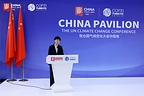
ANTALYA, Türkiye, Nov. 20, 2026 /PRNewswire/ — Hangzhou DataBeyond Technology Co., Ltd. (DataBeyond), a provider of intelligent waste-sorting equipment and solutions, presented applications of artificial intelligence (AI) and robotics in resource recovery at a China Pavilion side event during COP31 on Nov. 19. The company also joined an international initiative to promote green and low-carbon supply chains.

At the “Jointly Building a Green and Low-Carbon Supply Chain” event, DataBeyond Chairwoman Zhuoya Mo outlined the company’s approach to municipal solid waste (MSW) management. The approach prioritizes sorting recoverable materials, directing them to suitable recycling processes and sending residual waste for appropriate treatment.

The United Nations Environment Programme’s Global Waste Management Outlook 2024 projects that annual global MSW generation will reach 3.8 billion metric tons by 2050. Mixed collection and complex waste composition make effective sorting an important step in recovering materials for further use.

DataBeyond combines AI hyperspectral optical sorting with robotic picking to recover recyclable materials from mixed waste. Optical sorters process high-volume material streams, while robots identify and pick individual recyclable items from complex mixtures. The combination helps operators expand material recovery and reduce reliance on manual sorting in demanding environments.

In MSW applications, the company’s systems recover target plastics, including polypropylene (PP) and polyethylene (PE) films, while separating materials that are incompatible with the intended recycling process. Suitable recovered fractions can then be washed and processed into feedstock for manufacturing, helping reduce the amount of waste sent for final disposal.

For plastics recycling, DataBeyond offers AI hyperspectral optical sorters that distinguish materials by composition, including plastics with similar appearances. Applications cover mixed rigid plastics, PET bottles and PET flakes. By separating incompatible polymers and improving material consistency, the systems help recyclers prepare feedstock for downstream manufacturing.

In textile recycling, the FASTSORT-TEXTILE-AI-SPEC system from DataBeyond sorts used garments by fiber composition, including cotton and polyester content. Further sorting of shredded textiles can remove fragments containing buttons, zippers and other unwanted components. These processes help prepare textile feedstock for suitable textile-to-textile recycling routes. The Fastsort-Textile optical fabric sorter received a Special Mention in TIME’s Best Inventions of 2025.

DataBeyond serves customers in more than 40 countries and regions and has supported over 3,000 projects. Its applications span municipal waste, plastics, textiles, construction and demolition waste, and other waste streams.

Building on this experience, the company plans to expand technology sharing, local partnerships and the traceability of recovered materials, including their types, weights and downstream destinations. It also supports local operators through system integration, technical training and maintenance services, adapting sorting solutions to local waste composition, infrastructure and recycling markets.

Through these efforts, DataBeyond aims to connect recovery businesses with manufacturers seeking recycled feedstock, helping more recovered materials meet production requirements and return to supply chains.

About DataBeyond

Founded in 2018, Hangzhou DataBeyond Technology Co., Ltd. develops intelligent waste-sorting equipment and integrated solutions using AI, optical sensing and robotics. The company serves recycling and waste-management customers worldwide through equipment supply, system integration and technical services.

For more information, visit www.databeyond.com.

Media Contact

Felix
marketing@databeyond.com

View original content to download multimedia:https://www.prnewswire.com/news-releases/databeyond-showcases-ai-sorting-solutions-for-circular-supply-chains-at-cop31-302947646.html

SOURCE DataBeyond

Continue Reading

Technology

Ajman Government Media Office hosts Foreign Affairs Undersecretary at THE SIGNAL with a clear message: ‘The UAE does not seek the signal – it creates it’

Published

on

By

AJMAN, UAE, Nov. 22, 2026 /PRNewswire/ — H.E. Omar Obaid Alhesan Alshamsi, Undersecretary of the Ministry of Foreign Affairs, affirmed that diplomacy and media share a fundamental mission rooted in dialogue, understanding, and building bridges between nations and peoples. Both, he noted, rely on the power of words, trust, and the ability to connect with others.

Speaking during a keynote session titled ‘The UAE’s voice to the world’ on the second day of the Ajman Media Forum 2026, ‘THE SIGNAL’, His Excellency described the forum’s central question, ‘Who owns the signal?’, as one of the most profound questions of our time. He noted that it extends beyond media to the very heart of diplomacy, adding that those who own the signal shape the future, tell their story with authenticity, and earn the world’s trust and respect. “The UAE does not seek the signal—it creates it,” he said.

His Excellency explained that the global media landscape is changing at an unprecedented pace, with digital platforms shaping public awareness and attitudes. He added that owning media platforms is no longer sufficient, and reach alone is no measure of influence. Those who own the signal today, he said, are those who understand change, know their audiences, and present a comprehensive national narrative with a clear vision and message.

H.E. Alshamsi emphasized the importance of communication tools in modern diplomacy, explaining that building trust now extends beyond dialogue forums and bilateral meetings to encompass media engagement. Audiences, he noted, look beyond official statements to images, stories, and positions.

His Excellency affirmed that, under the leadership of His Highness Sheikh Mohamed bin Zayed Al Nahyan, President of the UAE, the country recognized this shift early and adopted a forward-looking vision. It has made media an essential partner in Emirati diplomacy, conveying its message of dialogue, tolerance, coexistence, and openness to the world. This partnership also highlights the UAE’s development and humanitarian initiatives with its partners to advance progress, prosperity, and stability for all peoples.

He added that the Ministry of Foreign Affairs, under the leadership of His Highness Sheikh Abdullah bin Zayed Al Nahyan, Deputy Prime Minister and Minister of Foreign Affairs, continues to develop its public diplomacy tools by strengthening cooperation with local and international media institutions, reaffirming the UAE’s steadfast positions, and highlighting its active role in regional and international affairs.

His Excellency also noted that the UAE was among the first countries to prepare for the era of advanced technologies and help shape it. Its efforts include launching a national artificial intelligence strategy, appointing the first Minister of State for Artificial Intelligence, and establishing a specialized university and leading research centers. The UAE also contributes to the development of global AI standards and governance frameworks through multilateral platforms.

He explained that the Ministry of Foreign Affairs has embraced this approach by deploying AI solutions to enhance its services and deliver them proactively, guided by the belief that modern technologies should serve people and help address shared challenges.

His Excellency added that these national efforts call for the continuous development of public diplomacy tools and stronger partnerships with the media sector. Today’s diplomats need the tools of media professionals, while media professionals need a diplomat’s understanding of contexts and positions.

In closing, His Excellency expressed his hope that the Ajman Media Forum would generate insights and practical initiatives that establish a new phase of closer cooperation between diplomacy and media. These efforts, he said, would strengthen the UAE’s international presence and influence, further consolidate its reputation and standing across global forums, and reinforce its position as a model for development and innovation and an active regional and international partner.

View original content to download multimedia:https://www.prnewswire.co.uk/news-releases/ajman-government-media-office-hosts-foreign-affairs-undersecretary-at-the-signal-with-a-clear-message-the-uae-does-not-seek-the-signal–it-creates-it-302947649.html

Continue Reading

Technology

Humaid bin Ammar attends day two of Ajman Media Forum 2026 and honours participants and partners

Published

on

By

AJMAN, UAE, Nov. 22, 2026 /PRNewswire/ — His Highness Sheikh Ammar bin Humaid Al Nuaimi, Crown Prince of Ajman and Chairman of the Executive Council, launched the “Ajman Memory” project, implemented by Ajman Government Media Office to preserve and document the emirate’s historical and cultural heritage. The project aims to collect, document and archive photographs, documents and video footage chronicling Ajman’s development through an integrated system that combines digital technologies with internationally recognised archiving and preservation standards.

The project was launched during the Ajman Media Forum 2026, “The Signal”, held on 18 and 19 November at the Emirates Hospitality Centre, under the patronage of His Highness Sheikh Humaid bin Rashid Al Nuaimi, Supreme Council Member and Ruler of Ajman.

His Highness Sheikh Ammar bin Humaid Al Nuaimi affirmed that Ajman’s collective memory is an integral part of its identity and a record of its people’s journey, as well as the efforts of successive generations that contributed to building and developing the emirate. He noted that preserving this heritage goes beyond safeguarding documents and photographs to protecting the stories, experiences and values they embody, which together form the community’s living memory.

His Highness said that Ajman’s history is not merely a record of past events, but a story of its people and place, reflecting the achievements of earlier generations and the values and experiences they have passed on. He stressed that every photograph, document and historical record represents an important part of this story and deserves to be preserved for future generations.

He added that documenting history and making it accessible through modern technologies strengthens younger generations’ connection to their roots, enabling them to explore the transformations the emirate has undergone and gain a deeper understanding of its development journey. He emphasised that leveraging technology to preserve historical heritage reinforces its role in serving people and advancing knowledge, noting that building the future begins with understanding the past and taking pride in its experiences and values.

His Highness further stressed that the value of societies’ historical memory is measured not only by the volume of documents they preserve, but also by their ability to communicate their significance to future generations and maintain their connection to their history and identity amid a rapidly changing world.

Under the theme “Preserving the Past… Building the Future”, the Ajman Memory project establishes an integrated framework for preserving and documenting the emirate’s cultural and historical heritage. It will collect and archive photographs, documents and video footage in line with international archiving standards, safeguarding records that chronicle Ajman’s journey through the different stages of its history.

The project comprises three interconnected components. The digital component includes a dedicated website for presenting and archiving historical materials, an integrated content management and digital archiving system, and dedicated social media accounts.

The organisational component encompasses the policies, procedures and operational systems developed by the Office in accordance with approved archiving legislation and requirements, establishing an institutional framework for managing and preserving documents and historical materials.

The archival component focuses on digitally preserving materials and documents on servers, alongside establishing a physical archive to safeguard original documents in appropriately equipped facilities. This approach combines the advantages of modern technologies with the preservation of original historical records.

The Ajman Memory project marks a significant step towards systematically documenting the emirate’s historical and cultural heritage, presenting it through contemporary platforms that strengthen its presence, preserve its legacy and ensure its continuity for future generations.

View original content to download multimedia:https://www.prnewswire.co.uk/news-releases/humaid-bin-ammar-attends-day-two-of-ajman-media-forum-2026-and-honours-participants-and-partners-302947639.html

Continue Reading

Trending