Connect with us

Technology

University of Phoenix student survey points to responsible use, judgment and real-world practice as foundations of AI readiness

Published

on

Among 5,419 respondents, responsible use was the top learning topic at 52%, while 59% want real examples from their field, priorities that align with the University’s existing academic AI framework for responsible, applied learning.

PHOENIX, Aug. 18, 2026 /PRNewswire/ — As artificial intelligence is increasingly integrated into learning and work, a new University of Phoenix survey of students suggests that AI readiness requires more than knowing how to access or operate a tool. The findings point to AI readiness that extends beyond tool use to responsible use, accuracy, citation, real-world application and human judgment.

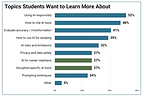
The Spring 2026 AI Student Survey received 5,419 submitted surveys from students enrolled in selected course sections across the University’s colleges. Seventy-eight percent of respondents report using at least one AI tool, showing that AI is already part of many students’ lives. Their learning priorities, however, extend beyond tool familiarity: 52% want to learn more about using AI responsibly for coursework, 48% want to learn how to cite AI tools and 41% want to learn how to evaluate accuracy and avoid misinformation.

The findings indicate student priorities that align with University of Phoenix’s academic AI pillars, a three-part framework established earlier this year to embed practical AI knowledge and responsible-use habits across degree programs, learning experiences and academic practices.

“AI readiness isn’t measured by how quickly someone can get an answer from a tool. It is demonstrated by whether a learner can evaluate that answer, understand its limitations, use it responsibly and know when their own judgment must lead,” said John Woods, PhD, provost and chief academic officer at University of Phoenix. “Our students are prioritizing clear academic expectations, opportunities to practice and field-relevant examples — priorities that closely align with our academic AI pillars and the kind of AI literacy higher education needs to help learners build with AI now being part of both learning and work.”

What do students say AI readiness requires?

When students were asked what AI topics or skills they would like to learn more about, their priorities emphasized responsible decision-making alongside practical proficiency:

52% selected using AI responsibly for coursework48% selected how to cite AI tools41% selected how to evaluate accuracy and avoid misinformation32% selected AI risks and limitations27% selected AI for career readiness24% selected prompting techniques

The findings suggest students want more than tool proficiency or prompting; they also want a stronger understanding about responsible use, citation, accuracy and AI’s risks and limitations.

How can AI support learning without replacing student thinking?

Students’ open-ended responses add context to the responsible-use findings. Comments addressed the validity and accuracy of AI-generated information, ethical use, preserving authentic work and personal voice, and maintaining human skills such as critical thinking, learning and writing — reinforcing that effective AI use also requires knowing when human thinking remains essential. Examples of comments from the survey include:

“I have never really considered using AI tools before…However, I am open to learning and understanding how AI tools can be used responsibly, especially in an educational setting.””I would include a step-by-step guide.” “More interactive, hands-on learning tools such as simulations and real-world practice scenarios.””As a Business and Healthcare Administration student who also works in…business intelligence, I would benefit from real examples showing how to use AI ethically for research, data analysis, and professional documentation.”

Students want to see, practice and evaluate AI in real-world contexts

Students provided a clear picture of how applied AI learning can support readiness. When asked what would help them feel more prepared to use AI in their career field and program coursework:

59% selected real examples from their field51% selected step-by-step demonstrations43% selected tutorials on industry-specific AI tools40% selected hands-on assignments with workplace scenarios31% selected opportunities to practice prompting or evaluating AI output

Together, the findings point to an applied learning sequence: show learners how AI is used, model the process, provide opportunities to practice and build judgment by evaluating the result.

Student priorities align with University of Phoenix academic AI pillars

University of Phoenix established its academic AI pillars in February 2026 as a three-part framework for helping working adult learners develop practical AI knowledge and responsible-use habits that translate across academic and workplace contexts:

Pillar 1: Embed AI into programs and course content.Pillar 2: Leverage AI tools to enhance the learning experience.Pillar 3: Weave AI into processes, policies and workflows.

While the framework predates the Spring 2026 student survey, the new findings provide an additional student-informed lens on many of the dimensions the pillars are designed to address.

How does the Center for AI Resources support responsible AI readiness?

The Center for AI Resources serves as the student-facing component of the University’s broader AI academic approach, providing a central pathway to guidance on responsible, safe and effective AI use. Student responses show strong expectations for that kind of support. When asked what they would expect to find in the Center:

87% selected how to use AI responsibly in coursework80% selected what the University considers acceptable AI use, including policies, expectations and examples69% selected how to check AI output for accuracy and avoid misinformation56% selected career examples showing how AI is used in their field

The responses indicate that students are seeking responsible-use standards, academic clarity, accuracy verification and career relevance. The findings can inform continued planning for the Center, discipline- and field-specific examples and resources supporting students at different stages of AI readiness.

Together, the University’s academic framework and the new student evidence point toward an approach to AI readiness that pairs practical skill-building with responsible use, critical evaluation and human judgment.

About the University of Phoenix AI Student Survey

The Spring 2026 AI Student Survey was deployed in selected course sections across University of Phoenix colleges to understand how students are using AI and what they need to use it responsibly and effectively in academic and professional settings. The survey was designed to identify broad student patterns and inform student support, curriculum conversations, college-level planning and continued development of AI learning resources.

Survey links were embedded within selected courses and aligned to a small course-point value. Participation also included an opportunity to enter a drawing for one of five $100 Amazon e-gift cards. No individual survey question was required.

Among 9,315 students enrolled in the selected course sections, 5,419 submitted surveys, resulting in a 58% response rate. Because questions were optional, response totals and denominators vary by question. The survey generated 9,890 coded comments across its open-response areas.

About University of Phoenix

University of Phoenix is Built for Real Life. 50 Years Strong. The University innovates to help working adults enhance their careers and develop skills in a rapidly changing world through flexible online learning, relevant courses, academic AI pillars, and skills-mapped curriculum for associate, bachelor’s and master’s degree programs. Active students and alumni have access to Career Services for Life® resources including career guidance and tools. For more information, visit phoenix.edu. 

View original content to download multimedia:https://www.prnewswire.com/news-releases/university-of-phoenix-student-survey-points-to-responsible-use-judgment-and-real-world-practice-as-foundations-of-ai-readiness-302854406.html

SOURCE University of Phoenix

Continue Reading

Technology

GEEKOM to Make Middle East Exhibition Debut at GITEX 2026 with Full PC Lineup and Local AI Innovations

Published

on

By

DUBAI, UAE, Nov. 23, 2026 /PRNewswire/ — GEEKOM, a global PC brand known for its Mini PC innovation, will make its Middle East exhibition debut at GITEX 2026, marking a new milestone in the company’s international development. At Booth H42-B28, GEEKOM will present one of its most comprehensive product showcases, bringing together local AI solutions, high-performance Mini PCs and its latest GeekBook laptops, offering computing options for businesses, professionals, creators and everyday users.

For visitors interested in local AI, the GEEKOM A9 MEGA series will be a major highlight. Powered by AMD Ryzen™ AI Max+ 495, the latest model features up to 192GB of unified memory for running large AI models locally. GEEKOM will also showcase a four-unit AI cluster featuring AMD Ryzen™ AI Max+ 395 systems, each with 128GB of unified memory, enabling businesses to deploy local AI flexibly and expand computing capacity as needs grow. Alongside the AMD Ryzen™ AI Max 388-powered A9 MEGA, the series supports applications including private AI assistants and enterprise knowledge bases.

GEEKOM’s broader Mini PC lineup shows how compact systems can serve different needs. The Intel® Core™ Ultra-powered IT15 (285H) and IT13 Max (185H) join AMD-powered A9 Max (Ryzen™ AI 9 HX 470) and A5 2027 Edition (Ryzen™ 7 7730U). Across selected models, multi-display support, expandable storage and adjustable power modes help users build versatile workstations, explore AI agent applications and create home entertainment setups or business terminals without the space demands of traditional desktop towers.

Extending beyond the desktop, GEEKOM will showcase its GeekBook X and M laptop families. Leading the X series, the latest GeekBook X16 Pro combines AMD Ryzen™ AI 9 HX 470 performance, Radeon™ graphics and AI acceleration in a slim, lightweight 16-inch design, giving professionals and creators greater freedom to work wherever they need. The GeekBook M series emphasizes affordability and long battery life, with up to 24 hours of standby time for everyday work, study and travel.

With its official online store now available in the Middle East, GEEKOM is making its products more accessible to regional customers. At GITEX, consumers can experience devices firsthand, while businesses and industry partners can explore applications and discuss opportunities with the GEEKOM team.

Visit GEEKOM at Booth H42-B28 to discover its latest innovations.

View original content:https://www.prnewswire.co.uk/news-releases/geekom-to-make-middle-east-exhibition-debut-at-gitex-2026-with-full-pc-lineup-and-local-ai-innovations-302947961.html

Continue Reading

Technology

Battalion Advanced Technology Ltd: Battalion commits up to £3 million to UK hypersonic materials programme with Oxford Sigma

Published

on

By

Programme SPEAR addresses three engineering problems that limit hypersonic flight. The intellectual property it creates will be owned by Battalion, a UK company.

LONDON, Nov. 23, 2026 /PRNewswire/ — Battalion Advanced Technology Ltd (“Battalion”) has signed a research agreement with Oxford Sigma Limited (“Oxford Sigma”) to develop materials and component technologies for hypersonic applications. Programme SPEAR has up to £3 million committed over three years and will be carried out in the UK.

Materials performance is a critical challenge in hypersonic flight to enable better performance and capability. Heat, pressure and oxidation place demanding requirements on joints, seals and apertures. SPEAR focuses on three related engineering challenges: joining dissimilar materials, developing adaptive seals and creating windows that maintain their performance in extreme environments.

Oxford Sigma will carry out the research under Principal Investigator Dr Thomas P. Davis, drawing on its existing materials expertise and know-how. Battalion will own the intellectual property created through SPEAR and lead its commercialisation, with Oxford Sigma entitled to 1.5% royalties on qualifying future product sales and licensing income under the agreement.

Alongside new intellectual property, the programme aims to produce prototype hardware, supporting test evidence and manufacturing know-how, establishing a foundation for subsequent qualification and commercial development. Technologies will be assessed progressively, with investment focused on those offering the strongest technical and commercial potential.

Oxford Sigma brings together materials development, computational modelling, prototype manufacture and experimental testing within a single British-owned UK organisation. Its experience across fusion, nuclear and defence engineering enables the programme to consider manufacturing, verification and future qualification requirements from the outset, alongside materials performance.

The programme is designed to take technologies from early-stage research (Technology Readiness Level 2-3) to TRL 4-5, including the testing of prototypes and potential products under Battalion’s direction. SPEAR will be coordinated with the hypersonic materials programme Battalion directs and funds at The Pennsylvania State University in the United States, and is aligned with AUKUS Pillar II, under which the UK, US, and Australia cooperate on advanced capabilities including hypersonics.

R. Michael Jones, Co-founder and Director of Battalion, commented:

“National security problems do not stop at borders, and the work on them should not either. SPEAR puts a British team on three of the hardest problems in hypersonic flight, alongside the programme we direct at Penn State. Allies attacking the same problem from different angles is how this moves quickly.”

Dr Thomas P. Davis, Co-founder and Chief Executive Officer of Oxford Sigma, commented:

“Hypersonic flight and fusion energy share an opportunity: materials operating beyond the limits of conventional engineering. Our team has spent years developing materials and components for those conditions. SPEAR focuses that expertise on three defined materials themes, with a partner committed to taking the results towards practical applications.”

About Programme SPEAR

Programme SPEAR is a research programme funded and directed by Battalion and carried out by Oxford Sigma over up to three years. It is staged, from research to prototypes and demonstrators, with progress reviews directing investment to the strongest technologies.

About Oxford Sigma

Oxford Sigma is a British-owned, internationally recognised advanced materials company based in Oxford, UK, focused on fusion, nuclear and defence systems. It is a supplier under the UK Ministry of Defence’s Hypersonic Technologies & Capability Development Framework (HTCDF), with wider experience across UK defence research and weapons engineering programmes. Dr Thomas P. Davis, Co-founder and Chief Executive Officer, is Principal Investigator for Programme SPEAR. His background spans materials science, fusion engineering, defence materials, and materials standardisation. He holds a PhD (DPhil) in Materials Science from the University of Oxford.

About Battalion

Battalion Advanced Technology Ltd is a London-based company that develops hypersonic materials and wide-bandgap semiconductor devices for national security and dual-use applications. It directs and funds the underlying research at The Pennsylvania State University, ranked first in the United States for materials science research expenditures (NSF, FY 2024), and at Oxford Sigma in the UK through Programme SPEAR.

For further information contact:

Battalion Advanced Technology Ltd

R. Michael Jones (Co-founder and Director)

Patrick Severide (President)

Tel: +44 (0)203 576 6742

View original content to download multimedia:https://www.prnewswire.co.uk/news-releases/battalion-advanced-technology-ltd-battalion-commits-up-to-3-million-to-uk-hypersonic-materials-programme-with-oxford-sigma-302947703.html

Continue Reading

Technology

Le son de Side: Paris game voice recording up 138% since opening

Published

on

By

Veteran team sets company growth record in one of Europe’s fastest growing markets

PARIS, Nov. 23, 2026 /PRNewswire/ — Paris is rapidly establishing itself as one of Europe’s leading hubs for global game audio and localisation. Since opening in 2023, Side Paris has increased its revenue by 243% making it one of the company’s fastest growing studios. Despite an industry fraught with challenges, the powerhouse team of eight has grown revenue by 10% year-over-year in 2026.

Over the course of this year alone, Side Paris has delivered more than 1,500 recording sessions with over 300 actors, reflecting both the scale of the studio’s growth and the depth of France’s voice talent and game development ecosystem.

Side Paris Studio Head, Maxime Romano commented on the studio’s beginnings: “Three years ago we kick-started Side Paris into existence with a team of three: myself, Ekaterina Bendrysheva, and Matthieu Tardit. The pace of growth has been a lot to pack into our little studio, and I’m exceptionally proud of this team’s ability to thrive in one of the games industry’s most competitive markets.”

With over a century of industry experience across the team, Side’s Paris studio is home to some of France’s most experienced games industry experts. The studio specialises in premium game voice recording and localisation, delivering projects both locally and in collaboration with Side’s global network across EMEA, the Americas, and APAC. Most recently, the team has provided audio and localisation services for blockbuster titles including The Game Awards nominees, Control Resonant by Remedy and The Legend of Zelda: Ocarina of Time by Nintendo.

Looking ahead, Romano sees the next phase of growth translating directly into new opportunities for the French games industry.

“My ambition is to build our project pipelines to the point where I’m hiring at least another ten people by 2028,” Romano added. “I would encourage passionate audio producers and engineers to keep an eye on our LinkedIn page, because we will certainly want to hear from you. More people means more capacity, more games and more opportunities for us to work side by side with some of the best French talent in our industry.”

Side is also looking beyond games for its next phase of growth. Globally, the company has begun expanding its capabilities into adjacent industries through datasets and IT services offerings.

Side COO, Olivier Deslandes said, “Growth at Side globally is strategic and selective, and Paris is a great example of what that looks like in practice. Considering where we started back in 2023, this team has created a blueprint for how we can build and scale in a mature market. We are now applying that same approach as we expand our portfolio, both within games and beyond.”

About Side: 

Side is a global video game development and services provider, offering technical and creative solutions to many of the largest developers and studios around the world. Founded in 2009, Side has grown from their Japanese roots to become a global force in the video games industry, with 15+ studios in over a dozen countries across North America, Europe, South America, and Asia. Their industry-leading services include art production, game development, audio production, quality assurance, localisation, localisation QA, player support, community management, and datasets. For more information, visit www.side.inc 


View original content to download multimedia:https://www.prnewswire.co.uk/news-releases/le-son-de-side-paris-game-voice-recording-up-138-since-opening-302947979.html

Continue Reading

Trending