Connect with us

Technology

Genye Technology Opens New LA-Area Branch and Technology Demonstration Center in Southern California

Published

on

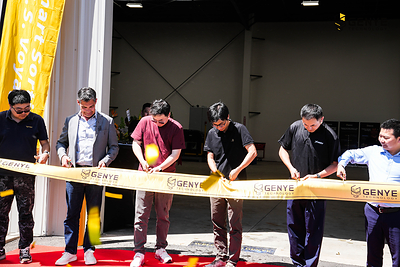
FONTANA, Calif., Aug. 22, 2026 /PRNewswire/ — Genye Technology today announced the official opening of its new LA-area branch and technology demonstration center at 8655 Beech Ave, Fontana, California 92336. Located within the greater Los Angeles metropolitan area,the new facility brings technology demonstration, application testing, customer engagement, and localized processing and assembly together under one roof. The opening marks a concrete step in Genye’s strategy to build a lasting North American presence and deliver localized support to customers throughout the region.

For Genye, the choice of Los Angeles was deliberate. The facility is located in Southern California’s Inland Empire, at the center of one of the most active logistics and distribution corridors in the United States, with major parcel, e-commerce, and freight operations concentrated within a short drive. The new facility allows Genye’s team to serve customers across the western United States from a base that is already deeply integrated into the region’s logistics network — and to do so in the same time zone as the operations it supports.

Customers and partners attending the opening event experienced Genye’s equipment firsthand, observed live sorting demonstrations, and engaged directly with the company’s engineering team to discuss specific application scenarios and operational requirements.

A Full Afternoon of Demonstrations and Dialogue

The opening event on August 18 drew customers and partners from across the logistics, e-commerce, and parcel distribution sectors. The program ran from early afternoon through late afternoon, starting with a welcome reception that gave early arrivals time to tour the facility, followed by an opening ceremony, a company introduction, an extended product showcase, an interactive Q&A session, a networking reception, and closing remarks.

The product showcase, the centerpiece of the afternoon, ran for over an hour. Attendees watched Genye’s systems process parcels in live operation, compared performance across different handling scenarios, and worked through configuration questions with the on-site engineering team. The Q&A session that followed covered system throughput, deployment timelines, integration requirements, and after-sales support arrangements. The networking reception that closed the day gave attendees and Genye’s team room for one-on-one follow-ups on potential projects — several of which are already being scoped for further discussion.

Among the attendees were Rockwell Automation, WINIT CORPORATION, Thunder International Group, and J&T International (commonly referred to as J&T), who observed live-equipment demonstrations and held in-depth technical discussions with Genye’s engineers on potential system configurations tailored to their operational requirements.

This event marked the first opportunity for many guests to witness Genye’s solutions in live operation within North America. Previously, customers evaluating Genye’s systems had to travel overseas to our manufacturing base, or rely solely on video walk-throughs and reference site visits. The Los Angeles facility eliminates this barrier. It enables regional end-users to view, inspect and test our equipment locally. For numerous projects, this hands-on, on-site experience proves to be the critical driver for moving projects forward.

Three Core Systems on Display at the Demonstration Center

The demonstration center currently features three of Genye’s core logistics automation systems, installed and running under realistic parcel handling conditions: the Mini Loop Cross-Belt Sorter, the 3D Sorter, and the Singulator with narrow-belt sorter.

Each system is set up to handle parcels the way they would in a live operation, allowing visitors to evaluate real performance rather than theoretical specifications. Visitors can observe sorting accuracy, throughput under continuous operation, and how each system handles variations in parcel size and flow. They can also explore different automation configurations and assess how each technology fits their specific operations — whether in e-commerce fulfillment, parcel distribution, or high-throughput sorting.

The three systems on display illustrate two sides of Genye’s automation portfolio. The Mini Loop Cross-Belt Sorter and the 3D Sorter are sorting solutions designed for different parcel handling scenarios — giving visitors a direct way to compare configurations and see which approach fits their operation’s throughput, parcel mix, and available space. The Singulator with narrow-belt sorter, in turn, is a core module of Genye’s fully automatic induction system: it takes an irregular inbound parcel flow and turns it into a controlled, single-file stream ready for downstream sortation. Together, the three systems give visitors a practical view of how an automated operation can be built up step by step — and equally important, where automation can be introduced first to deliver the fastest return on investment.

The hands-on nature of the center matters for a practical reason. Logistics automation decisions are high-stakes investments, and operators rarely commit based on spec sheets alone. Being able to bring their own parcel profiles, run them through a live system, and see the results on-site gives customers a level of confidence that remote sales discussions cannot provide. For Genye, the center also shortens the sales cycle: technical questions that would normally require a trip to the manufacturing facility can now be answered locally.

The center also creates a direct feedback loop between Genye’s R&D teams and the North American market. Feedback from hands-on testing and customer discussions flows directly back to product development, speeding up solution validation and keeping product direction aligned with what operators actually need on the ground.

A Stronger Local Presence for North American Customers

The new LA-area branch reflects Genye’s commitment to staying close to its North American customers — from initial evaluation through installation and after-sales support.

As automation adoption accelerates across North America, logistics operators increasingly need more than advanced equipment. They need responsive local support throughout project implementation and operation: someone on the ground during installation, fast access to spare parts, and engineering teams that can respond without the friction of time zones and long-distance coordination. In a market where downtime translates directly into cost, the ability to respond quickly is often as important as the performance of the equipment itself.

The industry context makes this particularly relevant. North American parcel volumes continue to climb year over year, e-commerce penetration keeps pushing fulfillment operations toward higher throughput, and labor markets remain tight in key distribution regions. These forces are driving logistics operators of all sizes — from regional carriers to national networks — to evaluate automation more seriously than ever. But the decision to automate is only the first step; successful projects depend on implementation quality, integration with existing operations, and reliable support once the system is running. That is where a local partner makes the difference between a smooth rollout and a project that stalls.

The Los Angeles facility addresses exactly that. It offers a dedicated space for customer visits, equipment demonstrations, technical discussions, and solution testing. Located in the Inland Empire — one of North America’s busiest logistics corridors, home to some of the region’s largest distribution hubs — the facility puts Genye in the heart of the very operations it serves. Localized processing and assembly capabilities further improve project flexibility and shorten lead times for North American customers.

With a permanent U.S. presence, Genye gives customers and partners direct access to local technical resources, shorter communication paths, and ongoing support at every stage of their automation projects — from the first evaluation, through installation and commissioning, and into day-to-day operation. For existing customers in North America, the new branch also means faster access to Genye’s engineering expertise and a simpler path for system upgrades, expansions, and service support.

Twelve Years of Global Experience, Backed by a Full In-House Capability Chain

Founded in 2014, Genye Technology designs and manufactures intelligent logistics automation systems — including sorting, feeding, and integrated material handling technologies — for the global logistics industry. The company’s product portfolio spans parcel feeding and singulation, sorting, and complete material handling integration, covering the full operational workflow from induction to sortation.

More than 4,000 Genye automation systems have been deployed worldwide. The company employs over 100 engineers and operates a 30,000-square-meter production facility, with in-house capabilities covering solution design, manufacturing, installation, commissioning, and after-sales service. Keeping these capabilities in-house matters: it means customers deal with a single accountable partner from system design through handover, rather than coordinating between separate vendors for hardware, software, and integration.

The engineering depth behind those numbers is worth noting. Genye’s team of more than 100 engineers covers mechanical design, control systems, software, and project management, allowing the company to take on complex integrations that combine multiple technologies into a single automated operation. From a single sorting line to a fully integrated parcel handling system, Genye can design, build, and commission the complete solution.

Over the past twelve years, Genye has delivered systems across a broad range of operating environments — from high-volume e-commerce fulfillment centers running around the clock, to regional parcel hubs, to specialized sortation lines for specific parcel profiles. That breadth of experience shows up in how the company approaches new projects: the engineering team draws on proven configurations from similar deployments, then adapts them to the customer’s specific throughput, parcel mix, and facility constraints. For customers evaluating automation for the first time, this reference base shortens the path from requirement to a working, commissioned system.

Genye’s projects and service network span North America, South America, Europe, the Middle East, Southeast Asia, and Africa. The company had already served customers across the United States, Canada, and Mexico from its global base. The new new LA-area branch upgrades that remote collaboration into local operations — North American customers no longer need to coordinate across time zones or wait for parts to cross an ocean; project progress and service response will be measurably faster.

A Long-Term Commitment to the North American Market

The Los Angeles facility is not just a new office — it is a long-term investment in North American operations. Genye will continue building local capabilities, with technology demonstration, testing, and localized processing and assembly already in place, and will keep expanding a complete local service system covering sales, delivery, and after-sales support.

The company’s roadmap for the region is deliberate. With the demonstration and service base and localized processing and assembly already in place, Genye gives customers a place to evaluate equipment, a local team to support them, and shorter lead times through local manufacturing. Beyond that, Genye will continue to expand the local team and deepen its service capabilities as the customer base in the region grows.

Genye will also deepen its partnerships with North American customers and partners, bringing its automation technologies closer to the operators who rely on them. The company’s approach to the region is built on the same principle that has guided its growth elsewhere: prove the value with real deployments, then grow alongside the customer.

The new branch also strengthens Genye’s global service network as a whole. The demonstration center, the engineering resources behind it, and the manufacturing base overseas are connected — a project supported locally in North America draws on the same engineering knowledge, quality standards, and reference base that have driven more than 4,000 deployments worldwide. For customers, that combination of global experience and local presence is exactly what a long-term automation partnership requires.

As logistics operators push for greater efficiency and throughput, Genye will keep advancing its automation technologies and expanding its service network to meet that demand — wherever customers operate. The pressures driving automation adoption — labor availability, rising throughput expectations, the need for consistent accuracy at scale — are not going away, and Genye intends to be a partner North American operators can count on as those pressures intensify.

The new LA-area branch marks the next step in Genye’s global growth and a concrete commitment to the North American logistics market. From this new base, Genye will continue to bring its technical capabilities, engineering resources, and service network closer to its customers across North America.

About Genye Technology

Founded in 2014, Genye Technology specializes in intelligent logistics automation solutions, providing automated sorting systems and parcel handling technologies for logistics operators worldwide. With more than 4,000 systems deployed globally, Genye supports customers across North America, South America, Europe, the Middle East, Southeast Asia, and Africa through integrated capabilities in R&D, manufacturing, installation, and after-sales service.

View original content to download multimedia:https://www.prnewswire.com/news-releases/genye-technology-opens-new-la-area-branch-and-technology-demonstration-center-in-southern-california-302857670.html

SOURCE Genye Technology

Continue Reading

Technology

Japan’s ARK Signs MOU with U.S.-Based UMBC/IMET to Advance Grouper Hatchery Development

Published

on

By

BALTIMORE, Nov. 20, 2026 /PRNewswire/ — ARK Inc. (ARK), a Japan-based aquaculture technology company developing modular recirculating aquaculture systems (RAS) to make land-based fish farming more accessible, announced today that it has signed a Memorandum of Understanding (MOU) with the University of Maryland Baltimore County (UMBC)Institute of Marine and Environmental Technology (IMET), a marine and environmental research institute based in Baltimore, Maryland, United States, to advance sustainable aquaculture.

Under the agreement, ARK and UMBC/IMET will collaborate on research, technology development, and demonstration activities related to grouper hatchery production in Baltimore, Maryland, leveraging ARK’s recirculating aquaculture technology and IMET’s aquaculture research expertise.

The collaboration will also explore the establishment of grouper hatchery facilities in Maryland, as well as opportunities for student training and workforce development aquatic resource conservation, and future commercialization. Both organizations will further examine the potential application of research outcomes in the United States, Japan, and other international markets.

Background of the MOU

The United States imports approximately 80% of the seafood it consumes, resulting in an annual seafood trade deficit of approximately USD 20 billion. In April 2025, a U.S. executive order aimed at strengthening the competitiveness of the domestic seafood industry highlighted the expansion of domestic aquaculture as a national priority.

Against this backdrop, ARK and IMET have been exchanging technical expertise and research insights to explore potential solutions to challenges facing the aquaculture industry.

In particular, the two organizations have been evaluating the potential application of ARK’s modular recirculating aquaculture systems (RAS) to support stable grouper hatchery production. Discussions have also focused on joint U.S.-Japan research into hatchery technologies and the potential development of the first commercial grouper hatchery in Maryland, United States.

The signing of this MOU marks a further step in these discussions, establishing a framework for cooperation in research, technology development, education, training and demonstration activities.

By combining ARK’s aquaculture technology with IMET’s aquaculture scientific expertise, the collaboration aims to advance grouper hatchery development in Maryland and the broader U.S. market, while exploring opportunities for future commercialization and international applications.

Key Areas of Collaboration

Under the MOU, ARK and UMBC/IMET will explore cooperation in the following areas:

Joint Research, Technology Development, and Demonstration for Grouper Hatchery Production: Conduct joint research, technology development, and demonstration activities related to grouper hatchery production, utilizing recirculating aquaculture systems (RAS), including ARK’s land-based aquaculture technology.Development of Grouper Hatchery Facilities in Maryland: Explore the development of grouper hatchery facilities in Maryland, with a focus on translating research outcomes into practical applications and evaluating opportunities for future commercial grouper hatchery production in the US and Japan.Technical Training, Marine Resource Conservation, and Commercialization: Explore opportunities for technical training, workforce  development, marine biodiversity and resource conservation, and commercialization related to grouper hatchery production, contributing to the advancement of sustainable aquaculture.International Application of Research Outcomes: Evaluate opportunities to apply technologies and research outcomes developed through the collaboration in the United States, Japan, and globally, supporting the adoption of aquaculture technologies tailored to local environmental conditions and market needs.

Comments from Both Organizations

Yonathan Zohar

Professor and Chair, Department of Marine Biotechnology and Institute of Marine and Environmental Technology (IMET), University of Maryland, Baltimore County (UMBC)

“This MOU establishes a groundbreaking partnership between global aquaculture leaders at UMBC/IMET and in Japan to overcome critical bottlenecks in farming the grouper, one of the most heavily fished and high-demand marine species. By closing the grouper’s life cycle and enabling year-round juvenile production, this initiative will make commercial hatchery-based grouper aquaculture viable. Integrating basic and translational research across academia and industry, our work will culminate in the establishment of the world’s first large-scale grouper hatchery in Maryland.”

Yosuke Kurihara

Co-founder/ Representative Director/, CEO, ARK Inc.

“I am deeply moved that several years of friendship with Professor Yoni Zohar and our friends at IMET have finally borne fruit today. Both the United States and Japan share a major challenge: we import far too much of our seafood. Under this five-year MOU, we see tremendous potential in combining ARK’s RAS technology with grouper hatchery production here in Baltimore. Grouper is prized as a delicacy across many food cultures, from Japanese sashimi to Chinese and Middle Eastern cuisine. By working with IMET to build commercial hatcheries and train future talent, I hope this fish will serve as a bridge, fostering strong, warm relationships between local communities in the U.S., Japan, and around the world”

MOU Signing Ceremony

The MOU signing ceremony will take place as follows:

Date and Time: November 17, 2026, 4:30–5:30 p.m. (U.S. Eastern Time)Venue: Institute of Marine and Environmental Technology (IMET)Key Attendees: Senior executives from the University of Maryland, representatives of the Embassy of Japan in the United States, U.S. members of the UJNR Aquaculture Panel, Professor Yonathan Zohar, Chair of UMBC and IMET’s Department of Marine Biotechnology and Mr. Yosuke Kurihara, Co-Founder  and CEO,   Group Representative of ARK Inc., among others.

Looking Ahead

ARK is advancing both technology development and commercialization initiatives to make land-based aquaculture a more accessible and viable industry for businesses and communities.

Through its collaboration with IMET, ARK aims to combine its recirculating aquaculture technology with IMET’s research expertise to advance grouper production technologies and develop aquaculture production facilities in the United States.

Guided by its concept, “LET THE OCEAN REST, CREATE YOUR OWN,” ARK aims to make land-based aquaculture accessible to anyone, anywhere.

ARK will continue collaborating with research institutions and industry partners in Japan and internationally to develop sustainable aquaculture models tailored to regional environments and market needs, working toward its vision of creating a world where anyone can engage in land-based aquaculture, anywhere.

About the Institute of Marine and Environmental Technology (IMET)

The Institute of Marine and Environmental Technology (IMET), based in Baltimore, Maryland, United States, is a world renown research institute specializing in marine and environmental sciences.

Bringing together multiple universities within the University System of Maryland, IMET conducts research across a wide range of fields, including innovative aquaculture, marine ecosystems, environmental science, and marine biotechnology.

Website: https://imet.usmd.edu/

About ARK Inc.

ARK Inc. is a Japan-based aquaculture technology company that develops and sells modular land-based aquaculture systems, including recirculating aquaculture systems (RAS), as well as seafood produced through land-based aquaculture. With business activities in Japan and international markets, ARK aims to contribute to food security by expanding opportunities for seafood production on land, complementing conventional fisheries and marine aquaculture.

Website: https://www.ark.inc/en/

View original content to download multimedia:https://www.prnewswire.com/news-releases/japans-ark-signs-mou-with-us-based-umbcimet-to-advance-grouper-hatchery-development-302946981.html

SOURCE ARK Inc.

Continue Reading

Technology

Ezee Fiber Wins Two 2026 Fierce Network Innovation Awards

Published

on

By

New Mexico fiber expansion named Broadband Build of the Year;

CEO Matt Marino named Innovator of the Year

HOUSTON, Nov. 20, 2026 /PRNewswire/ — Ezee Fiber won two categories in the 2026 Fierce Network Innovation Awards, a leading telecommunications industry awards program. Its fiber-to-the-home expansion in Albuquerque and Santa Fe was named Broadband Build of the Year, and CEO Matt Marino was named Innovator of the Year.

The awards were announced and presented Nov. 19 during Broadband Nation Expo at the Hilton Riverside in New Orleans. The ceremony marked the first live, in-person presentation of the awards in the program’s more than 15-year history.

New Mexico build recognized for measurable community impact

The Broadband Build of the Year category honors completed builds with measurable community results. At the end of 2022, only about 4% of Bernalillo County and 9% of Santa Fe County could buy fiber at home. Ezee Fiber’s $250 million New Mexico expansion, announced in 2023, now offers symmetrical residential speeds up to 8 Gbps and enterprise connectivity up to 400 Gbps, with no data caps.

A July 2026 Ezee Fiber-sponsored study by Dr. Brian Whitacre of Oklahoma State University ties roughly 661 local jobs to the rollout from 2021 to 2024 and estimates $77 million in home-value gains through 2025. More than 95% of the company’s New Mexico roles are filled locally, and it has invested $98 million in in-state supply chain spending.

After a 2025 stop-work order in Albuquerque, Ezee Fiber worked with city leaders on “neighbor-first” construction protocols that cut construction-related 311 calls by 47% year over year.

“This award belongs to our New Mexico team,” said Pedro Checo, chief operating officer of Ezee Fiber. “New Mexico shows what fiber can do when it’s built with local people, local partners and a long-term commitment to the community.”

Marino named Innovator of the Year

Since joining as CEO in 2023, Marino has built Ezee Fiber around the customer experience, pairing fast, reliable fiber with 24/7 local customer service. Under his leadership, that model is expanding from Texas and New Mexico into Washington, Illinois, Oregon and Michigan.

“Together, these awards recognize the commitment of our teams to building better networks, delivering exceptional service and earning the trust of customers and communities,” Marino said. “Innovation is not simply about technology. It is about how effectively we deliver on our promises, solve problems and create lasting value for the people we serve.”

The recognition marks the inaugural presentation of Fierce Network’s Innovator of the Year award and highlights the growing influence of emerging fiber providers in an industry historically dominated by much larger companies.

Hiring and recognition continue as the industry contracts

Fierce Network honors add to a growing list of national industry recognitions for Ezee Fiber. PCMag named the company the best overall internet service provider in the U.S. for 2026 and included it among the Best Gaming ISPs (2025, 2026) and Fastest ISPs in the U.S. (2024, 2025).

Ezee Fiber has also earned 65 Speedtest by Ookla awards. A recent edition of Consumer Reports ranked Ezee Fiber among the nation’s top 10 internet providers, with consumers praising its value, pricing and simplicity.

The recognition comes as Ezee Fiber continues to expand its network, customer base and workforce across six states. While several major U.S. telecommunications companies have announced substantial workforce reductions, Ezee Fiber continues to invest in new markets and hire employees in sales, field operations, customer service and other functions. The company employs approximately 800 people and is targeting 200,000 customers and 800,000 homes passed by the end of 2026.

For more information about Ezee Fiber and service availability, visit www.ezeefiber.com.

About Ezee Fiber

Ezee Fiber is a rapidly growing fiber internet company delivering premium multi-gigabit service to residential, business and government customers over a 100% fiber-optic network at exceptional value. The company’s carrier-grade infrastructure spans Texas, New Mexico, Illinois, Oregon, Michigan and Washington, supported by local teams who live and work in the communities they serve. Ezee Fiber’s industry-leading speeds, award-winning customer service and transparent pricing model set the company apart. Learn more at www.ezeefiber.com.

View original content to download multimedia:https://www.prnewswire.com/news-releases/ezee-fiber-wins-two-2026-fierce-network-innovation-awards-302942079.html

SOURCE Ezee Fiber

Continue Reading

Technology

Smart Cities Market worth $1,796.22 billion by 2032 – Report by MarketsandMarkets™

Published

on

By

DELRAY BEACH, Fla., Nov. 20, 2026 /PRNewswire/ — According to MarketsandMarkets™, the Smart Cities Market is expected to grow from USD 806.32 billion in 2026 to USD 1,796.22 billion by 2032, at a CAGR of 14.3%.

Browse 300 market data Tables and 55 Figures spread through 350 Pages and in-depth TOC on ‘Smart Cities Market – Global Forecast to 2032’

Smart Cities Market Size & Forecast:

Market Size Available for Years: 2020–20322025 Market Size: USD 699.73 billion2026 Market Size: USD 806.32 billion2032 Projected Market Size: USD 1,796.22 billionCAGR (2026–2032): 14.3%

Smart Cities Market Trends & Insights:

The Smart Cities Market is driven by the convergence of socio-economic, environmental, and technological factors that are transforming urban development worldwide.Smart citizen services is expected to hold the largest market share during the forecast year.The commercial segment is expected to hold the largest market share during the forecast period.The Asia Pacific region is projected to grow the fastest from 2026 to 2032.

Download PDF Brochure: https://www.marketsandmarkets.com/pdfdownloadNew.asp?id=542

Rapid urbanization, climate resilience priorities, and rising expectations for accessible public services are accelerating investment in intelligent transportation, energy-efficient buildings, connected utilities, digital healthcare, and e-governance. Artificial intelligence (AI), Internet of Things (IoT), 5G, digital twins, and cloud platforms are creating opportunities for technology providers, municipalities, and infrastructure operators to improve efficiency while delivering measurable citizen benefits. Recent industry developments underscore this momentum: in October 2026, Siemens partnered with Abu Dhabi’s Department of Municipalities and Transport to advance digital infrastructure and intelligent mobility; Huawei’s collaboration with Riyadh’s King Abdullah Financial District is targeting next-generation connectivity and AI-powered city services; and Hitachi’s 2026 Lumada 3.0 plans aim to expand integrated digital transformation capabilities. As governments increasingly prioritize interoperable, secure, and sustainable urban systems, competition is shifting toward scalable platforms, strategic partnerships, and solutions that translate connected data into demonstrable outcomes.

By smart building, commercial type is estimated to account for the largest market share in the Smart Cities Market during the forecast period.

Commercial smart buildings lead the smart building segment in the Smart Cities Market due to their high adoption rates in office buildings, retail establishments, and corporate office parks, prompted by the demand for operational efficiency and cost reduction. These buildings incorporate solutions such as automated building management systems (BMS), which minimize HVAC, lighting, and energy consumption. Smart visitor and access systems fortify security and simplify the process of entry, while AI-driven space optimization and data analysis drive maximum usage of space based on people patterns. Moreover, IoT sensors monitor real-time environmental parameters, enhancing occupant comfort and facility maintenance. These solutions cumulatively drive operational efficiency through minimal wastage of power, increased security, and lower operational expenditure. High demand for solutions in the commercial space, accompanied by the fact that they are scalable with measurable ROI, confirms their leadership position in the market, with businesses investing in sustainable, data-driven solutions to address the increasing needs of the modern city.

Request for Proposal: https://www.marketsandmarkets.com/requestsampleNew.asp?id=542

By smart transportation solutions, passenger information management is expected to register the fastest growth rate during the forecast period.

Passenger information management (PIM) is projected to register the fastest growth rate in the smart transportation segment of the Smart Cities Market due to its critical role in enhancing commuter experiences and operational efficiency. Passenger information management systems use real-time information, IoT, and AI to give precise, timely information about transit schedules, delays, and routes through mobile applications, digital signage, and in-vehicle systems. It increases commuter satisfaction, encourages the use of public transport, and minimizes traffic congestion. Rapid urban growth and the unabated rise in demand for seamless, technology-driven transportation solutions drive the growth in the adoption of PIM. Integration with smart ticketing platforms and mobility-as-a-service platforms further adds to the ease of accessibility. As the focus shifts towards sustainable transport solutions with data-driven city planning, PIM scalability, along with the potential to streamline transit networks, fuels the growth momentum of PIM in the intelligent transport ecosystem.

Based on region, Asia Pacific is projected to register the highest CAGR during the forecast period.

Asia Pacific is set to experience the highest compound annual growth rate (CAGR) of the Smart Cities Market for the forecast period, fueled by urbanization growth, emerging middle-class population bases, as well as growing government investment in digital infrastructure. The region’s population boom, most noteworthy in India, China, and Southeast Asia, is driving increased demand for smart urban solutions. Government drives like India’s Smart Cities Mission and China’s New Urbanization Plan are key growth drivers. To this end, an improved macroeconomic outlook, extended 5G networks, and public-private collaborations spur the development of smart cities across energy, transport, and public services. Technological adoption, coupled with environmental sustainability goals, is further propelling market expansion. As megacities continue to emerge, the Asia Pacific region is strategically positioned to lead global smart city innovation, developing tech ecosystems, and a sizable base of consumers that crave enhanced urban quality of life.

Request Pricing: https://www.marketsandmarkets.com/Enquiry_Before_BuyingNew.asp?id=542

Top Companies in Smart Cities Market:

The Top Companies in Smart Cities Market are Cisco (US), IBM (US), Siemens (Germany), Microsoft (US), Hitachi (Japan), Schneider Electric (France), Huawei (China), NEC Corporation (Japan), Honeywell (US), and ABB (Switzerland). These players have incorporated various organic and inorganic growth strategies, including collaborations, acquisitions, product launches, partnerships, agreements, and expansions to strengthen their international footprint and capture a greater share in the Smart Cities Market. These organic and inorganic strategies have allowed the market players to expand across geographies by offering smart cities solutions.

Smart Cities Market – Investment & Funding Scenario

Investment Funding Context

The Smart Cities Market is attracting investment as governments and enterprises modernize infrastructure, improve operational efficiency, and integrate connected technologies. Funding is driven by demand for AI-powered infrastructure management, IoT-enabled monitoring, predictive maintenance, smart building automation, intelligent transportation, and energy optimization. Investments are increasingly directed toward digital twins, cloud-based platforms, smart grids, connected devices, cybersecurity, and automated infrastructure management systems. Established technology providers and emerging smart technology companies are investing in product innovation, strategic partnerships, infrastructure development, and AI-enabled solutions to improve reliability, reduce operating costs, strengthen resilience, and support sustainability goals.

Revenue Shift Context

The Smart Cities Market is shifting from conventional infrastructure management toward AI-enabled, connected, and data-driven platforms and services. Revenue is increasingly generated through infrastructure software, cloud-based management platforms, predictive maintenance, intelligent building systems, and real-time monitoring solutions. Growth is supported by applications such as smart building automation, intelligent transportation, smart utility management, digital twins, asset optimization, and connected infrastructure operations. Service revenue is also expanding through consulting, implementation, system integration, cybersecurity, managed services, and ongoing technical support as organizations modernize existing infrastructure.

Global Smart Cities Market spending is projected to increase from USD 806.32 billion in 2026 to USD 1,796.22 billion by 2032, representing a CAGR of 14.3% during the forecast period. Growth is supported by rising demand for smart city development, energy-efficient buildings, intelligent transportation networks, resilient utilities, and industrial automation. Strategic partnerships, acquisitions, product enhancements, and investments in digital infrastructure are further supporting market expansion.

Mergers and Acquisitions

M&A activity in the Smart Cities Market is driven by technology providers seeking to strengthen their digital infrastructure portfolios, expand AI capabilities, and improve building and asset management solutions. Recent transactions reflect growing interest in AI-powered infrastructure management, renewable energy asset monitoring, data streaming, and smart building automation. For example, IBM’s acquisition of Confluent in March 2026 strengthened its real-time data streaming capabilities to support enterprise AI and connected applications. Johnson Controls’ acquisition of Nantum AI in April 2026 expanded its OpenBlue platform with AI-powered energy optimization, HVAC control, and real-time building performance management. Similarly, IBM’s acquisition of Prescinto in October 2024 strengthened its renewable energy asset management capabilities, enabling AI-driven monitoring and optimization of solar, wind, and energy-storage assets. Siemens’ acquisition of Heliox in January 2024 expanded its electric vehicle charging portfolio for depot and en-route charging applications. These transactions highlight the industry’s focus on integrating AI, data platforms, automation, and asset management technologies to improve operational efficiency, infrastructure reliability, and sustainability.

SMART CITIES MARKET: MERGERS AND ACQUISITIONS, January 2024–April 2026

Month & Year

Deal Type

Company 1

Company 2

Description

March 2026

Acquisition

IBM (US)

Confluent (US)

IBM completed its acquisition of Confluent to strengthen its real-time data streaming capabilities and support enterprise AI and connected applications.

April 2026

Acquisition

Johnson Controls (Ireland)

Nantum AI (US)

Johnson Controls acquired Nantum AI to strengthen its OpenBlue digital building platform with AI-powered energy optimization, HVAC control, and real-time building performance management capabilities.

October 2024

Acquisition

IBM (US)

Prescinto (India)

IBM acquired Prescinto, an AI-enabled renewable energy asset-performance management provider, to strengthen IBM Maximo’s capabilities for monitoring and optimizing solar, wind, and energy-storage assets.

January 2024

Acquisition

Siemens (Germany)

Heliox (Netherlands)

Siemens AG has acquired Heliox, a technology leader in DC fast charging solutions. The acquisition complements Siemens’ existing eMobility charging portfolio, adding products and solutions ranging from 40 kilowatts (kW) to megawatt charging solutions for depots and en-route charging.

Company Revenue Share Details

The total market share of the top five players is 17.0–22.0%, representing a fragmented market. This level of fragmentation indicates that no single vendor has established dominant control, leaving significant room for competition and consolidation activity in the years ahead. The top players contributing to the 17–22% share are Siemens, Schneider Electric, Cisco, IBM, and Microsoft.

Browse Adjacent Markets: Smart Infrastructure Market Research Reports & Consulting

Related Market Reports:

Smart Buildings Market by Solution (Building Infrastructure Management, Safety & Security Management, Energy Management, Integrated Workplace Management System), Building Type (Residential, Commercial, Industrial), and Region – Global Forecast to 2032

Smart Transportation Market by Transportation Mode (Roadways, Railways, Airways, Maritime, By End User (Government, Commercial Organizations) – Global Forecast to 2032

About MarketsandMarkets™

MarketsandMarkets™ has been recognized as one of America’s Best Management Consulting Firms by Forbes, as per their recent report.

MarketsandMarkets™ is a blue ocean alternative in growth consulting and program management, leveraging a man-machine offering to drive supernormal growth for progressive organizations in the B2B space. With the widest lens on emerging technologies, we are proficient in co-creating supernormal growth for clients across the globe.

Today, 80% of Fortune 2000 companies rely on MarketsandMarkets, and 90 of the top 100 companies in each sector trust us to accelerate their revenue growth. With a global clientele of over 13,000 organizations, we help businesses thrive in a disruptive ecosystem.

The B2B economy is witnessing the emergence of $25 trillion in new revenue streams that are replacing existing ones within this decade. We work with clients on growth programs, helping them monetize this $25 trillion opportunity through our service lines – TAM Expansion, Go-to-Market (GTM) Strategy to Execution, Market Share Gain, Account Enablement, and Thought Leadership Marketing.

Built on the ‘GIVE Growth’ principle, we collaborate with several Forbes Global 2000 B2B companies to keep them future-ready. Our insights and strategies are powered by industry experts, cutting-edge AI, and our Market Intelligence Cloud, KnowledgeStore™, which integrates research and provides ecosystem-wide visibility into revenue shifts.

MarketsandMarkets™ SalesPlay is an AI-driven Revenue Intelligence Co-Pilot designed to help revenue teams prioritize the right accounts, identify critical changes early, and surface opportunities ahead of demand, so pipeline builds naturally and deals close with greater consistency.

To find out more, visit www.MarketsandMarkets™.com or follow us on Twitter, LinkedIn and Facebook.

Contact:
Mr. Rohan Salgarkar
MarketsandMarkets™ INC.
1615 South Congress Ave.
Suite 103, Delray Beach, FL 33445
USA: +1-888-600-6441
Email: sales@marketsandmarkets.com
Visit Our Website: https://www.marketsandmarkets.com/
Research Insight: https://www.marketsandmarkets.com/ResearchInsight/smart-cities-market.asp
Content Source: https://www.marketsandmarkets.com/PressReleases/smart-cities.asp

View original content to download multimedia:https://www.prnewswire.co.uk/news-releases/smart-cities-market-worth-1-796-22-billion-by-2032–report-by-marketsandmarkets-302946678.html

Continue Reading

Trending