Technology
Cango Inc. Reports Second Quarter 2026 Unaudited Financial Results
Published
2 months agoon
By
DALLAS, Aug. 31, 2026 /PRNewswire/ — Cango Inc. (NYSE: CANG) (“Cango” or the “Company”), a leading Bitcoin miner leveraging its global operations to develop an integrated energy and AI compute platform, today announced its unaudited financial results for the second quarter ended June 30, 2026.
Second Quarter of 2026 Financial and Operational Highlights
Financial Performance: Even as the broader mining industry weighed on revenue, the Company continued to advance its diversification strategy through EcoHash’s commercial progress and disciplined cost management. In the second quarter of 2026, the Company generated total revenue of US$50.8 million, primarily driven by US$47.4 million from its Bitcoin mining business. The Company reported a net loss of US$81.6 million, primarily driven by non-cash impairment and disposal losses on the mining machines. As of the end of the period, the Company held 1,056 Bitcoins as digital asset reserves, with long-term debt of US$31.2 million, reflecting an improved balance sheet structure.Mining Operations and Costs: To reinforce its disciplined cost management, the Company continued to actively right-size its mining operations, disposing of machines with lower marginal efficiency and partially executing a leasing model. Total operating hashrate reached 27.58 EH/s, comprising 19.84 EH/s of self-mining capacity and 7.74 EH/s of leased hashrate capacity as of June 30, 2026. During the quarter, the Company mined 656 Bitcoins. The improved fleet mix and disciplined execution drove an approximately 5% sequential reduction in average cash cost per Bitcoin, which declined to US$73,313. The Company also started to selectively execute a hedging strategy to mitigate the impact of price volatility on operations.
Mr. Paul Yu, Chief Executive Officer of Cango, said, “In our Bitcoin mining business, we continue to focus on unit economics rather than scale. At the same time, we continued to deliver on our AI modular build at our LN mining site. The Georgia site completed conversion in early July and the infrastructure is now capable of supporting up to 3 megawatts, with scope for future expansion. Container units have been delivered and installed on site, and GPU hardware has been procured and is arriving in staged batches to support a phased ramp-up. In the future, we intend to pursue two business models. The first is bare-metal GPU hosting, using our infrastructure to offer a standardized deployment environment. The second is colocation, intended to enhance overall infrastructure utilization. Our Georgia site is in the process of onboarding customers, with revenue expected to be recognized in the third quarter. To support customers who require proximity-based deployment, we have begun to operate test nodes in Texas and on the West Coast as part of our phased ramp-up. Looking ahead, we continue to evaluate potential new sites and the possibility of self-build facilities.”
Mr. Simon Tang, Chief Financial Officer of Cango, stated, “During the quarter, we recorded a net loss of US$81.6 million, mainly driven by non-cash impairment and disposal losses on our mining machines. During the quarter, we also launched a Bitcoin hedging program designed to manage our exposure to Bitcoin price volatility and enhance the predictability of operating cash flows. We intend to use hedging strictly as a risk management tool, not for speculative purposes. Related short-term positions are reflected on our balance sheet and will be adjusted as we continue to execute this program in a disciplined manner.”
Second Quarter 2026 Financial Results from Continuing Operations
REVENUES
During the quarter, total revenues were US$50.8 million, including US$47.4 million from Bitcoin mining and US$3.4 million from other revenues. Compared with the first quarter of 2026, total revenue decreased approximately 50%, primarily reflecting the Company’s proactive reduction of operating hashrate as it phased out older, less efficient S19 series mining machines and transitioned some capacity to a hosted leasing model. While this strategic adjustment temporarily impacted top-line revenue, it resulted in lower operating costs and an improved overall cash flow profile.
OPERATING COSTS AND EXPENSES
During the quarter, total operating costs and expenses were US$131.4 million. These costs were primarily associated with the Company’s Bitcoin mining business and the recognition of impairment loss on mining machines, and included the loss from changes in fair value of crypto assets.
Cost of revenue (exclusive of depreciation shown below) was US$50.7 million, down from US$99.6 million in the first quarter of 2026. This was driven by lower electricity and hosting expenses following the hashrate reduction.Depreciation was US$16.9 million, down from US$29.4 million in the first quarter of 2026.General and administrative expenses, including related-party fees, totaled US$8.4 million.Impairment loss from mining machines was US$42.9 million.Loss on disposal of mining machines was US$8.5 million.Loss from changes in fair value of crypto assets was US$4.1 million, compared to a US$151.8 million loss from changes in fair value of crypto assets in the first quarter of 2026. This change is primarily driven by the stabilization and modest recovery in Bitcoin market prices during the quarter and the initial impact of our newly launched Bitcoin hedging program.
LOSS FROM OPERATIONS
Loss from operations in the second quarter of 2026 was US$80.6 million, compared with an operating loss of US$254.4 million in the first quarter of 2026.
NET LOSS FROM CONTINUING OPERATIONS
Net loss from continuing operations in the second quarter of 2026 was US$81.6 million, compared with a net loss of US$261.1 million in the first quarter of 2026. The net loss was mainly driven by non-cash impairment and disposal losses.
ADJUSTED EBITDA
Adjusted EBITDA in the second quarter of 2026 was a loss of US$10.7 million, which included a US$4.1 million loss from changes in fair value of crypto assets, compared with a loss of US$154.1 million in the first quarter of 2026.
BALANCE SHEET
As of June 30, 2026, the Company held:
Cash and cash equivalents of US$10.1 million, compared with US$7.2 million as of March 31, 2026.1,056 BTC in treasury holdings.Mining machines with a net value of US$58.7 million.Long-term debts (related party) of US$31.2 million, compared with US$30.6 million as of March 31, 2026.
Conference Call Information
The Company’s management will hold a conference call on Monday, August 31, 2026, at 9:00 P.M. Eastern Time to discuss the financial results. Listeners may access the call by dialing the following numbers:
International:
+1-412-902-4272
United States Toll Free:
+1-888-346-8982
Mainland China Toll Free:
4001-201-203
Hong Kong, China Toll Free:
800-905-945
Conference ID:
Cango Inc.
The replay will be accessible through September 6, 2026, by dialing the following numbers:
International:
+1-412-317-0088
United States Toll Free:
+1-855-669-9658
Access Code:
8654407
A live and archived webcast of the conference call will also be available at the Company’s investor relations website at http://ir.cangoonline.com.
About Cango Inc.
Cango Inc. (NYSE: CANG) is a Bitcoin mining company with a vision to establish an integrated, global infrastructure platform capable of powering the future digital economy. The Company’s mining operations span across North America, the Middle East, South America, and East Africa.
Since entering the digital asset space in November 2024, Cango has activated pilot projects in both integrated energy solutions and distributed AI computing. In parallel, Cango continues to operate an online international used car export business through AutoCango.com.
For more information, please visit: www.cangoonline.com and follow us on: X and LinkedIn.
Use of Non-GAAP Financial Measure
As part of our review of business performance, we present adjusted EBITDA as non-GAAP financial measure to help assess our core operating results. Adjusted EBITDA is defined as net income or loss before interest, taxes, depreciation, and amortization, impairment, results from discontinued operations and further excludes share-based compensation expenses and other non-operating income and expenses. We believe adjusted EBITDA can be an important financial measure because it allows management, investors, and our board of directors to evaluate and compare our operating results, including our return on capital and operating efficiency from period-to-period by making such adjustments.
While adjusted EBITDA is not a measure defined under U.S. GAAP, management uses it to evaluate performance, make strategic decisions, and set operating plans. Management believes it also helps investors gain a clearer understanding of our underlying performance by excluding certain costs and expenses that management believes are not indicative of our core operating results. The presentation of these non-GAAP financial measures is not meant to be considered in isolation or as a substitute for results or guidance prepared and presented in accordance with U.S. GAAP.
The Company compensates for these limitations by reconciling the non-GAAP financial measure to the nearest U.S. GAAP performance measure, all of which should be considered when evaluating the Company’s performance. The Company encourages you to review its financial information in its entirety and not rely on a single financial measure.
Reconciliations of Cango’s non-GAAP financial measure to the most comparable U.S. GAAP measure are included at the end of this press release.
Safe Harbor Statement
This announcement contains forward-looking statements. These statements are made under the “safe harbor” provisions of the United States Private Securities Litigation Reform Act of 1995. These forward-looking statements can be identified by terminology such as “will,” “expects,” “anticipates,” “future,” “intends,” “plans,” “believes,” “estimates” and similar statements. Among other things, the quotations from management in this announcement, contain forward-looking statements. Cango may also make written or oral forward-looking statements in its periodic reports to the SEC, in its annual report to shareholders, in press releases and other written materials and in oral statements made by its officers, directors or employees to third parties. Statements that are not historical facts, including statements about Cango’s beliefs and expectations, are forward-looking statements. Forward-looking statements involve inherent risks and uncertainties. A number of factors could cause actual results to differ materially from those contained in any forward-looking statement, including but not limited to the following: Cango’s goal and strategies; Cango’s expansion plans; the development and commercialization of its AI infrastructure business; the performance and economics of its Bitcoin mining operations; Bitcoin price volatility; Cango’s future business development, financial condition and results of operations; Cango’s expectations regarding demand for, and market acceptance of, its solutions and services; general economic and business conditions; and assumptions underlying or related to any of the foregoing. Further information regarding these and other risks is included in Cango’s filings with the SEC. All information provided in this press release and in the attachments is as of the date of this press release, and Cango does not undertake any obligation to update any forward-looking statement, except as required under applicable law.
CANGO INC.
UNAUDITED INTERIM CONDENSED CONSOLIDATED BALANCE SHEETS
(Amounts in US dollar (“US$”), except for number of shares)
As of December 31, 2025
As of June 30, 2026
US$
US$
ASSETS:
Current assets:
Cash and cash equivalents
41,243,627
10,121,719
Crypto currencies
42,545
12,892,900
Accounts receivable, net
1,661,702
1,818,814
Accounts receivable, net – related parties
1,064,440
–
Prepayments and other current assets, net
6,835,599
54,208,544
Other current assets, net – related party
74,270,770
42,108,750
Total current assets
125,118,683
121,150,727
Non-current assets:
Mining machines, net
248,745,505
58,699,566
Property, plant and equipment, net
18,797,925
22,290,496
Intangible assets, net
292,836
277,744
Operating lease right-of-use assets, net
2,079,937
1,764,239
Receivable for bitcoin collateral, net – non-current – related party
662,968,814
61,485,537
Other non-current assets, net
68,025,983
21,761,273
Other non-current assets, net – related party
6,955,650
6,955,650
Total non-current assets
1,007,866,650
173,234,505
TOTAL ASSETS
1,132,985,333
294,385,232
LIABILITIES AND SHAREHOLDERS’ EQUITY
Current liabilities:
Short-term debts
–
8,032,711
Accrued expenses and other current liabilities
82,329,075
22,954,250
Accrued expenses and other current liabilities – related parties
5,025,566
1,184,368
Income tax payable
88,792,503
88,361,704
Short-term lease liabilities
573,959
559,170
Total current liabilities
176,721,103
121,092,203
Non-current liabilities:
Long-term debts – related party
557,567,671
31,227,904
Deferred tax liability
1
1
Long-term operating lease liabilities
1,655,272
1,336,517
Convertible Note
–
9,984,086
Total non-current liabilities
559,222,944
42,548,508
Total liabilities
735,944,047
163,640,711
Shareholders’ equity
Ordinary shares
44,171
49,796
Treasury shares
(103,424,568)
(104,429,322)
Additional paid-in capital
1,135,958,943
1,213,346,273
Accumulated deficit
(635,537,260)
(978,222,226)
Total Cango Inc.’s equity
397,041,286
130,744,521
Total shareholders’ equity
397,041,286
130,744,521
TOTAL LIABILITIES AND SHAREHOLDERS’ EQUITY
1,132,985,333
294,385,232
CANGO INC.
UNAUDITED INTERIM CONDENSED CONSOLIDATED STATEMENTS OF
COMPREHENSIVE INCOME
(Amounts in US dollar (“US$”), except for number of shares)
For three months ended June 30
For six months ended June 30
2025
2026
2025
2026
US$
US$
US$
US$
Revenues
139,836,585
50,780,771
283,990,631
152,781,755
Bitcoin mining income
138,125,669
47,427,558
282,269,981
145,871,438
Other revenues
1,710,916
3,353,213
1,720,650
6,380,443
Other revenues from related parties
–
–
–
529,874
Operating cost and expenses:
Cost of revenue (exclusive of depreciation shown below)
112,786,283
50,694,280
225,447,985
150,273,065
Cost of revenue (depreciation)
21,849,482
16,930,355
43,194,326
46,302,554
General and administrative
2,986,487
7,788,237
13,014,756
14,337,583
General and administrative – related parties
–
647,653
–
1,295,306
Provision (Net recovery) for credit losses
920,228
(221,528)
1,209,459
(1,201,281)
Impairment loss from mining machines
256,856,570
42,861,871
256,856,570
91,900,419
(Gain) Loss on changes in fair value of crypto assets
(78,450,881)
4,148,957
(51,715,376)
155,987,387
Loss on disposal of mining machines
–
8,546,085
–
28,853,297
Total operation cost and expense
316,948,169
131,395,910
488,007,720
487,748,330
Loss from operations
(177,111,584)
(80,615,139)
(204,017,089)
(334,966,575)
Interest income
696,981
11
991,173
2,145
Interest expense
(2,053,009)
–
(3,363,606)
–
Interest expense – related party
–
(597,032)
–
(7,299,899)
Foreign exchange (loss) gain, net
19,702
120
(7,988)
(512)
Other income
114,123
–
226,993
–
Other expense
(78,095)
–
(78,095)
–
Net loss before income taxes
(178,411,882)
(81,212,040)
(206,248,612)
(342,264,841)
Income tax benefit (expenses)
1,581,658
(420,125)
1,150,475
(420,125)
Net loss from continuing operations
(176,830,224)
(81,632,165)
(205,098,137)
(342,684,966)
Discontinued operations:
Loss from discontinued operations
(125,915,027)
–
(129,822,040)
–
Income tax expense
(32,646,978)
–
(32,646,978)
–
Net loss from discontinued operations
(158,562,005)
–
(162,469,018)
–
Net loss attributable to Cango Inc.’s shareholders
(335,392,229)
(81,632,165)
(367,567,155)
(342,684,966)
Losses per ordinary share:
Basic
Discontinued operations
(7.41)
–
(7.70)
–
Continuing operations
(8.26)
(1.99)
(9.73)
(8.91)
Basic
(15.67)
(1.99)
(17.43)
(8.91)
Diluted
Discontinued operations
(7.41)
–
(7.70)
–
Continuing operations
(8.26)
(1.99)
(9.73)
(8.91)
Diluted
(15.67)
(1.99)
(17.43)
(8.91)
Weighted average shares used to compute losses per ordinary share:
Basic
21,408,969
41,021,969
21,084,595
38,455,840
Diluted
21,408,969
41,021,969
21,084,595
38,455,840
Other comprehensive income, net of tax
Release accumulated other comprehensive loss
44,270,340
–
44,270,340
–
Foreign currency translation adjustment
10,583,883
–
5,304,633
–
Total comprehensive loss
(280,538,006)
(81,632,165)
(317,992,182)
(342,684,966)
Total comprehensive loss attributable to Cango Inc.’s shareholders
(280,538,006)
(81,632,165)
(317,992,182)
(342,684,966)
CANGO INC.
RECONCILIATIONS OF GAAP AND NON-GAAP RESULTS
(Amounts in US dollar (“US$”)
For three months ended June 30
For six months ended June 30
2025
2026
2025
2026
(Unaudited)
(Unaudited)
(Unaudited)
(Unaudited)
US$
US$
US$
US$
Net loss
(335,392,229)
(81,632,165)
(367,567,155)
(342,684,966)
Less: Discontinued operations:
Loss from discontinued operations
(125,915,027)
–
(129,822,040)
–
Income tax expense
(32,646,978)
–
(32,646,978)
–
Loss on discontinued operations
(158,562,005)
–
(162,469,018)
–
Net loss from continuing operations
(176,830,224)
(81,632,165)
(205,098,137)
(342,684,966)
Add: Interest expense
2,053,009
597,032
3,363,606
7,299,899
Add: Income tax expenses (benefit)
(1,581,658)
420,125
(1,150,475)
420,125
Add: Depreciation
21,851,200
16,930,355
43,201,199
46,319,358
Cost of revenue
21,849,482
16,930,355
43,194,326
46,302,554
General and administrative
1,718
–
6,873
16,804
Add: Impairment loss from mining machines
256,856,570
42,861,871
256,856,570
91,900,419
Add: Loss on disposal of mining machines
–
8,546,085
–
28,853,297
Add: Other expenses
78,095
–
78,095
Less: Other income
114,123
–
226,993
–
Add: Share-based compensation expenses
152,674
1,553,214
3,697,862
3,089,509
General and administrative
152,674
1,553,214
3,697,862
3,089,509
Non-GAAP adjusted EBITDA
102,465,543
(10,723,483)
100,721,727
(164,802,359)
Non-GAAP adjusted EBITDA attributable to Cango Inc.’s shareholders
102,465,543
(10,723,483)
100,721,727
(164,802,359)
View original content to download multimedia:https://www.prnewswire.com/news-releases/cango-inc-reports-second-quarter-2026-unaudited-financial-results-302865031.html
SOURCE Cango Inc.
You may like
Technology
JA Selected as Exclusive PV Module Supplier for Teraco’s 120MW Sediba Solar Project
Published
30 minutes agoon
November 12, 2026By
High-efficiency n-type modules will support long-term renewable-energy generation in demanding South African operating conditions
BEIJING, Nov. 12, 2026 /PRNewswire/ — JA has been selected as the exclusive photovoltaic (PV) module supplier for Teraco’s 120MW Sediba solar project in Parys, in South Africa’s Free State province. The company will supply the high-efficiency n-type modules required for large-scale renewable energy development.
Owned by Teraco, a provider of carrier-, cloud- and vendor-neutral data centre environments for colocation services, Sediba will generate renewable electricity that will be fed into the national grid. The corresponding renewable energy allocation will be supplied to Teraco’s data centre operations through a power-wheeling arrangement with local municipalities and Eskom.
The project is expected to generate more than 354,000MWh of renewable electricity annually once operational, with operations scheduled to begin by the end of 2026.
Engineered for demanding South African conditions
The Sediba site presents the type of operating environment in which long-term PV performance is critical. High summer temperatures, intense solar irradiation, dust, seasonal thunderstorms and significant temperature variations can place sustained pressure on solar modules over their operating life.
Following technical evaluation and testing, JA was selected as the project’s exclusive module supplier based on the performance, durability and long-term reliability of its PV technology.
JA’s high-efficiency n-type modules are engineered to maintain strong energy output while withstanding challenging environmental and mechanical conditions, including high temperatures, hail and heavy loads. These characteristics are particularly important for utility-scale projects designed to operate reliably over several decades.
For Sediba, module selection therefore extends beyond initial power output. Long-term degradation, mechanical integrity, product consistency and the ability to perform across changing environmental conditions are all fundamental to the project’s lifetime generation profile.
Quality and traceability across the module lifecycle
JA combines module technology with a globally consistent approach to manufacturing quality and supply-chain management.
Key materials used in its modules, including glass and soldering ribbon, can be traced throughout the manufacturing process. Detailed environmental and supply-chain records provide further visibility across the product lifecycle.
This combination of manufacturing control, material traceability and product testing is designed to give project owners greater confidence in module quality and long-term performance, particularly for large-scale installations where consistency across thousands of modules is essential.
Supporting lower-carbon infrastructure
JA’s involvement in Sediba also reflects its broader focus on reducing the environmental impact of solar generation across the full value chain.
The company’s climate targets have been validated by the Science Based Targets initiative, while its manufacturing operations incorporate measures designed to reduce carbon emissions associated with PV production. JA also operates nationally recognised green factories as part of its approach to more sustainable manufacturing.
By combining lower-carbon manufacturing practices with high-efficiency module technology, JA aims to extend the environmental benefits of renewable energy beyond electricity generation itself.
For customers developing large-scale renewable-energy projects, this increasingly means considering not only how much electricity a module can generate, but also product longevity, manufacturing efficiency, supply-chain transparency and lifecycle environmental performance.
A reference project for large-scale solar in Africa
Large commercial and industrial electricity users are increasingly turning to renewable generation and wheeling arrangements to secure cleaner electricity, manage long-term energy requirements and advance sustainability objectives. In this environment, dependable PV performance and predictable lifetime generation are becoming increasingly important considerations.
JA’s role in Sediba demonstrates how proven module technology can meet these requirements at utility-scale. As the project progresses towards operation, it will showcase the application of JA’s n-type technology in one of South Africa’s demanding solar environments and further demonstrate the company’s ability to support complex, large-scale renewable-energy projects.
View original content to download multimedia:https://www.prnewswire.co.uk/news-releases/ja-selected-as-exclusive-pv-module-supplier-for-teracos-120mw-sediba-solar-project-302937333.html
Technology
From CityUHK’s HK Tech 300 to the world: Turning entrepreneurial dreams into reality
Published
30 minutes agoon
November 12, 2026By
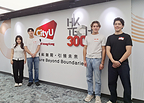
HONG KONG, Nov. 12, 2026 /PRNewswire/ — City University of Hong Kong (CityUHK) is fostering global talent exchange through its flagship innovation and entrepreneurship programme, HK Tech 300, and the Overseas Start-up Technology Entrepreneur Programme (STEP) organised by the CityUHK Academy of Innovation. Together, these initiatives attract students from around the world to explore entrepreneurial opportunities in Hong Kong while enabling local students to gain hands-on experience at overseas start-ups, facilitating the two-way exchange of innovative talent, knowledge and entrepreneurial spirit.
Attracting global talent to Hong Kong to explore entrepreneurial opportunities
HK Tech 300 recently held a new round of entrepreneurship training, attracting more than 110 participants, around 20% of whom came from Europe, Southeast Asia, Central Asia and other regions. During the three-day programme, participants learned how to transform innovative ideas into commercially viable solutions while exchanging perspectives with students from diverse cultural backgrounds, fostering cross-cultural collaboration and inspiring entrepreneurial thinking.
Sanzhar from Kazakhstan and Jessica, from Indonesia, both students in CityUHK’s Department of Computer Science, believe that Hong Kong’s position as an international technology and financial centre provides an ideal environment for start-up development. Through the training programme, they gained a deeper understanding of entrepreneurship and business planning, and hope to turn their innovative ideas into their own ventures one day.
Théo, a third-year student in CityUHK’s College of Business from France, hopes to pursue a career in the Chinese Mainland. He sees Hong Kong’s international environment as an ideal place to experience different cultures and languages. He said that HK Tech 300 helped him learn how to assess the feasibility of innovative ideas while connecting with students from diverse backgrounds, broadening his horizons and expanding his entrepreneurial network.
Kim, a student from South Korea studying in the Department of Electrical Engineering, aspires to establish an artificial intelligence (AI)-related start-up. He said Hong Kong’s open and multicultural environment, together with its vibrant innovation and technology ecosystem were key factors that attracted him to pursue opportunities in the city.
Taking talent from Hong Kong to the world through hands-on experience
While attracting international students to Hong Kong, CityUHK also actively supports students in gaining experience abroad. Over the past two years, STEP, organised by the CityUHK Academy of Innovation, has arranged internships for more than 50 students at 17 deep-tech start-ups in Melbourne, Australia; London and Cambridge, the United Kingdom; and Beijing. These opportunities allow students to gain first-hand experience of how innovative ideas are translated into products and services.
Winnie, a student in the Department of Biomedical Sciences, joined a start-up in Australia this year through STEP. The company provides rehabilitation support for young stroke survivors. She said that, unlike internships primarily focused on laboratory research, working at a start-up allowed her to take on different roles and gain a deeper understanding of the needs of patients and other stakeholders. The experience enhanced her communication skills and gave her a greater appreciation of how technology can address real-world societal challenges.
Febryan from Indonesia and Mariia from Kyrgyzstan, participated in STEP internships at a UK-based start-up specialising in nanomaterials technology that was incubated by Imperial College London. They helped analyse the procedures and requirements for an initial public offering (IPO), gaining insights into the challenges technology start-ups face in business development and financing. Both found that the overseas experience enabled them to apply classroom knowledge in a real-world business environment, equipping them with valuable skills for their future entrepreneurial pursuits and career development.
Building a global platform for innovation
From attracting international students to explore entrepreneurial opportunities in Hong Kong to supporting local students in gaining overseas start-up experience, CityUHK continues to strengthen connections between Hong Kong and the global innovation ecosystem, facilitating the cross-border exchange of talent, knowledge and innovative ideas.
Since its launch in 2021, HK Tech 300 has trained more than 2,200 participants and nurtured over 1,000 start-up teams. More than 230 start-ups have been approved for Angel Fund investments of up to HK$1 million each. Through the HK Tech 300 International Start-up Competition and partnerships with overseas universities and start-up incubators, the programme continues to connect innovation resources worldwide.
Professor Johnny Ho Chung-yin, Associate Vice-President (Enterprise) of CityUHK, said that the University would continue to bring together global innovation talent and entrepreneurial resources through initiatives such as HK Tech 300 and STEP. By supporting talent mobility and cross-border collaboration, CityUHK aims to nurture a new generation of entrepreneurs with a global outlook and entrepreneurial spirit, further strengthening Hong Kong’s position as an international innovation hub and a “super-connector”.
View original content to download multimedia:https://www.prnewswire.com/apac/news-releases/from-cityuhks-hk-tech-300-to-the-world-turning-entrepreneurial-dreams-into-reality-302937350.html
SOURCE City University of Hong Kong
Technology
OutSystems Introduces Agentic Claims Solution to Modernize Policyholder Experiences
Published
30 minutes agoon
November 12, 2026By
Agentic First Notice of Loss connects AI agents, customer applications and existing claims systems while keeping coverage, liability and payment decisions with human adjusters
SINGAPORE, Nov. 12, 2026 /PRNewswire/ — OutSystems, the Agentic Systems Platform helping regulated enterprises safely modernize legacy tech and run agentic systems, today announced the expansion of its Agentic Industry Solutions portfolio into insurance with Agentic First Notice of Loss. The pre-built solution enables auto insurers to modernize claims reporting and intake while safely deploying agentic workflows.
By combining customer-facing applications, AI agents, and governed workflows, the solution connects user experiences across existing policy and claims systems and external partners, while maintaining the oversight and control required in a highly regulated industry. While insurers are investing heavily in AI, many are struggling to move beyond experimentation and deliver meaningful improvements to the policyholder experience. According to the OutSystems State of AI Development in Insurance 2026 report, 35% of insurance IT leaders say AI projects have not started because they take too long, the highest rate of any industry surveyed. Legacy systems or scattered data are the top barrier for 42%, while 39% cite integration with existing systems.
These barriers are particularly relevant in claims processing, where critical information is distributed across policy administration, claims management, billing, and third-party systems. For policyholders, this fragmentation often means repetitive questions, disconnected interactions, and delays in getting help when they need it most. The business impact is significant, with 83% of U.S. consumers claiming they would switch insurance carriers following a poor claims experience, according to 2025 research from InvoiceCloud.
“Insurers don’t need another AI pilot. Insurers need AI working in daily claims operations,” said Luis Blando, Chief Product and Technology Officer at OutSystems. “When someone is in an accident, they need help right away, and the insurer needs accurate details while they’re still fresh. OutSystems Agentic First Notice of Loss delivers both. Through a conversational experience, connected to roadside help and claims systems, insurers can become the first line of support: taking the complete report, arranging a tow, and guiding the customer on what to do next. All while coverage, liability, and payment decisions stay firmly in the hands of adjusters.”
Bringing Governed AI Into the Claims Experience
Agentic First Notice of Loss provides insurers with a pre-built agentic solution for a critical moment in the policyholder journey: reporting a loss. It works across both existing claims systems or those rebuilt on OutSystems.
The solution combines customer-facing applications, data models, governed agents, and structured workflows to support key activities during the initial claims process:
Help policyholders report a loss: AI agents orchestrate the entire intake workflow, coordinating roadside dispatch through best-in-class providers like Honk, capturing driver statements, gathering third-party details, and analyzing submitted damage photos in real time.Give adjusters the facts they need: AI agents check coverage against the policy and open the claim in the carrier’s claims system through the solution’s integration layer, attaching the loss details, statements and photos.Keep critical decisions with adjusters: AI agent actions are recorded, with controls governing access to data and systems. Adjusters retain responsibility for all coverage, fault, and payment decisions, ensuring AI supports rather than replaces human judgment.
Built on a production-ready foundation, the solution allows insurers to tailor business rules, UI screens, and agents using OutSystems capabilities or third-party AI coding tools. Task-level testing enables teams to benchmark models continuously, optimizing for the ideal mix of accuracy, speed, and cost.
“OutSystems Agentic FNOL shows where the industry is headed. Governed AI agents tap into existing core systems in real time to orchestrate incident intake and sort the evidence,” said Tom Pelster, CIO at PRISM. “It proves that modernization doesn’t mean you throw out your platforms and systems of record. You build smarter workflows on top of them, and the critical liability and coverage decisions stay firmly with human adjusters.”
Expanding Claims Capabilities Through Roadside Assistance with Honk
Through a strategic partnership with the advanced roadside assistance technology provider Honk, OutSystems Agentic First Notice of Loss can arrange a tow while the policyholder reports the loss. The policyholder can then follow its status and ETA in the insurer’s app.
“The moments after an accident are when a driver finds out whether their insurer is there for them. With OutSystems Agentic First Notice of Loss, the driver reports what happened in a chat with an AI agent, and that agent coordinates in real time to dispatch a tow from Honk’s nationwide network of towing and roadside assistance providers on the carrier’s behalf,” said Adam DeWitt, CEO, Honk. “The agent first offers the carrier’s closest in-network repair shops to give the driver a clear next step. That’s where this technology matters: making a stressful moment easier for the person who needs help.”
The OutSystems Insurance Agent Kit is also available on OutSystems Forge, providing OutSystems insurance customers with reusable AI agents to check policy coverage and read claim photos and documents.
Agentic First Notice of Loss is generally available today. To learn more about how OutSystems is helping insurers move from AI pilots to optimizing policyholder experiences, visit the dedicated page.
About OutSystems
OutSystems is the Agentic Systems Platform helping regulated enterprises safely modernize legacy tech and run agentic systems. By applying AI at the architecture level rather than generating raw code, OutSystems reduces the cost, risk, and friction of legacy modernization—enabling organizations to deploy compliant, scalable, autonomous applications with any AI model. Global enterprises trust OutSystems to accelerate modernization and govern their entire AI portfolio on a unified platform.
OutSystems is consistently recognized as a leader in enterprise software development and agentic enterprise orchestration by Gartner, IDC, and Forrester, and ranked #1 in Customer Satisfaction by users on G2. Business leaders, IT executives and developers choose OutSystems to accelerate innovation without compromising reliability and security. Founded in 2001, the OutSystems ecosystem includes more than 90 million end users, over 600 partners, and thousands of active customers in 75+ countries across 20+ industries. Learn more at www.outsystems.com.
View original content to download multimedia:https://www.prnewswire.com/apac/news-releases/outsystems-introduces-agentic-claims-solution-to-modernize-policyholder-experiences-302937205.html
SOURCE OutSystems
JA Selected as Exclusive PV Module Supplier for Teraco’s 120MW Sediba Solar Project
From CityUHK’s HK Tech 300 to the world: Turning entrepreneurial dreams into reality
OutSystems Introduces Agentic Claims Solution to Modernize Policyholder Experiences
Send Rakhi to UK swiftly with UK Gifts Portal
Whiteboard Series with NEAR | Ep: 45 Joel Thorstensson from ceramic.network
Nullmax and Renesas Forge Strategic Partnership to Deliver Competitive ADAS Solutions for the Global Market
Why You Should Build on #NEAR – Co-founder Illia Polosukhin at CV Labs
Whiteboard Series with NEAR | Ep: 45 Joel Thorstensson from ceramic.network
NEAR End of Year Town Hall 2021: The Open Web World, MetaBUILD 2 Hackathon and 2021 recap
Trending
-
Coin Market5 days agoSuspicious prediction market activity seen before election poll release: NYT
-
Coin Market5 days agoNvidia may face a more hostile post-election Washington: Report
-
Technology3 days agoGlobal Validation First: How CrossHub Is Building Trust to Scale Overseas
-
Coin Market5 days agoUS sanctions Canadian money-exchange firms over Iran ties
-
Near Videos5 days agoIllia Polosukhin: Why AI Agents Need Verifiability | Token2049
-
Technology5 days ago7th World Media Summit opens in Beijing
-
Coin Market3 days agoVitalik ‘pivots’ ETH to store of value, crypto suffers after US midterms: Hodler’s Digest
-
Coin Market3 days agotBTC bridge partially resumes as $120M Aave reserve remains frozen