Connect with us

Technology

Sensors Data Successfully Hosts Sensors AI Salon in Hong Kong, Exploring AI Growth Team Practices with Industry Decision-Makers

Published

on

HONG KONG, Sept. 8, 2026 /PRNewswire/ — On September 4, 2026, Sensors Data successfully hosted the closed-door salon “Sensors AI Salon • Hong Kong” at the International Finance Centre (IFC), Central, Hong Kong. Under the theme “The Future of Enterprise Growth: Building Your AI Growth Team”, the salon brought together enterprise decision-makers and senior executives from aviation, banking & finance, hospitality, premium retail, property development, and utilities to explore practical paths of enterprise growth in the AI era through two keynote speeches and three panel discussions.

From Purchasing Growth Software to Hiring an AI Growth Team

Welf Sang, Founder & CEO of Sensors Data, delivered a keynote titled “From Data-Driven to AI Growth Team”, reviewing three stages of the company’s eleven-year journey: from its early focus on user behavior analytics and building a solid data foundation, to entering the marketing cloud space and helping enterprises turn insights into actions through the SDAF data closed loop (Sense–Decision–Act–Feedback), and to today’s full embrace of AI. He noted that Sensors Data has been developing the Hong Kong market for about two years.

Drawing on years of service practice, Sang shared his renewed thinking on data-driven growth: whether a data-driven approach can truly deliver growth depends first on the direction and quality of the business itself. Meanwhile, implementing data-driven strategies relies heavily on organizational capability, as talent who understand both business and data is scarce, costly, and hard to replicate. In his view, the new bottleneck lies in breaking the dependence on individuals and organizations.

Based on this, he offered three observations about the AGI era: AGI will arrive within the next three to five years; AGI will not eliminate enterprises but will reshape them; and general AGI is not the same as enterprise AGI — every enterprise needs to build its own “Mini-AGI”. He drew an analogy between enterprise growth and autonomous driving: growth likewise evolves from L2 (human-led, AI-assisted) to L3 (AI-led execution with human confirmation as the backstop) and then to L4 (AI operating autonomously once goals and boundaries are defined). Sensors Data’s three-year product strategy is precisely to build an L4-level AI Growth Team: from “delivering software” to “delivering workload” to “delivering results”.

“What companies have always wanted is not software, but growth.” Sang said the shift Sensors Data aims to drive in the collaboration model is from “purchasing a growth software suite” to “hiring an AI Growth Team”: a team composed not entirely of AI, but of human employees and AI employees working in concert — a “silicon-based plus carbon-based” combination.

He also introduced on site the Sensors AI 1.0 growth Agent platform that supports this vision: dozens of out-of-the-box AI growth workflows carry the complete growth process; three engines — the customer data engine (CDP), customer journey analytics (CJA), and customer journey optimization (CJO) — are packaged as Skills that Agents can invoke; and the Customer World Model enables Agents to genuinely understand an enterprise’s customers. In the three-tier product layout, on top of the Customer World Model and the growth Agent platform sits Sensors AGW (AI Growth Worker), an AI growth employee ready to be “hired”. Sang also shared Sensors Data’s own AI transformation practice: building dual world models internally so that the intelligence layer proactively drives customer operations and service closed loops — including the management AGW he uses every day, with which he can query any customer’s business status and health at any time within IM.

AI Employees, Living in Real Enterprise Workflows

You Chenjun, AGW Product Lead at Sensors Data, delivered a presentation and live demo titled “AGW: The Hirable AI Growth Worker”.

He pointed out that AI product forms have evolved rapidly, from Chatbot to Copilot to Agent. Yet when a general-purpose Agent is placed inside an enterprise as an “employee”, it falls short in three types of scenarios: business problems that require multi-person collaboration and have no standard answers; complex tasks whose execution paths keep changing; and process management that requires continuous tracking and accumulation. Real enterprise-grade work happens in IM communication, cross-system data retrieval, and person-to-person collaboration.

To address this, AGW is designed as a digital employee living in the enterprise IM: it proactively inspects data and raises alerts upon anomalies; it knows every member of the team and, when it cannot complete a step, proactively assigns the task to the right person and continues the process automatically once a reply is received; it retrieves and analyzes data across systems, connecting the enterprise’s internal systems one by one into callable capabilities; and more importantly, it consolidates the experience accumulated in each collaboration into Skills, upgrading individual experience into company standards to benefit the entire organization: “A personal assistant only makes the individual stronger; AGW makes the whole organization stronger.”

In the live demo, You Chenjun fully reproduced a growth analysis closed loop: AGA — the specialized version of AGW for data analysis — proactively alerted on an anomaly in first-charge conversion on an app release day, automatically aligned metric definitions, broke down the funnel, drilled down into user segments, and cross-validated multiple data sources to locate the root cause, provided role-specific remediation suggestions, and then continued to track the effectiveness of the fixes. Going one step further, the complete troubleshooting process was consolidated into a company-wide release-analysis Skill, which now runs automatically on every release. He stated that AGW’s design philosophy is “let everything happen naturally — do not reshape work, but follow it”: AI adapts to people, not people to AI.

Three Panel Discussions: Real Challenges from the Front Lines

Around the theme “Data Assetization and AI Transformation: New Growth Strategies for the Financial Services Industry within Compliance Boundaries”, three guests from banks and financial institutions discussed from the perspectives of IT, business, and marketing. The guests generally agreed that as AI projects move from pilot to scale, security and compliance are the first prerequisite; at the same time, they cautioned against “AI for AI’s sake”: first determine whether the problem genuinely exists and whether the process is sound, then decide whether to introduce AI. The key to implementation lies not only in technology but also in organizational coordination: involving business, IT, risk control, and frontline teams early, clarifying data ownership and definitions, and managing the integration between new-generation AI systems and existing core systems. On handling sensitive data, the guests shared practices such as data masking, using trusted models, and setting human red lines, and expressed the hope that AI could help bridge business breakpoints and shorten the approval chains of marketing campaigns.

The second panel focused on “The Next Era of Enterprise Growth: Operational Transformation and Omnichannel AI Execution”. Three guests from property development, premium retail, and hospitality discussed the common challenge of fragmented multi-channel data. Using coffee retail as an example, they noted that customers often experience products in-store first and convert through other channels later, so effectiveness cannot be judged by a single store visit; the same customer often appears under different identities across parking, consumption, accommodation, and membership systems, with inconsistent data definitions, making it difficult to form a complete customer journey and a unified view. The guests agreed that breaking down data silos and building a unified, trustworthy customer profile is the foundation of precise outreach and higher customer lifetime value; the key to marketing automation is delivering real value at the moment the customer needs it — push communications should stop proactively when information is overloaded or service issues remain unresolved. On implementation, they acknowledged that the bottleneck for most enterprises lies not in systems but in people: employees still tend to make decisions based on experience. One guest shared the practice of equipping the team with “data partners”, which notably improved efficiency after several months of operation. On AI’s role, the guests look forward to delegating repetitive work such as customer analysis and multilingual content generation to AI, transforming marketing professionals from executors into designers of customer experience, while strategic direction and key decisions remain in human hands.

The final panel, themed “The Next Era of Enterprise Growth: AI-Driven Operations and Customer Engagement”, featured two guests from aviation and utilities sharing AI practices in operations at scale. The utilities guest introduced how to build personalized customer journeys starting from the most mature data: from welcome communications for newly onboarded customers to e-payment guidance before bills are issued; and shared progress on building a unified customer profile (One Profile). The aviation guest used extreme weather as an example, noting that AI’s value at such moments is not to take over frontline service directly, but to help soothe traveler emotions and ensure their requests are heard in time, while focusing on root-cause analysis and solving problems at the process level, reserving frontline capacity for the most complex, high-value scenarios. Both guests agreed that AI should serve as the team’s customer strategy assistant, collaborating with humans in a human-in-the-loop manner: people are responsible for high-value judgments such as customer experience design, while AI handles repetitive tasks such as data retrieval and verification.

The salon concluded with a relaxed cocktail networking session. Guests engaged in in-depth exchanges on AI Growth Teams, digital employees, and industry implementation practices. Moving forward, Sensors Data will continue to bring the capability of “building an AI Growth Team” to more enterprises, helping more customers achieve the leap from data-driven to AI-driven growth.

View original content to download multimedia:https://www.prnewswire.com/apac/news-releases/sensors-data-successfully-hosts-sensors-ai-salon-in-hong-kong-exploring-ai-growth-team-practices-with-industry-decision-makers-302872000.html

SOURCE Sensors Data

Continue Reading

Technology

NetAlly Launches the First-Ever 100G Network Tester Designed for Enterprise Networks

Published

on

By

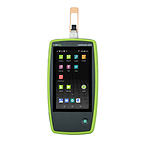
All-new LinkRunner 100G – professional-grade performance and precision tool network engineers need to troubleshoot and upgrade critical 100G fiber links.

COLORADO SPRINGS, Colo., Sept. 9, 2026 /PRNewswire/ — NetAlly today announced LinkRunner® 100G, a handheld tester built to validate and troubleshoot high-speed fiber links increasingly moving beyond data centers and into enterprise networks. With the press of a single button, LinkRunner 100G AutoTest tells a network technician whether a 100G link is healthy — and if it isn’t, exactly what’s wrong. At $8,999 plus an AllyCare Pro subscription, LinkRunner 100G delivers the professional-grade diagnostics network engineers expect from a 100G tester at a price built for enterprise IT.

“AI is driving a networking super-cycle, pushing higher-speed networks beyond the data center and into the enterprise,” said Jeff O’Mara, CEO of NetAlly. “Until today, the tools to support those networks were expensive and highly specialized for big telco providers. Enterprise IT is different. We built LinkRunner 100G to give enterprise network professionals the tool they need to deploy, fix, and upgrade these networks.”

As 25G, 40G, 50G, and 100G networks become more common in enterprise environments, IT teams are being asked to manage fiber networks that operate differently from the lower-speed connections they have traditionally supported. Troubleshooting networks running on twisted-pair copper up to 10G has been eased by rich automation specified by IEEE standards for auto-negotiation of speed, power, and polarity. None of this automation exists for 100G networks, resulting in brittle, hard-coded configurations. Vendors further complicate the space with proprietary, complex transceivers that modify encodings and bit rates to gain advantages in fiber efficiency and bandwidth.

LinkRunner 100G is designed specifically for these new challenges faced by network support teams, allowing technicians to run a full diagnostic at the push of a button, with no specialized fiber training required.

With LinkRunner 100G, network pros solve problems on 100G networks with simple, automated steps:

Catch configuration mismatches that can leave a Quad Small Form-factor Pluggable 28 (QSFP28) port down, even when nothing is actually broken. QSFP Insights identifies the transceiver, fiber type, speed, and Forward Error Correction (FEC) settings, helping uncover mismatches that can be difficult to spot through the switch alone.

Pinpoint the problem to make the fix, rather than guessing. NetAlly’s EZ Wired app validates the link speed, FEC, interfaces, network services, and application connectivity as well as transceiver operation. Since each parameter must be set by the user on the switches, knowing the exact set of parameters provides the network pro with the recipe for success.
 See where the traffic is actually getting stuck, rather than assuming the problem is the link being tested. Path Analysis traces the network path from the tester to its destination, hop by hop, revealing when a slowdown originates elsewhere, such as an overloaded switch several hops away.

Identify when a 100G link is trending in a bad direction and may be close to failing – before it does. Forward Error Correction (FEC), which enables higher-speed fiber connections by correcting damaged bits, can mask a degrading link while the network continues to operate. AutoTest catches failures before your users do and captures the information in Link-Live.

Verify that the network performs as specified and prove that you are getting the performance you paid for. Use Performance Test to validate newly deployed infrastructure, troubleshoot existing networks, and confirm expected throughput.

“Higher-speed fiber is quickly becoming part of the enterprise network, and IT teams need to be ready for it,” O’Mara said. “If you’re responsible for links above 10G, LinkRunner 100G belongs in your toolkit.”

LinkRunner 100G is handheld and battery-powered, so technicians can take it on any call, not just escalations. Results are translated into plain-language answers rather than error codes and can be uploaded to Link-Live, NetAlly’s collaboration and reporting platform, so a technician can share a full report instead of a screenshot.

Pricing and Availability

LinkRunner 100G is now available for $8,999, plus an AllyCare Pro subscription, through NetAlly’s network of authorized resellers. For full details, visit www.netally.com.

About NetAlly

Since introducing the industry’s first handheld network analyzer in 1993, NetAlly has helped network professionals deploy, manage, maintain, and secure today’s complex wired and wireless networks. Visit www.netally.com or contact 1-844-878-2559.

View original content to download multimedia:https://www.prnewswire.com/news-releases/netally-launches-the-first-ever-100g-network-tester-designed-for-enterprise-networks-302873135.html

SOURCE NetAlly

Continue Reading

Technology

DFI Introduces One Board, Two CPU Generations Mini-ITX Platform to Advance Physical AI for Robotics and Automation

Published

on

By

TAIPEI, Sept. 9, 2026 /PRNewswire/ — DFI, a Qisda Group company and a global leader in embedded motherboards and industrial computers, introduces the ARH171/ARH173, expanding its AI-ready portfolio with a Mini-ITX platform built for space-constrained, mission-critical deployments. Powered by Intel® technologies, the ARH171/ARH173 is purpose-built to handle demanding Physical AI workloads from perception to reasoning, enabling next-generation smart logistics and industrial automation.

As Physical AI transitions to operational deployment, intralogistics is driving rapid mobile automation adoption. Mordor Intelligence projects the autonomous mobile robot (AMR) market to expand at a CAGR of nearly 15% through 2029 to counter labor shortages, while advanced systems like 3D cube storage robots require on-device AI to navigate floors, climb racks, and process dense sensor streams in real time.

Flexibility starts at the board level. The ARH171/ARH173 adopts a unified “One Board, Two Generations” architecture, supporting 16 Intel® Core™ Ultra processor options across Meteor Lake-U/H and Arrow Lake-U/H (15–28W; Intel vPro® available on select SKUs). Delivering up to 99 total platform TOPS on Arrow Lake-H models, its integrated Intel® Arc™ GPU and dedicated NPU accelerate AI inference via OpenVINO™, DirectML, and ONNX RT. This lowers reliance on discrete graphics, reducing thermal and spatial overhead while enabling system integrators to scale across performance tiers using a unified platform architecture. The launch will further leverage DFI’s core strengths in embedded computing to support Qisda Group’s overall strategy across its four AI business categories: “AI Vision & Display,” “AI Infrastructure,” “AI Solutions & Smart Manufacturing,” and “AI Hospital & Wellness Ecosystem.”

“System integrators developing next-generation autonomous logistics robots need to shorten validation cycles and avoid recurring redesign costs,” said Claire Tien, President of DFI. “By supporting two processor generations on a unified board architecture, the ARH171/ARH173 simplifies long-term platform planning, delivers on-chip AI acceleration, and supports continuous operation through hardware-level remote management.”

Once deployed, reliable operation and reduced on-site maintenance become critical. Engineered for 24/7 robotic deployments, the ARH173 features a 12–28V wide-range DC input, up to three 2.5GbE LAN ports, and modular M.2 expansion for flexible sensor integration. To simplify field maintenance, the optional DFI EXT-OOB module enables out-of-band power cycling and OS recovery even if the primary system is unresponsive, while integrated Intel vPro® technology (on select SKUs) provides comprehensive remote hardware management.

From board to system to solution, the ARH171/ARH173 delivers a deployment-ready foundation that consolidates dual-generation scalability, native AI performance, and remote management into a single validation point, reducing engineering overhead and accelerating the transition from pilot to production.

About DFI

Founded in 1981, DFI is a global leading provider of high-performance computing technology across multiple embedded industries. With its innovative design and premium quality management system, DFI’s industrial-grade solutions enable customers to optimize their equipment and ensure high reliability, long-term life cycle, and 24/7 durability in a breadth of markets including Industrial Automation, Medical, Gaming, Transportation, Energy, Mission-Critical, and Intelligent Retail.

View original content to download multimedia:https://www.prnewswire.com/news-releases/dfi-introduces-one-board-two-cpu-generations-mini-itx-platform-to-advance-physical-ai-for-robotics-and-automation-302873374.html

SOURCE DFI

Continue Reading

Technology

BMO: Commission-Free Stock and ETF Trades with BMO InvestorLine

Published

on

By

BMO InvestorLine combines its lowest fees ever with access to advanced trading tools, professional research and market insights, empowering investors with a more accessible intelligent investing platform

Unlimited $0 commissions on all stock and ETF trades.Lower options trading costs, with $0 commissions and reduced per-contract fee of $0.90, down from $1.25.Elimination of all brokerage account administration fees.

TORONTO, Sept. 9, 2026 /CNW/ — BMO InvestorLine is making its digital investing experience even better, announcing today the introduction of unlimited commission-free trading on all stocks, ETFs and options, the elimination of all brokerage account administration fees and the reduction of options contract fees. As the first direct investing brokerage owned by one of Canada’s five largest banks to eliminate commissions on stock and ETF trades, BMO InvestorLine is making self-directed investing more accessible, giving Canadians access to a full-feature digital investing platform with professional research, intelligent tools, valuable insights and support to help them build their portfolios with confidence.

“BMO InvestorLine is setting a bold standard for digital investing in Canada by combining commission-free trading and no brokerage account administrative fees with the insights and advanced capabilities investors expect from a full-feature digital investing platform,” said Silvio Stroescu, President and CEO, BMO InvestorLine. “We’re eliminating barriers that can stand in the way of investing and paving the way for what comes next. BMO InvestorLine will continue to lead with new ideas, capabilities and experiences that give investors more of what they want and greater confidence in how they invest.”

Why it Matters

The announcement reflects BMO InvestorLine’s commitment to expanding access to digital investing for all Canadians. As more Canadians manage their financial lives digitally, BMO InvestorLine is lowering the cost of self-directed investing without compromising access to the tools, research and supports including AI-powered news and market summaries that investors can use to make informed investing decisions.

Whether clients are making their first investment, building long-term wealth or actively trading using sophisticated investment strategies, BMO InvestorLine delivers a comprehensive investing experience designed to help clients invest with confidence.

Tools for Active Traders

Today’s announcement builds on recent enhancements to the BMO InvestorLine platform that support both active traders and long-term investors through a suite of investing capabilities, including:

Multi-leg options tradingAdvanced options screenersStrategy-building toolsEnhanced educational resourcesReal-time market data and research

BMO InvestorLine also recently introduced ‘paper trading’ capabilities for BMO Active Trader clients that allow them to use a practice account to learn how the BMO Active Trader platform works, test new trading strategies and build trading skills without risking their money.

adviceDirect: A Simpler, Smarter Investing Experience

As part of BMO InvestorLine’s award-winning digital investing platform, adviceDirect combines online investing with personalized advice and dedicated advisor support, delivering a simpler, smarter investing experience. With adviceDirect, investors get all the features they enjoy along with a team of advisors to support them in reaching their goals, provide trade recommendations and offer continuous portfolio monitoring.

Together, these capabilities support investors across every stage of their journey, from those placing their first trade to experienced investors executing sophisticated options and trading strategies.

FAQ

When will BMO InvestorLine offer unlimited $0 commission stock and ETF trading?
BMO InvestorLine Self-Directed clients will benefit from $0 commissions on all stock and ETF trades and the elimination of all brokerage account administrative fees effective September 14, 2026.

Which BMO InvestorLine clients are eligible for unlimited $0 commission stock and ETF trading?
The $0 commission pricing for all stock and ETF trades and elimination of all brokerage account administrative fees apply for all BMO InvestorLine Self-Directed clients.

Are options trades included in unlimited $0 commission trading?
Yes, options trades will also have $0 commissions. In addition, the per-contract fee for options trades has been reduced to $0.90 from $1.25, and there will be no assignment fees or exercise fees for option contracts.

Do existing clients need to take any action to receive the new pricing?
No. BMO InvestorLine Self-Directed clients will automatically receive the new pricing effective September 14, 2026. No action is required.

Do adviceDirect clients also qualify for unlimited $0 commissions on stock and ETF trading?
An advisory fee based on the value of the billable assets in an account is paid by adviceDirect clients. Commissions are not applicable and options are not eligible for adviceDirect accounts.

Where can clients find the new pricing information?
For complete details on pricing and fees for BMO InvestorLine Self-Directed and adviceDirect accounts, please visit:

BMO InvestorLine Self-Directed – Commission & Fee Schedule BMO InvestorLine adviceDirect – Commission & Fee Schedule 

About BMO Financial Group 

BMO Financial Group is the eighth largest bank in North America by assets, with total assets of $1.5 trillion as of July 31, 2026. Serving clients for more than 200 years, BMO provides a broad range of personal and commercial banking, wealth management, global markets and investment banking products and services across Canada, the United States, and select markets globally. BMO is innovating for business value, by deploying and integrating human, digital and artificial intelligence to personalize client experiences, augment teams, and automate its business responsibly. Driven by its purpose, to Boldly Grow the Good in business and life, BMO is committed to driving positive change in the world, and making progress for a thriving economy, sustainable future, and stronger communities.

Disclaimers

Account fees, foreign exchange fees and other fees and charges continue to apply, and may apply to your transaction, account or service. Please see the Commission & Fee Schedule applicable to your account, available at the links above.

Options are not suitable for all investors. Investing in options carries substantial risk and tax consequences. Investors may realize losses on any investments made utilizing leverage. Future returns are not guaranteed, and use of leverage may magnify trading losses.

BMO InvestorLine Inc. is a member of BMO Financial Group. “BMO (M-bar rounded symbol)” is a registered trademark of Bank of Montreal, used under licence. Member – Canadian Investor Protection Fund and Member of the Canadian Investment Regulatory Organization.

adviceDirect is a product of BMO InvestorLine Inc. An adviceDirect account is a non-discretionary fee-based account which offers investment recommendations. adviceDirect does not provide portfolio management by a portfolio manager. The client makes their own investment decisions and manages their own investment portfolio. adviceDirect does not offer discretionary, managed accounts.

SOURCE BMO Financial Group

Continue Reading

Trending