Connect with us

Technology

25 Years After 9/11: Building Security Technology Failed to Keep Up

Published

on

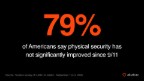
New national survey finds 79% of Americans don’t believe physical security has significantly improved in buildings since 9/11

CUPERTINO, Calif., Sept. 10, 2026 /PRNewswire/ — Twenty-five years after the September 11 attacks reshaped aviation security in the United States, a new national survey finds most Americans do not believe physical security in the country’s buildings has kept pace. According to the survey, 79% of U.S. adults do not believe physical security has significantly improved since 9/11, and 76% say office buildings never received investment comparable to what went into airports. The survey, conducted by YouGov, is the first national survey to measure public trust in badge- and credential-based physical security systems, 25 years after 9/11.

The survey was funded by Alcatraz after a summer of security breaches at four prominent U.S. buildings. In May, an intruder tailgated students through secured doors into UCLA dormitories, where he is accused of sexually assaulting four women in their rooms. That same week, a man followed a student through a card-secured gate and then a badge-secured door at Harvard University’s Lowell House. He attempted to kidnap a female undergrad before she fought him off with the help of other students. In June, two people purchased tickets to the Empire State Building’s 86th-floor observatory, hid inside after closing, and cut through two locks overnight to reach restricted floors. They went undetected until they livestreamed the breach from the building’s spire to nearly two million followers that afternoon. Weeks later, a man followed an employee through a badge-secured door at 30 Rockefeller Center in New York and confronted TODAY show anchor Craig Melvin, before being detained by security.

Three of the four incidents involved tailgating, in which an unauthorized person follows someone with a valid credential through a secured door. It is the number one breach of secure spaces. Security industry researchers have identified tailgating as a persistent vulnerability in badge-based access control systems, which are designed to verify a credential but not the identity of the person using it.

“We have spent 25 years upgrading aviation security with the latest technologies but have not kept pace in the spaces where most of us live and work. Keycard and badge technology is 30 years old. It is completely unintelligent. These headline breaches this summer are a warning about the need to upgrade physical security in our buildings, and Americans are saying it is urgent,” said Tina D’Agostin, CEO of Alcatraz AI. D’Agostin is a security expert who helped shape physical security efforts for Chase Center and Salesforce Tower while at Johnson Controls.

Survey findings

79% of Americans do not believe physical security has significantly improved since 9/11.76% say office buildings never received investment on par with aviation security.73% call upgrading physical security technology at least somewhat urgent.53% say they feel less safe in public than they did 25 years ago.64% say buildings with large numbers of occupants should be legally required to detect and report a security breach in real time — including 69% of Democrats and 72% of Republicans, one of the few security questions in the survey where both parties agree.60% say they do not trust the organizations responsible for their security to keep systems up to date.58% are already aware that key cards and badges can be duplicated or shared as a security gap.43% incorrectly believe that standard badge and key-card systems already alert security in real time when an anomaly, such as tailgating, occurs. Most such systems only log that a valid credential was used.68% believe a tailgater at their location would not be caught quickly — only 32% believe detection would be immediate or within a few minutes.

“I spent a big part of my career securing airports. After 9/11, airports received investment, became more secure and learned to balance security with the passenger experience. We never did the same for the buildings people spend their days in. Nuclear and energy companies, data centers and critical infrastructure use state of the art technology. Updating technology to secure everyday spaces is long overdue, and the survey shows Americans understand that,” said Matthew Powell, Senior Director of Infrastructure Markets at Alcatraz AI.

About Alcatraz AI
Alcatraz is known as the Face ID of physical spaces. Alcatraz is an AI-powered physical access control company headquartered in Cupertino, California. Its flagship product, the Rock, replaces badge-based and legacy biometric security with fully anonymized facial authentication and real-time tailgating detection. Alcatraz AI is trusted where security standards are highest and certifications hardest to earn: hyperscale data centers, financial institutions, airports, and nuclear and energy infrastructure. Its technology protects professional sports teams from the NBA to the NFL, Fortune 100 companies, universities, stadiums, and private individuals.

Media Contact
press@alcatraz.ai 

View original content to download multimedia:https://www.prnewswire.com/news-releases/25-years-after-911-building-security-technology-failed-to-keep-up-302875602.html

SOURCE Alcatraz

Continue Reading

Technology

Roofing Restoration Expert Travis Frees Explains Roof Repair vs. Replacement in HelloNation

Published

on

By

The Article Outlines Warning Signs That Help Homeowners Determine Whether Roof Repair or Replacement Is the More Practical Long-Term Solution.

READING, Pa., Sept. 10, 2026 /PRNewswire/ — What signs show whether a homeowner needs roof repair or roof replacement? HelloNation published an article featuring insights from Roofing Restoration Expert Travis Frees that answers this question.

The article explains that deciding between roof repair vs. replacement depends on several parts of a roofing system. Roof age, the extent of damage, and whether problems are isolated or widespread can all affect the decision. A professional inspection should consider shingles, flashing, valleys, pipe boots, attic ventilation, and decking, not just visible damage.

Storm damage is a common roofing concern in Reading and Berks County. The article notes that high winds, hail, and falling tree limbs can leave shingles missing or expose roofing materials. When damage is limited to a small area and surrounding shingles remain secure, targeted roof repair may provide sufficient protection.

The HelloNation article explains that widespread storm damage can look different. Shingles that repeatedly lift during windstorms, crack during handling, or become brittle may indicate aging materials. When deterioration affects larger portions of the roofing system, roof replacement may offer a more dependable solution than repeated repairs.

Granule loss is another warning sign the article discusses. Asphalt shingles naturally lose some granules over time, but excessive buildup in gutters can indicate advanced wear. As shingles lose their protective surface, they become more vulnerable to moisture, ultraviolet exposure, and further deterioration.

The article also identifies curling edges, cracked shingles, faded surfaces, and bald spots as signs of aging materials. Isolated problems may still be repairable, while widespread wear can indicate that the roofing system is approaching the end of its expected service life.

Roof age is another important consideration when comparing roof repair vs. replacement. According to the article, many asphalt shingle roofs last approximately 20 to 25 years. Actual lifespan can vary based on installation quality, ventilation, maintenance, and exposure to local weather conditions.

Interior warning signs can also reveal problems that are difficult to see from outside. Water stains on ceilings or walls may result from flashing failures, damaged pipe boots, or minor shingle damage. The article explains that repeated leaks in multiple rooms can point to broader roofing system failure.

Roofing Restoration Expert Travis Frees is also featured in the article’s discussion of problems beneath the roof surface. Poor attic ventilation can trap heat and moisture, contributing to warped decking, mold growth, and premature shingle deterioration. The article notes that a thorough inspection should evaluate attic conditions, ventilation, drainage patterns, and flashing details.

For older roofs, repeated repairs may temporarily address leaks while deterioration continues elsewhere. The article explains that homeowners should receive guidance based on the roof’s actual condition. Recommend proper repairs when they can realistically solve the problem, while widespread deterioration or recurring leaks may make replacement more practical.

The article concludes that homeowners in Reading and Berks County should watch for missing shingles, granule loss, water stains, storm damage, and attic ventilation problems. A professional inspection can help determine whether repairs are sufficient or replacement offers the more practical long-term approach.

Do You Need Roof Repair or Roof Replacement in Reading, PA? features insights from Travis Frees, Roofing Restoration Expert of Reading, Pennsylvania, in HelloNation.

About HelloNation

HelloNation is America’s Good News Network, a premier media platform built on the idea that good news travels faster when real people tell real stories. Through its community-focused publications and innovative “edvertising” approach, HelloNation delivers content that informs, inspires, and spotlights the leaders making a meaningful impact in their communities.

View original content to download multimedia:https://www.prnewswire.com/news-releases/roofing-restoration-expert-travis-frees-explains-roof-repair-vs-replacement-in-hellonation-302875587.html

SOURCE HelloNation

Continue Reading

Technology

Hivelocity Launches Gaming Bundle for Studios’ Always-On Infrastructure

Published

on

By

Dedicated bare metal infrastructure for build pipelines, production backends, and live game servers with predictable pricing for sustained workloads.

TAMPA, Fla., Sept. 10, 2026 /PRNewswire/ — Hivelocity, an infrastructure-as-a-service provider of bare-metal dedicated servers, colocation, and virtualized cloud solutions, today announced the Hivelocity Gaming Bundle.

Built for studios running live service titles and platforms, the bundle pairs single-tenant dedicated hardware with predictable, steady-state pricing and direct control over how game workloads are deployed and operated. It gives game studios, game-server orchestration platforms, and gaming security vendors a clear path to running build pipelines, production backends, and match-server fleets without paying cloud rates for elasticity their servers never use, and without handing off the orchestration they need to control.

The bundle is built around three common areas of game infrastructure:

Engineering Compute supports the development work behind modern games, including build farms, continuous integration pipelines, asset processing, testing environments, and other workloads that consume compute for long periods of time.

Production Compute runs the backend services players depend on every day, including account systems, authentication, progression, leaderboards, in-game commerce, telemetry, and matchmaking services.

Live Service Compute is designed for the latency-sensitive core of live games, including match servers, persistent world-state systems, voice services, and anti-cheat infrastructure. These workloads depend on consistent CPU performance, fast local storage, and network paths that can support a reliable player experience.

Game studios are taking a harder look at where public cloud fits, and where it starts to work against the economics of a live service business. Public cloud can be useful for burst capacity, GPU-heavy workloads, and development flexibility, but many live service workloads run continuously. Match servers, backend services, leaderboards, and telemetry systems often operate around the clock, and dedicated infrastructure can offer a more predictable cost model and greater operational control.

For content-heavy titles, bandwidth can also become a major cost driver. Large game patches, seasonal updates, and new releases can move massive volumes of data in a short period of time. Hivelocity’s Gaming Bundle is built to support sustained traffic with high-capacity network options, including 10 Gbps unmetered ports for appropriate workloads.

“Hivelocity’s Gaming Bundle is built for studios that want more control over the infrastructure behind their live games,” said Ned Pope, Chief Product Officer at Hivelocity. “Game teams already own the player experience, the matchmaking logic, the fleet orchestration, and the live operations model. We give them dedicated hardware, predictable economics, regional placement, and engineering support so they can run that stack with confidence.”

The bundle draws a clear line between what Hivelocity provides and what the studio operates. Hivelocity supplies the bare-metal foundation: single-tenant hardware, regional placement near concentrated player populations, network connectivity and transit, and network-level DDoS protection for the estate. The studio keeps matchmaking, fleet orchestration, anti-cheat operations, application security, and live ops uptime. A hybrid pattern is preferred by most organizations to take full advantage of all the cloud can offer, with bare metal for latency-critical core workloads for tick-rate-sensitive engines, a partner CDN at the edge, and the studio’s own cloud for burst and GPU workloads.

Studios manage their fleets through the myVelocity portal, public APIs, and Infrastructure as Code (IaC), with the same operations available in code as in the console. Hivelocity holds a SOC 2 Type II attestation for its core facilities, and a PCI-validated facility foundation is available at the Tampa facilities, with expansion in flight.

The Gaming Bundle is designed for studios already running their own server orchestration that have committed to a tick-rate target and need single-tenant bare metal, regional placement, and state persistence that shared infrastructure can’t reliably provide.

About Hivelocity
Founded in 2002, Hivelocity operates bare-metal infrastructure across globally distributed data centers, serving mid-market and enterprise customers in gaming, healthcare, SaaS, fintech, and high-performance computing. The company provides 24/7/365 in-house support with a 15-minute average ticket response time, backed by an SLA-guaranteed 99.99% network uptime.

View original content to download multimedia:https://www.prnewswire.com/news-releases/hivelocity-launches-gaming-bundle-for-studios-always-on-infrastructure-302875586.html

SOURCE Hivelocity

Continue Reading

Technology

Foundation Fighting Blindness Renames Venture Philanthropy Arm the Gund Vision Fund, Honoring Five Decades of Gund Family Leadership


Published

on

By

The new name honors the decades of leadership and giving by Foundation co-founder Gordon Gund and his family, honoring the Fund’s evolution into one of the most innovative venture philanthropy models in the retinal disease market

COLUMBIA, Md. and RALEIGH, N.C., Sept. 10, 2026 /PRNewswire/ — The Foundation Fighting Blindness today announced the rebrand of its venture philanthropy arm, formerly the Retinal Degeneration Fund (RD Fund), to the Gund Vision Fund.

The new name honors more than 50 years of leadership, advocacy, and philanthropic support from Gordon Gund and the Gund family, whose contributions to the Foundation have been immeasurable. It also reflects the Fund’s evolution since its launch in 2018, growing from an early-stage research funder into one of the most innovative venture philanthropy models in the market, catalyzing the translation of decades of research into real treatments.

“The Gund Vision Fund name reflects both where this Fund has been and where it is going. Gordon Gund and the Gund family did not support this work from a distance. They helped build it, and this name honors that,” said Jason Menzo, CEO, Foundation Fighting Blindness. “Vision speaks to our mission of advancing treatments and cures for the diseases that cause blindness, and to the forward-looking way we deploy capital to get there. We are proud of what the Fund has become and excited about what comes next.”

Since it was founded in 2018, the Fund – now the Gund Vision Fund – has built and proven its model by managing more than $140 million in strategic capital, deploying over $100 million directly into a portfolio of 20 companies, and syndicating with more than $1.5 billion in institutional capital from more than 60 co-investors. The Foundation is already the leading private funder of retinal disease research, with nearly $1 billion invested since 1971 and a patient registry of over 43,000 individuals.

The rebrand coincides with an active $100 million capital campaign to accelerate the development of treatments and cures for inherited retinal diseases and dry AMD. To anchor the campaign, the Gordon and Llura Gund Foundation has committed a $50 million lead challenge gift, matching every new or increased contribution to the Gund Vision Fund dollar for dollar up to $50 million. Every gift made during the campaign will be doubled, advancing more programs into clinical development and reaching more patients sooner.

“Building this Fund from the ground up has meant taking greater risks to bring treatments to patients and believing in companies when the path forward is uncertain. That conviction is being rewarded, treatments are reaching patients who had no options,” said Rusty Kelley, PhD, managing director of the Gund Vision Fund. “The Gund Vision Fund name honors the family that made this possible, and the gift from the Gordon and Llura Gund Foundation signals even greater conviction for the model, the momentum, and what’s next.”

The Gund Vision Fund’s updated website, GundVisionFund.org, has launched alongside updated social channels, marking the start of a new chapter for the Fund, with more to come in early 2027. For more information, visit GundVisionFund.org.

About the Gund Vision Fund
The Gund Vision Fund, formerly the Retinal Degeneration Fund (RD Fund), is the venture philanthropy arm of the Foundation Fighting Blindness and a 501(c)(3) not-for-profit subsidiary. Launched in 2018 as the first and only fund solely dedicated to advancing therapeutics for inherited retinal diseases and dry age-related macular degeneration, the Fund bridges the critical funding gap between discovery-stage research and drug development. For more information, visit GundVisionFund.org.

About the Foundation Fighting Blindness
Established in 1971, the Foundation Fighting Blindness is the world’s leading private funding source for retinal degenerative disease research. The Foundation has raised nearly $1 billion toward its mission of accelerating research for preventing, treating, and curing blindness caused by the entire spectrum of retinal degenerative diseases, including retinitis pigmentosa, age-related macular degeneration, Usher syndrome, and Stargardt disease. Visit FightingBlindness.org for more information.

Media Contact:
Chris Adams
Foundation Fighting Blindness
410-423-0585
CAdams@FightingBlindness.org 

View original content to download multimedia:https://www.prnewswire.com/news-releases/foundation-fighting-blindness-renames-venture-philanthropy-arm-the-gund-vision-fund-honoring-five-decades-of-gund-family-leadership-302875599.html

SOURCE Foundation Fighting Blindness

Continue Reading

Trending