Connect with us

Technology

California Waste Solutions Plans New Renewable Energy Facility To Help Vietnam Achieve National Net Zero Target

Published

on

Vietnam Waste Solutions (VWS), the California-owned operator of Ho Chi Minh City’s largest engineered landfill, is now embracing an expansion and conversion. Plans include a 50- to 60-megawatt waste-to-energy plant and specialized recycling lines that would supplement VWS’s existing systems, and a landfill-gas system already running on site.

OAKLAND, Calif., Sept. 14, 2026 /PRNewswire/ — Vietnam Waste Solutions (VWS), the wholly owned Vietnamese subsidiary of Oakland-based California Waste Solutions (CWS), is spending hundreds of millions of dollars to further Vietnam’s 2050 net-zero target by converting the country’s first U.S. Subtitle D sanitary landfill into a larger clean-power and resource-recovery complex.

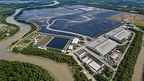
Vietnam Waste Solutions – Da Phuoc Integrated Solid Waste Facility (DPI)

The 341-acre landfill outside Ho Chi Minh City in Da Phuoc was the first U.S.-standard waste landfill built in the mid-2000s and it receives and buries up to 6,500 tons of municipal solid waste a day, or roughly 2.4 million tons a year. The landfill services over half the household waste generated by Ho Chi Minh City’s residents. Ho Chi Minh City disposes of around 10,000 tons of household waste every day.

About $200 million has already been invested in developing the existing Da Phuoc environmental complex. That investment established the landfill and its supporting systems and is separate from the proposed 50- to 60-megawatt waste-to-energy plant. The conversion now on the table is pivotal in Vietnam’s shift toward renewables as the country seeks to join America and Europe as a major green industrial economy.

“The renewable proposal is consistent with our core philosophy to be constantly improving on existing resources, both for the benefit of CWS and its subsidiaries and for our customers and the places they live in,” said Michael Duong, President of California Waste Solutions. “The Duong family has never taken any shortcuts when it comes to environmental innovation. In addition, the City’s visionary leadership is always easy to work with on long-range solutions like this, which has been a huge help to the plans.”

Da Phuoc Integrated Solid Waste Facility (DPI) has already been producing electricity for years from captured landfill gas, enough to support operations at the complex. The latest plans are an expansion of those operations: a waste-to-energy plant rated at 50 to 60 megawatts, plus specialized recycling lines that would supplement material-recovery systems already running on site.

This year, VWS formally proposed the waste-to-energy conversion enhancement at Da Phuoc Integrated Solid Waste Facility (DPI) and is working through appraisal and permitting. The added capacity is viewed by the company as a further contribution to a cleaner Ho Chi Minh City.

Since so much of the city’s waste is handled by VWS, the conversion of the giant landfill toward greater recovery and on-site power is intended to support Vietnam’s 2050 net-zero target. The project would cut the volume of residual material requiring long-term burial while recovering electricity from waste that cannot otherwise be economically reused or recycled.

CWS will be responsible for running the energy systems, while day-to-day construction and operations will be carried out by Vietnamese contractors which VWS has spent years working with and training.

A landfill built to a U.S. rulebook

The Da Phuoc landfill dates back more than two decades. In the 1990s, as Hanoi and Washington normalized political relations, Ho Chi Minh City asked CWS to build a U.S.-standard waste disposal unit. CWS agreed as long as it was made the sole owner of the landfill and it was built to U.S. environmental standards.

Environmentally friendly liner systems, a commercial-grade landfill leachate plant of a kind associated with large private water-treatment firms, and gas-collection hardware sourced from the United States was not the cheapest path to go down. Still, the expense was worth it, said David Duong, founder and CEO of California Waste Solutions, since it was the route that made the site bankable and durable long-term.

“We are all about quality as the main driver of everything we do,” said David Duong. “At the end of the day, I want to stand by what I’ve committed to doing and say, ‘This is the absolute best anyone could have done.’ That’s really the goal of the company since our early days picking up trash on the streets of Oakland for recycling. It’s the same today.”

The liner system was designed to isolate waste from surrounding soil and groundwater. Leachate generated within the landfill is collected instead of moving uncontrolled through the site, then directed to dedicated treatment systems. Gas generated as organic material decomposes is also collected and has become a source of electricity for the complex.

Da Phuoc Integrated Solid Waste Facility (DPI) became one of the first major catalysts for Vietnam’s new energy efficiency in an economy that has been growing rapidly. DPI is still the only landfill in Vietnam modelled on the U.S. Subtitle D standard, making it one of the country’s most essential components to Ho Chi Minh City’s environmental protections as the country works toward net zero by 2050.

Water treatment is a core part of Da Phuoc Integrated Solid Waste Facility (DPI)

The original DPI concept placed unusual emphasis on water and leachate management for a waste facility developed in Vietnam at the time. VWS operates dedicated systems to collect and treat leachate and wastewater generated by the complex, including biological processing, membrane filtration and reverse-osmosis technology.

The system allows VWS to reuse treated water for operating needs rather than relying entirely on fresh groundwater, including road and equipment washing, dust control, irrigation, odor management and other facility functions. VWS says the treated water leaving its process is already cleaner than water measured in nearby local waterways, a comparison the company attributes to its own operating and water-quality data.

International engineering has played an important role. German environmental engineering company Wehrle has supplied technology associated with leachate treatment at Da Phuoc Integrated Solid Waste Facility (DPI).

Recycling and composting were built into the system years ago

Material recovery has been part of Da Phuoc Integrated Solid Waste Facility (DPI) long before the current waste-to-energy proposal. VWS operates recycling and material-separation infrastructure designed to pull recyclable commodities from incoming waste. Dutch firm Bollegraaf is the provider of the sorting, separation and processing equipment.

The existing recycling systems matter to the new project because waste-to-energy is not intended to replace material recovery. Plans for the next phase include additional specialized recycling lines that would complement the systems already operating at the site.

Organic material follows another route. DPI has operated composting systems for years. Austrian firm Komptech provides VWS with organic grinding, turning, aerating and screening equipment for composting and soil amendments.

Taken together, different portions of the municipal waste stream are directed toward different processes according to what can still be recovered.

Da Phuoc Integrated Solid Waste Facility (DPI) was producing energy before the new project

Electricity generation is already an established part of the site. VWS has captured landfill gas for years as organic material decomposes beneath the landfill. Instead of allowing that gas to escape uncontrolled, the collection system directs it toward energy-recovery equipment used to support operations at Da Phuoc Integrated Solid Waste Facility (DPI).

That existing landfill-gas system is separate from the proposed 50- to 60-megawatt waste-to-energy plant. Landfill-gas energy is produced from gas created through decomposition after waste has been placed in the landfill. The proposed plant would process residual municipal waste before final disposal and recover energy directly from that material.

The new facility would therefore expand an energy-recovery strategy already operating at Da Phuoc rather than introduce electricity generation to the site for the first time.

International technology, operated increasingly by Vietnamese specialists

From its earliest years, Da Phuoc Integrated Solid Waste Facility (DPI) was built around technology sourced from the United States, Europe and other established environmental-engineering markets. Wehrle supplied technology for water and leachate treatment. Bollegraaf supplied recycling and material-separation systems. Komptech equipment supports organic processing and compost production. U.S.-sourced components have been used in landfill-gas management, while the proposed waste-to-energy expansion would introduce another generation of international power and waste-treatment technology.

The equipment, however, represents only one side of the operating model. VWS spent years transferring knowledge to Vietnamese engineers, operators, supervisors and contractors. Today, according to VWS, the operation is staffed almost entirely by Vietnamese employees, with one U.S. employee remaining on site.

That transition was intentional. The same philosophy is expected to guide the new waste-to-energy development. CWS would continue to provide technical and operating oversight, while Vietnamese contractors and employees would perform much of the construction and long-term operational work.

David Duong built the California-to-Vietnam connection

The Da Phuoc story began thousands of miles from Ho Chi Minh City. David Duong, founder and chief executive officer of California Waste Solutions and president and chief executive officer of Vietnam Waste Solutions, rebuilt his life in the United States after his family left Vietnam. The Duong family drew on earlier experience in paper and recovered materials, establishing CoGiDo Recycling in California before Duong founded California Waste Solutions in Oakland in 1992 with eight used collection trucks.

CWS later developed municipal recycling operations in Oakland and San Jose. Today the company operates six Bay Area recycling facilities and serves more than 343,000 customers through recycling collection, processing, material recovery, customer service and related municipal programs. Duong eventually brought that operating experience back to Vietnam.

“We brought American and European environmental technology and operating experience to Vietnam at an important period in the country’s development. That allowed us to build infrastructure with the long-term growth of Ho Chi Minh City in mind.” said Duong. “Because we were using American technology and know-how we were able to effectively plan for Ho Chi Minh City’s growth decades ahead of time.”

Duong’s cross-Pacific history is also documented in “The King of Trash,” a documentary examining the Duong family’s experience in Vietnam, refugee resettlement in the United States, recycling, entrepreneurship and the businesses that followed.

A second generation carries the family business forward

California Waste Solutions remains family owned and operated, with a second generation of Duong family leadership now working across operations, finance, public affairs and company strategy.

Alongside David Duong, Michael Duong serves as president of California Waste Solutions. Kristina Duong serves as chief financial officer. Johnny Duong serves as chief operating officer. Victor Duong serves as executive vice president of public affairs.

CWS has moved from a business David Duong started with eight used trucks into an environmental company working across municipal recycling in California and large infrastructure projects in Vietnam. The second generation is now involved in carrying that operating platform forward.

Beyond Da Phuoc Integrated Solid Waste Facility (DPI)

VWS’s work in Vietnam also extends beyond the Da Phuoc Integrated Solid Waste Facility (DPI). The company is pursuing the Long An Green Environmental Technology Park, a long-term environmental development designed around waste treatment, recycling, resource recovery, energy production and related green infrastructure.

The Long An project reflects the same operating principle that has evolved at Da Phuoc over more than two decades: recover usable materials where practical, process organic material through appropriate systems, control water and gas generated by waste, recover energy where technically feasible, and reserve sanitary landfill capacity for material that cannot be directed elsewhere.

“Circular systems are the future and we intend to be a big part of that in Vietnam and across the world over the next 35 years,” said David Duong.

About California Waste Solutions

California Waste Solutions Inc. is a family-owned and operated recycling and resource-recovery company headquartered in Oakland, California. Founded in 1992 by David Duong, CWS provides recycling collection, processing, material recovery and customer services for residential, commercial and municipal customers in Northern California, including Oakland and San Jose. The company operates six Bay Area recycling facilities and serves more than 343,000 customers. Its leadership includes David Duong, founder and chief executive officer; Michael Duong, president; Kristina Duong, chief financial officer; Johnny Duong, chief operating officer; and Victor Duong, executive vice president of public affairs. CWS extends its environmental infrastructure work internationally through its wholly owned subsidiary, Vietnam Waste Solutions.

About Vietnam Waste Solutions

Vietnam Waste Solutions is the wholly owned Vietnamese subsidiary of California Waste Solutions and operator of the Da Phuoc Integrated Solid Waste Facility serving Ho Chi Minh City. Da Phuoc Integrated Solid Waste Facility (DPI) was developed as Vietnam’s first sanitary landfill modelled on U.S. Subtitle D standards. Existing operations include sanitary landfill management, recycling and material recovery, composting, leachate and wastewater treatment, treated-water reuse, landfill-gas collection and electricity generation. VWS is advancing the proposed 50- to 60-megawatt Da Phuoc waste-to-energy project and continues development of the Long An Green Environmental Technology Park.

Media Contact
Wendy Nguyen
PR & Marketing Manager
California Waste Solutions
wendynguyen@calwaste.com

View original content to download multimedia:https://www.prnewswire.com/news-releases/california-waste-solutions-plans-new-renewable-energy-facility-to-help-vietnam-achieve-national-net-zero-target-302878145.html

SOURCE California Waste Solutions

Continue Reading

Technology

Dolby Laboratories, Inc. Grants Inducement Equity Awards Under Its 2026 Inducement Stock Plan

Published

on

By

SAN FRANCISCO, Sept. 15, 2026 /PRNewswire/ — Dolby Laboratories, Inc. (NYSE: DLB) (“Dolby”), a leader in immersive entertainment, today announced it has granted inducement awards under its 2026 Inducement Stock Plan (the “Plan”) to its new President and Chief Executive Officer, Marc Whitten, as inducement awards in connection with the commencement of his employment. The Plan was adopted by Dolby’s Board of Directors effective August 27, 2026, in accordance with New York Stock Exchange Rule 303A.08.

As provided in Mr. Whitten’s employment agreement with Dolby and Dolby Laboratories, Inc., a California Corporation, and previously described in the Current Report on Form 8-K filed by Dolby on August 27, 2026, Mr. Whitten’s grant consisted of (i) an award of time-based restricted stock units with a value equivalent to approximately $10,000,000 at grant, with such value converted into a grant of 160,256 restricted stock units based on the average closing price of Dolby’s Class A Common Stock for the 30 trading days ending prior to the grant date, scheduled to vest semi-annually over two (2) years following the grant date assuming Mr. Whitten’s continued employment with Dolby on each scheduled vesting date and (ii) an award of 600,000 performance-based restricted stock units, divided into five (5) separate tranches of 150,000, 150,000, 100,000, 100,000 and 100,000 restricted stock units, respectively, with each tranche becoming eligible to vest upon satisfying associated stock-price hurdles of $75, $100, $125, $150, and $175, respectively (subject to adjustment to account for dividends, distributions, stock splits and other capitalization changes), averaged over a consecutive sixty (60) trading-day period within a five (5) year performance period, with the eligible shares vesting on certification of each level of achievement assuming Mr. Whitten’s continued employment as Dolby’s Chief Executive Officer on each achievement date.

Each inducement award is subject to the terms of the Plan and related forms of agreements thereunder.  The inducement awards were approved by the independent Compensation Committee of the Dolby Board of Directors and were granted as a material inducement to Mr. Whitten entering into employment with Dolby in accordance with the New York Stock Exchange Listed Company Manual Rule 303A.08, which requires public announcement of inducement awards.

About Dolby

Dolby Laboratories (NYSE: DLB) is a world leader in immersive entertainment. From movies and TV, to music, sports, gaming, and beyond, Dolby transforms the science of sight and sound into spectacular experiences for billions of people worldwide across all their favorite devices. We partner with artists, storytellers, and the brands you love to transform entertainment and digital experiences through groundbreaking innovations like Dolby AtmosDolby VisionDolby Cinema, and Dolby OptiView.

Contact

General Press Inquiries

Headquarters:
1275 Market Street
San Francisco, CA 94103-1410 USA

media@dolby.com

View original content to download multimedia:https://www.prnewswire.com/news-releases/dolby-laboratories-inc-grants-inducement-equity-awards-under-its-2026-inducement-stock-plan-302879619.html

SOURCE Dolby Laboratories, Inc.

Continue Reading

Technology

OUTDOOR BUSINESS SIGNS EXPLAINED: CHANNEL LETTERS VS. MONUMENT SIGNS VS. PYLON SIGNS

Published

on

By

FASTSIGNS breaks down the most common types of exterior signage and the factors business owners should weigh before choosing one

CARROLLTON, Texas, Sept. 15, 2026 /PRNewswire/ — “What kind of sign should I get for my business is often the first question a new owner has, but with so many formats available, choosing the right one can feel overwhelming. That’s why FASTSIGNS®, the global leader in custom signs and visual solutions helps business owners evaluate their options and select exterior signage that fits their goals, their property, and their community.

“Exterior signage is one of the most important investments a business can make because it works around the clock to attract customers and reinforce brand identity,” said FASTSIGNS Vice President of Marketing Theron Andrews. “The right choice depends on so much more than aesthetics; it hinges on visibility, brand identity, the location, the consumer, budget, property type and local regulations. At FASTSIGNS, our job is to guide business owners through those decisions, so their signage works as hard as they do.”

Key Takeaways

Exterior signage comes in many formats, including channel letters, monument signs, pylon signs, window graphics, and wayfinding signage, each suited to different property types, visibility needs, and ADA compliance requirements.The optimal signage strategy carefully balances traffic patterns and property setbacks with brand visibility goals, budget, and local zoning laws.Understanding these variables is key to finding the perfect fit—whether that means utilizing channel letters for direct storefront visibility or deploying monument signs to capture traffic for properties set back from the road.FASTSIGNS operates as a full-service visual solutions consultant, solving unique visibility challenges by evaluating a business’s goals, property, and audience to deliver a comprehensive graphics and signage strategy.

Why It Matters

Exterior signage is often a customer’s first interaction with a brand, whether they’re driving by at 45 miles per hour or walking up to a storefront. Choosing the wrong format can mean reduced visibility, missed foot traffic or a sign that doesn’t comply with local regulations. Selecting the right exterior signage helps businesses maximize visibility, reinforce brand identity and ensure a strong first impression that drives customers through the door.

76% of consumers say they have entered a business they’ve never visited before based simply on its signs.68% of consumers believe a businesses” signage reflets the quality of it’s product and services.60% of consumers say the absence of clear signage deters them from entering a business at all.

Channel Letters: Built for Storefront Visibility

Channel letters are individually fabricated, three-dimensional letters mounted directly to a building facade, often illuminated from within. They are a popular choice for retail stores and restaurants because they create a bold, branded presence directly on the building itself.

Channel letters work especially well for businesses located in strip malls, shopping centers or standalone buildings with strong street-facing visibility, since the illumination and dimensional design make a storefront easy to spot day or night.

Monument Signs: A Strong First Impression from the Road

Monument signs are low, freestanding structures typically placed near a property’s entrance or along a roadway. They’re a common choice for office parks, medical centers, apartment communities and multi-tenant retail properties where a business is set back from the street or shares frontage with other tenants.

Because monument signs are visible from a distance and often illuminated, they help drivers identify a property before they arrive, making them especially valuable for businesses relying on vehicle traffic.

Pylon Signs: Maximum Visibility for High-Traffic Corridors

Pylon signs are tall, elevated signs mounted on one or more poles, designed to be seen from a distance along highways and major thoroughfares. They’re commonly used by gas stations, hotels and restaurants located near interstates or busy commercial corridors where visibility from a distance is critical to capturing drive-by traffic.

Window Graphics, Blade Signs and Wayfinding: Supporting the Full Exterior Experience

Beyond primary signage, businesses often rely on complementary exterior graphics to complete their brand presence:

Window graphics transform empty storefront glass into dynamic branding opportunities, communicating key information or promotions directly at eye level.Blade signs project perpendicularly from a building, making them ideal for pedestrian-heavy areas like downtown districts or shopping promenades.Wayfinding signage helps direct customers to entrances, parking and specific suites within larger properties, such as office parks, education or medical campuses.

How Businesses Should Choose the Right Exterior Signage

Selecting the best exterior signage format comes down to a few key considerations:

Traffic type and speed. Businesses that rely on vehicle traffic need larger, more visible signage from what pedestrian foot traffic downtown requires.Property setback and layout. Buildings close to the road may benefit from channel letters, while properties set back from the street often need a monument or pylon sign for visibility.Zoning and local regulations. Sign height, illumination, color and placement rules vary by municipality and can significantly influence which sign types are permitted.Brand identity goals. Some formats, like channel letters, offer more dimensional branding, while monument signs provide a clean, consistent look for multi-tenant properties.Budget and long-term maintenance. Illuminated and larger-format signs typically involve a higher upfront investment but can offer better visibility and a greater return over time.

How FASTSIGNS Helps

FASTSIGNS works with business owners from concept to installation, evaluating property layout, traffic patterns, brand goals and local sign regulations to recommend the most effective exterior signage solution. Local experts handle everything from design and fabrication to permitting and installation, ensuring the final sign is not only visually effective but fully compliant with municipal codes. To learn more, visit fastsigns.com.

Frequently Asked Questions

What is the difference between a channel letter sign and a monument sign?
Channel letters are dimensional letters, sometimes illuminated, mounted directly to a building facade, best suited for storefront visibility. Monument signs are freestanding structures placed near a property entrance, ideal for businesses set back from the road or sharing frontage with other tenants.

How do I know which type of exterior sign is right for my business?
The right choice depends on factors like traffic type, property setback, local zoning rules, budget, and brand visibility goals. FASTSIGNS evaluates these factors to recommend the most effective sign format for a specific property.

Are monument signs better than pylon signs?
Neither is inherently better; they serve different purposes. Monument signs work well for properties with moderate visibility needs close to the road, while pylon signs are designed for maximum visibility from highways and major traffic corridors.

Can exterior signage be customized for multi-tenant properties?
Yes. Monument signs are commonly used for multi-tenant properties because they can list several businesses in one branded structure while providing consistent visibility for each tenant.

Do different exterior sign types require different permits?
Yes. Sign type, size, illumination and placement all affect permitting requirements, which vary by municipality. Businesses should confirm local regulations before selecting a sign format. A local FASTSIGNS location can also help provide guidance on local permitting requirements and regulations.

How does FASTSIGNS help businesses choose the right exterior signage?
FASTSIGNS assesses a property’s layout, traffic patterns, business and brand goals and local regulations, then recommends, designs and produces the visual solution best suited to those needs, managing design, fabrication and installation from start to finish.

Where can a business start exploring exterior signage options?
Businesses can connect with a local FASTSIGNS center to evaluate their property and signage needs. Find a location at fastsigns.com/locations.

About FASTSIGNS®:
FASTSIGNS® is the leader in the custom signs and visual solutions industry. With over 40 years of experience, FASTSIGNS helps customers bring their vision to life and achieve more than they ever thought possible. As the largest service-oriented business within the Propelled Brands® family, FASTSIGNS spans over 790 independently owned and operated centers across the United States, Puerto Rico, the Dominican Republic, the United Kingdom, Canada, Chile, Grand Cayman, Malta and Australia (where centers operate as SIGNWAVE®). FASTSIGNS is frequently recognized for franchisee satisfaction and for awards that include being ranked No. 1 in its category on ENTREPRENEUR’s highly competitive Franchise 500® List in 2026 for the tenth consecutive year, and continuous recognition from Franchise Business Review in categories such as Top Franchises for Culture, Women, Veterans and more. For more information or to learn about opportunities, visit fastsigns.com or contact Mark Jameson at mark.jameson@propelledbrands.com or call 214-346-5679.

View original content to download multimedia:https://www.prnewswire.com/news-releases/outdoor-business-signs-explained-channel-letters-vs-monument-signs-vs-pylon-signs-302879687.html

SOURCE FASTSIGNS

Continue Reading

Technology

Roland DG Launches Dimense Surface Textured Wallcoverings and Print Provider Program, Further Expanding the Possibilities for Dimense Technology

Published

on

By

Premium interior wallcovering brand launches with exclusive designer Collaboration Series showcasing the creative potential of Dimense printing technology

IRVINE, Calif., Sept. 15, 2026 /PRNewswire/ — Roland DG, the world’s leading provider of digital printing solutions, today officially launches Dimense Surface, a premium interior wallcovering brand created to bring texture, depth, and dimension into modern interior spaces.

Powered by Roland DG’s innovative Dimense printing technology, the collection pushes the boundaries of contemporary wallcovering design by combining striking visual aesthetics with tactile embossed surfaces. Designed for architects, interior designers and specifiers, Dimense Surface transforms walls into immersive features that engage both the eye and sense of touch.

Making its debut at the ongoing London Design Festival 2026 the brand launches with the Dimense Surface Collaboration Series, a collection of exclusive wallcoverings created in partnership with four internationally renowned design studios: Nice Projects (London), KEIJI ASHIZAWA DESIGN (Tokyo), LOVEISENOUGH (New York) and JAM (London). Each studio has developed bespoke designs that demonstrate the creative possibilities made possible through Dimense technology.

Made possible by the revolutionary Dimense DA-640 textured printing solution from Roland DG, the collection introduces a new category of wallcoverings that combine visual impact with physical texture. Through a unique printing process, designs are enhanced with embossed surface effects that can be seen and felt, creating rich, multidimensional environments.

The technology utilizes newly developed printheads to deliver vivid, high-resolution output, while proprietary structural ink precisely determines where texture appears. As the specialized media passes through the printer, heat activates the surface, expanding it by up to 0.079 inches (2 mm) to bring contours, patterns and intricate details to life. In addition to the Collaboration Series, Dimense Surface includes a broader collection of in-house wallcovering designs suitable for residential, hospitality and commercial environments. Dimense Surface projects are fulfilled through Roland DG’s network of authorized Dimense print providers, creating new opportunities for businesses that have invested in the technology.

“Dimense Surface represents an exciting new chapter for Dimense technology and Dimense print providers,” said Andrew Oransky, Chief Strategy Officer at Roland DG. “For years, we’ve been helping businesses push the boundaries of what’s possible through digital print innovation. With Dimense Surface, we’re bringing together world-class designers and groundbreaking technology, while creating exciting opportunities for our Dimense printer users, and enabling interior designers, architects and space owners to transform walls from passive surfaces into immersive textured experiences.”

Alongside its creative credentials, Dimense Surface has been developed with a more sustainable approach to interior design in mind. The collection is produced using on-demand digital manufacturing, enabling short production runs that help reduce excess inventory, overproduction and material waste associated with traditional wallpaper manufacturing.

The solution combines water-based inks with PVC-free, odorless wallpaper material and allows designers to create bespoke solutions for individual projects without minimum order requirements. By pairing responsible materials with on-demand production, Dimense Surface delivers greater design flexibility while helping reduce environmental impact across the interior design supply chain.

The Dimense Surface collection is now available to order from authorized Dimense print providers, through the Dimense Surface website.

About Roland DG

Roland DG empowers creators and businesses worldwide to Make Your Mark with more than four decades of delivering reliable, innovative digital imaging technology. The company provides advanced solutions that combine hardware, software, supplies, and service to help customers build successful businesses and produce work they are proud to stand behind. Roland DG’s inkjet printers, integrated printer/cutters, milling machines and other digital fabrication technologies enable applications ranging from signage and interior décor to personalized products and industrial customization. Serving print professionals, manufacturers, entrepreneurs, and makers across industries, the company enables high-mix, on-demand production and enhances performance through connected, cloud-based solutions. Through innovation, craftsmanship and partnership, Roland DG pioneers new ways for customers to be successful with digital technology.

About Roland DG Americas

Roland DGA serves North and South America as the marketing, sales, distribution, and service arm of Roland DG Corporation. Founded in 1981, Roland DG of Hamamatsu, Japan empowers creators and businesses worldwide to “Make Your Mark” using innovative digital imaging solutions that turn ideas into positive impact. Combining hardware, software, services and supplies, Roland DG is a global leader in wide-format format inkjet printers for sign, textile, industrial, interior design, personalization, and vehicle graphics markets; engravers for awards, giftware and signage; photo impact printers for direct part marking; and milling machines for dental CAD/CAM, parts manufacturing and medical industries. Uniquely designed for high-mix, on-demand production, Roland DG solutions enable print professionals, manufacturers, and entrepreneurs in a variety of industries to elevate their level of craftsmanship, productivity, and profitability.

View original content to download multimedia:https://www.prnewswire.com/news-releases/roland-dg-launches-dimense-surface-textured-wallcoverings-and-print-provider-program-further-expanding-the-possibilities-for-dimense-technology-302879705.html

SOURCE Roland DGA

Continue Reading

Trending