Connect with us

Technology

Gastech 2026 in Bangkok Converts Global Energy Ambition into Billions of Dollars in Deals

Published

on

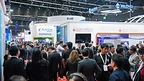
Cementing the event’s place at the centre of global energy growth and dealmaking, Gastech 2026 has seen memoranda of understanding, supply agreements and investment commitments with a combined estimated value of $40 billion USD announced or advanced in Bangkok – dmg eventsMajor agreements spanning LNG supply, power generation, upstream development, petrochemicals and shipping show how decisions made at Gastech 2026 are translating directly into new supply, infrastructure and industrial capacity.The Strategic Conference continued to advance the discussions on policy, capital and infrastructure that are required to sustain this momentum and deliver secure, affordable and reliable energy at the scale global growth demands.

BANGKOK, Sept. 16, 2026 /PRNewswire/ — Billions of dollars in energy agreements are moving from discussion to delivery at Gastech 2026. By the end of day three, memoranda of understanding, supply agreements and investment commitments with a combined estimated value of $40 billion USD were announced or advanced in Bangkok, cementing Gastech’s essential role as the global meeting place where the energy industry does business.

The agreements announced and progressed during Gastech 2026 demonstrate the event’s unique ability to turn strategic dialogue into commercial action. Producers, buyers, governments, investors, technology leaders and infrastructure providers are using the event to secure long-term supply, expand power-generation capacity, unlock new resources, strengthen shipping capability and build the infrastructure projects required to meet rising global demand.

These agreements are not simply commercial milestones. Together, they will influence how energy moves across markets, where new capacity is built and how quickly economies can respond to rising electricity consumption, industrial growth and the expansion of AI. Key deals announced or advanced during the first three days include:

China Gas Holdings and Venture Global LNG announced a landmark 20-year sales and purchase agreement for 0.5 million tonnes per annum of US LNG from 2030, strengthening supply security for one of the world’s largest energy markets.GE Vernova and B.Grimm Power signed agreements for natural gas-turbine supply and long-term services, supporting new and existing power-generation capacity in Malaysia & Thailand.PETRONAS, PTTEP JDA and the Malaysia-Thailand Joint Authority formalised a 35-year production-sharing contract and natural gas sales agreement in the Malaysia-Thailand Joint Development Area, delivering new natural gas supply to both countries.Eni and the Government of Senegal signed a memorandum of understanding to assess the oil potential of five offshore blocks, with the aim of expanding the country’s production of secure and affordable energy.Sarawak finalised discussions with Indorama Ventures and Japanese partners on an estimated US$1 billion downstream natural gas and petrochemicals investment in Bintulu, which will strengthen local industrial capacity and create new value from regional resources.Samsung Heavy Industries secured a US$1.2 billion order for LNG carriers and crude oil tankers, adding to the fleet capacity required to keep global energy trade moving.YPF CEO Horacio Marín announced the company’s plan to sign two or three LNG sales agreements for its proposed Argentina LNG export project.

Alongside this industry-defining commercial activity, Gastech’s Strategic Conference continued to drive high-level conversations on the future of energy security, reliability and affordability. Across the programme, energy ministers, CEOs, policymakers, investors and technology leaders examined the policy, infrastructure and delivery strategies that will allow energy systems to grow with the speed and resilience required to support the world’s expanding population and economies.

The ministerial session titled ‘Africa Takes Power: Control, Sovereignty and Growth’ explored how African nations can convert energy potential into industrial growth, greater energy access and long-term economic value. Speakers considered the partnerships and investment models needed to ensure that resource development strengthens national resilience while opening new supply opportunities for international markets. Hon. Yeukai Simbanegavi, Deputy Minister for Energy & Power Development, Zimbabwe, stated:

“Over the years, we have been relying on imports from other nations, but recently we have discovered oil in the northern part of Zimbabwe. We are working with investors, but we still need more people to come and work with us. We need to upgrade our national grid so that investors can have the correct infrastructure in place to be able to market their investments.”

The need for unprecedented infrastructure investment across the value chain was emphasised by government leaders and energy executives throughout the event’s Strategic Conference. During the session ‘Building Energy Security: The Global Race to Deliver Natural Gas Infrastructure’, which examined the pipelines, processing facilities, LNG terminals and power infrastructure required to turn natural gas into reliable energy for homes, cities and growing economies, Paul Marsden, President, Bechtel Energy, said:

“I think predictability is becoming more important in the development of large capital infrastructure. We need to know where the molecule is going to be produced and when, so we can place bets on that. People who are cooking food and heating their homes rely on fuel arriving at a predictable time and being affordable.”

The call for greater capital mobilisation and infrastructure development was echoed during the session ‘Advancing Sustainable Maritime Infrastructure and Fleet Capacity’, as James Sagar, CEO, Hanwha Shipping, explained how the maritime sector can expand the ships, ports and logistics systems needed to support reliable international energy trade, while improving the resilience, efficiency, and sustainability of critical natural gas supply chains. He stated:

“Shipping is a long-term investment. It should be grounded in discipline. How do you maintain the value of an asset over 20 or 30 years? You have to finance it and work with both the supply side and the demand side. When it comes to regulation, we need to ensure that the right technology is in place throughout the life of that ship. It all starts with partnerships and collaboration.”

Maintaining the central role of natural gas in an evolving energy mix will depend on how effectively the industry reduces emissions across its value chain. The session ‘Capturing the Lost Opportunity: Driving Global Alignment on Methane Abatement Across Natural Gas Supply Chains’ considered how stronger measurement, shared standards and technology deployment can reduce methane emissions and enhance the long-term competitiveness of natural gas. Adeleye Falade, Managing Director and Chief Executive Officer, Nigeria LNG, stated:

“I think the first place to start is to redefine what methane is: every tonne of methane is a lost opportunity, not just from a volume point of view, but also from the value point of view. Once you get to the point of being able to measure it, the business case becomes very clear.”

With one day remaining, Gastech 2026 continues to demonstrate how commercial partnerships and strategic collaboration must advance together to deliver on the world’s fast-growing and increasingly complex energy needs. The agreements concluded in Bangkok will set the stage for how the industry responds to the opportunities and challenges presented by an evolving global economy, ensuring that both emerging and established markets have the secure, reliable and affordable energy they need to keep growing with confidence.  

About Gastech

Gastech is the world’s largest exhibition and conference for natural gas, LNG, low-carbon solutions, hydrogen, shipping, AI for energy and electrification. Gastech 2026 is expected to welcome more than 50,000 attendees from over 150 countries, 800+ exhibiting companies and 800+ speakers.

For further information and registration, visit the official Gastech website. https://www.gastechevent.com 

For media accreditation, visit the Gastech media centre. Register here 

About dmg events

Since 1989, dmg events has created connections that enable growth by bringing together global industries, governments and innovators to drive collaboration, unlock commercial opportunity and advance meaningful progress across the world’s most important markets. Through high-impact events and strategic partnerships, dmg events supports businesses and communities to navigate change, accelerate innovation and build sustainable success.

Operating from 13 offices worldwide, dmg events delivers more than 30 energy and policy events annually. Across four continents, its leading events, including ADIPEC and Gastech, bring together policymakers, industry leaders, investors and innovators to engage on the priorities shaping the future of energy systems and global markets.

View original content to download multimedia:https://www.prnewswire.co.uk/news-releases/gastech-2026-in-bangkok-converts-global-energy-ambition-into-billions-of-dollars-in-deals-302881057.html

Continue Reading

Technology

Diagnostic Imaging Market to Reach US$ 33.2 Bn by 2031, Growing at 4.6% CAGR: New Report by Wissen Research

Published

on

By

Rising Demand for Early Disease Detection and AI-Enabled Imaging Drives Steady Market Expansion Through 2031

SHERIDAN, Wyo., Sept. 16, 2026 /PRNewswire/ — The global diagnostic imaging market is projected to grow from USD 26.5 billion in 2026 to USD 33.2 billion by 2031, registering a CAGR of 4.6% during the forecast period (2026–2031), according to a new study by Wissen Research.

Growth is being driven by rising chronic disease prevalence, an expanding geriatric population, and increasing demand for earlier and more precise disease detection. AI-assisted imaging, 3D/4D visualization, and portable imaging devices are improving diagnostic accuracy, streamlining radiology workflows, and extending imaging access across hospitals, outpatient clinics, emergency settings, and rural healthcare facilities.

See the Full Data Behind This Forecast — Get a Free Sample Report

Where the Technology Is Heading: AI Moves Into the Scanner Itself

The most significant shift in diagnostic imaging is not happening after the scan — it is happening during it. Major manufacturers are embedding deep learning reconstruction (DLR) algorithms directly into image acquisition pipelines, clearing signal-level noise as data is captured rather than cleaning up images afterward.

The clinical impact is measurable. GE HealthCare’s Sonic DL sequence now enables complex multi-sequence brain and joint MRI protocols to complete in under 15 minutes, allowing hospitals to increase daily throughput per scanner substantially without new capital equipment. Radiology remains the leading specialty for AI-enabled device clearances, with more than 1,100 cleared by the U.S. FDA to date.

Alongside this, cloud-native PACS and teleradiology platforms are replacing on-premise image archives, enabling remote reads across multi-site networks and reducing reporting turnaround times. Photon-counting CT and hybrid imaging systems are pushing resolution higher while lowering radiation dose, supporting earlier detection in oncology, cardiology, and neurology.

What’s Fueling Growth in the Diagnostic Imaging Market

AI-Enabled Imaging Adoption: AI-based systems are improving diagnostic precision, shortening scan-to-diagnosis time, and raising patient throughput across care settings.Cloud PACS and Teleradiology Expansion: Remote reading platforms are accelerating reporting and improving specialist access across distributed hospital networks.Photon-Counting CT Commercialization: Ultra-high-definition imaging with reduced radiation exposure is shortening replacement cycles for high-end equipment.Portable and Handheld Imaging: Point-of-care ultrasound and mobile systems are expanding diagnostic access in emergency departments, outpatient centers, and rural facilities.Safer Contrast Agents: Non-nephrotoxic imaging options are extending diagnostic access to chronic kidney disease patients.Certified Refurbished Systems: Lower capital barriers are enabling imaging infrastructure expansion across developing markets.

Need Data Specific to Your Region or Segment? Request a Custom Report

Challenges Facing the Diagnostic Imaging Market

Reimbursement compression is emerging as the sector’s most pressing operational constraint. The Centers for Medicare & Medicaid Services introduced an efficiency adjustment in the 2026 Medicare Physician Fee Schedule that permanently reduces work relative value units by 2.5% across roughly 7,700 diagnostic and procedural codes. New combined head and neck CTA codes have produced global payment reductions of up to 30.8%. The result is a growing misalignment between what providers invest in premium scanners and what public payers reimburse — pushing many networks to extend equipment life cycles rather than upgrade.

Beyond reimbursement, high acquisition and maintenance costs for MRI and CT systems remain a barrier for community hospitals and providers in developing markets. A persistent shortage of qualified radiologists is contributing to reporting backlogs, while the shift to cloud-based imaging raises data security and cybersecurity considerations for healthcare providers.

Recent Strategic Developments in the Diagnostic Imaging Market

In May 2026, GE HealthCare introduced next-generation SIGNA MRI technologies and AI-based workflow solutions at ISMRM 2026, including new 3T and helium-free MRI systems, deep learning imaging technologies, and cloud-based research tools.

Also in May 2026, Siemens Healthineers launched an integrated workflow solution for CT-guided percutaneous coronary interventions, combining CT imaging, plaque analysis, procedural planning, and cath lab guidance in a single application.

In March 2026, Samsung Medison consolidated its U.S. medical imaging divisions, NeuroLogica and Boston Imaging, under the Samsung HME America brand, expanding into AI ultrasound, digital radiography, portable CT, and photon-counting detector technologies.

In February 2026, Fujifilm Holdings launched the ARIETTA Deep Insight x ultrasound platform, applying AI and deep learning to improve image quality, with automated workflow tools and real-time virtual sonography.

Key Insights from Diagnostic Imaging Market Analysis

X-ray systems led the market by modality in 2025, supported by the highest global procedure volumes of any modality, lower installation and shielding requirements, and continued analog-to-digital replacement demand.2D imaging held the largest share by technology type in 2025, driven by faster acquisition and turnaround times, lower infrastructure needs, and the fact that most AI triage algorithms were built around standard 2D radiography and ultrasound workflows.North America held the largest regional share in 2025, supported by strong reimbursement, high per-capita imaging volumes, and large health systems with significant purchasing capacity.Asia-Pacific is the fastest-growing region, driven by healthcare infrastructure expansion, rising healthcare expenditure, and growing adoption of AI-enabled and portable imaging across urban and underserved areas.

Key Players in the Diagnostic Imaging Market

Leading companies are focused on embedding AI into imaging platforms, expanding cloud and enterprise imaging capabilities, and broadening portable and point-of-care portfolios.

Company

Key Focus Area

GE HealthCare (US)

SIGNA MRI platforms and deep learning reconstruction

Siemens Healthineers (Germany)

CT, interventional imaging, and integrated procedural workflows

Philips (Netherlands)

Enterprise imaging, cloud PACS, and AI-enabled platforms

Canon Medical Systems (Japan)

CT, MRI, and ultrasound imaging systems

Fujifilm Holdings (Japan)

AI-driven ultrasound and enterprise imaging management

Samsung Medison (South Korea)

AI ultrasound, portable CT, and photon-counting detectors

Hitachi Healthcare (Japan)

Diagnostic imaging systems portfolio

Shimadzu Corporation (Japan)

X-ray and fluoroscopy imaging systems

Hologic (US)

Mammography and breast imaging

United Imaging Healthcare (China)

Advanced imaging systems manufacturing

Butterfly Network (US)

Handheld point-of-care ultrasound

Nano-X Imaging (Israel)

Digital X-ray and imaging access technologies

Regional Analysis and Growth Opportunities

North America leads the diagnostic imaging market, underpinned by advanced healthcare infrastructure, high imaging procedure volumes, favorable reimbursement for advanced modalities, and sustained hospital investment in premium imaging technology. An aging population and the formation of large health networks and group purchasing organizations continue to support long-term equipment and service contracts.

Asia-Pacific is the fastest-growing region, propelled by healthcare infrastructure expansion, rising healthcare expenditure, and improving access to advanced diagnostics across China, India, Japan, South Korea, and Australia. Government investment in healthcare modernization and the growth of private hospitals and imaging centers are accelerating adoption, while AI-enabled and portable systems are extending diagnostic capability into underserved areas.

Europe, Latin America, and the Middle East & Africa complete the report’s regional coverage, with growth shaped by screening program expansion and imaging infrastructure investment.

Wissen Research’s healthcare technology analysts are available to walk through findings specific to your market, region, or competitive set.

Need Insights Specific to Your Business? Request a Customized Version of This Report:

Market Segmentation Snapshot

The global diagnostic imaging market is segmented across modality, technology, portability, architecture, application, end user, and region:

By Modality Type: X-RayUltrasoundComputed Tomography (CT)Magnetic Resonance Imaging (MRI)Nuclear Imaging (PET/SPECT)MammographyFluoroscopyBy Technology Type: 2D Imaging3D/4D ImagingAI-Enabled ImagingPortable/Point-of-Care ImagingCloud-Based Imaging InformaticsBy Portability Type: Fixed Imaging SystemsPortable/Mobile Imaging SystemsBy Source/Architecture Type: Standalone Imaging SystemsHybrid Imaging Systems (PET-CT, SPECT-CT, PET-MRI)By Application Type: CardiologyOncologyNeurologyOrthopedicsGynecology & ObstetricsPulmonologyGastroenterologyBy End User: HospitalsDiagnostic Imaging CentersAmbulatory Surgical CentersSpecialty ClinicsResearch & Academic InstitutesBy Region: North AmericaEuropeAsia-PacificLatin AmericaMiddle East & Africa

As AI-enabled imaging, photon-counting CT, and cloud-based radiology continue to mature, diagnostic imaging remains a cornerstone of modern healthcare infrastructure. For manufacturers and providers, the path forward lies in balancing continued technology investment against tightening reimbursement, while extending imaging access into outpatient, portable, and underserved care settings.

Get the Complete Diagnostics Imaging Market Report — Forecasts, Insights & Growth Opportunities: https://www.wissenresearch.com/market-research-reports-pricings/diagnostic-imaging-market/

Frequently Asked Questions

Q: What is the size of the diagnostic imaging market? A: The global diagnostic imaging market is estimated at USD 26.5 billion in 2026 and is projected to reach USD 33.2 billion by 2031.

Q: What is the growth rate of the diagnostic imaging market? A: The diagnostic imaging market is projected to grow at a CAGR of 4.6% between 2026 and 2031.

Q: Which modality holds the largest share of the diagnostic imaging market? A: X-ray systems held the largest share by modality in 2025, supported by the highest global procedure volumes and lower installation and infrastructure requirements compared with other modalities.

Q: Which region leads the diagnostic imaging market? A: North America held the largest share of the diagnostic imaging market in 2025, while Asia-Pacific is the fastest-growing region through 2031.

Q: Who are the key players in the diagnostic imaging market? A: Leading companies in the diagnostic imaging market include GE HealthCare, Siemens Healthineers, Philips, Canon Medical Systems, and Fujifilm Holdings.

Q: How is AI changing diagnostic imaging? A: AI is being embedded directly into image acquisition through deep learning reconstruction algorithms, reducing noise at the signal level, shortening scan times, and enabling automated lesion detection and workflow prioritization for radiologists.

Expert Profile | Mayur Jain, Wissen Research

Mayur Jain is a Research Expert at Wissen Research with multidomain expertise with more than 12+ years of experience in market research industry. 

Email: mayur@wissenresearch.com
LinkedIn:  https://www.linkedin.com/in/mayur-jain-0190542a/ 

About Wissen Research

Wissen Research is a global market intelligence and consulting firm specializing in healthcare, life sciences, technology, and emerging industries. The company provides data-driven insights, strategic market analysis, and industry forecasts to help organizations make informed business decisions and identify new growth opportunities across global markets

Company Contact:

Wissen Research LLC,
Gould St, Ste R,
Sheridan, WY 82801,
Phone: (+1) 510 240 9853
Email: info@wissenresearch.com
Website: https://www.wissenresearch.com/
Blog: https://www.wissenresearch.com/insights/
LinkedIn: https://www.linkedin.com/company/wissen-research 

View original content to download multimedia:https://www.prnewswire.co.uk/news-releases/diagnostic-imaging-market-to-reach-us-33-2-bn-by-2031–growing-at-4-6-cagr-new-report-by-wissen-research-302881093.html

Continue Reading

Technology

CIB closes $100 million loan with Morguard to advance building energy upgrades

Published

on

By

NERVA Energy to support deep energy retrofits across selected Morguard properties

Disponible en français

Morguard has established a $145 million Morguard ReNew Fund supported by its partnersThe Morguard ReNew Fund supports retrofits which will reduce energy use and help lower long-term operating costs, with a minimum 30 per cent reduction in emissionsMorguard and NERVA Energy will complete deep energy retrofits and optimization projects across a diverse portfolio of residential and commercial properties in CanadaUpgrades will modernize mechanical systems and support fuel switching to low-carbon heating and hot water options, including heat pumps and the use of district energy

TORONTO, Sept. 16, 2026 /CNW/ — The Canada Infrastructure Bank (CIB) has reached financial close on a $100 million loan with Morguard Corporation to enable energy‑efficient retrofits across a portfolio of approximately 30 properties in Canada.

Morguard is a fully integrated real estate firm with more than $24.2 billion in assets under management across North America. Morguard will collaborate with NERVA Energy, a multi‑disciplinary engineering firm specializing in energy performance, to design and implement the retrofit projects across the portfolio.

The loan, coupled with an equity commitment from Morguard and its investors through the newly established Morguard ReNew Fund, will support portfolio-scale building upgrades across Morguard’s multi-suite residential and commercial buildings, including retail, office and industrial properties. Upgrades are expected to include improvements to optimize building systems and mechanical equipment, along with low-carbon heating and hot water solutions.

NERVA Energy is serving as the technical and delivery partner, providing integrated engineering and implementation across participating properties. The projects are focused on improving building performance, reducing emissions and supporting long-term operational efficiency.

The upgrades are expected to reduce annual emissions by approximately 35,246 tonnes of CO₂e across participating properties, while improving building performance and long-term operational efficiency.

The CIB’s loan is provided through its Building Retrofits Initiative, which offers low-cost, long-term financing to help building owners overcome high upfront costs and long payback periods associated with deep energy retrofits.

Endorsements:

Delivering deep retrofits at scale takes strong collaboration between building owners, technical experts, and long‑term capital. Working with Morguard and NERVA Energy, we’re accelerating deep retrofits that reduce energy use, save owners long‑term operating expenses and cut emissions.
Ehren Cory, CEO, Canada Infrastructure Bank

Through investments like this, the Canada Infrastructure Bank is helping building owners make the upgrades needed to cut emissions, lower energy costs, and extend the life of the building. These large-scale retrofits will modernize buildings across Ontario and Quebec while supporting a cleaner economy and more resilient communities for generations to come.
Hon. Gregor Robertson, Minister of Housing and Infrastructure and Minister responsible for Pacific Economic Development Canada

This $100 million investment through the Canada Infrastructure Bank will help modernize buildings across Canada, reduce emissions by more than 35,000 tonnes annually, and improve long-term energy efficiency. By partnering with Morguard and NERVA Energy, we are supporting practical solutions that strengthen our building infrastructure while advancing Canada’s clean economy.
Hon. Shafqat Ali, President of the Treasury

Establishing the Morguard ReNew Fund, with support from CIB, advances our ongoing efforts to strengthen the performance, efficiency and resilience of our properties over time. By implementing retrofit upgrades across selected assets, we are improving building operations, reducing emissions and continuing to position our portfolio for long-term value creation.
Angela Sahi, President and Chief Executive Officer, Morguard Corporation

This is a clear example of where the industry is heading. Retrofit programs are no longer conceptual or fragmented, they are becoming structured, measurable and scalable. We are proud to support Morguard in delivering tangible performance improvements across their portfolio while advancing Canadian expertise in this space.
Rob Hallewick, Chief Executive Officer, NERVA Energy

Learn More:

Morguard Corporation
NERVA Energy

Morguard Corporation

Morguard Corporation is a real estate investment company listed on the Toronto Stock Exchange (TSX: MRC). The company and its subsidiaries, Morguard REIT (TSX: MRT.UN) and Morguard North American Residential REIT (TSX: MRG.UN), own a diversified portfolio of real estate assets across multiple classes, including office, industrial, retail, multi-suite residential and hotel. Morguard also provides real estate management services to institutional and other investors. As of June 30, 2026, Morguard’s owned and managed portfolio of assets was valued at $24.2 billion.

For more information, visit www.morguard.com or follow on LinkedIn and Instagram.

NERVA Energy

NERVA Energy is a Canadian multidisciplinary engineering firm specializing in the delivery of high-performance building retrofit solutions. Combining in-house engineering expertise with field execution capabilities, NERVA provides turnkey programs that optimize building systems, improve energy performance, and enhance overall asset quality.

With a focus on measurable outcomes and accountability, NERVA’s solutions are supported by performance guarantees, ensuring that projected results are realized in practice. The firm works with building owners and institutional partners to deliver scalable retrofit programs that improve efficiency, reduce emissions, and strengthen long-term asset performance.

SOURCE Canada Infrastructure Bank

Continue Reading

Technology

Millennium Partners Management LLC – Notice of Data Security Incident

Published

on

By

NEW YORK, Sept. 16, 2026 /PRNewswire/ — Millennium Partners Management experienced data security incident involving the personal information of some customers and employees.

On April 27, 2026, Millennium discovered a network disruption. It took immediate action to secure its network and engaged outside cybersecurity specialists to investigate. As part of the investigation, Millennium learned that its network suffered unauthorized access at times between April 24, 2026, and April 26, 2026. On July 9, 2026, it confirmed that personal information from its network had been accessed and acquired. The information may have included Social Security numbers.

Upon becoming aware of the disruption, Millennium took immediate steps to secure its systems and enhance its security posture. In addition, Millennium established a toll-free professional call center to answer questions about the incident.

Generally, it is best practice to remain vigilant for risk of identity theft and fraud by reviewing and monitoring your account statements and credit reports for suspicious activity and errors. If you discover any suspicious or unusual activity on your accounts, promptly contact your financial institution or service provider. Individuals are entitled to one free credit report annually from each of the three major credit reporting bureaus: TransUnion, Experian, and Equifax. To order a free credit report, visit www.annualcreditreport.com or call 1-877-322-8228.

For further information, individuals may contact a professional call center at 1-800-405-6108, 8:00 a.m. to 8:00 p.m. Eastern Time, Monday through Friday, excluding federal holidays.

Joshua Mooney, joshua.mooney@kennedyslaw.com

View original content:https://www.prnewswire.com/news-releases/millennium-partners-management-llc—notice-of-data-security-incident-302881103.html

SOURCE Kennedys CMK LLP

Continue Reading

Trending