Connect with us

Technology

Apex Intelligence Raises Nearly US$50 Million in Angel Funding to Build Self-Evolving Foundation Models

Published

on

-A Chinese Startup Enters the Global RSI Race.

BEIJING, Sept. 16, 2026 /PRNewswire/ — Apex Intelligence has completed its angel and angel-plus funding rounds, raising nearly US$50 Million in total. The angel round was co-led by IDG Capital, LinkX Capital and XtalPi, with participation from Decent Capital, SEE Fund, Monad Ventures, and Winsoul Capital. The angel-plus round was co-led by Zhongguancun Science City Fund, SCGC, and Shanghai Engine Fund.

Founded in June 2026, Apex Intelligence is building the next generation of self-evolving foundation models. Self-evolution refers to Recursive Self-Improvement (RSI), or models improving themselves. With a focus on scientific research and discovery, the company aims to move AI from an assistive tool to a co-researcher, and from accelerating what is known to discovering what is unknown.

Apex Intelligence will also visit leading North American universities—including Harvard University, MIT, Yale University, and Boston University—from September 17 to September 23 to meet with students, researchers, and academic research groups for talent recruitment and research collaboration.

AI’s Next Frontier Is Research

Centuries of technological progress have unfolded through successive S-curves opened up by scientific breakthroughs. Each S-curve spans three stages: scientific breakthroughs, research discoveries, and engineering implementation. Most AI today remains focused on engineering and execution, while the scarce breakthroughs in science and research still depend heavily on humans.

Apex Intelligence believes the next technological revolution will center on AI becoming a co-researcher and a native research engine—one that goes beyond accelerating familiar work to actively discovering unexplored directions. Research is the core driving force behind RSI.

Building AI Researchers, Not Just AI Assistants

Apex Intelligence believes that advancing AI’s general intelligence in R&D requires model training. Specifically, through mid-training and post-training, the company guides models to generate creative ideas and autonomously carry out the entire cycle of self-improvement: hypothesis, experimentation, validation, and iteration.

Over the long term, Apex Intelligence aims to build self-evolving foundation models whose collective research capabilities match, and progressively surpass, those of 100,000 top-tier AI scientists spanning disciplines, forming a scalable network of AI researchers. This is a long-term vision and goal, and the company is working toward it step by step. It represents a fundamental shift in the R&D paradigm, rather than an incremental improvement in efficiency. Potential applications span any field where R&D workflows can be structured and outcomes measured, including chip design and simulation, molecular R&D, and quantitative strategy iteration. These fields share three characteristics: high value, intensive demands on human expertise, and costly trial and error.

Apex Intelligence’s Self-Evolving AI System Approaches Capabilities of Leading Human Researchers

Apex Intelligence’s self-evolving AI system has delivered encouraging results in both AI for AI and AI for Math.

AI for AI

The system has autonomously produced research of a standard suitable for acceptance at leading AI conferences, demonstrating capabilities comparable to those of an AI PhD student. It has also autonomously achieved more accurate decisions before training, better strategies during training, and optimizations to the underlying GPU kernels. Across SimpleTES, NanoChat Autoresearch, GPUMode TriMul, and MLS-Bench, it has set new records or approached the best publicly reported results, outperforming solutions developed by or with contributions from Recursive Superintelligence, Tencent Hunyuan, Stanford, NVIDIA, and other organizations.

AI for Math

The AI system has produced a complete proof of the majorization conjecture, which had remained open for more than three decades, and achieved multiple breakthroughs in optimization theory, geometric topology, and other areas.

Apex Intelligence was founded by Yongchao Chen, an assistant professor at Tsinghua University’s School of Artificial Intelligence. His undergraduate and graduate education spans the University of Science and Technology of China and a joint Harvard–MIT training program. He has conducted research at Google DeepMind, Microsoft, and the MIT–IBM Watson AI Lab. The core team comes from leading universities including Tsinghua, Peking University, Harvard, and MIT.

Looking ahead, Apex Intelligence will continue investing in foundation models and compute, advance the training and iteration of recursively self-improving foundation models, build a high-quality research trajectory data infrastructure, and attract top talent from around the world. Guided by its founding mission to “Unlock Undiscovered Discovery,” the company is working to move AI from reproducing existing knowledge to autonomous scientific discovery.

Founder Quotes

“I have always believed that models taught by humans are ultimately limited by humans themselves. When we align them to human preferences, we lock their intelligence ceiling at our own level. No matter how much compute and data we add, we are only making them better at retaining existing knowledge. The limits of true intelligence can only be defined by the objective world. The first generation of large models replaces white-collar workers; embodied AI replaces blue-collar workers; and ASI will replace humanity’s most accomplished scientists. That moment will come sooner or later. Our job is to bring it closer.”

— Yongchao Chen, Founder of Apex Intelligence

About Apex Intelligence

Founded in June 2026, Apex Intelligence is a Beijing, China-based self-evolving foundation model company focused on next-generation industrial intelligence through recursive self-improvement.

For more information, please visit: https://apexin.ai/

View original content to download multimedia:https://www.prnewswire.com/apac/news-releases/apex-intelligence-raises-nearly-us50-million-in-angel-funding-to-build-self-evolving-foundation-models-302880803.html

SOURCE Apex Intelligence

Continue Reading

Technology

Zhou Jianjun from Huawei: Building a Grid-Interactive AIDC Solution to Maximize Tokens Per Watt

Published

on

By

SHENZHEN, China, Sept. 17, 2026 /PRNewswire/ — The Green Energy Development Conference & International Digital Energy Expo 2026, kicked off  in Shenzhen. Zhou Jianjun, Vice President of Huawei and President of Global Marketing, Sales and Services, Huawei Digital Power, attended the opening ceremony and unveiled Huawei’s grid-interactive AI data center (AIDC) solution during the key industry achievement release session. This solution aims to tackle the new challenges of power acquisition, high-density power supply, high-density heat dissipation, and complex delivery, operation, and maintenance in AIDC construction during the AI era, by leveraging system-level compute-electricity synergy to maximize tokens per watt.

The Token Factory Era: Compute and Power Deeply Coupled

The global AI industry is rapidly accelerating from R&D to large-scale deployment. The fast iteration of large models and the surging demand for AI applications are driving exponential growth in token consumption. As the basic unit for invoking, consuming, and billing AI services, tokens are becoming increasingly valuable. Major global tech companies, operators, cloud service providers, and energy enterprises are ramping up investments in AI infrastructure. AIDC campuses are scaling from traditional megawatts to hundreds of megawatts or even gigawatts. Power acquisition, power supply and cooling in high-density compute scenarios, delivery, operation, and maintenance capabilities, and construction speed have become new challenges for AIDC construction.

Zhou Jianjun stated: “Electricity is essential for computing. Today, in the AI era, the startup, shutdown, and load fluctuations of a large AIDC campus can all impact grid operations.” He emphasized that as the penetration of renewable energy continues to rise, the power grid itself is also evolving, with local grid strength declining and volatility and uncertainty increasing. Future AIDCs must not only adapt to weak grids and maintain stable operation during grid fluctuations, but also support the grid and become a key “grid-friendly” node. Therefore, the integration of generation, grid, load, and storage has become an inevitable choice for AIDC development.

“3+1” Redefining a System-Level Grid-Interactive AIDC Solution

Huawei proposes a “3+1” system redefinition across three domains—Watt (electricity), Bit (digital), and Heat (thermal)—along with the construction model, to build a grid-interactive AIDC solution.

The core of the redefinition is as follows:

Watt (electricity): Shifting from stable power consumption to supporting the power grid.

On the generation-grid-storage side, Huawei enhances the AIDC facility’s adaptability to weak power grids and large load fluctuations through grid-forming control and energy storage synergy. The industry’s first 1000 V grid-forming inverter FusionSolar series and the world’s first 1000 V Smart String Grid Forming ESS Platform LUTERRA, both launched by Huawei, have significantly boosted the grid-forming capability of renewable energy. On the load side, Huawei builds an integrated grid-forming energy router based on the solid-state transformer (SST) technology. Moreover, Huawei has become the first vendor in the industry to pass the wideband oscillation damping test conducted by Shanghai Electrical Apparatus Research Institute, driving UPS in the AIDC era to evolve from “reliable power supply” to “grid-friendly.”

Heat (thermal): from “reliability of individual components” to “reliability of the entire system.”

The key to AIDC liquid cooling is not just cooling, but controllability; not just the reliability of individual components, but the reliability of the entire system from chips to cooling sources. Huawei’s Thermal Management Unit (TMU) and AI-enabled MW-level liquid cooling system provide a paradigm for highly reliable cooling in the AIDC industry.

Bit (digital): from “passive operation and maintenance” to “proactive sensing.”

AI capabilities are leveraged to redefine operations, enabling AIDC to achieve proactive sensing, optimization, and protection.

Construction model: from “traditional engineering” to “productization and prefabrication.”

AIDC can no longer rely entirely on traditional engineering methods. Through productization, prefabrication, and modularization, Huawei shifts complexity to the factory, leave simplicity to customers, and speed up compute rollout.

System-Level Innovation for the Next-Generation AIDC

Huawei’s grid-interactive AIDC solution is not a single product-level innovation, but an end-to-end solution built on system-level innovation. Its core value is clear and compelling: ensuring stable operation of high-value computing power with high reliability, generating more tokens per watt with high energy efficiency, enabling faster rollout of computing power with fast delivery, and supporting the power grid with grid-friendly features despite being a large load.

Zhou Jianjun said, “AI is opening up a new era of industry. In response to the opportunities brought by the AIDC industry transformation, Huawei deeply integrates digital technology, power electronics, thermal management, and energy storage management, and focuses on the new power system and core fields of AIDC to build comprehensive capabilities in renewable energy generation, grid forming and grid connection, power supply for high-density compute, liquid cooling, and compute-electricity synergy. Huawei is willing to work with global customers and partners to drive the AIDC industry toward high-quality, sustainable, and innovative development, enabling each watt to produce more tokens and powering the AI era forward.”

View original content to download multimedia:https://www.prnewswire.co.uk/news-releases/zhou-jianjun-from-huawei-building-a-grid-interactive-aidc-solution-to-maximize-tokens-per-watt-302881315.html

Continue Reading

Technology

HL Klemove and Lenovo Forge Partnership to Lead the Autonomous Driving Market

Published

on

By

Joint development of high-performance AI computing (HPC) solutions to pursue global OEM opportunities and expand mass-production programs

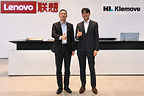
SEOUL, South Korea, Sept. 17, 2026 /PRNewswire/ — HL Klemove, HL Group’s autonomous driving solutions specialist, has entered into a strategic partnership with global IT company Lenovo to spearhead the autonomous driving market. On September 8, key executives from both companies attended the partnership signing ceremony at Lenovo’s R&D Center in Shanghai, China, including HL Klemove President Yun Haeng Lee, CTO Dae Gun Hong, and CMO Sung Kug Kim, as well as Lenovo Vice President Peter Xu and COO Nix Luo.

The partnership will be carried out in phases. The first phase will focus on jointly developing HPC solutions for vehicles, followed by a second phase to secure orders and a third phase for mass production. HL Klemove will lead global OEM business development and mass-production activities, leveraging its established customer network, local market expertise, and global manufacturing capabilities. Building on ADAS business experience dating back to 2012, the company has accumulated extensive mass-production expertise in sensing and control components for Level 2 and Level 2+ ADAS systems. These products are manufactured across its global production footprint in South Korea, China, India, and North America. Combined with its system integration capabilities and more than 2,700 patents, HL Klemove aims to further strengthen its position in the global automotive computing and ADAS market through its collaboration with Lenovo.

“By combining HL Klemove’s technological expertise, sales capabilities, and production capacity with Lenovo’s advanced autonomous driving controller design capabilities, we will sharpen our competitive edge in the global market,” said Yun Haeng Lee, President of HL Klemove. “Through this partnership, we will accelerate the development of differentiated automotive computing solutions that meet the evolving needs of global OEM customers.”

Meanwhile, Peter Xu, Vice President and head of Lenovo’s automotive computing business, stated, “Lenovo is expanding its AI computing business into automotive computing, with a focus on Level 4 autonomous driving and ADAS. By leveraging HL Klemove’s manufacturing capabilities and global supply network, we will accelerate our entry into newC markets.”

View original content to download multimedia:https://www.prnewswire.com/in/news-releases/hl-klemove-and-lenovo-forge-partnership-to-lead-the-autonomous-driving-market-302880459.html

Continue Reading

Technology

Regpack Introduces Attendance Tracking for Afterschool, Camp, and Enrichment Programs

Published

on

By

SAN DIEGO, Sept. 16, 2026 /PRNewswire/ — Regpack, the online registration and payment platform used by thousands of organizations that need attendance security for the children in their programs, announced today. Parents put their children’s safety in the hands of someone else who isn’t a parent or family member. Child safety is the top priority when doing attendance, and Regpack is built around it.

Each family gets a QR code and a unique PIN per child at registration that works for every pick-up. Whoever arrives shows the code; it’s checked against the authorized contacts on that child’s record, and the release is logged with a name and a time. Adults without a QR code can message parents, or parents can leave a note on the child’s profile. Students must know the additional person picking them up, and staff must send a photo of the child and the adult to the parents.

“Every program I have ever visited already knows exactly who is in the building, but they don’t know the family relationship, who is cleared to pick up students, and who the students are familiar with,”  said Asaf Darash, founder of Regpack. “This gives them the same picture with advanced security and quick pick-up with locked QR codes. Staff isn’t holding the line of security with just a paper document; they now have a full system behind them.”

Details at https://www.regpacks.com/features/online-registration-software/attendance-tracking.

About Regpack

Regpack is an online registration and payment platform built for the people who run programs. Camps, after-school and enrichment programs, schools, nonprofits, and event organizers use it to handle sign-ups, collect payments, and manage participant information in one place.

Mandi Rogers
mandi@regpacks.com 

View original content to download multimedia:https://www.prnewswire.com/news-releases/regpack-introduces-attendance-tracking-for-afterschool-camp-and-enrichment-programs-302872889.html

SOURCE Regpack

Continue Reading

Trending