Connect with us

Technology

iQIYI Capitalizes on China’s Big-Screen Viewing Trend as Long-Form Video Enters Next Chapter

Published

on

BEIJING, Sept. 17, 2026 /PRNewswire/ — iQIYI, China’s leading online entertainment platform, is well positioned to capitalize on the growing trend toward big-screen viewing, as the big screen increasingly becomes a key destination for long-form video consumption.

Behind this trend is a rising bar for viewing experience. The big screen’s natural advantages — audio-visual quality, immersion, and shared family viewing — make it a more fitting home for premium long-form content. As big-screen viewing continues to gain momentum, iQIYI’s big-screen business has become an increasingly important driver of user scale, engagement, and monetization.

A Global Trend Toward the Big-Screen

This shift is part of a broader global trend toward big-screen streaming. The worldwide Connected TV (CTV) market is projected to reach USD 260.56 billion in 2026 and expand at a 6.03% CAGR through 2032, with the Asia-Pacific region accounting for approximately 45% of total demand, according to MarkNtel Advisors. In the United States, streaming accounted for 48.6% of total TV watch time in May 2026, with YouTube representing 13.8% and Netflix at 8.0%, according to Nielsen’s monthly “The Gauge” report.

The shift is also visible across other markets. In Poland, for example, Nielsen found that Netflix’s share of viewing on TV screens rose from 83% in May to 86% in June 2026, reflecting what Nielsen described as a broader trend of digital platforms strengthening their presence on the household’s largest screen. Together, these developments point to the growing role of the big screen as a key destination for streaming, particularly for premium and long-form content.

A Growing Audience

According to China’s leading big data intelligence services provider QuestMobile, active smart TV devices reached 302 million in June 2026, up 12.04 million year-over-year, with OTT monthly active devices continuing to grow. iQIYI’s smart TV application, QIYIGuo TV, led the market with 141 million monthly active devices.

The scale of big-screen viewership extends well beyond what mobile numbers capture. QIYIGuo TV recorded 50.42 million daily active devices in June, slightly ahead of the 45.14 million daily active users on the iQIYI mobile app. But television is not a single-user device. According to Gozen Data, a leading cross-screen big data provider in China, each smart TV averages 2.6 viewers, implying iQIYI’s big-screen content reaches approximately 130 million individual viewers daily — nearly three times its mobile daily active users (DAU).

Deeper Engagement

Scale only tells part of the story. What sets the big screen apart is how long audiences stay. Gozen Data shows that iQIYI TV users averaged 256 minutes of daily viewing in August, up 13 minutes from the prior month and growing for three consecutive months.

That engagement translates into willingness to pay. According to iiMedia Research, a leading new-economy research and data analytics firm in China, QIYIGuo TV ranked first among consumers’ preferred TV video subscription services in 2026, with a 32.45% share. Paying habits on the big screen are well established, providing a solid foundation for monetization. Television viewing is also behaviorally different from mobile: sessions run longer, consumption is shared across the household, and immersion runs deeper. That makes the big screen a more natural home for long-form content and a more durable platform for subscription retention and advertising.

Stronger Content, Smarter Production

Big-screen engagement is built on content. This year, iQIYI has produced three dramas surpassing its content popularity index of 10,000 — a measure of audience engagement on the platform and a milestone typically associated with nationwide hit titles, including “The Punishment,” “Born with Luck” and “Pursuit of Jade.” Among this summer’s new releases, iQIYI accounted for seven of the 15 dramas rated S+ across all platforms by Enlightent, a leading Chinese entertainment data provider, with all seven exclusively streamed on the platform.

Beyond content investment, iQIYI is driving efficiency through AI while expanding the possibilities of AI-powered storytelling. In July, iQIYI exclusively premiered “Mystic Tales: The Spider Lady’s Vendetta” on iQIYI and iQIYI International, making it China’s first AIGC internet feature film released under an Internet Drama and Film Distribution License. This was followed by the first two films in “The Ferry Man” AIGC series, “The Ferry Man: Butterfly Dream” and “The Ferry Man: The Dream of the Celestial Maiden,” which generated over RMB 6 million in revenue-sharing box office within their first 10 days following their August 22 debut—an early signal that audiences are receptive to AI-produced premium content.

From a strong content slate to AI-driven efficiency, iQIYI is amplifying user value on the big screen through streamlined production and a more open, diverse content supply. As big-screen viewing continues its resurgence, iQIYI is well-positioned to capture the trend and reinforce its standing as a leading destination for long-form video in China.

Contact:
iQIYI Press, press@qiyi.com 


View original content to download multimedia:https://www.prnewswire.com/news-releases/iqiyi-capitalizes-on-chinas-big-screen-viewing-trend-as-long-form-video-enters-next-chapter-302882877.html

SOURCE iQIYI Inc.

Continue Reading

Technology

Huawei Digital Power Showcases Multi-Scenario Solutions Featuring Grid Forming and AI at IDEE 2026

Published

on

By

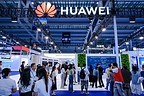
SHANGHAI, Sept. 20, 2026 /PRNewswire/ — The 4th International Digital Energy Expo (IDEE 2026) was held from September 15 to 17. At IDEE 2026, Huawei Digital Power showcased its latest practices of “grid forming + AI” in renewable energy applications with the theme of “Making the Most of Every Ray, Powering the Unpowered.” The company presented its solutions for utility, grid-forming energy storage system (ESS), smart microgrids, commercial and industrial (C&I) green power, ultra-fast charging, and grid-interactive AI data center (AIDC).

Utility: Grid-Forming Stability Meets Full-Lifecycle AI

Huawei’s FusionSolar9.0 Utility PV Solution unveiled the industry’s first 1000VAC solution, the industry’s first grid-forming string inverter, and the industry’s largest 11MW smart transformer station. This solution further enhances the capabilities of large renewable plants in terms of performance ratio, grid friendliness, and smart operation and maintenance (O&M).

The innovative smart string inverter features grid awareness and oscillation damping. In terms of AI, the FusionSolar Agent, based on the device-edge-cloud collaboration foundation. This helps customers address challenges in electricity marketization and achieve higher overall benefits. On September 10, 2026, Huawei’s Smart I-V Curve Diagnosis solution successfully passed the L5 test, the highest level of certification, from China General Certification Center, becoming the industry’s first solution to achieve this certification.

Grid-Forming ESS: Stabilizing Grids and Enhancing Smart Operation Capabilities

Huawei has developed six plant-level grid-forming capabilities, including short-circuit capacity support, inertia response, wideband oscillation damping, primary frequency regulation, black start, and seamless on/off-grid switching. These capabilities ensure stable grid forming for the entire plant, under all working conditions and at all times.

Huawei showcased its new-generation Smart String Grid Forming ESS Solution. The solution features the industry’s first 1000 VAC smart string architecture, through-busbar architecture, and plant-level grid forming technology. It supports 1000 VAC voltage and the industry’s optimal 12.5 MW/50 MWh array, improving performance ratio and delivery efficiency while further unleashing the revenue potential throughout the lifecycle. Additionally, the solution provides more accurate digital support for electricity trading based on the digital twin platform, and builds a cell-to-grid, full-lifecycle safety assurance system.

Smart Microgrid: Balancing Stable Power Supply and Economical Energy Use

Huawei’s Smart Microgrid Solution features high quality and efficiency, stable grid forming, and lower levelized cost of electricity (LCOE), and has been implemented in many areas worldwide with no or insufficient electricity.

It supports strong and weak grid adaptation, PQ/VSG switching, and full VSG mode operation. The on/off-grid switching time at medium voltage is 40 ms. It also supports a grid-forming SOC range of 5% to 98% and parallel operation of multiple voltage sources with the ESS and gensets. This further improves the system configuration flexibility and energy efficiency while ensuring stable power supply.

C&I Green Power: Grid Forming Unleashes the Value of Generation-Grid-Load-Storage Synergy

The C&I One-Fits-All Solution is designed for various scenarios, including PV-only, ESS-only, PV+ESS, charger+ESS, and virtual power plant (VPP). Huawei also shared its global rollout practices of this solution.

As for energy storage, Huawei introduced its 241 kWh series C&I Hybrid Cooling Grid Forming ESS Solution. This product upgrades the traditional single cooling mode to a smart hybrid cooling mode through an innovative thermal management architecture. It also introduces the innovative “pack-level optimization 2.0” technology. The product achieves a round-trip efficiency (RTE) of 91.8% and a depth of discharge (DOD) of 100%, exceeding the industry average.

Huawei FusionCharge: AI-Powered PV+ESS+Charger for All-Scenario Ultra-fast Charging Networks

Huawei FusionCharge integrates PV, ESS, and chargers into a smart microgrid for passenger and commercial vehicles. Its self-developed system features dual grid-device protection, air-liquid cooling, and AI scheduling that boosts station revenue by over 15%. Collaborating with partners across logistics, urban, and highway scenarios, Huawei aims to build an efficient, grid-friendly, and user-friendly ultra-fast charging network.

Grid-Interactive AIDC: “3+1” Redefining Compute Infrastructure

By leveraging “3+1” innovations, Huawei builds the grid-interactive AIDC that is reliable, energy-efficient, fast to deliver, and grid-friendly to maximize tokens per watt.

Huawei redefines AIDC power supply and thermal management by combining MIMO power architecture—featuring grid-friendly UPS and ESS—with an AI-enabled megawatt-level liquid cooling system. Additionally, AI empowers data centers across their entire lifecycle, ensuring full-link visibility, reliability, and efficient O&M.

Huawei Digital Power prioritizes full-link quality through rigorous R&D, supply, manufacturing, and service processes. Proven globally across extreme environments like extreme cold and high altitudes, Huawei products consistently deliver performance that exceeds expectations.

Huawei Digital Power will drive innovation through high quality, deliver long-term reliable value for customers, and partner with the industry to raise quality standards and achieve excellence.

View original content to download multimedia:https://www.prnewswire.com/apac/news-releases/huawei-digital-power-showcases-multi-scenario-solutions-featuring-grid-forming-and-ai-at-idee-2026-302883933.html

SOURCE Huawei Digital Power

Continue Reading

Technology

JA’s Space PV Products Reach Orbit, Starting Space Validation

Published

on

By

BEIJING, Sept. 20, 2026 /PRNewswire/ — JA announced that its independently developed and packaged P-type heterojunction (P-HJT) modules were successfully launched on September 17 and entered their planned orbit.

The mission marks JA’s first in-orbit test of P-HJT modules, with future large-scale commercial applications as a long-term goal.

“Energy innovation has long been a driving force behind human progress,” said Dr. Ouyang Zi, Chief Technology Officer of JA. “As satellite deployment accelerates and the space economy expands, solar power is expected to play an increasingly important role in future space infrastructure. Developing more cost-competitive solar solutions for space is therefore an important strategic priority.

“JA has spent years building expertise in photovoltaic technology, with the reliability and long-term performance of its products proven through large-scale manufacturing and deployment across a wide range of terrestrial applications. This in-orbit test extends those capabilities into the space environment and marks an important step in JA’s exploration of future space energy solutions.

“Through real-world testing in orbit, we aim to assess the reliability and degradation of crystalline silicon technology in low-Earth orbit and explore more cost-competitive options for future space energy systems. The technology will require long-term validation, but we believe it is a direction worth pursuing.”

In orbit, the JA modules will be exposed to harsh conditions, including intense radiation, high-energy particles and extreme temperature swings. By comparing in-orbit performance data with results from ground-based simulations, JA will assess the long-term reliability and degradation of P-HJT technology in low-Earth orbit.

If the validation targets are achieved, the program could help accelerate the adoption of mature crystalline silicon technologies as an alternative to gallium arsenide in low-Earth-orbit applications, potentially lowering the cost of satellite power systems. It could also support the development of satellite internet, remote sensing, space communications, space-based computing and other low-Earth-orbit applications.

JA will use the mission as a starting point to further strengthen its module R&D and manufacturing capabilities and advance scalable energy solutions for space exploration and commercial space applications.

Space PV remains at an early stage of exploration and validation, and large-scale commercialization remains highly uncertain. JA currently has no orders related to space PV, and the program has no material impact on its current operating performance.

SOURCE JA

Continue Reading

Technology

JA’s P-HJT Modules Successfully Reach Orbit

Published

on

By

BEIJING, Sept. 20, 2026 /PRNewswire/ — JA announced that its independently developed and packaged P-type heterojunction (P-HJT) modules were successfully launched aboard a Kuaizhou-11 rocket from the Jiuquan Satellite Launch Center on September 17 and entered their planned orbit.

The mission marks JA’s first in-orbit test of P-HJT modules, with future large-scale commercial applications as a long-term goal.

“Energy innovation has long been a driving force behind human progress,” said Dr. Ouyang Zi, Chief Technology Officer of JA. “As satellite deployment accelerates and the space economy expands, solar power is expected to play an increasingly important role in future space infrastructure. Developing more cost-competitive solar solutions for space is therefore an important strategic priority.

“JA has spent years building expertise in photovoltaic technology, with the reliability and long-term performance of its products proven through large-scale manufacturing and deployment across a wide range of terrestrial applications. This in-orbit test extends those capabilities into the space environment and marks an important step in JA’s exploration of future space energy solutions.

“Through real-world testing in orbit, we aim to assess the reliability and degradation of crystalline silicon technology in low-Earth orbit and explore more cost-competitive options for future space energy systems. The technology will require long-term validation, but we believe it is a direction worth pursuing.”

In orbit, the JA modules will be exposed to harsh conditions, including intense radiation, high-energy particles and extreme temperature swings. By comparing in-orbit performance data with results from ground-based simulations, JA will assess the long-term reliability and degradation of P-HJT technology in low-Earth orbit.

If the validation targets are achieved, the program could help accelerate the adoption of mature crystalline silicon technologies as an alternative to gallium arsenide in low-Earth-orbit applications, potentially lowering the cost of satellite power systems. It could also support the development of satellite internet, remote sensing, space communications, space-based computing and other low-Earth-orbit applications.

JA will use the mission as a starting point to further strengthen its module R&D and manufacturing capabilities and advance scalable energy solutions for space exploration and commercial space applications.

Space PV remains at an early stage of exploration and validation, and large-scale commercialization remains highly uncertain. JA currently has no orders related to space PV, and the program has no material impact on its current operating performance.

View original content to download multimedia:https://www.prnewswire.com/news-releases/jas-p-hjt-modules-successfully-reach-orbit-302883923.html

SOURCE JA

Continue Reading

Trending