Connect with us

Technology

Huawei Unveils Upgraded Stellar AI Campus Network to Usher in the New Era of AI Campuses

Published

on

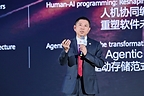
SHANGHAI, Sept. 20, 2026 /PRNewswire/ — During HUAWEI CONNECT 2026, Huawei unveiled its upgraded Stellar AI Campus Network Solution that stands out with innovations in superfast wireless, full-scope security, and network autonomy, helping enterprises build a superfast, secure AI campus.

“Driven by AI, today’s campuses are evolving into a super agent that can perceive, think, self-heal, and dynamically adapt,” said Leon Wang. “Leveraging our ICT prowess, we, together with global customers and partners, are building ubiquitous AI campuses to bring ‘technology for people’ to life and accelerate digital and intelligent transformation across all industries.”

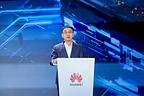
“The AI era has placed higher demands for campus networks, especially bandwidth capacity, security defense, and O&M efficiency,” said Shawn Zhao. “To address this, Huawei’s upgraded Stellar AI Campus Network Solution offers innovations across superfast wireless, full-scope security, and network autonomy, helping maximize productivity.”

Huawei’s solution delivers enhanced capabilities across three pillars.

Superfast wireless: As multi-agent collaboration gains momentum at enterprise workspaces, Huawei Wi-Fi 7 Advanced introduced intelligent Coordinated Scheduling and Spatial Reuse (iCSSR) technology that delivers twice the networking performance of industry peers. To grow the Wi-Fi+X ecosystem, Huawei also debuted the eCampusLink platform and HiSpaceX appliance, supporting full-element digital campus operations with unified access, spatial modeling, and rapid orchestration.Full-scope security: Huawei’s solution offers asset, connectivity, spatial, and privacy security to enable full-scope security across the digital and physical worlds. Particularly, Huawei’s upgraded Asset Security Solution achieves second-level blocking of terminal behavior anomalies and precise network-security collaborative tracing, ensuring that all assets are fully visible, trustworthy, and controllable.Network autonomy: With the rise of AI, enterprises urgently need to boost their network O&M efficiency. Huawei meets this with its iFlow and distributed real-time simulation technologies to enable pre-event proactive detection, in-event rapid localization, and post-event service verification, thereby delivering real-time visibility into agent experience. Furthermore, Huawei has made upgrades across data, models, and tools to deliver 24/7 AI-powered operations, achieving a 95% troubleshooting accuracy rate and a 90% reduction in MTTR.

Looking ahead, Huawei will continue to innovate and work closely with customers and partners worldwide to build a superfast, secure AI campus for the agentic world.

View original content to download multimedia:https://www.prnewswire.com/apac/news-releases/huawei-unveils-upgraded-stellar-ai-campus-network-to-usher-in-the-new-era-of-ai-campuses-302883882.html

SOURCE Huawei

Continue Reading

Technology

JA’s P-HJT Modules Successfully Reach Orbit

Published

on

By

BEIJING, Sept. 20, 2026 /PRNewswire/ — JA announced that its independently developed and packaged P-type heterojunction (P-HJT) modules were successfully launched aboard a Kuaizhou-11 rocket from the Jiuquan Satellite Launch Center on September 17 and entered their planned orbit.

The mission marks JA’s first in-orbit test of P-HJT modules, with future large-scale commercial applications as a long-term goal.

“Energy innovation has long been a driving force behind human progress,” said Dr. Ouyang Zi, Chief Technology Officer of JA. “As satellite deployment accelerates and the space economy expands, solar power is expected to play an increasingly important role in future space infrastructure. Developing more cost-competitive solar solutions for space is therefore an important strategic priority.

“JA has spent years building expertise in photovoltaic technology, with the reliability and long-term performance of its products proven through large-scale manufacturing and deployment across a wide range of terrestrial applications. This in-orbit test extends those capabilities into the space environment and marks an important step in JA’s exploration of future space energy solutions.

“Through real-world testing in orbit, we aim to assess the reliability and degradation of crystalline silicon technology in low-Earth orbit and explore more cost-competitive options for future space energy systems. The technology will require long-term validation, but we believe it is a direction worth pursuing.”

In orbit, the JA modules will be exposed to harsh conditions, including intense radiation, high-energy particles and extreme temperature swings. By comparing in-orbit performance data with results from ground-based simulations, JA will assess the long-term reliability and degradation of P-HJT technology in low-Earth orbit.

If the validation targets are achieved, the program could help accelerate the adoption of mature crystalline silicon technologies as an alternative to gallium arsenide in low-Earth-orbit applications, potentially lowering the cost of satellite power systems. It could also support the development of satellite internet, remote sensing, space communications, space-based computing and other low-Earth-orbit applications.

JA will use the mission as a starting point to further strengthen its module R&D and manufacturing capabilities and advance scalable energy solutions for space exploration and commercial space applications.

Space PV remains at an early stage of exploration and validation, and large-scale commercialization remains highly uncertain. JA currently has no orders related to space PV, and the program has no material impact on its current operating performance.

View original content to download multimedia:https://www.prnewswire.com/news-releases/jas-p-hjt-modules-successfully-reach-orbit-302883923.html

SOURCE JA

Continue Reading

Technology

Huawei Grid-Interactive AIDC Solution: Shaping the New Paradigm of AI Infrastructure

Published

on

By

SHANGHAI, Sept. 20, 2026 /PRNewswire/ — HUAWEI CONNECT 2026 kicked off in Shanghai, The HUAWEI AIDC Facility Summit was held alongside the event. Huawei unveiled its grid-interactive AIDC solution, setting a new paradigm for AI infrastructure to maximize tokens per watt.

Hou Jinlong, Director of the Board of Huawei and President of Huawei Digital Power, delivered the opening speech at the summit. He shared four insights on architectural innovation and systematic design to address AIDC construction challenges such as power acquisition, power quality, rack power supply and heat dissipation, and engineering delivery.

First, innovative power architecture and liquid cooling ensure stable power supply and efficient heat dissipation, delivering comprehensive reliability and efficiency. Second, a multi-layer hybrid energy storage system absorbs local power fluctuations, enhancing AIDC power quality and grid-friendliness. Third, electricity-compute synergy and supply-consumption interaction enable AIDCs to transform from rigid loads to an integral part of the new power system. Fourth, construction mode innovation and modular, prefabricated, and product-based delivery significantly shorten the lead time.

Mr. Hou emphasized that maximizing tokens per watt and minimizing costs per token will be the core competitiveness of compute factories.

Huawei Grid-Interactive AIDC Solution Unveiled

Bob He, Vice President of Huawei Digital Power, stated that as the share of renewable energy grows, the power grid exhibits stronger features of power electronics. Coupled with the rapid and severe power fluctuations of AI workloads, compute and energy infrastructure are no longer decoupled but deeply coordinated. By leveraging “3+1” innovations, Huawei builds a grid-interactive AIDC solution that is highly reliable, energy-efficient, fast to deliver, and grid-friendly to maximize tokens per watt.

In the watt domain, Huawei proposes a future-oriented MIMO power supply architecture. To address industry challenges, Huawei has launched the grid-interactive AIDC 1.0 solution. By integrating grid-friendly UPS, intelligent lithium batteries, and grid-forming energy storage systems, the solution enables AIDC to adapt to and support the power grid while smoothing AI workload fluctuations. In the heat field, Huawei launched an AI-powered liquid cooling system, predict the health of working fluids, and facilitate predictive maintenance.

According to Mr. He, Huawei’s unique advantage lies in its end-to-end energy and full-stack AI capabilities.

Compute-Electricity Synergy: Establishing a Solid Foundation for the AI Era

Booming AI has brought about a sharp increase in tokens, posing higher requirements on AI infrastructure. Xia Qin, Chief Expert in Huawei Computing Strategy Planning, noted that AIDC is evolving toward an integrated, coordinated compute-network-storage architecture, and energy is fundamental to infrastructure. An energy system that is highly reliable, energy-efficient, and rapidly deployable allows hyperscale AI compute clusters to operate reliably, establishing a solid foundation for large-scale training and inference in the agentic era.

Traditional data centers have limited interaction with the power grid. However, AI workloads are prone to high-frequency changes, which can easily cause grid operation issues such as grid disconnection and unstable wideband oscillation. Josh Chen, Founder & Chairman of VNET Group, stated that power sources, campuses, and buildings can be redefined to enable mutual support among power sources, scheduling within campuses, and DC power supply for buildings. This will create a new power system centered on direct green power connection and active microgrids, ensuring reliable and stable power supply for GW-level AIDC.

Lin Hai, General Manager of Intelligent Computing Center, SenseCore Business Group at SenseTime, elaborated on the efficiency evolution of SenseTime intelligent computing from PUE to TPW at the summit. SenseCore is driving the transformation of IDC from energy efficiency management centered on power usage effectiveness (PUE) to end-to-end efficiency management centered on tokens per watt, which directly connects power consumption with token output, covering the entire chain from power plants and grids to IDC rack services, computing cloud services, and model services. It’s a metric that reflects the essence of AI production. Through end-to-end optimization, SenseCore has improved the TPW by 80%.

At HUAWEI CONNECT 2026, Huawei showcased its grid-interactive AIDC solution and one-stop AI inference solution, to build a computing foundation that is highly reliable, energy-efficient, and fast to deliver for AI cluster infrastructure.

View original content to download multimedia:https://www.prnewswire.com/apac/news-releases/huawei-grid-interactive-aidc-solution-shaping-the-new-paradigm-of-ai-infrastructure-302883908.html

SOURCE Huawei

Continue Reading

Technology

BioShanghai Week 2026 Opens — Joining Forces to Build a Global Biopharmaceutical Innovation Ecosystem


Published

on

By

SHANGHAI, Sept. 20, 2026 /PRNewswire/ — A news report from Yicai Global:

On September 17, the BioShanghai Week 2026 opened at Zhangjiang Science Hall in Shanghai. Themed “AI for Biopharma, Health for All,” this year’s event brings together innovation resources from around the world to foster an open, collaborative innovation ecosystem for the biopharmaceutical industry.

The opening ceremony marked the launch of the “Connect Globally: Shanghai–London Life Sciences Innovation Partnership.” The ceremony was attended by representatives of Chinese and British institutions, including Zhangjiang Group, Shanghai Minhang Biomedical Industry Development Co., Ltd., Shanghai Jiading Industrial Zone Development (Group) Co., Ltd., London & Partners, Imperial College London, and Oxford University Innovation. Going forward, London Life Sciences Week and BioShanghai Week will work more closely to connect research capabilities, industry resources, and innovation platforms in life sciences across China and the UK, creating an open, efficient platform for international exchange and cooperation.

The ceremony also unveiled the “Empower the Future: BioShanghai Investment and Financing Ecosystem Partnership,” bringing together representatives from domestic and foreign equity investment and financial institutions. These included Shanghai Industrial Investment (Holdings) Co., Ltd., Shanghai State-owned Capital Investment Co., Ltd., Advantech Capital, CBC Group, Pudong Venture Capital Group, GL Ventures, HongShan, Jefferies Financial Group, Guotai Haitong Securities, New Alliance Capital, YUNION Healthcare Ventures, and Shanghai Hongsheng Capital. Together, these partners will work to align capital with industry and build a biopharmaceutical capital ecosystem that supports companies at every stage of their life cycle.

The BioShanghai Week 2026 officially opened. Running from September 17 to 20, this event follows a “1+5+1+1” framework: one opening ceremony, five thematic tracks, one exhibition with matchmaking sessions, and one Bio-Tour of industry sites. It brings together entrepreneurs, investors, scientists, clinical PIs, and other key players to address practical challenges in frontier technologies, research commercialization, industry collaboration, and business growth. Activities are organized around five themes: Innovation Integration, Clinical Translation, Capital Empowerment, Ecosystem Services, and Coordinated Healthcare Development. To connect resources efficiently, formats such as “One Room One Topic,” closed-door discussion, project roadshows, one-on-one meetings, and Bio-Tour are adopted.

This year, BioShanghai Week returns with an upgraded format, aiming to position itself as a global bellwether for cutting-edge biopharmaceutical technologies and a gateway for cross-border collaboration. Over the years, Zhangjiang Pharma Valley has become an internationally recognized and influential signature brand of the biopharmaceutical industry. Pairing BioShanghai Week with the Zhangjiang brand will further raise both the profile and market vitality of Zhangjiang Pharma Valley, creating a premier annual dealmaking summit that connects global capital with Chinese pharmaceutical innovation and takes Chinese breakthroughs to global markets. These efforts will support Shanghai’s ambition to become “the world’s most supportive city for innovative drugs and medical devices.”

The 2026 Jiading District Biopharmaceutical Industry Development Promotion Conference and the 2026 Minhang District Biopharmaceutical Ecosystem Promotion Conference were held on the same day. Both events support Shanghai’s drive to develop high-end medical device industry clusters and help land innovation resources and outcomes in the city.

View original content to download multimedia:https://www.prnewswire.com/apac/news-releases/bioshanghai-week-2026-opens—-joining-forces-to-build-a-global-biopharmaceutical-innovation-ecosystem-302883915.html

SOURCE Yicai Global

Continue Reading

Trending