Connect with us

Technology

New Research from Kai: UK CISOs Face a Widening AI Security Gap as Attackers Gain the Advantage

Published

on

59% of UK CISOs say attackers already hold the advantage, while 67% take more than a week to remediate critical vulnerabilities

SAN JOSE, Calif., Sept. 21, 2026 /PRNewswire/ — Kai, the company behind the first agentic AI cybersecurity platform designed to execute security work end-to-end at machine speed with human expert accuracy, today announced UK findings from its inaugural 2026 State of Autonomous Defense Report.

According to the survey of 100 UK CISOs, a growing gap is emerging between the speed of AI-powered attacks and the ability of security teams to respond. As AI makes it faster and easier for attackers to find and exploit vulnerabilities, many UK organisations are still relying on manual processes that can take days or weeks. The findings point to a looming challenge for defenders: security operations built around human speed may not be able to keep pace as attackers become faster and more automated. If organisations fail to close vulnerabilities quickly, attackers could strike before defenders have a chance to act, increasing the risk of a major security incident.

While UK CISOs recognise the need to move toward machine-led security, many organisations aren’t there yet. Barriers including trust, governance and operational readiness could slow that transition as attackers continue to accelerate their use of AI.

“AI is changing the speed of cyberattacks, and security teams can’t afford to fall further behind,” said Nick Degnan, Chief Revenue Officer at Kai. “The concern is that attackers are getting faster while many defenders are still operating with processes built for a different era. UK organisations know they need to change, but moving from human-led to machine-led security takes trust, governance and a willingness to let machines take on more of the work. The longer that transition takes, the more room attackers have to pull ahead.”

UK CISOs understand the AI threat, but many security processes remain human-led

UK security leaders overwhelmingly acknowledge that AI has changed the threat landscape. Nearly all UK CISOs (94%) say their organisation is prepared to defend against AI-accelerated vulnerability exploitation, yet only one-third (33%) describe themselves as very prepared.

That confidence comes as UK CISOs see attackers gaining the upper hand. Fifty-nine percent believe attackers currently have the advantage given current levels of AI adoption and advancement, compared with just 13% who believe defenders have the advantage. As attackers increasingly leverage AI to accelerate exploitation, many UK organisations continue to rely on human-led security workflows that struggle to keep pace.

Slow remediation leaves a growing window for attackers

The research found that vulnerability management remains heavily dependent on manual effort, leaving UK organisations exposed and security teams under pressure. More than half (54%) of UK organisations report their vulnerability and exposure management processes are at least half manual, while 67% require more than one week to remediate critical vulnerabilities. More than half (54%) say at least one-quarter of known vulnerabilities go unremediated for more than 30 days.

These operational challenges are taking a measurable toll on UK security teams. Eighty-four percent of UK CISOs say vulnerability and exposure management contributes at least moderately to security team burnout, including 19% who describe it as a major contributor.

The findings suggest it’s not just the threat landscape creating risk, but the operating model itself.

UK organisations want more automation, but barriers remain

While UK organisations increasingly see automation as essential to keeping pace with AI-powered threats, confidence in autonomous decision-making has yet to catch up. More than half (51%) of UK CISOs identify lack of trust in automated decisions as one of the biggest barriers to broader automation adoption in vulnerability and exposure management, followed by governance or compliance concerns (45%) and skills or talent gaps (45%).

UK organisations are already embracing automation for lower-risk activities such as vulnerability prioritisation (57%) and asset discovery and inventory (55%). However, only 32% currently permit automated remediation actions without human approval, underscoring that most organisations remain cautious about letting machines change the environment.

UK CISOs are also clear about what would give them greater confidence in machine-led security. More than half point to vendor accountability and liability protections (54%), auditability and explainability (53%), and regulatory clarity (52%) as factors that would increase their confidence in allowing machine-led systems to execute remediation actions without human approval.

UK organisations are moving toward machine-led security, but attackers are moving faster

Despite today’s challenges, the research shows UK organisations are further ahead in adopting machine-led approaches. Today, 46% of UK organisations describe their vulnerability and exposure management approach as mostly or primarily machine-led, compared with 35% of organisations globally.

The foundations for further adoption are also being put in place. Ninety-four percent of UK CISOs say their organisation’s governance approach is either already designed to support machine-led security actions or is being adapted for greater machine-led operation.

Looking ahead 12 to 18 months, 40% expect humans to supervise machine-led systems that lead prioritisation and execution, while 25% expect most vulnerability and exposure management workflows to be machine-led and 14% expect autonomous security operations to become the primary operating model.

The findings suggest UK organisations are not waiting for machine-led security to become a future reality. Many are already putting it into practice, while adapting governance and operating models for a more autonomous approach to cyber defence. But as attackers gain speed through AI, the pressure to make that transition is only growing.

Read the full 2026 UK State of Autonomous Defense Report here.

Methodology

The Kai Survey was conducted by Wakefield Research among 500 CISOs at private sector companies with a minimum annual revenue of $500 million, including 100 CISOs in the United Kingdom. The research was conducted in four markets between June 15 and June 29, 2026, using an email invitation and an online survey. All UK findings cited in this release are based on the 100 UK respondents.

About Kai

Kai is the AI company rebuilding cybersecurity for the machine-speed era. Trusted by Fortune 500 and Global 2000 enterprises, the Kai Autonomous Defense Platform replaces fragmented tools and human-limited workflows with agentic AI that works continuously across cyber asset management, application security, infrastructure vulnerability management, and detection engineering. It contextualises, reasons, and acts at machine speed and enterprise scale. What takes human-led teams weeks, Kai executes in hours, driving risk toward zero through Auto Remediation. Human defenders don’t just keep up. They become superhuman.

Media contact: kai@inkhouse.com 

View original content to download multimedia:https://www.prnewswire.co.uk/news-releases/new-research-from-kai-uk-cisos-face-a-widening-ai-security-gap-as-attackers-gain-the-advantage-302883513.html

Continue Reading

Technology

UK digital pathology provider Source BioScience chooses Sectra to enable seamless pathology collaboration across the NHS

Published

on

By

LINKÖPING, Sweden, Sept. 21, 2026 /PRNewswire/ — International medical imaging IT and cybersecurity company Sectra (STO: SECT B) has signed an agreement with Source BioScience UK Ltd (Source BioScience) in the UK to deliver its service for advanced share and collaborate workflows. As the first Sectra customer in this domain, Source BioScience will now be able to support NHS organisations that need to send pathology cases to external specialists. This lays the foundation for national telepathology networks in the UK, and for improved access to specialist pathologists.

The service, Sectra Image Exchange Portal (Sectra IEP), is a cloud-based, vendor-neutral platform for exchanging and collaborating around medical images. It is already used by more than 500 institutions, mainly within radiology. Recently, the service has undergone substantial modernisation which now makes it possible for healthcare providers to benefit from new advanced workflow functionality, for the service to be used by specialties other than radiology and for customers to move beyond image sharing to managing workflows between organisations.

“This milestone integration will give the NHS a seamless digital pathway to external specialists, with diagnoses delivered straight back into its own records – reducing turnaround times, easing consultant shortages and tackling reporting backlogs,” says Nick Bills, Healthcare Director at Source BioScience.

Source BioScience is a UK laboratory services provider specialising in histopathology and genomics. Its pathology business supports more than 85 NHS trusts alongside a network of private healthcare clinics, with histopathology delivered from laboratories in Nottingham, Chichester and Cambridge.

NHS pathology services are handling growing case volumes with a limited number of reporting consultants, and increasing subspecialisation means the pathologist best suited to a case is often at another organisation. Sending work to external capacity providers today typically relies on bespoke arrangements between individual laboratories, including the transportation of physical glass slides. This slows reporting times and creates administrative overhead for both the sending and receiving laboratories. With Sectra’s service, a case can be created as a job directly from a laboratory’s worklist, delegated to a receiving organisation, and the completed report returned to the referring organisation’s own records.

“IEP is the backbone of image sharing across the NHS. With our modernised platform, we are introducing advanced workflows between healthcare organisations, and extending that trusted national network into pathology. Connecting trusts directly with external specialists like Source BioScience means cases and completed reports move seamlessly across organisational boundaries. It is a step towards an NHS where expertise is always within reach, and where work moves between organisations as easily as it moves within them,” says Jane Rendall, Managing Director for Sectra UK and Ireland.

The three-year contract was signed in the second quarter of Sectra’s 2026/2027 fiscal year. Up to 60,000 cases are expected during the first year, scaling up in subsequent years.

Source BioScience Media Contact:
Klaudyna Johnstone, Commercial Director, klaudyna.johnstone@sourcebioscience.com 

CONTACT:

For further information, please contact: Dr. Torbjörn Kronander, CEO and President Sectra  AB, 46 (0) 705 23 52 27
Marie Ekström Trägårdh, Executive Vice President Sectra AB and President Sectra Imaging IT Solutions, 46 (0)708 23 56 10

This information was brought to you by Cision http://news.cision.com

https://news.cision.com/sectra/r/uk-digital-pathology-provider-source-bioscience-chooses-sectra-to-enable-seamless-pathology-collabor,c4398521

The following files are available for download:


View original content:https://www.prnewswire.co.uk/news-releases/uk-digital-pathology-provider-source-bioscience-chooses-sectra-to-enable-seamless-pathology-collaboration-across-the-nhs-302884440.html

Continue Reading

Technology

askelie® opens its Operational AI Platform to customers and partners

Published

on

By

New platform makes proven AI capabilities available for MSPs, software vendors and business users to configure and compose

LONDON, Sept. 21, 2026 /PRNewswire/ — askelie® today announced the launch of its Operational AI Platform, opening the proven technology behind its enterprise AI solutions to MSPs, software vendors and business users.

The platform enables customers and partners to configure and compose AI-powered solutions using proven, reusable askelie capabilities. Rather than building an AI foundation from scratch, organisations can combine existing capabilities to address real business needs — providing a practical route from AI ambition to business value, with faster time to value, lower cost and less risk.

“We’ve spent years using askelie to rapidly deliver enterprise-grade AI solutions. What we’re doing now is opening that capability up,” said Derek Kilroe, CEO and Founder, askelie. “For the first time, MSPs, software vendors and business users can take proven AI capabilities and configure and compose their own solutions for real business operations — without having to build the underlying AI platform themselves.”

Built around Understand • Decide • Act • Control, the platform brings together AI intelligence, data, knowledge, workflows, enterprise integrations, security and governance.

At launch, customers and partners can configure and compose existing capabilities to create and adapt AI-powered Assistants and Automations around specific business needs. The platform provides the foundation for increasingly sophisticated AI applications, including Digital Workers and Autonomous Applications.

“Customers shouldn’t have to assemble an AI technology stack before they can solve a business problem,” said Ian Halliday-Pegg, Chief Product Officer, askelie. “askelie brings the capabilities needed for operational AI together in a platform that can be combined and reused for different needs.”

The platform is designed to be practical, affordable and trusted. Proven, reusable capabilities reduce the need to build enterprise AI from scratch; model choice and consumption-based pricing help control costs; and security, governance, human oversight and auditability are built into the platform.

The platform also enables MSPs to configure and reuse AI-powered services across customers, while software vendors can extend existing products, enhance them with external data and context, and configure new AI-powered capabilities.

The askelie Operational AI Platform is available from 21 September 2026.

For more information, visit www.askelie.io

View original content to download multimedia:https://www.prnewswire.com/news-releases/askelie-opens-its-operational-ai-platform-to-customers-and-partners-302884442.html

SOURCE AskELIE Limited

Continue Reading

Technology

Huawei Upgrades Stellar AI WAN Solution to Drive All Intelligence Across Industries

Published

on

By

SHANGHAI, Sept. 21, 2026 /PRNewswire/ — At HUAWEI CONNECT 2026, Huawei unveiled its upgraded Stellar AI WAN Solution. Centered on ultimate computing efficiency and multi-dimensional security, this solution addresses cross-region computing challenges in efficiency, cost, and security, driving all intelligence across industries in the AI era.

Stellar AI WAN for Intelligent Connectivity

Amid the rapid expansion of AI computing power, deploying new compute infrastructure in the West has made remote invocation the new norm. However, traditional networks face three critical issues relating to cross-region computing.

Severe efficiency loss: Invoking computing power across 1,000 km can incur a 37% efficiency loss from a mere 0.073% packet loss.High on-premise costs: Local compute deployment costs from 1 million RMB per branch.Expensive private lines: Enterprises spend around 1.2 million RMB annually on 10G private lines.

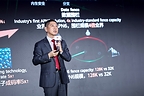
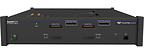
To address this, Leon Wang, President of Huawei’s Data Communication Product Line, introduced the Stellar AI WAN Solution, enabling lossless delivery of computing power over 1,000 km for a local-like remote computing experience. The XH computing-network appliance uses a unique layerwise model partitioning algorithm to run the initial and final layers of inference locally while offloading intermediate layers to remote infrastructure. With the network transmitting only high-dimensional vectors, raw data remains on-premises. The appliance requires just two xPUs to match a traditional 8-xPU setup, slashing xPU costs by 75%. The updated Starnet lossless algorithm cuts bandwidth idle time by over 80% and reduces required bandwidth fivefold, further lowering cross-region computing costs.

Stellar AI WAN for Security

As global security threats intensify, novel vectors like APTs and HNDL attacks continue to emerge. To address these, Huawei provides a three-layer defense for WANs.

Device layer: Intrinsic security boards detect and block intrusions in real time, tracing threats within minutes at over 95% accuracy.Link layer: Built-in QKD delivers robust quantum security without extra devices or fibers, slashing costs by over 60%. An adaptive noise suppression algorithm extends QKD transmission past 80 km.Network layer: APN6-based data fencing enables network-wide control over traffic paths, ensuring data travels exclusively within secure networks with intrinsic security and quantum encryption deployed.

Looking ahead, Huawei will continually upgrade the Stellar AI WAN Solution, deepening its computing-network synergy and multi-dimensional security. Together with partners, Huawei aims to reinforce the intelligent network foundation and accelerate all intelligence across enterprises.

View original content to download multimedia:https://www.prnewswire.com/apac/news-releases/huawei-upgrades-stellar-ai-wan-solution-to-drive-all-intelligence-across-industries-302884354.html

SOURCE Huawei

Continue Reading

Trending