Connect with us

Technology

Pearson research warns of a ‘triple capability gap’ emerging as AI adoption outpaces education and training in skilled occupations

Published

on

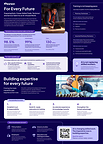
SHANGHAI, Sept. 24, 2026 /PRNewswire/ — Pearson (FTSE: PSON.L) today launched new research, For Every Future: Preparing Early-Career Skilled Trade, Technical and Service Talent for an AI-Infused World, at the WorldSkills International Conference 2026 in Shanghai. The report finds that as AI transforms skilled occupations, early-career talent is entering the workforce without the job-specific AI literacy, human skills, and practical experience it needs.

What’s new: Pearson’s research warns of a growing ‘triple capability gap’ opening across skilled trade, technical and service occupations that keep hospitals, factories and infrastructure operating. This challenge is being driven by two trends. AI is reshaping these jobs faster than education and training systems can adapt, while experienced workers are retiring and taking decades of practical knowledge with them. Together, these shifts are changing how expertise is built – leaving a new generation of workers at risk of becoming AI-rich but experience-poor.

As a result, employers increasingly need workers who can combine three capabilities at once: the judgment to apply AI safely and effectively, the human skills AI can’t replace, and the hands-on expertise traditionally passed from one generation to the next. Left unaddressed, Pearson cautions the gap could make it harder for employers to maintain safety standards, sustain essential services and support economic growth.

Why it matters: The challenge is no longer simply filling jobs. Skilled trade, technical and service occupations remain essential to modern economies, but the way expertise is developed within these careers is shifting. As AI reshapes these professions and experienced workers leave the workforce, the “triple capability gap” is making it harder for employers to sustain essential services and economic growth.

Key findings:

AI is rapidly reshaping occupations not typically associated with the AI conversation. The bulk of the AI conversation has been centered on office-based knowledge work, but less attention has been given to how AI is changing skilled trade, technical and service jobs.  As AI becomes embedded in their daily work, judgment, safety and human oversight become even more valuable. The challenge is ensuring education, training, and workplace learning keep pace with the changing nature of these roles. For example, one UK pharmacy industry participant said it takes 2-3 years to revise pharmacy technician education and training standards, while fewer than half of industrial machinery mechanics feel their training is preparing them for AI-enabled work.

Demand is rising for skilled trade, technical and service workers-at the same time these jobs are being reshaped by AI. Much of that demand will be driven by people retiring or leaving skilled jobs. 99% of skilled job openings in the UK, and 98.5% in the US, stem from replacing workers who retire, change careers, or leave the workforce. It’s not only about filling jobs; it’s about developing expertise faster and ensuring practical knowledge is passed from one generation to the next.

A new triple capability gap is emerging, changing how expertise is built. Skilled trade, technical, and service workers face a unique challenge. Their jobs require three things simultaneously: role-specific AI literacy and critical judgment (understand when to use AI, when to question it and how to apply it safely and responsibly), the human capabilities (communication, collaboration, adaptability, emotional intelligence and learning agility), and the institutional knowledge that retiring experts are taking with them.

Closing these gaps requires education, training, and workplace learning to evolve. They must build role-specific AI literacy and critical judgment, strengthen durable human capabilities, and expand opportunities to develop practical know-how through mentoring, observation, feedback, simulation, and hands-on experience.

The cost of inaction is significant. If these challenges aren’t addressed, employers will struggle to find and develop the skilled workers they need, while expertise gaps could affect safety-critical occupations and essential services. 98% of surveyed pharmacy technicians rated exactness and accuracy as extremely important, while 44% rated the consequences of error as extremely serious. 

What people are saying: Sharon Hague, President, English Language Learning & UK CEO, Pearson, said: “We’re entering a period where many of the workers who keep hospitals, factories and critical infrastructure running will need three things at once: the judgment to work safely with AI, the human skills technology can’t replace, and the hands-on expertise traditionally learned from experienced colleagues. The challenge is that demand for these workers is rising just as many experts are retiring and taking decades of practical knowledge with them. If we don’t rethink how expertise is developed, the gap between what employers need and what workers can do will continue to grow.”

The report: Read For Every Future: Preparing Early-Career Skilled-Trade, Technical and Service Talent for an AI-Infused World 

About the Research: The research combines labour market and AI exposure analysis in the US, UK and China with surveys, interviews and roundtables involving employers, educators, industry bodies, workforce experts, students and early-career workers, plus in-depth analysis of pharmacy technician and industrial machinery mechanic roles.

Related Pearson News

New Pearson and AWS Research: Only 14% of UK Learners Consider Themselves Highly AI-ReadyNew Pearson and AWS Research: The U.S. Helped Build the AI Economy. The Next Opportunity is Preparing Graduates to Thrive in it.Entry-Level Work Remains Essential: 94% of HR Leaders Expect AI to Create New Entry-Level Roles, Pearson and Cognizant Study Reveals

About Pearson
At Pearson, our purpose is simple: to help people realize the life they imagine through learning. We believe that every learning opportunity is a chance for a personal breakthrough. That’s why our c. 18,000 Pearson employees are committed to creating vibrant and enriching learning experiences designed for real-life impact. We are the world’s lifelong learning company, serving customers in nearly 200 countries with digital content, assessments, qualifications, and data. For us, learning isn’t just what we do. It’s who we are. Visit us at plc.pearson.com

Media Contact
Greg.Forbes@pearson.com 

View original content to download multimedia:https://www.prnewswire.com/news-releases/pearson-research-warns-of-a-triple-capability-gap-emerging-as-ai-adoption-outpaces-education-and-training-in-skilled-occupations-302887581.html

SOURCE Pearson

Continue Reading

Technology

Tencent Cloud PalmAI Unveils Palm X, Bringing Palm Verification to Standard RGB Cameras

Published

on

By

SHENZHEN, China, Sept. 24, 2026 /PRNewswire/ — Tencent Cloud, the cloud business of global technology company Tencent, has unveiled Palm X, a new palmprint verification solution. As an extension of its PalmAI technology, Palm X is specifically designed to be compatible with standard RGB cameras. By extending palm verification to widely available camera-equipped devices such as smartphones, Palm X enables enterprises to integrate palm-based identity verification into mobile applications and digital services without requiring dedicated palm-scanning hardware.

Palm verification has traditionally been associated with fixed offline terminals equipped with specialized biometric devices; however, Palm X expands its potential applications by providing businesses with a more flexible way to introduce palm verification into digital user journeys by offering a software-based alternative.

Extending Palm Verification Beyond Dedicated Hardware

Palm X uses standard RGB cameras to capture and verify palmprints without requiring dedicated infrared or palm-vein scanning hardware. Users can enroll and verify their palmprints through supported camera-equipped devices, making the technology easier to integrate into existing mobile applications and online services.

The solution supports 1:1 identity verification and one-to-many palmprint matching within defined enrolled user groups. With 1:1 verification, a live palmprint is matched against the palmprint associated with a specified user identity. One-to-many matching searches within an enrolled group to help identify a user or detect duplicate enrollments.

Palm X also incorporates liveness detection mechanisms designed to help mitigate presentation attacks, such as those involving photos and screen replays. This allows enterprises to use palm verification in scenarios requiring both identity confirmation and protection against common spoofing attempts.

For enterprise deployment, Palm X can be seamlessly integrated into existing authentication and risk-control systems through mobile SDKs and backend APIs. Rather than replacing an organization’s current identity infrastructure, it can serve as a complementary authentication factor alongside passwords, SMS verification codes, facial verification, passkeys, and other methods.

Businesses can introduce palm verification at different stages of the user journey according to their security requirements, user experience goals, and risk levels. The use of standard cameras also minimizes reliance on dedicated terminals, allowing palm verification to extend from fixed offline environments to mobile applications and digital workflows.

Supporting a Wider Range of Identity Scenarios

Palm X supports a wider range of identity scenarios by addressing the growing enterprise need for verification methods that balance user experience, privacy, and ease of deployment.

In financial services, Palm X can complement existing authentication processes in scenarios such as account login and identity confirmation. Enterprises can integrate it alongside existing authentication methods based on their business and security requirements.

For Web3 communities and digital platforms, Palm X can support user verification and help detect duplicate enrollments. It can be applied to scenarios such as trusted account registration, community access, and campaign participation.

Palm X can also support membership programs and online-to-offline (O2O) service scenarios. Once enrolled, users can verify their identity for check-ins, membership recognition, benefit redemption, or service access without relying solely on physical cards or other credentials.

Unlike biometric features that may appear in publicly shared photos or videos, palmprints typically require users to deliberately present their palms for capture. This ensures palm verification remains a highly intentional interaction while reducing biometric exposure in public imagery.

Making palm verification easier to integrate across industries

“Facial recognition is widely adopted for identity verification today, while businesses and users are also looking for more diverse approaches to biometric verification. With Palm X, we are introducing a palmprint-based option that is compatible with standard RGB cameras, making palm verification easier to integrate into existing digital services while giving users a more intentional way to verify their identity,” said Sine, Director of Palm X Product at Tencent Cloud.

Palm X marks Tencent Cloud PalmAI’s latest step in expanding palm verification beyond dedicated biometric hardware. By combining palmprint verification, liveness detection, mobile SDKs, and backend APIs, the solution offers enterprises a flexible option for introducing palm-based verification into their existing services.

Looking ahead, Tencent Cloud PalmAI will continue collaborating with customers and ecosystem partners worldwide to explore how palm verification can be applied for secure identity verification, digital platforms, membership services, and other business environments.

Learn more about Palm X: Palm X — Palm Recognition & Palm Verification SDK for Smartphone Cameras

About Tencent Cloud

Tencent Cloud, one of the world’s leading cloud companies, is committed to creating innovative solutions to resolve real-world issues and enabling digital transformation for smart industries. Through our extensive global infrastructure, Tencent Cloud provides businesses across the globe with stable and secure industry-leading cloud products and services, leveraging technological advancements such as cloud computing, Big Data analytics, AI, IoT, and cybersecurity. It is our constant mission to meet the needs of industries across the board, including the fields of gaming, media and entertainment, finance, healthcare, real estate, retail, travel, and transportation. 

View original content to download multimedia:https://www.prnewswire.com/apac/news-releases/tencent-cloud-palmai-unveils-palm-x-bringing-palm-verification-to-standard-rgb-cameras-302888952.html

SOURCE Tencent Cloud

Continue Reading

Technology

Plainly Launches Plainly Flows, a Workflow Automation Platform for Creative Teams

Published

on

By

The new product lets creative teams turn their repetitive creative work into automated workflows that any team can operate.

LONDON, Sept. 24, 2026 /CNW/ — Plainly, the company behind video automation platform Plainly Videos, today launched Plainly Flows, a workflow automation platform that lets creative teams set up their production workflow once and put asset creation directly into the hands of teams requesting them.

Marketing teams, local branches, and agency clients regularly need creative assets. Getting them means submitting a request, waiting for a designer, and repeating the same production process that ran last time. Creative teams spend a significant portion of their time executing repeatable work rather than building new things. Plainly Flows automates that repeatable work and puts it directly in the hands of the people requesting it.

Creative teams build workflows by setting up video templates, adding AI generation steps, and defining which elements change through inputs. End users fill out inputs through a simple interface, and Plainly Flows generates high-quality, on-brand assets based on the workflow.

During the beta, a B2B company used Plainly Flows to send personalized CEO avatar videos to customers every quarter, pulling in usage data and milestones automatically. Their customer success team now produces 50 to 70 personalized renewal videos per month in 2 to 3 minutes each. A different customer uses the platform to generate event graphics on-site through a phone, outputting finished video in three aspect ratios through a single workflow.

“Most automation tools were built around business data, not creative files,” said Nebojša Savičić, CEO of Plainly. “Plainly Flows lets creative teams encode their production knowledge into a workflow anyone in the organization can run.”

Plainly Flows is available now at https://plainlyflows.com/.

About Plainly

Plainly is a London-based automation company for creative production. Its first product, Plainly Videos, is a cloud-based video automation platform built on native Adobe After Effects rendering and an official Adobe Video Technology Partner, used by organizations including WPP Production and UNICEF Australia. Plainly Flows is its second product. Learn more at plainlyvideos.com


View original content to download multimedia:https://www.prnewswire.com/news-releases/plainly-launches-plainly-flows-a-workflow-automation-platform-for-creative-teams-302888350.html

SOURCE Plainly

Continue Reading

Technology

AI Moves from Optional to Essential: Canton Fair Service Robots to Showcase Real-World Problem Solving


Published

on

By

GUANGZHOU, China, Sept. 24, 2026 /PRNewswire/ — The 140th Canton Fair will open on October 15, bringing together a new generation of AI-powered robotics solutions. As AI becomes a standard feature across industries, competition is shifting from whether products use AI to how effectively they use it to solve real-world challenges.

AI Brings Intelligent Companionship to Home and Eldercare

In home and elderly care settings, AI transforms robots from single-function executors into intelligent companions, capable of emotional interaction and health monitoring for users of all ages.

Through AI-powered emotion recognition and conversation capabilities, the companion robot helps reduce loneliness and emotional stress while maintaining a simple, intuitive user experience.

An Eldercare Robot integrates health monitoring, medication reminders, video consultations, fall detection, emergency alerts, remote caregiving and daily companionship functions into a single platform designed specifically for older users.

AI Improves Efficiency in Food Service and Cleaning Operations

In catering and cleaning, AI drives autonomous decision-making and multi-robot coordination to lower operating costs and enhance service consistency.

For instance, embodied robot platforms designed for food-service environments can combine compliant service functions with lightweight collaborative arms, enabling robots to perform a wider range of tasks safely and efficiently.

For public-space maintenance, the smart cleaning robot combines autonomous driving and AI-powered waste recognition with fully unmanned cleaning, docking, charging and replenishment capabilities for round-the-clock operation.

AI Enhances Emergency Response in High-Risk Environments

In emergency response, AI enables robots to operate in conditions that challenge human safety and endurance.

For example, explosion-proof fire reconnaissance robots can operate in hazardous environments involving fire, smoke, toxic gases and explosive materials. Combining AI-powered reconnaissance with a high-flow firefighting cannon, it supports precise fire detection and suppression while minimizing danger to rescue personnel.

From consumer-focused emotional companionship to industrial-grade operations, AI is transforming robots from conventional automated machines into intelligent systems with greater autonomy and interactive capabilities. As technology continues to reshape human-machine collaboration, visitors to the 140th Canton Fair are invited to discover how AI is delivering tangible value by solving real-world challenges across industries and everyday life.

For pre-registration, please click:
https://buyer.cantonfair.org.cn/register/buyer/email?source_type=16


View original content to download multimedia:https://www.prnewswire.com/news-releases/ai-moves-from-optional-to-essential-canton-fair-service-robots-to-showcase-real-world-problem-solving-302885987.html

SOURCE Canton Fair

Continue Reading

Trending