Connect with us

Technology

WHO DOES GEN Z TRUST? PACSUN’S PURPOSE SUMMIT EXPLAINS ALL

Published

on

Not Influencers, Not AI, A New Youth Report Finding On Where Young People Place Their Trust Took Center Stage In Malibu Today

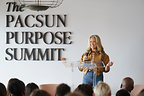
LOS ANGELES, Sept. 24, 2026 /PRNewswire/ — Pacsun hosted its second annual Purpose Summit today at Soho House‘s Little Beach House Malibu, bringing together creators, executives, cultural leaders, and young voices across the brand’s four founding pillars, fashion, sport, art, and music, for a day of conversation centered on the forces shaping the next generation.

This year’s Summit built on findings from Pacsun’s newly released 2026 Youth Report, developed with GlobalData, which found that young people place far more trust in family and friends than in influencers or artificial intelligence. The finding became a throughline for conversations throughout the day, raising a larger question for the leaders in the room around how brands and organizations can build genuine relationships with a generation that increasingly values participation, community, and trusted connections.

The day opened not with a keynote but with a guided meditation led by Tai Beauchamp, Founder, Morning Mindset with Tai. From there, conversations moved across creativity and entrepreneurship, technology, community, sport, and self-expression. Speakers included acclaimed fashion designer and creative director Sami Miró, Snapchat’s Chief Marketing Officer Grace Kao, Rare Beauty Chief Impact Officer and Rare Impact Fund President Elyse Cohen, Los Angeles Rams Chief Commercial Officer Jennifer Prince, Angel City Football Club CEO Amy Taylor, and VP, Jordan Visioneering & LA28 / Founder and Creative Director, Trillicon Valley Jason Mayden, among others.

The report’s central idea, “The Drawbridge Generation,” ran through much of the day’s conversation. Young people, the report found, are pulling closer to family and friends while becoming more selective about a noisy public world shaped by algorithms and inauthentic messaging. Influencers never break an 11% trust share in any category tested. AI presents an even sharper contrast between adoption and trust. While 85% of young people use it, only 2% trust it for fashion advice and 5% for financial advice. Neil Saunders, Managing Director and Retail Analyst at GlobalData, called it evidence that young people are “becoming more intentional about the relationships, influences and priorities closest to them,” even as financial independence slips and social media dependence climbs.

For Pacsun, those findings reinforce an approach the brand has increasingly put into practice through co-creation, bringing young consumers into the conversation rather than simply interpreting youth culture from the outside. The Purpose Summit extends that philosophy by creating a forum where research, lived experience, and perspectives from leaders across culture can inform one another.

“The Purpose Summit gives us an opportunity to take what we’re hearing from young people and put it into conversation with the people helping shape the world around them,” said Brieane Olson, CEO of Pacsun. “Co-creation starts with listening, but it also means giving people a meaningful role in what comes next. By bringing young voices together with leaders across different industries, we can challenge our own assumptions, learn from one another, and better understand how we can show up for this generation in ways that feel relevant and earned.”

That exchange played out across the day’s programming, as leaders from industries that intersect in young people’s everyday lives explored many of the same questions from distinctly different perspectives.

“What stood out to me about the Purpose Summit is how connected these conversations really are,” said Amy Taylor, CEO of Angel City Football Club. “Sport can be an incredibly powerful place for people to find identity, belonging and community, but those ideas extend far beyond the field. Bringing leaders from different corners of culture together with young people themselves creates an opportunity to hear perspectives we might not encounter every day and think differently about the communities we’re building for the future.”

The Summit also marked the first public appearance of the second cohort of Pacsun’s Youth Council, bringing the idea of co-creation directly into the room. The Council gives young consumers an ongoing voice within Pacsun through strategy sessions, workshops, and executive mentorship, creating a direct feedback loop between the brand and the generation it serves. The new cohort was introduced in a session moderated by Kate Nishimura, Deputy Editor at Sourcing Journal, featuring new Youth Council members Sophia Johnson, Iya’Nique Kelly, Max Yu, Ashton Thomas, and Mia Mendoza.

Pacsun also unveiled its inaugural Youth 25™, recognizing 25 creators, artists, athletes, and entrepreneurs shaping the next generation across fashion, art, sport, music, technology, and digital culture. As part of the Summit, Pacsun presented Youth 25 honors in person to Grace Kao and Michelle K. Hanabusa celebrating their contributions to culture and the communities they influence.

The day included:

Opening Meditation – Tai Beauchamp (Morning Mindset with Tai)The 2026 Youth Report – Neil Saunders (GlobalData)Fireside Chat, Building at the Scale of Trust – Michelle K. Hanabusa (UPRISERS), Erick de Vera (Gardens and Seeds), Sami Miró, and Elijah Baig (Springy), moderated by Oliver Chen of TD CowenYouth 25™ Unveiling – Inaugural List Recognizing 25 Voices Across Fashion, Music, Art, Sport, Technology, and Digital Culture Moving Youth Culture ForwardKeynote, How Snapchat is This Generation’s Media of Choice – Grace Kao (Snapchat)Youth Council Introduction – Kate Nishimura (Sourcing Journal), featuring Sophia Johnson, Iya’Nique Kelly, Max Yu, Ashton Thomas, and Mia MendozaFireside Chat, Turning Purpose Into Action – Elyse Cohen (Rare Beauty & Rare Impact Fund), Jennifer Prince (Los Angeles Rams), Amy Taylor (Angel City Football Club)Fireside Chat, Purpose by Design – Jason Mayden (VP, Jordan Visioneering & LA28 / Founder and Creative Director, Trillicon Valley)

Now in its second year, the Purpose Summit reflects Pacsun’s broader approach to staying connected to youth culture through ongoing dialogue and co-creation. Alongside the Summit, the Youth Report, Youth Council, PS Community Hub, and newly introduced Ambassador Program give young people multiple ways to share their perspectives and participate in shaping the brand. Together, these initiatives help Pacsun continually listen, learn, and evolve alongside its community across fashion, sport, art, and music.

The full 2026 Youth Report by Pacsun is available here. To view all images from the Purpose Summit, click here.

About Pacsun
Pacsun is a purpose-driven, leading specialty retailer offering a cross section of emerging brands and trending fashion through the lens of youth culture. Delivering the latest contemporary, streetwear, and activewear, Pacsun partners with the best brands at the intersection of fashion, music, art, and sport to offer curated collections, rare and exclusive products, and creative collaborations on every level to inspire the next generation. Founded in 1980 in Newport, CA, Pacsun is now co-created in Los Angeles. Follow @pacsun on TikTok, Instagram, X, Facebook, and YouTube.

Press Contacts:
Kate Fosha George
kgeorge@pacificsunwear.com

Alyssa McDonald
pacsun@michelemariepr.com

View original content to download multimedia:https://www.prnewswire.com/news-releases/who-does-gen-z-trust-pacsuns-purpose-summit-explains-all-302889994.html

SOURCE Pacsun

Continue Reading

Technology

Applied Quantum Software Brings AQS FabriQ to IBM Quantum Network

Published

on

By

Quantum finance company Applied Quantum Software is bringing the AQS FabriQ quantum software development platform to the industry-leading IBM Quantum Network.

SAN MATEO, Calif., Sept. 25, 2026 /PRNewswire-PRWeb/ — San Francisco Bay Area-based quantum software company Applied Quantum Software (AQS) has announced that it has joined the IBM Quantum Network startup program. The IBM Quantum Network is a global community of more than 325 member organizations working to advance quantum computing and explore practical applications across industries. Members of the IBM Quantum Network have access to a range of IBM quantum computers, software, and other resources.

“A recent study by McKinsey indicates that quantum computing is expected to deliver roughly half a trillion dollars in economic value to the finance sector by 2035. AQS will help bring this timeline forward.”

Applied Quantum Software works with a variety of organizations, especially finance companies, to develop software algorithms optimized for near-term quantum computers. The company has created AQS FabriQ, an easy-to-use software development platform. The platform includes data integration, quantum computer and simulator integration, and benchmarking capabilities. AQS FabriQ supports the creation and deployment of native quantum and quantum-inspired software alongside their classical counterparts.

Applied Quantum Software founder Tom Finke commented, “A recent study by McKinsey indicates that quantum computing is expected to deliver roughly half a trillion dollars in economic value to the finance sector by 2035. Published papers, as well as our efforts at AQS, represent solid progress on the journey toward quantum advantage for finance. By engaging directly with leading quantum computing providers such as IBM, by empowering customers via AQS FabriQ, and through cutting-edge work on relevant algorithms, AQS will help bring this timeline forward.”

AQS offers organizations access to AQS FabriQ for exploratory efforts, including the opportunity to use IBM Heron and IBM Nighthawk quantum processing units (QPUs) available over the cloud, alongside the open source Qiskit software development kit, Qiskit Runtime, and OpenQASM.

About Applied Quantum Software

Applied Quantum Software (AQS) is a quantum-finance software company headquartered in San Mateo, California. AQS FabriQ is a platform enabling quantitative teams to catalog financial datasets and use cases, run quantum and quantum-inspired algorithms, and rigorously benchmark them against the best classical methods for applications in finance. Learn more at https://aqs.one.

Media Contact

Floyd smith, Applied Quantum Software, 1 510-290-2227, floyd@aqs.one, www.aqs.one

View original content to download multimedia:https://www.prweb.com/releases/applied-quantum-software-brings-aqs-fabriq-to-ibm-quantum-network-302889806.html

SOURCE Applied Quantum Software

Continue Reading

Technology

CGTN: Why the world is watching the Xi-Trump meeting: Steering China-US ties, shaping the future

Published

on

By

CGTN published an article on Chinese President Xi Jinping’s state visit to the United States. Drawing on the stories of young Americans who have engaged with China and Xi’s latest announcement inviting 100,000 young Americans to China over the next five years, the article highlights how head-of-state diplomacy is shaping the direction of China-US ties while examining the broader global significance of cooperation between the two countries.

BEIJING, Sept. 25, 2026 /PRNewswire/ — For Marlon Forrester and Joey Zhang, a letter to Chinese President Xi Jinping brought an unexpected reply.

The two were among nearly 100 students from 10 US universities who recently participated in youth exchanges in China. After the trip, they wrote to Xi to share what they had seen and experienced. A reply arrived on the eve of Xi’s state visit to the United States.

In an exclusive interview with CGTN, Forrester, a Harvard faculty member, and Zhang, a Columbia University student, said the experience made them feel part of a new generation carrying forward exchanges between the two countries. They described Xi’s engagement with young people as “planting seeds” and “laying a foundation” for future exchanges.

There may be many more such stories ahead. At a White House welcome ceremony on September 24, Xi announced that China will invite 100,000 young Americans to visit China for exchanges and study over the next five years.

This commitment highlights how high-level decisions translate into the real-life experiences of ordinary people and further illustrates why the world is watching as China and the US shape the future of their relationship.

Steering the course of China-US ties

Frequent interactions between Xi and US President Donald Trump in 2026 have steadily steered the giant ship of China-US relations forward.

During a phone call in February, Xi and Trump agreed to “accomplish more big things and good things,” with Xi urging both nations to make 2026 a year of advancing toward mutual respect, peaceful coexistence, and win-win cooperation.

Three months later, Trump visited China. The two presidents spent nearly nine hours together and reached a milestone political consensus to build “a constructive China-US relationship of strategic stability.”

For Xi, setting the direction is only the beginning. “Building a constructive China-US relationship of strategic stability is neither an expedient measure nor something that can be achieved overnight,” he told Trump in Washington, calling on both sides to implement their consensus with the “spirit of driving the nail.”

That effort is reflected in flourishing people-to-people ties. From students at Lincoln High School in Washington State to youth groups from Maryland and Florida, Xi has repeatedly responded to letters and encouraged young people to become a new generation of friendship envoys.

Economic ties offer another solid foundation. According to China’s Ministry of Commerce, as of July 2026, US companies had established over 84,000 foreign-invested enterprises in China, with investment growing 7.8% year on year in the first half of the year. A survey of 175 US companies by the US-China Business Council revealed that 95% viewed their China operations as vital to global competitiveness.

Responsibility extending beyond two countries

The stakes of the China-US relationship extend far beyond Beijing and Washington.

At the White House, Xi said “China-US cooperation may not solve every problem in the world. But, without our cooperation, it would be hard to solve many of the world’s problems.”

He called on both sides to “lengthen the list of cooperation, and shorten the list of issues,” pointing to areas ranging from trade and investment to artificial intelligence, counternarcotics, law enforcement and direct flights.

Sun Taiyi, an associate professor at Christopher Newport University, noted that bilateral cooperation reduces market uncertainty, manages tech risks, and improves crisis communication. “Even limited cooperation can generate important positive spillovers for global stability.”

AI governance is drawing particular global focus. “Both China and the United States are leading nations in artificial intelligence,” Xi said in the meeting, emphasizing their shared responsibility to ensure AI remains “under human control and serves the well-being of the people.”

Wang Honggang, director of the Institute of Peaceful Development at the Chinese Academy of Social Sciences, added that joint AI governance would be a prime example of China-US cooperation benefiting the world.

Global public opinion reflects these stakes. A CGTN survey across 39 countries showed that 75% of respondents – rising to 78.3% in developing nations – consider stable China-US relations vital to the international community.

With China hosting the APEC Economic Leaders’ Meeting and the US hosting the G20 Summit this year, global focus will closely follow how the two leaders interact, sustain communication, and expand cooperation.

As Xi put it in his White House speech, “China and the United States, as two major countries, shoulder a historic responsibility of advancing human development and progress.”

https://news.cgtn.com/news/2026-09-25/Why-the-world-is-watching-the-Xi-Trump-meeting-1QIgAZq6BMY/p.html 

SOURCE CGTN

Continue Reading

Technology

ICAC and UNODC’s pioneering international anti-graft training brings together law enforcers worldwide to combat illicit enrichment

Published

on

By

HONG KONG, Sept. 25, 2026 /PRNewswire/ — The ICAC, the Hong Kong International Academy Against Corruption, the United Nations Office on Drugs and Crime (UNODC) and the Global Operational Network of Anti-Corruption Law Enforcement Authorities (GlobE Network) jointly organised the pioneering “Professional Development Programme on Unmasking Hidden Wealth: Strengthening Investigations into Illicit Enrichment” from September 7 to 16, drawing participation of 35 graft-fighters and law enforcers from 19 jurisdictions to expound on investigation of illicit enrichment crimes.

Speaking at the opening ceremony of the programme, Acting Commissioner Mr Ricky Yau Shu-chun said, “Illicit enrichment strikes at the heart of public trust and institutional integrity. When public officials accumulate unlawful wealth, it deprives communities of vital development opportunities. Graft fighters must crack down this crime to restore justice, uphold accountability, and safeguard economic foundations. Tracing, exposing, and recovering illicit assets of public officials is far more than a technical skill, it is the fundamental imperative for safeguarding the rule of law and preserving the integrity of the global financial architecture.”

Yau also noted that investigators worldwide required advanced and forward-looking learning opportunities to tackle illicit enrichment. He encouraged participants to share their diverse experiences and forge the professional networks to unmask hidden wealth for advancing a just and equitable world.

Chief Law Enforcement and Strategic Networks Section of the UNODC, Mr Neil Walsh, said in the ceremony that investigators’ ability to track, freeze and recover illicit enrichment is of utmost importance. He anticipated that the strategic partnership between the UNODC and the ICAC would help various law enforcement agencies nurture new experience, thus enabling better investigation and intelligence.

The 10-day course is a specialised training co-hosted by the ICAC and the UNODC with a focus on specific corruption area. Previous courses co-organised include the “Professional Development Programme on Financial Investigation and Asset Recovery” and “Professional Development Programme on Empowering Integrity: Mastering Artificial Intelligence & Technologies in Anti-Corruption“, etc. The present course focused on the exchange and application of investigation experience. Through seminars, case studies and exchanges, directorates and forensic accountants of the Commission examined relevant legal frameworks, tracing of illicit assets, modus operandi of money laundering, crypto-related crimes and relevant preventive measures with course participants.

Speakers from international organisations, academics and industry experts were invited for professional knowledge sharing. While the Basel Institute on Governance from Switzerland examined the strategies and practical challenges in tracing illicit assets, the Hong Kong Jockey Club shared their insights on preventing money laundering of crime proceeds from gambling. Moreover, the City University of Hong Kong illustrated the criminal psychology of illicit enrichment, and blockchain specialist expounded on tracing crime proceeds in crypto transactions, etc. Participants became well-versed in illicit enrichment investigation, asset tracing, latest financial crime trend and application of effective investigative skills.

The course also featured a four-day study tour to Guangzhou, during which participants visited relevant law enforcement agency and large enterprises, gaining first-hand experience on how to identify, manage and investigate illicit enrichment, as well as corresponding measures and practical challenges in law enforcement, etc. Participants also visited the Legislative Council of the Hong Kong Special Administrative Region, where participants exchanged with legislative councillors over the work on the fight against corruption and asset recovery.

The training attracted middle and senior management officials from law enforcement departments and policymakers from 19 countries and regions, including Indonesia, Kuwait, Madagascar, Malta, Mauritius, Mongolia, Montenegro, Nigeria, Oman, Republic of Korea, Saudi Arabia, Singapore, Spain, Thailand, Tonga and Ukraine. Also attending the programme are officials from the Guangdong Provincial Commission of Supervision, the UNODC Regional Corruption and Financial Crime Hub for South-East Asia and the Pacific, the Commission Against Corruption of Macao SAR, the Hong Kong Police Force, the Customs and Excise Department, the Securities and Futures Commission and the Hong Kong Jockey Club.

View original content to download multimedia:https://www.prnewswire.com/news-releases/icac-and-unodcs-pioneering-international-anti-graft-training-brings-together-law-enforcers-worldwide-to-combat-illicit-enrichment-302890057.html

SOURCE The Independent Commission Against Corruption of Hong Kong, China

Continue Reading

Trending