Technology
Accuray and Samsung NeuroLogica Advance Volumetric Imaging Collaboration for the Accuray CyberKnife® Platform
Published
2 hours agoon
By
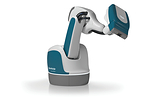
MADISON, Wis., Sept. 27, 2026 /PRNewswire/ — Accuray Incorporated (NASDAQ: ARAY) today announced that it had entered into agreements with Samsung HME America, Inc., dba NeuroLogica Corp. (“Samsung NeuroLogica”) to pursue advanced volumetric imaging capabilities for the CyberKnife® System. The announcement coincides with the American Society of Radiation Oncology (ASTRO) Annual Meeting in Boston, Massachusetts, where the companies are highlighting their collaboration. The collaboration represents another example of Accuray’s strategy to address customer priorities through targeted partnerships that bring together complementary expertise.
Accuray customers have consistently identified imaging capabilities that enhance treatment efficiency and informed decision-making as important priorities. Through this collaboration, Samsung NeuroLogica’s experience in mobile computed tomography (CT) and volumetric imaging will be coupled with Accuray’s expertise in precision treatment delivery, robotic radiosurgery, and motion management.
“When I joined Accuray, I spoke about the importance of bringing meaningful innovation to customers with greater focus and speed,” said Steve La Neve, President and Chief Executive Officer of Accuray. “That requires clarity about where Accuray should lead, where we should collaborate, and how we translate customer priorities into action. Our collaboration with Samsung NeuroLogica reflects that approach by bringing together complementary expertise to pursue opportunities that are expected to help address important customer and patient needs.”
Leading practitioners have emphasized to Accuray that volumetric imaging can enhance visualization of patient anatomy in the treatment environment and support future clinical workflows. The collaboration between Accuray and Samsung NeuroLogica is intended to pursue opportunities to bring additional imaging information closer to treatment decision-making while maintaining the regulatory rigor required in radiation oncology.
“We have long been interested in what volumetric imaging could add to CyberKnife’s non-coplanar treatment delivery and real-time motion management,” said Professor Nicholas van As, Consultant Clinical Oncologist at The Royal Marsden NHS Foundation Trust and Chief Investigator of the landmark PACE trials, which have helped establish five-fraction radiotherapy as a standard of care for selected patients with localised prostate cancer. “Seeing the target and surrounding anatomy together at the time of treatment could help us make more informed decisions for each patient. Looking further ahead, this could open new possibilities for adapting treatment to the patient’s anatomy of the day, alongside real-time motion management during delivery. We are delighted that The Royal Marsden is the first centre worldwide to participate in this Accuray–Samsung NeuroLogica collaboration, exploring what Samsung’s volumetric imaging technology could bring to the future of robotic radiosurgery.”
“The potential of volumetric imaging alongside robotic radiosurgery extends across thoracic, abdominal and pelvic malignancies,” said Jonathan Lischalk, MD, Clinical Director of Radiosurgery at MedStar Georgetown University Hospital and Clinical Associate Professor at Georgetown University School of Medicine, who will speak at Accuray’s clinical session at ASTRO on Monday, September 28. “For clinicians treating lung, pancreatic and prostate cancers, understanding the relationship between the target and nearby healthy organs at the time of treatment is central to the decisions we make. Exploring how additional imaging information could complement CyberKnife’s non-coplanar delivery and real-time motion management is an exciting direction. Looking further ahead, it could also open new possibilities for adapting treatment to changing anatomy. I look forward to discussing these clinical opportunities with colleagues at ASTRO.”
The feedback from leading clinicians reinforces the importance of pursuing innovations that can provide additional information at the time of treatment.
“Our team has spent years developing mobile CT, bringing imaging to the patient. The discussion with Accuray begins with a practical clinical need: better visualization of anatomy in the treatment room,” said Boris Geyzer, Head of Business, Mobile CT, Samsung HME America. “Samsung NeuroLogica brings deep experience in mobile computed tomography, while Accuray brings precision treatment-delivery expertise and a close understanding of radiotherapy workflows. By bringing these perspectives together, we believe that we can facilitate use of volumetric imaging to address meaningful needs in the treatment room.”
The Samsung NeuroLogica collaboration is one component of Accuray’s broader strategy to accelerate innovation and product development through a deliberate combination of internally developed technologies and strategic partnerships.
“Customers expect us to move with urgency while maintaining the discipline required in radiation therapy,” La Neve added. “We do not believe every capability must be developed internally. In many cases, the strongest path forward is bringing together distinct expertise around a shared customer or patient challenge.”
The collaboration will progress through phased development activities as the companies evaluate technical, clinical, and commercial opportunities. No commercial product offering has been announced, and future developments remain subject to ongoing evaluation and applicable regulatory requirements.
The announcement reinforces Accuray’s commitment to helping clinicians deliver highly precise treatments while advancing the company’s mission to expand the curative power of radiation therapy and improve as many lives as possible.
About Accuray
Accuray is committed to expanding the potential of radiation therapy to improve as many lives as possible. The company develops unique, market-changing solutions designed to deliver radiation treatments for even the most complex cases, while making commonly treatable cases easier, helping to meet the full spectrum of patient needs. Accuray is dedicated to continuous innovation in radiation therapy for oncology, neuro-radiosurgery and beyond. Through collaboration with clinicians and administrators, the company aims to empower healthcare professionals to help patients return to their lives faster. Accuray is headquartered in Madison, Wisconsin, USA, and has facilities worldwide. For more information, please visit http://www.accuray.com
About Samsung Healthcare USA
Samsung Healthcare USA is the unified brand for Samsung HME (Healthcare and Medical Equipment) America, bringing advanced medical imaging solutions to healthcare providers across the United States, including Ultrasound, Digital Radiography, and Computed Tomography. Samsung HME America also serves as the global manufacturing center for Samsung’s mobile Computed Tomography business, leading the development and production of advanced CT systems used by healthcare providers worldwide. As part of the Samsung Healthcare family, Samsung HME America drives the sales, marketing, service, and support of Samsung Healthcare’s imaging solutions across the United States. For more information, please visit: https://usa.samsunghealthcare.com/.
Forward-Looking Statements
Statements made in this press release that are not statements of historical fact are forward-looking statements and are subject to the “safe harbor” provisions of the Private Securities Litigation Reform Act of 1995. Forward-looking statements in this press release relate, but are not limited to, expectations regarding collaborations and strategic partnerships with third parties, including the collaboration with Samsung NeuroLogica, and the company’s ability to address customer priorities and bring meaningful innovation to customers. These forward-looking statements involve risks and uncertainties. If any of these risk or uncertainties materialize, or if any of the company’s assumptions prove incorrect, actual results could differ materially from the results expressed or implied by these forward-looking statements. These risks and uncertainties include, but are not limited to, the ability of the company to execute upon its transformation plan; the effect of the global macroeconomic environment on the operations of the company and those of its customers and suppliers; the company’s ability to achieve widespread market acceptance of its products; substantial outstanding indebtedness and its ability to maintain compliance with financial covenants related to its debt; the company’s ability to realize the expected benefits of the China joint venture and other partnerships; risks inherent in international operations; the company’s ability to maintain or increase its gross margins on product sales and services; the company’s ability to convert backlog to revenue; and such other risks identified under the heading “Risk Factors” in the company’s Annual Report on Form 10-K, filed with the Securities and Exchange Commission (the “SEC”) on August 27, 2026, and as updated periodically with the company’s other filings with the SEC.
Forward-looking statements speak only as of the date the statements are made and are based on information available to the company at the time those statements are made and/or management’s good faith belief as of that time with respect to future events. The company assumes no obligation to update forward-looking statements to reflect actual performance or results, changes in assumptions or changes in other factors affecting forward-looking information, except to the extent required by applicable securities laws. Accordingly, investors should not put undue reliance on any forward-looking statements.
Accuray Media Contact
Taylor Bould
Communications Specialist, Accuray
+1 (608) 830-3604
tbould@accuray.com
Samsung Healthcare USA Media Contact
Anthony Tardi
Samsung HME America
978.564.8500
atardi@samsunghme.com
View original content to download multimedia:https://www.prnewswire.com/news-releases/accuray-and-samsung-neurologica-advance-volumetric-imaging-collaboration-for-the-accuray-cyberknife-platform-302890828.html
SOURCE Accuray Incorporated
You may like
Technology
AI Memory & Storage: The 5th GMIF2026 Innovation Summit Successfully Concludes in Shenzhen
Published
58 minutes agoon
September 27, 2026By
SHENZHEN, China, Sept. 26, 2026 /PRNewswire/ — On September 23, the 5th GMIF2026 Innovation Summit successfully concluded at the Renaissance Shenzhen Bay Hotel. Co-hosted by the Shenzhen Memory Industry Association (SMIA) and School of Integrated Circuits at Peking University, the summit, themed “The Future Built on AI Memory and Storage,” has brought together industry forces from IDMs, controllers, and memory solution providers to OSATs, equipment and material suppliers, server and AI infrastructure vendors, automotive electronics companies, AI applications developers, academic institutions, and investors. In-depth discussions explored the evolution of memory and storage technologies, industry trends, and application innovations in the AI era.
As AI training and inference workloads continue to scale, the boundaries of memory and storage technology and its applications keep expanding — from storage media and controllers to system architecture and AI applications themselves. GMIF 2026 approached the industry through the lens of the token economy, spotlighting inference efficiency, enterprise-grade storage, cloud-edge-device coordination, industrial capital, and the shifting global competitive landscape.
Five Years of GMIF: A Platform Built Around the Memory & Storage Industry
The summit officially kicked off with an opening remarks from Rixin Sun, President of the Shenzhen Memory Industry Association (SMIA). He looked back on GMIF’s growth since its founding in 2019. Now in its fifth consecutive year, the summit has steadily expanded in scale, industry reach, and influence, with its agenda consistently tracking the pulse of the storage sector.
President Sun said GMIF will continue to pursue a more specialized and differentiated approach going forward — staying close to frontier industry trends and supply-chain coordination, while connecting storage companies with adjacent players in AI compute and end-user applications to drive technical exchange, supply-demand matching, and ecosystem collaboration.
As AI Inference Accelerates, Memory & Storage’s Value Climbs
Daniel Yen, Executive Director at Morgan Stanley, opened the technical discussion with a look at how generative and agentic AI are reshaping infrastructure demands. As model weight loading, KV cache management, and data read/write scheduling grow more complex, Daniel noted that AI capital expenditure keeps rising — and memory and storage’s share of that investment, and its strategic value, are rising with it. He pointed to the “memory wall” as a defining challenge now driving fresh innovation in storage architecture, advanced packaging, and related technologies.
Yimao Cai, Dean of School of Integrated Circuits at Peking University, addressed the topic from the angle of AI inference architecture, discussing the growing role of high-bandwidth storage and multi-media integration. As large model inference drives up demand for capacity, bandwidth, and cost efficiency, Prof. Cai suggested that high-bandwidth flash (HBF) and heterogeneous multi-media storage architectures stand to play a larger role — combining HBM, NAND, and RRAM to strike a better balance between performance, capacity, and cost for AI inference.
Global IDMs Race to Meet the Demands of Agentic AI
Kevin Yoon, CVP & CTO of Samsung Memory China at Samsung Electronics, discussed memory architecture in the age of agentic AI. As agentic AI drives token generation and KV cache volumes to new heights, AI systems are placing greater demands on capacity, bandwidth, and energy efficiency. He outlined Samsung’s progress on Z-NAND, PCIe Gen6 SSDs, and ultra-high-capacity data center SSDs, and discussed how tiering across different storage media can more efficiently support KV cache and model weight storage.
Maya Zhang, Senior Director of Product Marketing at Sandisk, focused on data storage needs in the age of AI inference. As multimodal models, long-context processing, and increasingly sophisticated agents continue to grow KV cache demands, she noted, NAND flash is becoming ever more central to AI infrastructure. She added that more flexible data tiering and reuse across SSDs can improve efficiency for different AI workloads, and that high-density technologies like QLC are set to see broader adoption in AI use cases.
Benny Ni, GAR Sales VP at Solidigm, addressed enterprise SSDs’ role in AI infrastructure amid growing data volumes and operational demands. As model size, token counts, and inference complexity all continue to climb, he said, memory offloading and data tiering are becoming core components of AI system architecture — with high-capacity QLC SSDs paired with high-performance storage offering a more efficient, cost-effective data foundation for inference.
Cloud, Edge, and Device: AI Opens New Ground for Memory & Storage
John Xavier Lionel, Head of Global Storage Business at Arm, spoke on system-level coordination in AI inference, noting that inference spans compute, memory, storage, and data movement — all of which require holistic architectural optimization. As small models, quantization, and heterogeneous NPUs continue to advance, he said, AI deployment will increasingly span cloud, edge, and device, with local storage taking on a larger role in hosting model weights, knowledge bases, and application data.
Stanley Huang, AVP at Silicon Motion, focused on storage requirements in multi-agent, concurrent-use scenarios, where differing tasks demand tailored QoS, latency, and resource allocation. He described how Silicon Motion’s controller and resource-scheduling technologies improve storage efficiency under complex workloads, spanning enterprise SSDs, server storage, mobile UFS, autonomous driving, and robotics applications.
Sam Sun, Chairman at BIWIN, discussed how AI is simultaneously driving storage demand across data centers, edge, and endpoint devices — each with distinct requirements. In data centers, he noted, AI training and inference are pushing up demand for enterprise SSDs and server memory; at the edge and endpoint, applications like AI/AR glasses, AI PCs, smart vehicles, and industrial equipment are pushing storage toward smaller form factors, lower power consumption, higher reliability, and tighter system integration. Sam Sun said BIWIN continues to leverage its integrated solutions and manufacturing capability across enterprise, embedded, PC and mobile, industrial, and automotive product lines — with innovations like Mini SSDs, ultra-compact embedded storage, and wide-temperature industrial SSDs opening new ground in the AI era.
From Compute Infrastructure to Token Production, Deeper System-Level Integration
Tao Zhou, General Manager of the Server Division at Lenovo ISG China, discussed the concept of the “token factory.” As enterprise AI moves from proof-of-concept to large-scale deployment, he said, improving the efficiency of AI infrastructure and sustaining stable token output have become critical industry priorities. He also described how top-level design, data governance, compute optimization, and security management — combined with pooled training/inference resources and hardware-software coordination — are helping enterprise AI infrastructure evolve from simple compute buildout into systematic operations.
Fan Zhang, Chief Computing Architect at NEXWISE, discussed integrated management and scheduling across cloud, compute, and storage resources from an operations standpoint, showing how coordination across compute, storage, and software platforms can improve overall infrastructure efficiency.
Wei Xiong, CTO of Infplane, focused on storage tiering in large model inference, explaining how hot/cold data tiering and intelligent scheduling can shift more inference workload onto SSDs — reducing memory footprint and improving token output efficiency.
Across servers, AI computing centers, and storage systems, deeper coordination among compute, memory, storage, networking, and software scheduling is emerging as a defining trend in AI infrastructure.
From Core Technology to Real-World Application, AI Memory & Storage Ecosystem is Converging Fast
As AI continues to move into automotive, robotics, and enterprise applications, the connection between the storage industry and AI use cases keeps deepening.
Junjia Chen, AI Product Director at SYNCORE, discussed the application of agent architecture in automotive scenarios, focused on smart cockpits and vehicle-wide intelligence.
Lusha Chen, General Manager for APAC at Dify, introduced a “workflow plus agent” model for enterprise AI, connecting large models, corporate knowledge bases, business systems, and end-user applications to embed AI more deeply into enterprise workflows.
Gongjie Liu, Regional Director for Central & Southern China & General Manager of Branch Office at Paratera, discussed multi-model access, unified management, and enterprise AI services built around a MaaS platform.
Zhen Li, VP of Genstoraige, spoke to the concept of “storage-powered compute,” covering data hosting, high-speed interconnects, and intelligent scheduling within AI systems.
Yunjie Ye, Chairman of Numbers Law, presented the company’s work on next-generation mechanical storage architectures for large-capacity data storage.
Ming Zhao, General Manager of OKN Technology, addressed testing requirements for the AI era, describing how test equipment is evolving to support higher speeds, more complex scenarios, and real-world workload simulation for PCIe 6.0 SSDs, memory, and increasingly demanding AI applications — laying the groundwork for the development and large-scale deployment of next-generation storage products.
The Future Built on AI Memory & Storage
From AI inference to agentic AI, from emerging storage media to enterprise SSDs, from data centers to edge and endpoint devices, and from controllers, packaging, and testing equipment to servers, AI computing platforms, and applications, GMIF 2026 highlighted the technological innovation and industry transformation taking place across the memory and storage ecosystem in response to AI.
The massive volumes of data that AI generates, retrieves, and moves are steadily elevating memory and storage’s role within the broader computing stack. Demand for high-capacity, high-bandwidth, and high-reliability storage in data centers continues to climb, while emerging endpoints — AI PCs, smart vehicles, AI/AR glasses, robotics — keep opening new application space. Together, cloud, edge, and device are shaping a richer and more complex set of storage requirements for the AI era.
Meanwhile, the technology itself keeps moving — HBM, HBF, NAND flash, enterprise SSDs, and a handful of newer media all advancing in parallel, with controllers, packaging, testing, and software scheduling evolving alongside them into tighter, more coordinated systems.
Now in its fifth successful year, GMIF has established itself as a leading platform for exchange across the global memory and storage industry. Looking ahead, GMIF will continue to focus on technological innovation, industry trends, and supply-chain collaboration — bringing together key players from across the global industry, pursuing an increasingly specialized and differentiated event model, and fostering deeper exchange and cooperation across the storage value chain.
Media Contact:
Carina Gu
wenjing.gu@gmif.com.cn
View original content to download multimedia:https://www.prnewswire.com/news-releases/ai-memory–storage-the-5th-gmif2026-innovation-summit-successfully-concludes-in-shenzhen-302890873.html
SOURCE Shenzhen Memory Industry Association (SMIA)
Technology
NonPublic eclipses US$500M in assets, becomes one of Australia’s fastest-growing private markets investment platforms
Published
58 minutes agoon
September 27, 2026By
NonPublic has grown assets under administration to over US$500 million in under four years, giving Australian wholesale and sophisticated investors direct exposure to pre-IPO companies including SpaceX, Perplexity, and Groq.
SYDNEY, Sept. 27, 2026 /PRNewswire-PRWeb/ — Private markets technology investment platform NonPublic has grown assets under administration (AUA) across the Group to more than US$500 million in under four years, making it one of the fastest-growing private markets investment platforms in Australia.
It has achieved this growth by building a portfolio that spans some of the most closely watched private technology companies globally, including the likes of SpaceX, Shield AI, Groq, Ayar Labs, Perplexity, Tenstorrent, Discord, and more.
NonPublic uses a unique structure that pools capital from Australian wholesale and sophisticated investors, giving individual investors exposure to a single private company.
This gives individual investors access to minimum commitments of US$1 million to US$5 million and United States Securities and Exchange Commission (SEC) accreditation thresholds that would otherwise be out of reach for most Australians investing directly.
NonPublic has positions in sectors including defence, robotics, and energy generation. The platform has also launched a secondary market that lets investors sell an eligible position before a company lists publicly.
Over the next 12 months, NonPublic plans to deepen its Australian investor base including across family offices and financial advisers, while also exploring expansion into international jurisdictions.
The fact that the platform is expanding into new sectors and markets signals growing Australian investor appetite for pre-IPO access to private US technology companies, according to NonPublic.
Milan Reinartz, founder and CEO of NonPublic, said: “Four years ago, Australian wholesale investors had almost no structured way to access the private US technology companies driving the next wave of global growth. Reaching over US$500 million in assets under administration in that time reflects how quickly that gap has closed, and how much appetite there is among sophisticated investors for deal-by-deal access, where they choose exactly which company they back with each vehicle.
“Our growth has been built one company at a time, from Tenstorrent and Perplexity through to SpaceX and Groq, and it shows how quickly Australian investor appetite for this kind of access is growing. Our task over the next 12 months is to deepen that access for Australian investors, broaden the sectors we cover, and build the secondary market functions that give investors a genuine path in and out of these positions.”
NonPublic (www.nonpublic.com) is an Australian-licensed investment platform providing sophisticated/accredited and professional investors with curated access to exclusive pre-IPO and private market opportunities, with a focus on leading US technology companies. Through a transparent, technology-enabled platform, NonPublic connects investors with high-growth private companies, secondary transactions, and alternative investment opportunities that have traditionally been difficult to access. NonPublic Pty Ltd holds Australian Financial Services Licence (AFSL) 482668.
*This article does not constitute investment advice.
Media Contact
Priyanka Dogra, NonPublic, 61 0410593587, priyanka@thirdhemisphere.agency, www.nonpublic.com
View original content to download multimedia:https://www.prweb.com/releases/nonpublic-eclipses-us500m-in-assets-becomes-one-of-australias-fastest-growing-private-markets-investment-platforms-302889069.html
SOURCE NonPublic
Technology
Leo Cancer Care Unveils Bold Plans to Improve How Children Experience Radiotherapy, Following World-First Treatments
Published
2 hours agoon
September 27, 2026By
BOSTON, Sept. 27, 2026 /PRNewswire/ — Leo Cancer Care has announced plans to further invest in the treatment experience for children undergoing radiation therapy. Following the world’s first pediatric treatments using an upright positioning and imaging platform, Marie®, the company has confirmed it has developed a dedicated pediatric program bringing together education, distraction and gamification.
First pediatric treatments
In June 2026, Stanford Medicine delivered the first treatments using the Mevion S250-FIT Proton Therapy System™, which integrates Leo Cancer Care’s Marie® upright positioning and imaging solution and utilizes RaySearch Laboratories’ RayStation® planning system.
These early treatments have shown not only that upright pediatric proton therapy is feasible, but that it can be applied across a wide pediatric age range, and that anesthesia remains available where it is the right clinical choice.
A more natural position for children
The company set out to develop a platform that would simplify the delivery of, and access to, radiation therapy by rethinking the conventional approach. Instead of moving the radiation beam around a patient lying down, their solution inverts this: The beam stays fixed while the patient, seated or semi-standing, is rotated to treatment positions in front of it.
An upright position also encourages more active participation. When children can sit or stand, it is easier for them to play an active role in their treatment, which may help reduce fear and foster a sense of control.
Unlocking imaginations to design a new experience
The foundation of the new experience is underpinned by the premise that a chair can become, in a child’s imagination, the seat of a rocket ship blasting off into space, or the driver’s seat of a racing car at the Grand Prix.
This insight has been carried through into a dedicated program for children. It includes an augmented-reality education platform that lets a child explore the upright treatment room on a phone or tablet before their first visit, guided by Leo the Lion, who also appears as a soft toy from the first oncology appointment and in Toby’s Magic Chair, a storybook following a young boy through upright treatment.
Leo Cancer Care has also licensed a Stanford Medicine system called AVATAR: a radiolucent screen positioned in the child’s line of sight in the treatment room, designed to offer immersive distraction during treatment and reduce the need for anesthesia.
New research efforts and clinician guidance
A new report, Upright positioning in pediatric radiotherapy: rationale, safety considerations and a research roadmap, has been published in Technical Innovations & Patient Support in Radiation Oncology. It is the work of the Upright Radiotherapy Pediatric Task Group, an international, multiprofessional group spanning radiation oncology, medical physics, radiation therapy, pediatric anesthesia and industry, including Leo Cancer Care.
The report finds that upright positioning may reduce distress for selected children, while noting that pediatric-specific evidence remains limited. It outlines a research roadmap for upright radiotherapy in pediatric oncology and highlights the importance of standardized, safety-led workflows for children.
Challenging the conventions to deliver a more human way
Pediatric patients are the leading clinical application for proton therapy, and the children with the clearest indication have historically had the least access to it.
Leo Cancer Care’s aim is to make radiation therapy fit the patient rather than the other way around. Their upright platform opens access to the children who need protons most, and changes what the room asks of them once they are in it. It is a true nod to their vision of delivering radiation therapy in a more human way.
At the American Society for Radiation Oncology (ASTRO) 2026 Annual Meeting in Boston, Leo Cancer Care is sharing its clinical progress and vision for the future at booth 519.
View original content to download multimedia:https://www.prnewswire.co.uk/news-releases/leo-cancer-care-unveils-bold-plans-to-improve-how-children-experience-radiotherapy-following-world-first-treatments-302890856.html
AI Memory & Storage: The 5th GMIF2026 Innovation Summit Successfully Concludes in Shenzhen
NonPublic eclipses US$500M in assets, becomes one of Australia’s fastest-growing private markets investment platforms
Leo Cancer Care Unveils Bold Plans to Improve How Children Experience Radiotherapy, Following World-First Treatments
Send Rakhi to UK swiftly with UK Gifts Portal
Whiteboard Series with NEAR | Ep: 45 Joel Thorstensson from ceramic.network
New Gooseneck Omni Antennas Offer Enhanced Signals in a Durable Package
Why You Should Build on #NEAR – Co-founder Illia Polosukhin at CV Labs
Whiteboard Series with NEAR | Ep: 45 Joel Thorstensson from ceramic.network
NEAR End of Year Town Hall 2021: The Open Web World, MetaBUILD 2 Hackathon and 2021 recap
Trending
-
Technology5 days agoReap and Visa Collaborate to Launch Stablecoin Card Programs Across 100+ Markets
-
Technology4 days agoBrain-Inspired AI Neo-lab Xisiid Intelligence Raises Seed Funding
-
Technology4 days agoRealset AI and Flatkey Raise $10M Series A to Build Real-World Training Data for Frontier Models and Embodied Agents
-
Technology4 days agoApex CoVantage to Launch eden, an AI-Powered Editorial Engine for Publishing, at Frankfurt Book Fair
-
Technology4 days agoAvalara Ushers in New Era of Agentic Tax and Compliance with Avalara Aviator
-
Technology4 days agoBeroe reveals Beroe abi: the world’s smartest digital procurement analyst
-
Technology5 days agoTencent Cloud Launches Tencent Cloud DataBuddy, an Agent-Native Data + AI Workbench
-
Technology5 days agoTacnIQ.ai raises US$1.5 million from In Group Holdings to scale tactile AI