Connect with us

Technology

Companies risk losing their most AI-savvy employees while leaving majority behind: PwC

Published

on

Across the workforce, AI use is up 10 points – but access to learning and development resources is down 8 pointsWorkers who use AI daily are significantly more likely to trust management, feel secure in their jobs and view technological change positivelyHowever, the majority of workers (56%) are falling behind – only two in five say they have access to the learning and development resources they needMeanwhile, almost a third (29%) of ‘front-runner’ employees with strong AI capabilities and scarce skills say they are very or extremely likely to change employer in the next year.Cost-of-living pressures rise: Only a third of workers report having money left at the end of the month, down 8% year on year

LONDON, Sept. 29, 2026 /PRNewswire/ — A growing AI skills divide is creating a diverging workforce, with the majority of workers at risk of being left behind as access to learning and development falls – even as AI use and the pace of workplace change accelerate.

PwC’s 2026 Global Workforce Hopes and Fears Survey, which interviewed nearly 50,000 workers across 48 countries and regions, finds diverging optimism in the growth trajectories and experiences of employees – as workers face rapid change, rising workloads and greater cost-of-living pressures.

Just 51% say they have access to the learning and development resources they need, down from 59% last year.

The divide is particularly stark among the 56% of ‘engine room’ workers whose skills are less scarce and who are not far along the AI learning curve: only two in five of those workers say they have access to the learning and development resources they need.

Meanwhile, workers who use AI daily are more confident in their job security, more likely to trust management and more confident about their ability to learn new skills.

Pete Brown, Global Workforce Leader, PwC, said:

“Workers are under growing pressure from rising workloads, rapid change and external uncertainty. But those using AI every day are more confident, more ambitious and more positive about their careers and prospects. The challenge for leaders is to keep developing those people – but not at the expense of the rest of the workforce.”

AI adoption continues to rise but workers face growing pressures

Workers are feeling significant pressure. Only a third report having money left at the end of the month, down 8% year on year.

At the same time, almost a third (29%) say they have significantly less bargaining power than three years ago, more than double the number who disagreed. For fully remote workers, the proportion is 10 points higher.

When considering the biggest risks to job security, more workers cite economic volatility (57%) than AI taking on more tasks (44%) – with Gen Z more anxious across all these metrics.

Three-fifths (58%) of those who have experienced change in the workplace feel there has been more change in the last year than in previous years. Almost one-third (27%) say that feeling fatigued or burned out limits their productivity.

The vast majority of workers say they have also had to apply new skills in their job over the past year, with two-fifths (40%) saying this was to a large or very large extent.

Change is happening faster at leadership levels. More than half (51%) of senior executives and 46% of managers say they have applied new skills in their roles, relative to 29% of non-managers and 38% of entry-level workers.

But as workers face mounting pressure – AI adoption continues to rise: nearly two-thirds (64%) of all workers cite using AI at work in the past 12 months – a ten-point increase relative to last year. The proportion using Gen AI daily also increased from 14% to 22%. Roughly three-fifths (59%) of workers expect their use of AI tools in their job to increase over the next 12 months. This group reports that the use of AI makes them feel energised and empowered rather than tired and powerless, by margins of around 5:1.

Daily AI users in the workforce are also more optimistic: 68% report confidence in their job security compared to 57% for infrequent users. They are also more likely to ask for a promotion (+12 percentage points), trust top management (+15) and be confident they can learn new skills (+21).

The new workforce divide

While workers are broadly confident (61%) that they can develop skills growth – only half (51%) cite being able to access learning and development resources (down from 59%). To understand this further, the report segments the workforce into four groups:

Front-runners (14%), with scarce skills and strong AI capabilitiesAI insurgents (18%), whose skills are less scarce but are using AI to deliver moreIndispensables (11%), with scarce skills that employers value highly, but who are not far along the AI learning curveThe Engine Room (56%), whose skills are not scarce and who are not far on the AI learning curve

The report highlights the need for employers to pay particular attention to the ‘engine room’ group. This group is less likely to be rewarded for using AI, learning new skills or challenging existing ways of working – yet they are the majority of the workforce, responsible for most of the day-to-day work within an organisation.

Meanwhile the ‘front-runners’ are seeing strong benefits from their position. They are most likely to over-index on being rewarded for challenging existing ways of working (1.5x global average) and learning new skills (1.2x global average). This group is also +33 points more likely to ask for a promotion.

In a challenge to employers seeking to retain their most valuable workers, almost a third (29%) of this group say they are very or extremely likely to change employer in the next year.

Pete Brown, Global Workforce Leader, PwC, concluded:

“There is a real risk that the global workforce is starting to move at different speeds. More than half of workers are not yet benefiting from AI and skills in the same way, while those with scarce skills and strong AI capabilities are becoming more confident and more mobile. Leaders need to think hard about where they invest in skills, how they give people the opportunity to adapt, and how they hold on to the capabilities they most need.”

Notes to Editors

About PwC’s 2026 Global Workforce Hopes and Fears Survey

PwC’s 2026 Global Workforce Hopes and Fears Survey gathered responses from 49,364 workers across 48 countries and regions and 29 sectors in May and June 2026. The figures in this report are weighted proportionally to the working population’s gender and age distribution in each country or region, ensuring workers’ views are broadly representative across all major geographies. 

About PwC 

At PwC, we help clients build trust and reinvent so they can turn complexity into competitive advantage. We’re a tech-forward, people-empowered network with more than 360,000 people in 130+ countries and territories. Across audit and assurance, tax and legal, deals and consulting, we help clients build, accelerate, and sustain momentum. Find out more at www.pwc.com.    


View original content to download multimedia:https://www.prnewswire.co.uk/news-releases/companies-risk-losing-their-most-ai-savvy-employees-while-leaving-majority-behind-pwc-302891364.html

Continue Reading

Technology

CTM and Huawei Jointly Launch the World’s First Integrated QKD-Communication Target IP Network to Reinforce Digital Security Across the Greater Bay Area

Published

on

By

MACAO, Sept. 29, 2026 /PRNewswire/ — To counter the emerging network security challenges posed by quantum computing, CTM has actively embraced the national quantum strategy. It is designing a quantum-secured framework to build an integrated QKD-communication network security foundation, further enhancing the end-to-end transmission security of critical data. In addition, CTM plans to roll out quantum-secured private lines for enterprise and government sectors to unlock new growth opportunities while supporting Digital Macao and fortifying digital security across the Greater Bay Area. CTM and Huawei are pioneering the world’s first integrated QKD-communication target IP network, driving the development of the quantum industry chain throughout the region.

The rapid advancement of quantum computing is driving a disruptive shift in the global network security landscape. Encrypted data that would take traditional computers trillions of years to crack can now be breached in just minutes using quantum computing. This poses an unprecedented, seismic challenge to the security defenses of critical digital assets and sensitive data. To strengthen China’s digital security defenses, the 15th Five-Year Plan Outline has designated quantum technology as a strategic future industry.

CTM and Huawei have jointly launched the world’s first integrated QKD-communication target network. Innovative QKD-communication integration combines the quantum, negotiation, and communication channels into one, while seamlessly integrating communication and quantum networks into a single network to create a next-generation communication network foundation with quantum security. The network will serve as a shield against quantum computing threats for core and sensitive services such as government office, financial transactions, and critical infrastructure, ensuring end-to-end secure transmission of critical services.

Mr. Poon Fuk Hei, CEO of CTM, stated that as a core enabler of Macao’s digital and intelligent transformation and a trusted guardian of its communication security, CTM has long been dedicated to building and strengthening local communication networks. It has been a key driver behind the evolution and real-world deployment of the network foundation powering Digital and Intelligent Macao. He added that, aligning with national strategic goals and Macao’s regional digital security needs, CTM has proactively deployed a local quantum-secured network foundation, fully accelerating the adoption of cutting-edge quantum security technologies in Macao.

Leon Wang, President of Huawei’s Data Communication Product Line, stressed that security and resilience is one of the three defining characteristics of IP bearer networks. He noted that in the realm of quantum security—a crucial subset of security and resilience—Huawei has maintained continuous investment and innovation across hardware, software, algorithms, and more. For example, Huawei pioneered the industry’s first router with built-in QKD. This innovation helps operators to reduce TCO by over 60%. This empowers CTM to build a quantum-secured network foundation featuring QKD-communication integration, providing robust security assurance for the digital transformation and core data transmission of government and enterprise customers.

Looking ahead, CTM and Huawei will continue to deepen their strategic partnership in industrial development and technological innovation, designing products specifically for quantum-secured private lines while accelerating their deployment on live networks. Meanwhile, leveraging Macao’s unique geographical advantages and technical expertise, the two companies aim to drive collaborative development, technological innovation, and practical applications of the quantum security industry within the Guangdong-Hong Kong-Macao Greater Bay Area, ultimately safeguarding the high-quality development of the region’s digital economy.

View original content to download multimedia:https://www.prnewswire.com/in/news-releases/ctm-and-huawei-jointly-launch-the-worlds-first-integrated-qkd-communication-target-ip-network-to-reinforce-digital-security-across-the-greater-bay-area-302892553.html

Continue Reading

Technology

Sectra signs partner agreement to bring enterprise imaging to Brazil

Published

on

By

LINKÖPING, Sweden, Sept. 29, 2026 /PRNewswire/ — International medical imaging IT and cybersecurity company Sectra (STO: SECT B) has signed a partner agreement with S&S Partners, marking Sectra’s entry into Latin America’s largest healthcare market. The initial commercial focus will be on Sectra’s enterprise imaging platform Sectra One Cloud, providing Brazilian hospitals access to a unified imaging environment that reduces operational complexity and supports improved diagnostic care.

“Brazil’s leading hospitals have signaled interest in a unified, cloud-based imaging platform, and we see a clear opportunity in a market where the transition from on-premise to cloud is gaining momentum. Partnering with S&S Partners gives us access to the relationships and local knowledge needed for a successful market entry,” says Torbjörn Kronander, President and CEO at Sectra.

Brazil has approximately 7,100 hospitals, with the private sector accounting for the majority of advanced imaging investment. The market is shifting away from on-premise capital purchases toward cloud-based platforms with subscription economics, driven by demand from major private hospital groups for more scalable and operationally efficient imaging solutions.

“Brazil’s leading hospital groups have been looking for a scalable, cloud-based imaging platform that consolidates multiple specialties in a single system. With Sectra, we can offer that. The transition toward cloud subscription models is already underway in the market, and we see a clear opportunity to support hospitals in making that shift effectively,” says Daurio Speranzini, CEO, S&S Partners.

S&S Partners brings executive-level experience from the medical technology sector in Latin America, with established relationships across Brazil’s leading private hospital groups and a track record of building healthcare technology businesses in the region. The company has already initiated commercial activity, including marketing activity ahead of the Brazilian Radiology Congress that reached approximately 3,000 users across Brazil’s top hospital accounts.

Sectra’s enterprise imaging solution provides a unified strategy for all imaging needs while lowering operational costs. The scalable and modular solution, with a VNA at its core, allows healthcare providers to grow from ology to ology and from enterprise to enterprise. Visit Sectra’s website to read more about Sectra and why it’s top-ranked in “Best in KLAS”.

For further information, please contact:
Dr. Torbjörn Kronander, CEO and President Sectra AB, 46 (0) 705 23 52 27
Marie Ekström Trägårdh, Executive Vice President Sectra AB and President Sectra Imaging IT Solutions, 46 (0)708 23 56 10

This information was brought to you by Cision http://news.cision.com

https://news.cision.com/sectra/r/sectra-signs-partner-agreement-to-bring-enterprise-imaging-to-brazil,c4401751

The following files are available for download:


View original content:https://www.prnewswire.co.uk/news-releases/sectra-signs-partner-agreement-to-bring-enterprise-imaging-to-brazil-302892555.html

Continue Reading

Technology

Ultima Markets Named “Prime Player in Forex Industry 2026” at Forex Expo Dubai

Published

on

By

EBENE CYBERCITY, Mauritius, Sept. 29, 2026 /CNW/ — Ultima Markets concluded its participation at Forex Expo Dubai 2026, held on 22 and 23 September at the Dubai World Trade Centre. Operating from Booth 127, the team engaged with institutional partners and retail traders, presenting competitive trading conditions alongside institutional-grade technology.

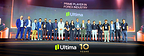
During the official ceremony, Ultima Markets was awarded “Prime Player in Forex Industry 2026.” The accolade recognises the broker’s dependable market execution and ongoing commitment to technological innovation.

In an official Executive Interview conducted by the expo organizers, Waleed Yaseen, Country Manager for Jordan, addressed evolving trader interests and expectations. Yaseen outlined the firm’s trading platforms and flexible account solutions, while detailing Ultima Markets’ five-year growth outlook and the expo’s role in connecting the global trading community.

At the booth, visitors experienced live platform demonstrations and joined the “Hit 10.00” Challenge, competing to freeze a digital timer at exactly ten seconds. Global Market Analyst Georg Schmidt joined the team on site to deliver real-time market commentary.

“Forex Expo Dubai brings together some of the most engaged traders in the region,” Schmidt said. “Comparing notes on where the markets are headed and hearing directly what is on people’s minds has been the highlight of the event.”

Ultima Markets concluded the event positioned to reinforce its international partner network and support traders worldwide.

About Ultima Markets

Ultima Markets operates globally through entities regulated by the Financial Conduct Authority (FCA), Financial Sector Conduct Authority (FSCA), and Financial Services Commission (FSC). As the Official Regional Partner of FC Internazionale Milano, UM unites football passion with trading knowledge. Serving 170+ countries with 1,000+ instruments, the broker is a 50+ award winner and proud supporter of the UN Global Compact, aligning with Sustainable Development Goals for responsible growth.

Risk Warning

Leveraged derivative products are complex and involve a high risk of losing your capital quickly due to leverage. You should consider whether you understand how these products work and whether you can afford to take the high risk of loss.

View original content to download multimedia:https://www.prnewswire.com/news-releases/ultima-markets-named-prime-player-in-forex-industry-2026-at-forex-expo-dubai-302892556.html

SOURCE Ultima Markets

Continue Reading

Trending