Connect with us

Technology

Asia New Vision Forum Innovation 2026 Opens in Singapore, Focusing on “Disruption Meets Resilience”

Published

on

SINGAPORE, Sept. 30, 2026 /PRNewswire/ — Asia New Vision Forum (ANVF) Innovation 2026 opened in Singapore on September 29. More than 300 policymakers, entrepreneurs and experts from across the globe gathered at the event to explore pathways toward sustainable development.

Launched by Caixin Global with support from the Singapore government, the Asia New Vision Forum has successfully held three editions since 2023. For its fourth edition in 2026, the forum launches the sub-brand “Innovation Forum”, marking its evolution from macro geopolitical dialogues toward practical business solutions and industry-level implementation.

Under the theme “Disruption Meets Resilience”, participants engaged in in‑depth discussions covering macro level topics including shifting geopolitical landscapes, advances in artificial intelligence, supply‑chain resilience, energy transition, biotechnology and investment in emerging markets, as well as practical issues such as real‑world AI deployment and transformations in Asian consumption, culture and tourism.

Wang Shuo, Editor-in-Chief of Caixin Media, delivered the opening remarks. He noted that the transformations we face today are twofold: the unraveling of the old order and AI reshaping everything. Both are sweeping in with overwhelming force, breaking down and building up at once. Resilience, he added, comes from meaning.

Heng Swee Keat, Co-Chair of ANVF, Former Deputy Prime Minister of Singapore, delivered the opening keynote address. He said that amid technological advances, the energy transition, supply-chain realignment and geopolitical tensions, countries need to build on stability to advance ongoing economic and industrial restructuring, while expanding their respective capabilities through cooperation.

The two-day forum features keynote addresses, panel discussions, the ASEAN Business Forum, fireside chats and closed-door meetings. Amiram Appelbaum, Chairman of Ofir SouthUp Ventures and former Chairman of the Israel Innovation Authority and former Israel Chief Scientist, also delivered a keynote focused on “Bridging Innovation Ecosystems: From National Strategy to Global Venture Creation.”

The opening panel, “Asia as a Stable Force: Navigating Through Geopolitical Disruptions,” brought together Yu Tiejun, President of the Institute of International and Strategic Studies and Professor at the School of International Studies, Peking University; Joseph Liow Chinyong, Dean of the Lee Kuan Yew School of Public Policy, National University of Singapore; and Yasuto Watanabe, Director and CEO of the ASEAN+3 Macroeconomic Research Office (AMRO), to examine Asia’s role as a stabilizing force in a volatile global environment.

Discussions on day one examined investment trends, China’s growth outlook, and the evolution of culture, travel and consumption, with participation from Patrick Lee, CEO of Singapore and CEO of ASEAN and South Asia, Standard Chartered; Jin Jianhua, General Manager of China Securities Co., Ltd.; Zhu Feng, Distinguished Professor and Former Dean of the School of International Studies, Nanjing University; Shen Minggao, Professor of Practice at the School of Management, Zhejiang University, and Vice Chairman of the China Chief Economist Forum; Feng Han, Head of Marketing, Trip.com; and He Jihong, Chief Strategy Officer, H World Group.

AI-focused sessions featured Zhang Tao, Chief Representative of the BIS Office of Asia and the Pacific; Chen Lihao, Deputy Director of Resources and Environment, the Central Committee of JIUSAN Society; Chen Feng, CEO of Arm Technology (China) Co., Ltd.; Allen Zhang, Founder and CEO of MATRIX Robotics; Chang Qing, Vice Chairman of Squirrel Ai Learning; and Xie Shuo, GM of Momenta Robotaxi, where panelists explored computing constraints and the deployment of AI in business and industry.

Beyond deployment, Gaurav Keerthi, CEO and Founder of StrongKeep Cybersecurity, and Gene Yu, Founder and CEO of Blackpanda Group, examined the cybersecurity implications of AI and geopolitical fragmentation in “The Invisible Battlefield: Cybersecurity in the Age of AI and Geopolitical Fragmentation”.

In the afternoon, a special focus on ASEAN was explored via the ASEAN Business Forum: The Future of Capital & Connectivity, where discussions centred on Asia’s growth engines, renminbi (RMB) internationalization and the evolving needs of a new generation of consumers. Cao Zhongming, Chinese Ambassador to Singapore, and Sim Tze Tzin, Malaysia’s Deputy Minister of Investment, Trade and Industry and Member of Parliament, delivered keynote addresses. Andy Lee, VP of International Business and GM for Southeast Asia Region, Alibaba Cloud Intelligence Group; Jean Lu, Chief Executive Officer and Executive Vice Chairperson, Standard Chartered Bank (China) Limited; Allen Zhu, Managing Partner, GSR Ventures; and Guan Tao, Chief Economist, Huafu Securities Co. Ltd., joined the discussions, amongst others.

Day two picks up momentum with dialogues around secure energy flows, medical innovation, critical-mineral supply chains, AI’s impact on companies and talent, and sustainable development. Grace Fu Hai Yien, Singapore’s Minister for Sustainability and the Environment and Minister-in-charge of Trade Relations, will join a fireside chat “From Singapore to Asia – The Sustainability Playbook,” while Tan Kiat How, Singapore’s Senior Minister of State, Ministry of Digital Development and Information and Ministry of Health, will deliver a keynote address on “Singapore’s National AI Strategy.” Other speakers include Dominic Barton, Chair of Rio Tinto and LeapFrog Investments and former Canadian Ambassador to China; Tai E Shyong, Professor at the National University of Singapore; and Helena Li, Executive President of Trinasolar.

ANVF Innovation 2026 concludes with an invitation-only gala dinner, where Yao Ming, International Advisory Board Member of Caixin Global Forum and Chairman of the YAO Foundation; Gita Wirjawan, Former Indonesian Minister of Trade; and Hua Fung Teh, Co-Founder and Group President of ONE Championship, will come together for a special dialogue on nurturing resilient future generations: “The Human Advantage: Growing Up, Staying Connected and Leading Through an Uncertain Future.”

For more information, please visit the Asia New Vision Forum: Innovation 2026

About Caixin Global

Caixin Global is a highly respected international source for macroeconomic, financial, and business news about China. Leveraging Caixin Media’s award-winning journalism, Caixin Global delivers reliable, independent reporting via its 24/7 digital platform (caixinglobal.com) and its print publication, Caixin: China Economics and Finance. Its conference division is dedicated to convening global elites to generate actionable insights in an era of rapid transformation.

View original content:https://www.prnewswire.com/news-releases/asia-new-vision-forum-innovation-2026-opens-in-singapore-focusing-on-disruption-meets-resilience-302893951.html

SOURCE Caixin

Continue Reading

Technology

AiID Emerges from Stealth with Frictionless ID™

Published

on

By

Fake IDs can look perfect. Real IDs shouldn’t have to.

WEST PALM BEACH, Fla., Oct. 13, 2026 /PRNewswire/ — After two years in stealth, AiID today unveiled Frictionless ID™, a credential intelligence platform built to improve a critical first step in identity verification: determining whether the ID itself is genuine.

Now operating at beta locations, AiID is taking on both sides of a costly problem: counterfeit credentials that get through and genuine IDs that get turned away.

In three product demonstration examples, enabling AiID’s intelligence layer changed a genuine ID from FAIL to PASS and two counterfeit IDs from PASS to FAIL.

“When a system repeatedly rejects genuine IDs, it does more than frustrate customers. It undermines confidence in the result,” said Brandon Currul, founder and CEO of AiID. “We built Frictionless ID™ to restore that confidence, with a clear objective: catch counterfeit credentials and stop unnecessarily rejecting genuine ones. Stop asking a good ID to prove it’s perfect.”

AiID has developed a proprietary intelligence layer that moves beyond how closely an ID resembles an ideal sample to evaluate the authenticity of the credential itself. Before facial matching, liveness or broader identity verification, its engine applies validated document intelligence to answer the question that comes first: Is this ID genuine?

The company’s commercialization strategy includes direct integrations, embedded licensing for identity and fraud-prevention platforms, and complete solutions combining credential intelligence with capture, biometrics and optional compliance services. The platform is designed to strengthen the systems businesses already use, not force them to start over.

AiID has demonstrated phone-image, API and end-to-end workflows. The company is now focused on scaling Frictionless ID™ for broader commercial availability.

AiID has begun investor discussions for its seed round. During Venture Atlanta week, the company will advance those conversations and explore commercial and integration partnerships to bring Frictionless ID™ to more businesses and verification platforms.

To arrange a demonstration or discuss investment and partnership opportunities, visit aiid.io/connect.

About AiID

AiID develops Frictionless ID™, proprietary credential intelligence built to strengthen document authentication and reduce friction across identity-verification workflows.

Media Contact

Brandon Currul, Founder & CEO
424595@email4pr.com | 508-321-1671

View original content to download multimedia:https://www.prnewswire.com/news-releases/aiid-emerges-from-stealth-with-frictionless-id-302906521.html

SOURCE AiID

Continue Reading

Technology

Building the Future of Montessori Technology: How The Montessori Foundation and illumine Are Shaping What Comes Next

Published

on

By

WILMINGTON, Del., Oct. 13, 2026 /PRNewswire/ — For more than a century, Montessori education has been built around careful observation, independence, purposeful environments and deep respect for the individual child. The technology supporting Montessori schools, however, has often evolved along a very different path.

Many schools still operate across a patchwork of systems for admissions, enrollment, billing, attendance, parent communication, observations, records and school management. As organizations expand across multiple campuses, the result can be duplicated work, disconnected information and increasing complexity for already lean teams.

Now, that is beginning to change.

An ongoing collaboration between illumine and The Montessori Foundation, led by President Tim Seldin, is bringing Montessori expertise and technology together to rethink how schools can operate in a more connected, increasingly AI-powered world.

The shift is already translating into adoption. Over the past six months, more than 100 Montessori schools have begun using illumine, with schools across California, New York, Texas, Florida and other parts of the United States moving away from fragmented technology stacks. The objective is not simply to bring more technology into Montessori schools. It is to build technology that understands them.

When Montessori expertise met technology

The collaboration began at an industry event, where Seldin encountered illumine’s childcare and preschool management software firsthand.

What caught his attention was not simply the breadth of the platform, but its potential to address some of the operational realities facing Montessori organizations. That first interaction led to a deeper conversation, with Seldin helping the illumine team understand Montessori not simply as an educational philosophy, but as an operating environment with its own structures, workflows and priorities.

For more than three decades, The Montessori Foundation has worked with Montessori schools around the world to help them become stronger, more sustainable and more effective. That experience has given the Foundation a deep understanding of the realities facing Montessori school leaders, educators and families.

Through ongoing conversations with Seldin, illumine gained a closer understanding of how Montessori schools manage admissions, enrollment, family communication, observations and day-to-day operation, and how frequently those processes span multiple disconnected systems.

For illumine, the lesson was not that Montessori schools are resistant to technology. It was almost the opposite. Montessori leaders are looking for technology that understands their work. Together, the organizations are demonstrating what becomes possible when deep Montessori expertise and technology expertise inform one another from the outset.

From collaboration to impact

For schools that have already moved to illumine, the shift is about more than replacing individual software tools. Connecting previously separate systems can reduce the cost and complexity of managing multiple platforms while creating a more consistent experience for guides, administrators and families.

“We’re seeing Montessori schools across the country rethink how they manage their daily operations,” said Navneet Rastogi, Founder and CEO of illumine. “We first saw this shift take shape in California, where our initial wave of early adopters emerged in 2025. The momentum accelerated significantly this year with the launch of our purpose-built Montessori record-keeping tools for student observations and lesson planning within illumine.

Today, we’re seeing this trend extend beyond California to states like New York, Texas, and Florida, as more Montessori schools move away from fragmented systems and bring their administrative and academic record-keeping operations into one connected platform. This shift is helping schools reduce the cost and complexity of managing multiple tools while creating a more seamless experience for educators, administrators, and parents.

We’re continuing to invest in this technology because we believe Montessori schools deserve systems that not only support their day-to-day operations but also evolve alongside the ambitions of the educators and organizations using them.”

The collaboration is also expanding the conversation around what technology can mean for Montessori. Through webinars, live workshops and conversations with Montessori experts, illumine and The Montessori Foundation have created forums for leaders to explore topics ranging from enrollment and parent engagement to school operations, technology and AI. These programs have reached more than 1,000 Montessori leaders, creating a space to reimagine how technology can support the next generation of Montessori schools and educators.

The goal is not simply to promote technology. It is to build understanding, exchange ideas and give Montessori leaders a voice in shaping what gets built for their schools.

Building technology around Montessori practice

For Seldin, the value of the collaboration lies not in claiming that every challenge in Montessori operations has already been solved, but in the opportunity to keep building.

“What excites me is not a claim that every Montessori-specific technology problem has already been solved. It is how rapidly illumine is developing, the resources it can bring to the challenge, its experience building and supporting school-management technology at scale, and its willingness to listen to Montessori educators about what they actually need. That is one of the principal reasons for the collaboration.” said Tim Seldin, President of the Montessori Foundation.

The Foundation is bringing its experience and ideas to the development process, including perspectives on Montessori curriculum planning, classroom observation, parent communication, teacher support and narrative student reporting.

That exchange creates a continuous feedback loop: Montessori educators help identify the problems worth solving, technology creates new possibilities, and those possibilities return to the Montessori community for discussion, refinement and learning.

AI brings a new chapter

The collaboration is becoming even more consequential as artificial intelligence moves from a technology discussion into an operational reality. For Montessori schools, the question is increasingly not whether AI exists, but where it can create genuine value, where it should be used responsibly and where human judgment must remain central.

The opportunity is not to replace the teacher or the relationships at the heart of Montessori education. It is to reduce the administrative work surrounding them. A teacher can dictate an observation. AI can help organize it. Rough notes can become clearer reports. Information can be translated for families. Operational information can be turned into more useful reports.

The principle is simple: AI can draft. People decide.

The educator or administrator remains responsible for reviewing, correcting, approving and ultimately using the information. As AI develops rapidly, Montessori schools have an opportunity not merely to adopt new technology, but to help shape how it is applied within their unique educational context. illumine is committed to being part of that journey, building technology that advances what’s possible while preserving the human relationships and Montessori principles at the heart of education.

Montessori does not have to choose

The future of Montessori technology is not about replacing the principles that have made Montessori distinctive. It is about giving those principles a stronger operational foundation. The collaboration between The Montessori Foundation and illumine represents one approach to that future: bringing Montessori expertise and technology expertise together before building the solution.

The impact is already visible in schools moving away from fragmented systems, in a growing conversation around responsible AI and in technology being developed around Montessori workflows. Technology will continue to change rapidly. Montessori does not have to stand outside that conversation. It can help shape what comes next.

By bringing the people who understand Montessori together with the people building its technology, The Montessori Foundation and illumine are working toward a future where innovation does not move around Montessori, but is shaped with it.

About illumine
illumine is an AI-powered childcare management platform built for preschools, Montessori schools, and early education networks. It streamlines enrollment, tuition and billing, attendance tracking, regulatory compliance, and parent communication within a unified system powered by AI. Built to reduce administrative burden and improve operational efficiency, illumine supports childcare centers and multi-site programs across the United States and globally. For more information, visit www.illumine.app

View original content to download multimedia:https://www.prnewswire.com/news-releases/building-the-future-of-montessori-technology-how-the-montessori-foundation-and-illumine-are-shaping-what-comes-next-302903550.html

SOURCE illumine Technology Inc

Continue Reading

Technology

Omneky Harness Outperforms ChatGPT and Gemini on TasteBench Ad Score

Published

on

By

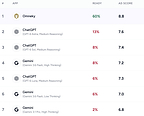
Omneky leads with an ad score of 8.8 compared with 7.6 for the next best tested configuration

SAN FRANCISCO, Oct. 13, 2026 /PRNewswire/ — Omneky, an AI advertising platform, today announced that its advertising harness earned the highest ad score in the TasteBench evaluation, scoring 8.8 and outperforming all six tested ChatGPT and Gemini configurations. The next-best configuration, ChatGPT using GPT-6 Astra at medium reasoning, scored 7.6.

Across the tested configurations, ChatGPT ad scores ranged from 7.3 to 7.6 and Gemini scores ranged from 6.8 to 7.2. Omneky led the nearest competitor by 1.2 points. The comparison covered 52 ad requests across four brands, producing 364 ads for evaluation.

The results highlight the role of the harness in creative production. A harness is the software surrounding a model that supplies context and directs its work. Omneky’s advertising workflow reads brand information, develops art direction, provides product and logo references, and selects an image model. TasteBench compares the ads produced by these complete workflows.

“Creative is one of the most important levers for growth, and the quality of the finished ad matters to every marketer,” said Hikari Senju, founder and CEO of Omneky. “We built Omneky’s harness to bring brand knowledge and creative direction into every generation. TasteBench gives marketers a way to compare the quality of what these systems actually produce.”

Omneky also led the separate readiness measure: 60% of its ads passed every applicable check, compared with 13% for the next-best configuration. This supporting metric measures whether an ad meets all of the benchmark’s required checks.

Omneky conducted the evaluation with three anonymous judges, applying the same standard to each tested system. ChatGPT and Gemini runs used APIs with web search and image generation; app spot-checks produced similar results. The findings assess generated creative and do not measure campaign returns.

Explore the results and side-by-side examples at www.omneky.com/tastebench.

About Omneky
Omneky is an AI advertising platform that helps businesses create image and video ads, review campaign performance and launch campaigns. Its agent brings these workflows into a single conversation. Learn more at www.omneky.com.

Media Contact: Hikari Senju | 424652@email4pr.com | (415) 236-2333

View original content to download multimedia:https://www.prnewswire.com/news-releases/omneky-harness-outperforms-chatgpt-and-gemini-on-tastebench-ad-score-302907011.html

SOURCE Omneky Inc

Continue Reading

Trending