Connect with us

Technology

Hong Kong/Shanghai Co-operation Open Data Challenge 2026 Hong Kong Teams Won Three Accolades: Driving Smart City and Cross-border Travel Innovation through Data

Published

on

HONG KONG, Sept. 30, 2026 /PRNewswire/ — The Final Judging and Awards Presentation Ceremony of the “Hong Kong/Shanghai Co-operation Open Data Challenge (HSODC) 2026”, jointly steered by the Digital Policy Office (DPO) of the Hong Kong Special Administrative Region Government and the Shanghai Municipal Bureau of Data, and curated by B4B (Hong Kong Big Data for Business Challenge), International Data Port (Shanghai Lin-Gang Special Area International Data Port Co., Ltd.) and SODA (Shanghai Open Data Applications Competition), and supported by Hong Kong Science and Technology Parks Corporation (HKSTP), were successfully held in Shanghai recently. Hong Kong teams excelled with outstanding performances, winning three major honours. The Lands Department/AECOM/China Energy Engineering Group Guangdong Electric Power Design Institute Co, Ltd garnered the Grand Award and the Best Smart Environment Award with their solution “Underground Utilities Information System”, while FAITH (Frankie and Apple Intelligence Technology HK) claimed the Best Smart Mobility Award with their solution “Cross-border Self-drive Transportation Trusted Data Service Platform (HK Drive Safe)”. The two winning teams will represent Hong Kong to compete for the Asia Pacific Information and Communications Technology Alliance Awards 2026 this December, striving for further excellence.

A press conference was held yesterday to share the competition outcomes. Guests in attendance included Ms Nicole WONG, Senior Systems Manager (Mainland and Industry Collaboration) of the DPO; Mr Fei Man CHU, Senior Survey Manager and Mr Sahib Singh SANDHU, Land Surveyor from the Lands Department; Mr Chun Yu WONG (Frankie), Project Founder and Ms Xiu Lei HE (Apple), Project & Technical Lead of FAITH.

Speaking at the press conference, Ms Nicole WONG said that the HSODC 2026 marked the fourth consecutive year of collaboration between Hong Kong and Shanghai. Building upon the achievements of the previous three editions, the two cities have further deepened data collaboration, leveraging the competition to drive applications and jointly promote high-quality development of the digital economy. The competition has become an important platform for Hong Kong and Shanghai to advance open data innovation and deepen exchanges in digital technology. Not only does it fully leverage the multiplier effect of data elements, but it also demonstrates the strategic value of data collaboration.

As a supporting organisation of the event, HKSTP expressed its enthusiasm for witnessing outstanding tech teams actively engaged and fully embracing the significant opportunities brought by digitalisation. The flow of data is a key force in driving industrial upgrading and fostering cross-sector collaboration. HKSTP will continue to serve as a platform, connecting talent, technology, and resources to support more I&T teams and collectively strengthen Hong Kong’s innovation ecosystem.

Grand Award and Best Smart Environment Award: “Underground Utilities Information System”

Beneath Hong Kong’s bustling streets lies a complex web of utilities, where repeated road openings and prolonged excavations frequently disrupt daily life. To resolve these repeated challenges, the Lands Department, AECOM and China Energy Engineering Group Guangdong Electric Power Design Institute Co., Ltd. jointly developed the “Underground Utilities Information System” (UUIS). UUIS serves as a unified, one-stop master database that seamlessly consolidates, updates, and shares vital underground utility data among key stakeholders. By integrating interactive 3D maps, aerial photos, and real-time excavation site details into a single portal, it equips engineers with the high-fidelity spatial data needed for precise utility alignment design and clash analysis.

By bridging the gap between data and execution, UUIS streamlines the pre-construction lifecycle. It empowers the industry to plan smarter and build faster, significantly reducing road closure times and public disruption. Ultimately, UUIS delivers a highly resilient infrastructure that benefits the entire Hong Kong community. With this innovative solution, the team won two awards at the HSODC 2026, including the competition’s highest honour — the Grand Award.

Mr Yue Chun CHAN, Chief Land Surveyor of the Lands Department, said the team was honoured that the “Underground Utilities Information System” had received the Best Smart Environment Award and the highest honour, the Grand Award. “The recognition is a tremendous encouragement to us. Over the past few years, we have sought to collect and standardize utility data as the foundation to drive a smarter working environment, looking forward to helping the industry improve construction efficiency and shorten road closure times, and supporting Hong Kong in becoming a smart and resilient city. We will continue to harness the multiplier effect of data elements. With our continuously updated utility records and other reference datasets — such as 3D maps and excavation sites information — users can grasp the distribution of underground facilities from a see-through, three-dimensional perspective, plan pipeline routes with precision, reduce accidents, accelerate infrastructure completion and better meet the needs of the community. Once again, we extend our heartfelt gratitude to the organisers for giving us the opportunity to participate the competition and receive the awards!”

Best Smart Mobility Award: “Cross-border Self-drive Transportation Trusted Data Service Platform (HK Drive Safe)”

FAITH (Frankie & Apple Intelligence Technology HK) received the Best Smart Mobility Award for its “Cross-border Self-drive Transportation Trusted Data Service Platform (HK Drive Safe)”. HK Drive Safe aims to build a trusted data service platform for cross-border mobility. Through traffic-rule conversion support and real-time alerts on differences in driving rules, it helps drivers rebuild muscle memory that matches local road regulations. Taking the “Southbound Travel for Guangdong Vehicles” scheme as its initial scenario, the platform takes the lead in serving the needs of mainland vehicle owners driving to Hong Kong and will later be replicated and promoted to major self-driving destinations worldwide. By leveraging technology to reduce traffic offences and accidents in cross-border travel, it enhances road safety, and support regional connectivity and the development of smart mobility.

The FAITH team said they were deeply honoured and greatly encouraged to receive the Best Smart Mobility Award. Ms Apple HE, Project & Technical Lead of FAITH, said: “Our two founders — one in finance and one a taxi driver —at the outset just wanted to solve the cross-border driving pain points we had experienced ourselves. Being able to advance to the Final Judging and receiving patient guidance and recognition from the judges has been especially meaningful for our small, cross-disciplinary team. During the two months from being shortlisted in June to competing in Shanghai in August, the open data training, one-on-one mentoring, mock presentations and exchanges with other finalist teams provided helped us refine a rough idea step by step into a product with a sound business logic that can be implemented. We are very grateful to the DPO and the Shanghai Municipal Bureau of Data for promoting Hong Kong-Shanghai data cooperation, and to B4B and the other curators for building this platform. Not only did they provide professional guidance, they also arranged company visits, which were immensely rewarding and eye-opening. We hope to work with more people from different backgrounds in the future and to solve real social challenges through technology.”

About “Hong Kong/Shanghai Co-operation Open Data Challenge 2026”

“Hong Kong/Shanghai Co-operation Open Data Challenge 2026” is jointly steered by the DPO of the Hong Kong Special Administrative Region Government and the Shanghai Municipal Bureau of Data, and curated by B4B, International Data Port and SODA.

Themed “Co-creating a Data Industry Platform for the Two Cities”, this year’s competition leveraged open data from both cities to align with emerging urban development needs. Focusing on four key areas, namely smart mobility, smart living, smart environment, and smart economy, the contestants created innovative projects and developed frontier applications to foster synergy in the digital economy development of both cities. With more international elements incorporated this year, some Hong Kong and Shanghai teams explored international application scenarios, thereby promoting the global advancement of digital technologies and innovation capabilities of the two cities.

After about three months of First Judging, competition briefing session and training, 12 teams from various enterprises and institutions in Hong Kong had advanced to the Final Judging and competed alongside finalist teams from Shanghai. During their visit to Shanghai, apart from participating in the Final Judging, the Hong Kong delegation participated in achievement exhibitions, roadshows, and business matching sessions to present their innovative data applications to the Mainland technology industry and further explore business opportunities. The delegation also visited a number of well-known innovation and technology organisations in Shanghai to deepen their understanding of Shanghai’s latest advancements in cutting-edge fields, including AI, embodied AI and new energy vehicles, thereby fostering deeper collaboration between Hong Kong and Shanghai in the development of digital economy.


View original content to download multimedia:https://www.prnewswire.com/apac/news-releases/hong-kongshanghai-co-operation-open-data-challenge-2026-hong-kong-teams-won-three-accolades-driving-smart-city-and-cross-border-travel-innovation-through-data-302894173.html

SOURCE B4B Limited

Continue Reading

Technology

CUJO AI Takes Residential Proxy Detection Inside the Home

Published

on

By

New capability identifies the device hosting proxy activity inside a subscriber’s home, classifies what that activity is, and gives operators a path from detection to remediation.

LOS ANGELES, Sept. 30, 2026 /PRNewswire/ — CUJO AI, the global leader in network intelligence and cybersecurity solutions for network service providers (NSPs), today introduced a new capability that detects the specific device in a subscriber’s home network that is being used as a residential proxy. The capability pairs that device-level findings with activity classification (such as ad fraud or malware) with remediation guidance and real-time notifications, giving operators a complete path from detection to resolution for the first time.

Residential proxy networks quietly resell home internet connections to third parties, routing anonymous traffic through real subscriber IP addresses, usually without the subscriber’s knowledge. Compromised devices, bundled SDKs in free apps, and “get paid for your bandwidth” schemes are the most common ways a household device ends up enrolled. Until now, operators could at best flag a suspicious IP address; they had no way to say which device was compromised, quietly monetized, or actively taking orders from someone else.

CUJO AI’s new capability closes that gap. Running at the home gateway, it identifies which subscriber network is hosting proxy activity and pinpoints the specific device inside the home generating it, along with clear, device-specific remediation steps and real-time alerts so operators can act before the damage compounds.

“CUJO AI can tell the operator which device in which home is the source and what to do about it. That’s the difference between an alert and an answer,” said Chris Turner, Chief Product Officer, CUJO AI.

For operators, the capability turns an invisible cost center into a manageable one: reclaiming bandwidth consumed by third-party traffic, protecting IP reputation, and giving frontline support a real root cause for slowdown complaints instead of a shrug. For subscribers, the specificity changes the nature of the conversation. Instead of a warning letter or account suspension, an operator can reach out with something genuinely useful: a device has been identified, here is how to fix it. Handled that way, an incident that would otherwise feel like a penalty becomes a demonstration of the operator looking out for its customers.

“Customers are often unaware that residential proxy activity is happening on their home network. Every one of these findings gives a network service provider an opportunity to have a helpful conversation with a customer instead of a difficult one. Delivered well, this isn’t about enforcement, it’s a moment when subscribers see that their provider is actively looking out for them,” said Steven Offerein, Vice President, Device and Protection Services at CUJO AI.

The capability is being introduced to CUJO AI’s operator partners now, with coverage and remediation guidance expanding as the program scales.

About CUJO AI

CUJO AI enables service providers to understand, serve, and protect consumers with advanced cybersecurity and granular network and device intelligence. The CUJO AI Intelligence platform – built on 72,000 device models and deployed across 63 million homes – gives service providers deep, continuous visibility into every connected device and network behavior from day one. CUJO AI Services delivers active security, digital parenting, and scam protection for service providers ready to monetize that intelligence with subscriber-facing products. Advanced AI algorithms help NSPs uncover previously unavailable insights to raise the bar for customer experience and retention with new value propositions and improved operations. Fully compliant with all privacy regulations, CUJO AI is trusted by the world’s largest broadband operators, including Comcast, Charter Communications, T-Mobile, Deutsche Telekom, TELUS, Sky Italia, Sky UK, Rogers, Cox, Shaw, Videotron, BT and EE.

For more information, visit www.cujo.com.

viktorija@cujo.com

View original content to download multimedia:https://www.prnewswire.com/news-releases/cujo-ai-takes-residential-proxy-detection-inside-the-home-302891529.html

SOURCE CUJO AI

Continue Reading

Technology

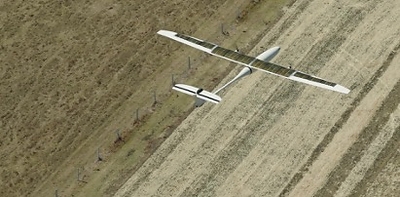
LI-S ENERGY BATTERY POWERS NEAR TWO HOUR ENDURANCE FLIGHT OF EATP PEGASUS DRONE

Published

on

By

The Pegasus long endurance drone, developed by Li-S Energy, V-TOL Aerospace and Halocell Energy, completes a successful series of test flights over Queensland

Key Highlights:

The EATP Pegasus long endurance drone completed several successful test flights in Queensland, culminating in an endurance flight of almost 2 hours covering more than 75 kilometres, on a single Li-S Energy battery pack.The endurance flight met expected flight performance and landed safely with battery capacity to spare.On a same cell weight basis, the Li-S Energy cells delivered 80% more range and flight time than would have been achieved by an equivalent high-performance professional lithium polymer UAV battery pack #The Pegasus drone comprises V-TOL Aerospace’s airframe, Li-S Energy’s lithium sulfur battery system, and Halocell Energy’s perovskite solar array.Designed to accommodate two Li-S Energy battery packs, in due course Pegasus is expected to deliver flight durations of 5-8 hours, and 250 kilometres, ideal for long endurance mapping, surveillance, and agricultural, utilities and environmental monitoring missions.Demand for drones is growing exponentially across commercial and defence markets, with proposed US and Australian government investment in drone and counter-drone technologies now exceeding A$100 billion[1].Following this success, the collaboration partners intend to assess further commercial development, targeting future platform sales.See a one-minute video of the flight here: https://lis.plus/EATP

BRISBANE, Australia, Sept. 30, 2026 /PRNewswire/ — Li-S Energy Limited (ASX: LIS) (“Li-S Energy”, “LIS” or “the Company”) is pleased to announce that Pegasus, the long endurance drone developed under the Emerging Aviation Technology Partnership (EATP) programme, has completed a series of successful test flights in Queensland, culminating in endurance flight of almost 2 hours, powered by a single Li-S Energy lithium sulfur battery pack.

The twin motor, five-metre wingspan Pegasus was designed and built from the ground up through the collaboration of three innovative Australian companies. It combines an airframe and power systems designed and developed by V-TOL Aerospace (V-TOL), the 382 Wh lithium sulfur battery packs and battery management system designed and built by Li-S Energy, and a perovskite solar cell array fabricated by Halocell Energy (Halocell).

As announced in June 2024, the project is supported by a grant of just over $1.35 million from the Commonwealth Government under the EATP programme, matched by the collaboration partners. The collaboration is targeting the development of a family of long endurance surveillance drones powered by Li-S Energy batteries. This flight marks the culmination of the EATP project and the successful completion of its practical development and flight test work.

Milestone flight testing

The flight test programme comprised several flights, culminating in an endurance flight of almost 2 hours on a single Li-S Energy battery pack. The aircraft met its expected flight performance throughout and landed safely with battery capacity to spare.

The Li-S Energy battery system enabled sustained cruise flight of more than 75 kilometres, with the Company’s battery management system integrated with V-TOL’s power management system controlling the battery power for the twin motors and control systems, while being capable of simultaneously managing the feed-in from the solar array.

The Pegasus was designed to accommodate two Li-S Energy battery packs, and with the latest improvements to Halocell’s solar array performance beyond those fitted to the current airframe, we expect the platform to be capable of flight missions of five to eight hours and 250 kilometres, ideal for long endurance mapping and surveillance, and for agricultural, utilities and environmental monitoring missions.

The flight data will now be analysed by the partners to characterise platform performance and inform the assessment of the platform’s commercial potential.

Toward commercial development

Demand for long endurance uncrewed aircraft continues to grow rapidly across commercial and defence markets, and both endurance and sovereign supply are decisive competitive strengths. With their integrated technologies now proven in flight, the collaboration partners intend to capitalise on this market potential.

Li-S Energy filed two patent applications to protect innovative developments during the project relating to the battery management system and battery pack design.

Quotes

Dr Lee Finniear, Chief Executive Officer and Managing Director of Li-S Energy, said:

“With the exponential growth of drones and uncrewed systems in both commercial and military applications, flight endurance and sovereign capability are critical to Australia’s future in this sector. Today, with our partners, we have shown what Australian innovation and collaboration is capable of. The EATP Pegasus drone is the result of two years of work by the teams from V-TOL Aerospace, Halocell and Li-S Energy, proving that Australia has the sovereign capability and the unique technology to be leaders in this field.”

Mark Xavier, Managing Director and Chief Executive Officer of V-TOL Aerospace, said:

“The Pegasus flew exactly as our team designed it to. Our airframe and power systems performed faultlessly throughout the flight, and pairing them with Li-S Energy’s new lightweight pouch cell battery system gives the platform an endurance advantage operators will immediately recognise. I am proud of what our engineers have delivered, and our focus now turns to the pathway from successful trials to commercial platform sales.”

Paul Moonie, Founder and Chief Executive Officer of Halocell Energy, said:

“Seeing our ultra-lightweight perovskite cells take to the air on the Pegasus is a proud moment for the Halocell Energy team, whose skill in fabricating flexible solar modules for such a demanding application has been outstanding. Each flight builds the data and experience we need as we continue to develop higher output modules for aerospace applications, and we are delighted to stand alongside Li-S Energy and V-TOL Aerospace in an all-Australian collaboration delivering this platform.”

The companies acknowledge the support of the Commonwealth Government through the EATP programme as instrumental in bringing the project to this success.

The Company will keep the market informed of material developments in accordance with its continuous disclosure obligations.

This announcement has been authorised by the Board.

About Li-S Energy:

Li-S Energy Limited (ASX: LIS) is an Australian developer of next-generation lithium sulfur battery cells that offer around twice the energy density of conventional lithium-ion. Using proprietary IP and advanced nanomaterials including boron nitride nanotubes (BNNTs) and Li-Nanomesh™, it builds lighter, more efficient energy storage for defence, drones and aviation, where weight is critical. www.lis.energy

About V-TOL Aerospace:

V-TOL Aerospace is a Brisbane-based Australian aerospace company specialising in the design, manufacture and operation of unmanned aircraft systems and intelligent robotic technologies for commercial, government and defence applications. Visit: www.v-tol.com

About Halocell Energy:

Halocell Energy is an Australian solar technology company producing next-generation perovskite solar cells using an advanced roll-to-roll manufacturing process at its facility in Wagga Wagga, New South Wales. Visit: www.halocell.energy

# Cell level comparison based on the 1.1 kg of lithium-sulfur power cells (382 Wh) flown in the endurance flight. Reference: Tattu 16000 mAh 6S lithium polymer battery (355 Wh, approximately 1.85 kg, around 192 Wh/kg), one of the most widely used commercial batteries for large professional UAVs. Excludes weight of pack housing and BMS in each case and assumes flight time scales linearly with cell energy.

 [1] Li-S Energy 2026 Annual Report – Managing Directors Report


View original content to download multimedia:https://www.prnewswire.com/news-releases/li-s-energy-battery-powers-near-two-hour-endurance-flight-of-eatp-pegasus-drone-302894228.html

SOURCE Li-S Energy Limited

Continue Reading

Technology

Servier Adopts Veeva OpenData Globally to Scale AI

Published

on

By

 Establishing an AI-ready data foundation in more than 80 countries

PLEASANTON, Calif., Sept. 30, 2026 /PRNewswire/ — Veeva Systems (NYSE: VEEV) today announced that Servier is standardizing customer reference data across more than 80 countries with Veeva OpenData. Building on its global success with Veeva Link Key People, a leading French pharmaceutical company governed by a Foundation, is harmonizing customer reference data and creating a unified foundation to scale AI.

“By centralizing our customer reference data through Veeva OpenData, we aren’t just improving our current processes, we are building the global, AI-ready data foundation that will redefine how we work,” said Liam Hanrahan, director of world operations excellence at Servier. “A globally unified semantic layer and Veeva Link connectivity gives our affiliates the high-quality insights to reach the right HCPs in each market, driving efficiency to scale AI globally.”

With OpenData and Link Key People, Servier equips its global commercial and medical teams with connected data, driving faster insights and quicker action across the organization.

“The industry fails to scale 89% of AI initiatives due to data challenges,” said Kilian Weiss, president, Link and OpenData at Veeva. “Servier demonstrates strong industry leadership by addressing this with a standard data-first approach to AI across all regions. With OpenData as the basis for its harmonized global data foundation, Servier can scale more effective, AI-driven commercial execution.”

Veeva OpenData is part of Veeva Data Cloud, which includes Veeva Link and Veeva Compass. OpenData unifies customer reference data globally, replaces fragmented silos, and drives the consistency required for scaling advanced analytics and AI.

About Veeva Systems
Veeva delivers the industry cloud for life sciences with applications, agents, data, and consulting. Committed to innovation, product excellence, and customer success, Veeva serves more than 1,500 customers, ranging from the world’s largest pharmaceutical companies to emerging biotechs. As a Public Benefit Corporation, Veeva is committed to balancing the interests of all stakeholders, including customers, employees, shareholders, and the industries it serves. For more information, visit veeva.com.

Veeva Forward-Looking Statements
This release contains forward-looking statements regarding Veeva’s products and services and the expected results or benefits from use of our products and services. These statements are based on our current expectations. Actual results could differ materially from those provided in this release and we have no obligation to update such statements. There are numerous risks that have the potential to negatively impact our results, including the risks and uncertainties disclosed in our filing on Form 10-Q for the fiscal year ended July 31, 2026, which you can find here (a summary of risks which may impact our business can be found on pages 33 and 34), and in our subsequent SEC filings, which you can access at sec.gov.

Contact:
Alison Borris
Veeva Systems
alison.borris@veeva.com


View original content to download multimedia:https://www.prnewswire.com/news-releases/servier-adopts-veeva-opendata-globally-to-scale-ai-302893844.html

SOURCE Veeva Systems

Continue Reading

Trending