Connect with us

Technology

UCLA Anderson Forecast Sees Resilient Growth Despite Inflation, Weak Labor Markets

Published

on

California continues to outpace the nation in economic growth, even as employment recession persists

LOS ANGELES, Sept. 30, 2026 /PRNewswire/ — The UCLA Anderson Forecast’s September 2026 outlook finds an economy that has largely weathered a series of disruptions, with economic growth remaining resilient, even as inflation and interest rates have risen and labor markets nationally and in California remain weak.

The outlook has shifted considerably over the course of the year. In March, the Forecast expected tax cuts and rapidly expanding investment in artificial intelligence to help reaccelerate the U.S. economy in 2026. Three months later, the war in Iran and resulting oil shock had replaced tariffs as the leading threat to that expansion.

The contrasting signals are particularly pronounced in California. The state’s economy grew at an annual rate of 3.7% in the first quarter of 2026, compared with 2.1% nationally, with only Washington state growing faster. Yet California’s unemployment rate stood at 5.1% in August, the highest of any state. The “employment recession” identified by the Forecast six months ago has continued, even though California has outperformed the nation in the production of goods and services.

Nationally, the Forecast expects growth to remain above 2% for the remainder of 2026 and near 2% in 2027 and 2028, supported in part by continued investment in AI infrastructure and the wealth effects associated with rising technology equity valuations. Inflation, meanwhile, is expected to move higher again this winter, keeping interest rates elevated and prompting the Federal Reserve to raise rates accordingly.

The National Economy

The September 2026 forecast describes a U.S. economy that has proved surprisingly resilient through a series of shocks. The tariff increases that dominated the outlook in late 2025 were followed by the war in Iran and a sharp increase in oil prices in the spring. Despite those disruptions, underlying economic growth has remained around or above 2%.

Credit the continued expansion of AI-related investment for much of the growth. Capital spending by large technology companies has supported nonresidential investment, while rising valuations of AI-related companies have increased household wealth and helped support consumer spending. The Forecast estimates that high-tech investment and the wealth effect associated with AI-related equities together account for nearly one percentage point of core GDP growth.

Fiscal policy has provided an additional boost. Larger income tax refunds and tariff refunds have increased disposable income, helping offset some of the drag from higher energy costs and interest rates.

The labor market, however, continues to send mixed signals. The unemployment rate fell in August to 4.1% from 4.5% in November 2025, but payroll growth has slowed substantially. Payrolls increased by 162,000 in August but averaged just 71,000 jobs per month over the previous three months, and 31,000 per month over the previous year. At the same time, immigration restrictions and demographic trends have reduced growth in the labor force.

The Forecast expects the labor market to stabilize rather than accelerate, with monthly payroll growth generally between zero and 50,000 jobs and unemployment remaining near 4.2% through the forecast horizon.

Inflation remains a more persistent concern. The disruption to world oil supplies caused by the Iran conflict, combined with attacks on Russian refining capacity, has kept energy prices elevated. Headline inflation, which declined to 3.4% in July and August after reaching 4.2% in May, is expected to move back toward 4% during the winter. Core inflation is expected to approach 2.9% in early to mid-2027 before gradually declining toward the Federal Reserve’s 2% target.

Higher inflation has also changed the outlook for interest rates. The 10-year Treasury yield has risen from below 4% in February to around 5%, reflecting inflation and fiscal risks, heavy private-sector borrowing associated with AI investment and continued expectations for economic growth. The Forecast expects long-term rates to remain elevated.

The Federal Reserve raised the federal funds rate by 25 basis points in September, to a target range of 3.75% to 4%. The Forecast expects another quarter-point increase in December, followed by no further changes through 2027, absent another adverse supply shock.

Overall, the Forecast expects GDP growth above 2% through the remainder of 2026 and around 2% in 2027 and 2028. The outlook is subject to significant risks in both directions. A sharp correction in AI-related equity valuations or financing could reduce investment and consumer spending, while another escalation in the Middle East could push oil prices sharply higher. Conversely, a resolution of the conflict and faster diffusion of AI-driven productivity gains could produce stronger growth with less inflation.

The California Economy

California continues to present an unusual combination of superior economic growth and inferior employment performance.

In June, the Forecast estimated that California’s economy had grown 2.9% in the first quarter of 2026. The actual growth rate was substantially higher: 3.7%, compared with 2.1% nationally. Over the year ending in the first quarter, California GDP grew 3.3%, compared with 2.7% for the nation. Adjusting for population migration leaves California’s growth rate unchanged and widens its advantage over other fast-growing large states whose economies benefited from population gains.

Much of that growth reflects California’s concentration in technology and other high-productivity industries. Six of the 10 largest venture capital investments in the Americas during the first quarter were in the San Francisco Bay Area, representing more than 95% of the value of the top 10 investments. In the second quarter, 82% of all venture capital investment went to California. Aerospace is also benefiting from increased commercial aircraft production, defense purchases, space exploration and satellite production.

But that strength has not translated into broad employment gains. California’s unemployment rate has remained above 5% for 31 months and stood at 5.1% in August, one percentage point above the national rate. Payroll employment increased by 138,500 jobs over the 12 months ending in August, while a separate household survey showed 246,700 fewer Californians employed and a decline of 351,100 in the state labor force over the same period.

The two measures capture different aspects of employment, but both point to continued weakness in labor demand. Job growth so far in 2026 has been concentrated primarily in health care and social services, education and retail — sectors that the Forecast does not expect to provide the same support going forward. Government budget constraints, reductions in federal support for health care and continued deportations are expected to limit hiring in several of those areas.

A stronger California labor market will therefore depend increasingly on technology, aerospace and other durable goods manufacturing. Aerospace is already benefiting from increased production and government and private-sector demand. Tech employment continues to decline, although at a moderating pace. The Forecast assumes AI-related hiring and the end of contraction elsewhere in the technology sector will produce employment growth beginning in 2027 and accelerating in 2028.

Housing remains another constraint. New-home construction has changed little since June, with the annual pace of permits around 110,000 units, well below the level needed to address the state’s housing shortage. Elevated mortgage rates, tariffs on imported building materials and the loss of construction workers through deportations are expected to continue limiting new construction.

Overall, the September 2026 California outlook is slightly weaker than the June forecast, largely because of continued disruption in energy markets. Recovery is expected to begin in early 2027, followed by stronger growth later in 2027 and in 2028.

The Forecast expects California’s unemployment rate to average 5.2% in 2026, 4.9% in 2027 and 4.4% in 2028. Total employment is forecast to decline 0.2% in 2026 before growing 0.6% in 2027 and 1.8% in 2028, while nonfarm payroll employment is expected to grow 0.9%, 1.2% and 2.2%, respectively. Real personal income is forecast to increase 1.0% in 2026, 2.4% in 2027 and 2.6% in 2028. The Forecast expects 116,000 residential permits this year, rising to 118,000 by the end of 2028.

Separating AI Investment from AI’s Economic Impact

In a new essay, senior economist Clement Bohr examines the distinction between the already substantial economic effects of investment in artificial intelligence and the effects of the technology itself. AI-related infrastructure spending and rising technology equity valuations are already contributing significantly to economic growth, Bohr writes, but evidence that AI itself is responsible for broad changes in employment or productivity remains inconclusive. He argues that it is too early to know how transformative AI will be, ultimately, and notes that previous general-purpose technologies took years to produce measurable economy-wide productivity gains.

UCLA Anderson Forecast’s fall 2026 economic outlook conference, Energy in the Age of AI and War, is organized in collaboration with the Center for Impact and takes place on September 30, 2026.

About UCLA Anderson Forecast

UCLA Anderson Forecast is one of the nation’s most widely watched economic outlooks and was unique in predicting both the seriousness of the early-1990s California downturn and the strength of the state’s rebound. The Forecast was credited as the first major U.S. economic forecasting group to call the recession of 2001 and was among the first to declare the COVID-19 recession in March 2020.

uclaforecast.com

About UCLA Anderson School of Management

UCLA Anderson School of Management is a world-renowned learning and research institution. As part of the nation’s No. 1 public university, its mission is to advance management thinking and prepare transformative leaders to make positive business and societal impact. Located in Los Angeles, one of the nation’s most diverse and dynamic cities and the creative capital of the world, UCLA Anderson places more MBAs on the West Coast than any other business school, and its graduates also bring an innovative and inclusive West Coast sensibility to leading organizations across the U.S. and the world. Each year, UCLA Anderson’s MBA, Fully Employed MBA, Executive MBA, UCLA-NUS Executive MBA, Master of Financial Engineering, Master of Science in Business Analytics and doctoral programs educate more than 2,000 students, while the Executive Education program trains an additional 1,800 professionals. This next generation of transformative leaders will help shape the future of both business and society.

anderson.ucla.edu

Follow Us

@uclaanderson

View original content to download multimedia:https://www.prnewswire.com/news-releases/ucla-anderson-forecast-sees-resilient-growth-despite-inflation-weak-labor-markets-302893583.html

SOURCE UCLA Anderson Forecast

Continue Reading

Technology

Ives Ultra AI Opportunities Inc. (NYSE: IVAI) Announces Pricing of $200 Million Initial Public Offering

Published

on

By

SAN FRANCISCO, Sept. 30, 2026 /PRNewswire/ — Ives Ultra AI Opportunities Inc. (“IVAI”) today announced the pricing of its initial public offering of 20,000,000 shares of common stock at $10.00 per share. IVAI is the first publicly listed closed-end investment fund dedicated to providing public market investors with access to private AI companies. IVAI has up to 12 months to propose its initial private AI investments and provide investors with the opportunity to tender their shares under its Tender Offer Policy.

Dan Ives serves as Chairman of the Board of Managers of Ives Ultra Capital Management LLC, IVAI’s investment adviser (“the Adviser”). Jeff Leathers is CEO of the Adviser and sits on its Board of Managers. Ed Leathers, CFA, is portfolio manager of IVAI and sits on the Board of Managers of the Adviser; Mr. Ives is not IVAI’s portfolio manager and does not serve on the Investment Committee. Mr. Ives is Partner and Senior Managing Director, Analyst at Yorkville Ives & Co.

IVAI’s shares of common stock are expected to begin trading on the New York Stock Exchange (“NYSE”) on September 30, 2026 under the symbol “IVAI.” IVAI also granted the underwriter an option to purchase up to 3,000,000 shares of its common stock to cover overallotments, if any. The offering is expected to close on October 1, 2026, subject to customary closing conditions.

Cohen & Company Capital Markets, Inc., a division of Cohen & Company Securities, LLC, acted as the sole bookrunner for the offering.

A registration statement on Form N-2, as amended, relating to these securities was filed with the U.S. Securities and Exchange Commission (the “SEC”) and declared effective on September 29, 2026. The offering is being made only by means of a prospectus. Copies of the preliminary prospectus and the final prospectus relating to the offering, when available, may be obtained from Cohen & Company Capital Markets, Inc., a division of Cohen & Company Securities, LLC, 135 East 57th Street, 21st Floor, New York, New York 10022, or through the U.S. Securities and Exchange Commission’s website at www.sec.gov.

Investors should carefully consider IVAI’s investment objectives, risks, charges and expenses before investing. The preliminary prospectus, dated September 28, 2026, contains this and other important information about IVAI and should be read carefully before investing.

This press release does not constitute an offer to sell or a solicitation of an offer to buy any securities, nor will there be any sale of these securities in any jurisdiction in which such offer, solicitation or sale would be unlawful prior to registration or qualification under the securities laws of that jurisdiction. Offers of these securities are made only by means of the prospectus. The SEC has not approved or disapproved these securities or passed upon the adequacy of the preliminary prospectus. Any representation to the contrary is a criminal offense.

About IVAI

IVAI is the first publicly listed closed-end investment fund dedicated to providing public market investors with access to private AI companies. The fund seeks to provide exposure to leading private AI companies demonstrating strong growth, market leadership and attractive competitive positioning, with a primary focus on late-stage businesses in AI infrastructure and applied AI. IVAI is advised by Ives Ultra Capital Management LLC, an SEC-registered investment adviser, where Dan Ives serves as Chairman of the Board of Managers.

Forward Looking Statements

This communication contains forward looking statements within the meaning of the Private Securities Litigation Reform Act of 1995, including statements regarding the completion of IVAI’s initial public offering, the expected commencement of trading of IVAI’s common stock on the NYSE, the expected closing of the offering, the anticipated use of the net proceeds, and IVAI’s investment strategy. Statements other than statements of historical fact included in this press release may constitute forward-looking statements and are not guarantees of future performance or results and involve a number of risks and uncertainties. Actual results or events may differ materially from those expressed or implied by these statements, including those described in the prospectus and IVAI’s other filings with the SEC. IVAI undertakes no obligation to update these forward looking statements to reflect changes since the date of this press release, except as required by law.

View original content to download multimedia:https://www.prnewswire.com/news-releases/ives-ultra-ai-opportunities-inc-nyse-ivai-announces-pricing-of-200-million-initial-public-offering-302893842.html

SOURCE Ives Ultra AI Opportunities Inc.

Continue Reading

Technology

TrackVia Launches Next Generation of Its AI-Ready Field Operations Platform

Published

on

By

TrackVia IRIS, enterprise AI connectivity, a rebuilt Android application and a modernized user experience expand how organizations run, understand and improve mission-critical operations

DENVER, Sept. 30, 2026 /PRNewswire/ — TrackVia today announced a significant expansion of its Field Operations Intelligence platform, introducing new artificial intelligence capabilities, enterprise AI connectivity, a rebuilt Android application and a modernized web experience designed to help organizations run complex, mission-critical operations more effectively.

TrackVia serves organizations across industries including construction, facilities and property management, manufacturing, gaming, healthcare, hospitality, education and government. These are environments where operational work is complex, constantly changing and often too specialized for traditional off-the-shelf software.

Field teams are under more pressure than ever. Today, there are roughly three open skilled-trade jobs for every qualified worker available to fill them, according to an August 2026 Lightcast analysis. That workforce gap is colliding with rising expectations for faster service, greater productivity and tighter margins, even as the work itself becomes more complex.

TrackVia helps organizations meet that challenge by connecting the people doing the work, the workflows that run the operation and the data needed to make better decisions. Now, TrackVia is bringing artificial intelligence directly into that operational environment, allowing organizations to gain more insight from the systems and processes they already rely on every day.

“Our customers have spent years building incredibly important processes and operational knowledge into TrackVia,” said Aylin Basom, Chief Executive Officer of TrackVia. “Our opportunity now is to help them unlock even more value from that foundation. We want TrackVia to be the place where operational work, operational data and operational intelligence come together.”

“This is much bigger than adding an AI feature,” Basom continued. “We are investing across the entire TrackVia platform, including AI, mobility, user experience, integrations and enterprise readiness. We are making TrackVia easier to use, more intelligent and more powerful so our customers can not only run their operations, but increasingly understand, improve and transform them.”

Introducing TrackVia IRIS: AI for Operational Intelligence

At the center of TrackVia’s AI strategy is TrackVia IRIS, the company’s artificial intelligence layer for operational intelligence. Now users can ask questions about their operational data using natural language and receive answers directly within TrackVia. Instead of navigating multiple dashboards or waiting for someone to analyze the data, users can now ask questions about the information already available to them and get the insight they need more quickly.

TrackVia IRIS is designed with enterprise controls in mind and respects TrackVia’s existing permissions model, meaning users can only access information they are already authorized to see.

Connecting TrackVia to the Enterprise AI Ecosystem

TrackVia is also introducing support for Model Context Protocol (MCP), enabling organizations to securely connect TrackVia with AI platforms and assistants they already use, including Claude, ChatGPT, Microsoft Copilot and Gemini.

Through MCP, organizations can connect their TrackVia operational environment with the AI tools they choose, creating new possibilities for querying information, building applications, improving workflows and making operational data more accessible across the business.

“With the new MCP capabilities, I was able to build and refine a new fleet management application in just 20 minutes,” said one TrackVia customer.

This approach allows TrackVia to remain the operational system of record while giving customers greater flexibility in how they adopt and use AI.

Built for the People Doing the Work

TrackVia’s investment extends beyond AI. The company has also rebuilt its Android application on a modern technical foundation, delivering improved performance, reliability and usability for employees working in the field.

TrackVia has long enabled field teams to continue working even when connectivity is limited or unavailable, an essential capability for organizations operating at construction sites, facilities, manufacturing environments and other remote locations. The new Android experience brings TrackVia’s modernized interface to mobile users and establishes a stronger foundation for continued innovation across both Android and iOS.

For organizations with employees working across job sites, facilities, plants and other distributed environments, mobile technology is not simply an extension of the operational platform. It is often where the work actually happens.

A More Modern, Intuitive TrackVia Experience

TrackVia is also rolling out a refreshed web experience developed in response to customer feedback. The redesigned experience provides simpler navigation and a more intuitive interface while preserving one of TrackVia’s core advantages: the ability to configure technology around the way an organization actually operates.

Organizations should not have to redesign complex operations around rigid software. TrackVia allows customers to build and evolve operational applications around their own processes, helping them respond as requirements, teams and business conditions change.

The modernized experience makes TrackVia easier for new users to adopt while giving existing customers a stronger foundation for increasingly sophisticated operational workflows.

About TrackVia

TrackVia is a Field Operations Intelligence platform that helps organizations connect, control and continuously improve mission-critical operations.

TrackVia brings together field teams, operational workflows and enterprise data to create real-time visibility, automate work and turn operational data into actionable intelligence. With configurable operational applications, mobile capabilities, enterprise integrations and AI-powered intelligence, TrackVia helps organizations adapt as operations change without adding another rigid point solution or relying on costly custom development.

TrackVia serves organizations across construction, facilities and property management, manufacturing, gaming, healthcare, hospitality, education and government.

To learn more, visit trackvia.com.

Media Contact

Daniel Dorr TrackVia, daniel.dorr@trackvia.com

View original content to download multimedia:https://www.prnewswire.com/news-releases/trackvia-launches-next-generation-of-its-ai-ready-field-operations-platform-302893630.html

SOURCE TrackVia

Continue Reading

Technology

ARC Bio Demonstrates Canadian Forest Residue Pathway to Sustainable Aviation Fuel

Published

on

By

Pilot-scale refinery co-processing demonstrates a pathway to convert forest industry residues into low-carbon jet fuel using existing infrastructure.

PORT-CARTIER, QC, Sept. 30, 2026 /CNW/ — ARC Bio, the Canadian joint venture between an affiliate of Bioénergie AE Cote-Nord Canada Inc. (“Bioénergie AECN”) and Alder Renewables, today announced the successful demonstration of a pathway to produce sustainable aviation fuel (“SAF”) from Canadian forest residues through refinery co-processing.

The demonstration brings together Canada’s forest products industry, renewable fuels technology and existing refining infrastructure to show how residual woody biomass can be converted into a refinery-ready biocrude for processing alongside conventional feedstocks to produce transportation fuels, including SAF.

“Canada has the biomass feedstock, the forest sector expertise, the industrial capability and the refining infrastructure to build an important new clean fuel value chain,” said Serge Mercier, President of Bioénergie AECN. “This work creates a direct connection between Canada’s forest sector economy and the growing need for low-carbon fuels in aviation and marine transportation markets.”

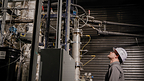
The project upgraded fast pyrolysis bio-oil produced from Canadian forest residues by Bioénergie AECN in Port-Cartier into barrel-scale quantities of Alder Renewable Crude (ARC). This biocrude was then processed in a fluid catalytic cracking, or FCC, pilot unit that simulates commercial refinery operation. Carbon-14 analysis of the resulting fuel products confirmed the presence of biogenic carbon from the wood residue-derived feedstock.

The FCC campaign successfully produced a jet-range fuel fraction that was isolated and evaluated for blending compatibility with HEFA-based SAF produced from fats, oils and greases. The resulting SAF blend met the key ASTM D1655 fuel-property specifications evaluated in the screening. The work represents an important step toward demonstrating that biocrude produced from Canadian forest residues can enter existing refinery infrastructure and be converted into finished transportation fuels.

“The significance of this demonstration is not simply that we produced a renewable jet-range fuel,” said Derek Vardon, CEO of Alder Renewables. “We demonstrated a pathway connecting Canadian forest residues with refinery infrastructure already operating at commercial scale. That creates the potential for a scalable, capital-efficient route to bring forest-derived renewable carbon into aviation fuel markets.”

With financial support from Boeing, the project was established to validate the conversion of forest residues into SAF in Canada and generate the technical and economic data needed to support future commercial-scale facilities.

A New Market Opportunity for Canada’s Forest Sector

Canada’s forest industry generates large volumes of wood residues. As traditional markets face changing demand and international trade pressures, creating higher-value uses for these residues can strengthen forest-sector economics while supplying renewable carbon to industries that are difficult to decarbonize.

The project also demonstrates opportunities to create value from low-value woody biomass, including forest residues generated through forest management and wildfire-risk reduction, where appropriate feedstock supply chains can be established.

By converting these materials into an energy-dense, transportable biocrude, ARC Bio is developing a model that connects distributed forestry resources with large-scale fuel refining infrastructure.

Leveraging Refinery Infrastructure Already in Place

Unlike pathways requiring an entirely new standalone fuel refinery, ARC Bio’s approach is designed to integrate with existing refinery operations. Fluid catalytic cracking is widely used in refineries around the world to produce transportation fuel components. Introducing Alder Renewable Crude into an FCC process creates a pathway connecting renewable feedstocks with existing commercial fuel production assets.

The next stage of the program will generate additional refinery-relevant data to support larger-scale trials. ARC Bio’s roadmap is ultimately aimed at enabling a first-of-a-kind Canadian commercial project combining forest-residue conversion, biocrude production and refinery integration.

Learn more about ARC Bio’s milestone and latest activities at ARC Bio News.

About ARC Bio and its Partners

ARC Bio is a Canadian joint venture between an affiliated company of Bioénergie AECN and Alder Renewables focused on converting Canadian forest residues into renewable fuels. The collaboration combines commercial fast pyrolysis, renewable crude upgrading, and refinery processing to advance sustainable aviation fuel and marine fuels in Canada. Bioénergie AECN operates North America’s largest fast pyrolysis bio-oil facility using wood residue feedstocks in Port-Cartier, Quebec. The Port-Cartier facility has an annual production capacity of 40 million litres of bio-oil. Alder Renewables develops upgrading technology that converts fast pyrolysis bio-oil into refinery-ready biocrude for downstream production of low-carbon fuels and other industrial products.

SOURCE Arc-Bio

Continue Reading

Trending