Connect with us

Technology

The Tethered Drone Pictured at Fort Benning Has a Name: Meet Hoverfly Spectre

Published

on

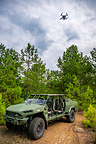
The tethered UAS pictured in coverage of the Army’s recent ISV-U trials was Hoverfly Spectre: the first and only TeUAS on the DCMA Blue UAS Cleared List

SANFORD, Fla., Oct. 5, 2026 /PRNewswire/ — Hoverfly Technologies, the world’s leading US-based tethered UAS provider, today confirmed its participation in recent U.S. Army Maneuver Battle Lab (MBL) field trials at Fort Benning, Georgia. Defense media outlets widely reported on the Army’s evaluation of tethered drones integrated onto an Infantry Squad Vehicle-Utility (ISV-U) to extend line-of-sight communications and surveillance.

The tethered UAS pictured in coverage of the Army’s recent ISV-U trials was none other than Hoverfly Spectre

What those headlines didn’t mention is the name behind the tethered drone featured in the imagery: Hoverfly Spectre TeUAS.

Industry commentators have framed the Fort Benning event as a test of an emerging concept. For Hoverfly, it was the next step in years of work. The trials built on more than 700 Hoverfly TeUAS fielded, five years of direct Soldier touch points, and numerous National Training Center rotations, each of which has shaped Spectre TeUAS into the system it is today. Fort Benning confirmed that work has produced a mature, combat-ready platform refined around the needs of the warfighter.

A FIELDED FORCE MULTIPLIER

When defense coverage leaves out the brand name, it can make an operational capability look like a prototype looking for a home. Hoverfly’s tethered UAS technology defined the category, and it’s been in the field for years.

The Only TeUAS on the Blue List: Hoverfly Spectre is officially the first and only Tethered UAS platform cleared on the DCMA Blue UAS List and verified secure via AUVSI Green UAS.Official U.S. Army VHA-Heavy: Spectre TeUAS was selected to be the designated VHA-Heavy for PDM Nett Warrior FY25.700+ TeUAS Systems Fielded: With over 700 systems delivered to the U.S. military and allied forces to date, Hoverfly platforms are already deployed worldwide for operating base security, battalion-level communications, and persistent ISR.

PROVEN AT FORT BENNING

During the two-week MBL evaluation at McKenna Field Landing Site, Soldiers, capability developers, the Air Robotics Dismounted Requirements Branch, and Product Lead Strategic Spectrum Warfare (PL SSW) put tethered UAS platforms, including Hoverfly Spectre, through rigorous tactical pacing.

Integrated directly onto the moving ISV-U, Hoverfly Spectre demonstrated dynamic “follow-mode,” tracking smoothly above vehicles traversing complex, off-road terrain. Operating at altitudes up to 200 feet, Spectre TeUAS functioned as an airborne mobile sensor and radio relay node, extending command-and-control (C2) reach and situational awareness well beyond physical terrain limits while keeping pace with the maneuver unit.

BUILT FOR THE WARFIGHTER

Modern battlefields have zero tolerance for short flight times or vulnerable wireless links. Traditional battery-powered drones require battery swaps after 30 minutes or get jammed the moment the electronic spectrum gets hot, jeopardizing critical mission intelligence. Hoverfly Spectre was built to dominate in those exact environments.

By delivering continuous power and high-speed data through a physical tether, Spectre TeUAS eliminates flight-time limits entirely while producing zero RF emissions for command and control. In contested conditions like those replicated at Fort Benning, this secure physical link lets operators bypass active RF signal jamming, bounce communications over terrain obstacles, and track targets at extended ranges, without exposing the squad’s position to electronic detection.

“In a matter of minutes, I was able to get [the drone] launched up in the air … and then it’s a quick, easy one-step button to bring it back down,” said Capt. Sarah Runion, MBL Live Experimentation Branch executive officer. “This has been a user-friendly experience.”

“It’s similar to a very high tower,” added Mark Pagliaro, contractor for Product Lead Strategic Spectrum Warfare. “Having a sensor up that high in their area of operations is going to influence the maneuver unit and allow them to extend ranges and see targets farther.”

THE LEADING TEUAS: SPECTRE

Hoverfly Spectre stands apart through several key operational capabilities required for modern multi-domain operations:

Unmatched Persistence: Tether power delivers 24/7 airborne operations for persistent surveillance, targeting, and mobile mesh network extension without battery recovery cycles.Contested Environment Operation: Hardwired control and data transmission mitigates jamming, reduces RF signature, and protects tactical units in contested electronic warfare environments.Dynamic On-The-Move Mobility: Automated launch, landing, and dynamic follow-mode allow light maneuver platforms like the ISV-U to maintain continuous aerial coverage at tactical speeds.

WE ARE THE CONVERSATION

Hoverfly has shaped tethered drone requirements for years, turning theoretical technologies and critical mission needs into real fielded capability. With a Modular Open Systems Approach (MOSA) supporting up to 8 lbs of flexible payload capacity, including EO/IR optics, tactical radios (MANET/MIMO), and Counter-UAS sensors, Hoverfly Spectre is already delivering force-multiplying aerial dominance to warfighters every single day.

Fort Benning is one more chapter in that story. Every system fielded, Soldier touch point, and training rotation shapes how Spectre is built, and as the Army refines tethered operations for light tactical vehicles, Hoverfly Spectre is ready to fly with them today.

SUMMARY

Recent news reports highlighted the U.S. Army Maneuver Battle Lab (MBL) testing tethered drones on the Infantry Squad Vehicle-Utility (ISV-U) at Fort Benning—including the battle-proven Hoverfly Spectre, the platform pictured in coverage of the trials.

Key Highlights:

Setting the Record: Confirmed Hoverfly Spectre as the tethered drone pictured in coverage of recent Army ISV-U mobility and ISR trials at Fort Benning.Proven Track Record: Highlighted Hoverfly Spectre as the only tethered drone on the DCMA Blue UAS Cleared List and over 700 Hoverfly TeUAS systems fielded across the U.S. military.On-The-Move Coverage: Validated dynamic “follow-mode” capabilities up to 200 feet above moving tactical vehicles, extending vision and mesh communications over terrain obstacles.Elevated Security: Highlighted physical tether data links that bypass RF jamming and maintain zero RF control signatures in contested EW environments.

About Hoverfly Technologies

Hoverfly Technologies is a leading provider of tethered drone systems for defense and security. As a Blue UAS Cleared manufacturer, Hoverfly’s technology enables 24/7 situational awareness and secure communications in the most demanding combat environments.

View original content to download multimedia:https://www.prnewswire.com/news-releases/the-tethered-drone-pictured-at-fort-benning-has-a-name-meet-hoverfly-spectre-302897880.html

SOURCE Hoverfly Technologies Inc.

Continue Reading

Technology

SOXAI RING X Tops US$635,200 in Kickstarter Pledges, Attracts 2,868 Backers in First 72 Hours

Published

on

By

After passing US$400,000 from 2,000 backers on its first day, the Japanese smart ring brand makes its international debut with a 5.19 mm-wide ring offering up to 10 days of battery life.

YOKOHAMA, Japan, Oct. 5, 2026 /PRNewswire/ — SOXAI Inc. today announced that its SOXAI RING X smart ring has surpassed US$635,200 in pledges from 2,868 backers within 72 hours of its Kickstarter launch, after attracting 2,000 backers and more than US$400,000 in its first 24 hours.

With more than 80,000 users, SOXAI is Japan’s No. 1 smart ring brand by cumulative app downloads[1]. SOXAI RING X marks the company’s international debut, bringing together a width of just 5.19 mm—the narrowest in its category[2]—and up to 10 days of battery life[3].

Led by founder and CEO Dr. Tatsuhiko Watanabe, a former researcher at ETH Zurich, SOXAI develops its hardware, software and data analysis technologies together.

Proven Power Efficiency, Now in a Slimmer Ring

Low-power design is one of SOXAI’s core engineering strengths. Its previous model, SOXAI RING 2, is already on the market and delivers up to 15 days of continuous use on a single charge—among the longest battery lives in the smart ring category.

SOXAI RING X builds on that experience, applying the company’s expertise in power-efficient hardware and software to a more compact design. Users can review their sleep and activity in the companion app.

Original Engineering, Japanese Manufacturing

SOXAI RING X is an original product developed by SOXAI, not a rebranded white-label device.

SOXAI designs the ring’s physical structure and functionality, developing its hardware, software and data analysis as a complete system. Manufacturing and testing are planned to take place in Japan, alongside ongoing data management and customer support.

A working prototype is already complete.

A Japanese Brand with a Focus on Sleep

Sleep has been central to SOXAI’s product development. Japan’s Ministry of Health, Labour and Welfare cites a 2021 survey in which Japan recorded the shortest average sleep duration among the 33 countries surveyed.

Joint research with the University of Tokyo and the University of Essex has examined sleep-stage estimation using heart rate and movement data from an earlier SOXAI RING model, with findings published in an academic journal. Studies of blood oxygen saturation (SpO2) measurement at rest and heart rate estimation during physical activity have also been published in academic journals.

These findings relate to earlier products and related technologies; they are not test results for SOXAI RING X.

From Japan to the World

The Kickstarter campaign is SOXAI’s first step toward bringing its experience in Japanese product development and manufacturing to an international audience. Backer demand will help guide the company’s rollout, including which countries and regions to prioritize.

Kickstarter Campaign Details

Project: SOXAI RING X: World’s Smallest, Up to 10-Day Battery
Campaign period: October 2, 2026, at 8:30 p.m. through October 10, 2026, at 11:59 p.m. Japan Standard Time (UTC+9).
Project page: SOXAI RING X on Kickstarter

[1] Based on cumulative downloads of smart ring apps in Japan from January 2022 through December 2024, across the App Store and Google Play combined. Source: SOXAI research.

[2] Based on a comparison of ring widths publicly reported by major manufacturers of smart rings with vital-sign sensing capabilities. Source: SOXAI research, as of September 2026.

[3] Up to 10 days is a theoretical battery-life estimate for US ring sizes 10–13. Actual battery life varies depending on ring size, usage, product age and other factors.

SOXAI RING X is not a medical device and is not intended to diagnose, treat or prevent any disease. Countries and regions eligible for shipping and use will be determined based on applicable wireless regulatory certifications and other requirements.

About SOXAI

SOXAI Inc. is a smart ring company based in Yokohama, Japan, led by founder and CEO Dr. Tatsuhiko Watanabe. With more than 80,000 users, SOXAI combines expertise in low-power hardware design, software and data analysis to help people better understand their sleep, activity and everyday well-being.

View original content to download multimedia:https://www.prnewswire.com/news-releases/soxai-ring-x-tops-us635-200-in-kickstarter-pledges-attracts-2-868-backers-in-first-72-hours-302898406.html

SOURCE SOXAI Inc.

Continue Reading

Technology

Canadian Alliance for Regulated Gaming launches to put Canadians first in a fast-changing market challenged by illegal gambling

Published

on

By

New industry association will advance player health, consumer protection and evidence-based gaming policy

MONCTON, NB, Oct. 5, 2026 /CNW/ — The Canadian Alliance for Regulated Gaming (CARG) today announced its official launch as a national not-for-profit industry association representing members of the legal and regulated gambling industry in Canada.

Formerly the Canadian Lottery Coalition (CLC), the organization has evolved into the Canadian Alliance for Regulated Gaming to reflect the rapid transformation of Canada’s gaming landscape.

Founded by publicly owned lottery and gaming organizations that return all profits to their provinces to help fund critical public services, CARG provides a unified national forum for collaboration, research, public education and policy engagement on the issues shaping Canada’s gambling sector.

As gambling markets evolve, CARG will work with governments, regulators, industry stakeholders and communities to advance public-interest policies that promote player health, strengthen consumer protection and support effective legislation, regulation and enforcement. Illegal online gambling operators, increased advertising, emerging products such as prediction markets, and evolving technologies are creating new challenges for policymakers and growing risks for consumers, requiring coordinated action across jurisdictions.

“The Alliance was created in recognition of the increasingly complex and national nature of many industry-related issues and the importance of ensuring there is a strong, unified voice representing legal and regulated gaming organizations,” said Molly Cormier, Executive Director of the Canadian Alliance for Regulated Gaming.

“Canada’s gambling landscape is changing at an unprecedented pace, while illegal and unregulated operators create growing risks for consumers and communities. Canadians must be at the centre of how we respond. By bringing together governments, regulators and industry leaders, we can help ensure the public interest continues to drive the future of gambling policy in Canada.”

As membership expands, CARG will welcome additional voices from across the legal and regulated gaming ecosystem, fostering collaboration and informed dialogue while remaining grounded in the public interest.

The organization also launched its new website today, providing stakeholders, policymakers, media and the public with access to information about CARG’s mandate, policy positions and ongoing work.

To learn more, visit www.carg-ajcr.ca.

About the Canadian Alliance for Regulated Gaming

The Canadian Alliance for Regulated Gaming (CARG) is a national not-for-profit industry association representing legal and regulated gaming organizations across Canada. Formerly the Canadian Lottery Coalition (CLC), CARG provides a forum for collaboration, policy development, public awareness and advocacy in support of responsible, legal and publicly accountable gaming in Canada. Through research, public education and policy engagement, the Alliance advances evidence-based solutions that promote player health, strengthen consumer protection and accountability, and support a gambling sector that serves the public interest.

Media Contact

Molly Cormier
Executive Director
Canadian Alliance for Regulated Gaming (formerly Canadian Lottery Coalition)
executivedirector@canadianlotterycoalition.ca 
506.431.6511
carg-ajcr.ca

SOURCE Canadian Alliance for Regulated Gaming

Continue Reading

Technology

Bitso Processes 15% of US-Mexico Remittances

Published

on

By

From January to August 2026, roughly one in every seven dollars sent through this corridor moved through Bitso’s infrastructure.

MEXICO CITY, Oct. 5, 2026 /PRNewswire/ — Bitso, Latin America’s leading digital financial services company, processed 14.7% of all remittances sent from the United States to Mexico in the first eight months of 2026, based on Banco de México (Banxico) figures. The result reflects the growth of Bitso Business, the company’s B2B payments unit.

Unlike a traditional direct-to-consumer remittance service, Bitso operates as part of the infrastructure that enables remittance companies and other financial providers to move money between the United States and Mexico. Its technology uses digital assets and stablecoins as rails to transfer value across borders and settle in local currency, reducing the friction of moving money internationally.

Remittances are one of Mexico’s main sources of foreign currency and account for about 4% of GDP. According to Banxico, Mexico received US$41.8 billion in remittances between January and August 2026, up 2.2% year over year. Of that total, 99.1% (US$41.4 billion) arrived through electronic transfers.

In 2024, Bitso estimated it was processing more than 10% of US–Mexico corridor volume through Bitso Business and the companies that use its technology for international payments.

“Close to 15% of US–Mexico remittances now run through our infrastructure. That shows digital assets are no longer a niche technology. They are becoming part of the financial infrastructure that moves money in Latin America. Most people receiving a remittance never see the technology behind it. What matters is that their money arrives faster, more efficiently and more securely,” said Felipe Vallejo, CEO of Bitso Mexico.

About Bitso

Bitso is Latin America’s leading digital financial services group, serving more than 10 million users and over 2,000 institutional clients through a regulated financial infrastructure built for the digital economy.
Through its ecosystem of specialized companies, including Nvío, Nvierte, and Juno, Bitso provides consumers with access to digital assets, equities, and investment products, while enabling businesses and financial institutions to process local and cross-border payments at scale.
Founded in 2014, Bitso operates across North, Central, and South America and Europe.

View original content:https://www.prnewswire.com/news-releases/bitso-processes-15-of-usmexico-remittances-302897489.html

SOURCE Bitso

Continue Reading

Trending